The Appeal of Beautiful Bathrobes: Design, Material Science, and Everyday Luxury
The appeal of beautiful bathrobes lies in their unique intersection of tactile comfort, functional utility, and aesthetic refinement. Beyond serving as post-bath coverage, a well-crafted bathrobe acts as a psychological boundary betwee...
The appeal of beautiful bathrobes lies in their unique intersection of tactile comfort, functional utility, and aesthetic refinement. Beyond serving as post-bath coverage, a well-crafted bathrobe acts as a psychological boundary between daily stress and personal relaxation, utilizing premium natural fibers and thoughtful tailoring to elevate ordinary domestic routines into restorative rituals.
Contents
The Psychological Appeal: Elevating Home Rituals and Tactile Comfort
The decision to slip into a high-quality bathrobe marks an intentional shift in mindset. In modern living, where boundaries between professional responsibilities and personal time are increasingly blurred, physical wardrobe changes serve as vital cognitive cues. Transitioning from structured formal wear or work apparel into a soft, beautifully draped bathrobe signals to the nervous system that the demands of the day are complete, facilitating a shift toward rest and recovery.
Tactile stimulation plays a central role in this experience. Touch is one of the primary senses through which humans register comfort and security. When skin comes into contact with long-staple natural fibers, such as fine Egyptian cotton or smooth silk, it triggers a sensory response that lowers stress levels and promotes relaxation. A bathrobe wraps the body entirely, offering a light, soothing pressure that mimics the calming effect of weighted garments or soft linens.
Moreover, the visual appeal of a beautiful bathrobe enhances self-perception within private spaces. Wearing a garment designed with elegant proportions, harmonious colors, and clean lines fosters a sense of order and personal dignity. Rather than wearing worn-out loungewear or utilitarian towels, choosing a garment built with high-end craftsmanship transforms simple domestic habits—such as sipping morning coffee, reading before bed, or stepping out of a warm shower—into deliberate acts of self-care.
Decoding Bathrobe Materials: From Long-Staple Cotton to Pure Silk
The character, drape, and physical performance of any bathrobe depend primarily on its fiber composition. Understanding material properties helps buyers select a garment that matches their climate, skin sensitivity, and aesthetic preferences.
| Fiber Type | Absorbency | Breathability | Texture Profile |
|---|---|---|---|
| Turkish Cotton | High | Moderate | Plush & Thirsty |
| Mulberry Silk | Low | High | Smooth & Fluid |
| French Linen | Moderate | Very High | Crisp & Air-Permeable |
| Plush Microfiber | Moderate | Low | Velvety & Insulating |
Long-Staple Cotton (Egyptian, Turkish, and Pima)
Cotton remains the gold standard for absorbent, durable bathrobes. However, not all cotton provides the same level of comfort:
- Turkish Cotton: Renowned for its extra-long fibers, Turkish cotton strikes an ideal balance between absorbency and drying speed. Its long threads become softer and more absorbent with successive washings without trapping excess moisture, making it ideal for wet environments and humid climates.
- Egyptian Cotton: Featuring even longer fibers than standard varieties, Egyptian cotton produces exceptionally dense, strong, and soft yarns. Bathrobes made from Egyptian cotton offer superior absorbency and a heavy, rich feel, making them ideal for cold environments or spa-style robes.
- Pima Cotton: Grown primarily in North America and South America, Pima cotton provides comparable softness and tensile strength to Egyptian cotton, delivering a smooth surface that resists pilling over years of use.
Pure Mulberry Silk
For pure visual elegance and lightweight drape, silk is unmatched. Mulberry silk—produced by silkworms fed exclusively on mulberry leaves—yields uniform, continuous filaments that create a lustrous fabric with a friction-free texture. Silk bathrobes provide minimal water absorption compared to terry cloth, making them designed for lounging rather than post-shower drying. Silk acts as a natural thermoregulator, retaining body heat during cool evenings while remaining cool against the skin in warm weather.
French and European Linen
Linen, woven from the fibers of the flax plant, offers an airy, breathable alternative to heavy cotton terry. Flax fibers are inherently strong, highly moisture-absorbent, and fast-drying. A linen bathrobe softens over time, acquiring a relaxed texture that drapes naturally around the body. Linen robes excel in warmer climates or summer months, providing moisture management without trapping excess thermal heat.
Modern Plush Microfibers and Fleece
Synthetic microfibers and fleece robes cater to those seeking immediate warmth and velvety softness. Manufactured from finely spun polyester threads, plush microfiber traps insulating air pockets efficiently while remaining lightweight. While synthetic options lack the moisture-wicking and breathable properties of natural cotton or linen, they excel as cozy outerwear for cold winter mornings.
Technical Specifications: GSM Weight, Weave Types, and Construction Details
Evaluating a bathrobe requires looking beyond fiber content to examine fabric construction, weave style, and garment tailoring. These technical characteristics determine how a bathrobe feels, absorbs water, and holds up over time.
Understanding GSM (Grams per Square Meter)
Fabric weight in bathrobes is measured in grams per square meter (GSM). This metric directly indicates density, warmth, and absorbency:
- 200 to 350 GSM: Lightweight and breathable. Typically found in linen, silk, or waffle-weave cotton robes. Ideal for warm seasons, compact travel packing, or casual summer lounging.
- 350 to 500 GSM: Medium weight. Offers balanced absorbency and moderate thermal insulation. Suitable for year-round indoor use in temperate climates.
- 500 to 800 GSM: Heavyweight and ultra-plush. Found in high-end spa terry robes and dense winter wraps. Highly absorbent, extremely warm, but takes longer to air-dry after laundering.
Primary Weave Structures
The weave determines the surface texture and functional performance of the robe:
Terry Cloth: Built with uncut loops of yarn standing up from the base fabric. These loops maximize surface area to quickly absorb liquid from wet skin.
Velour: Created by cutting the loops of terry cloth on one side, resulting in a smooth, velvet-like surface. Velour bathrobes usually feature a plush exterior for visual appeal combined with an uncut terry interior for water absorption.
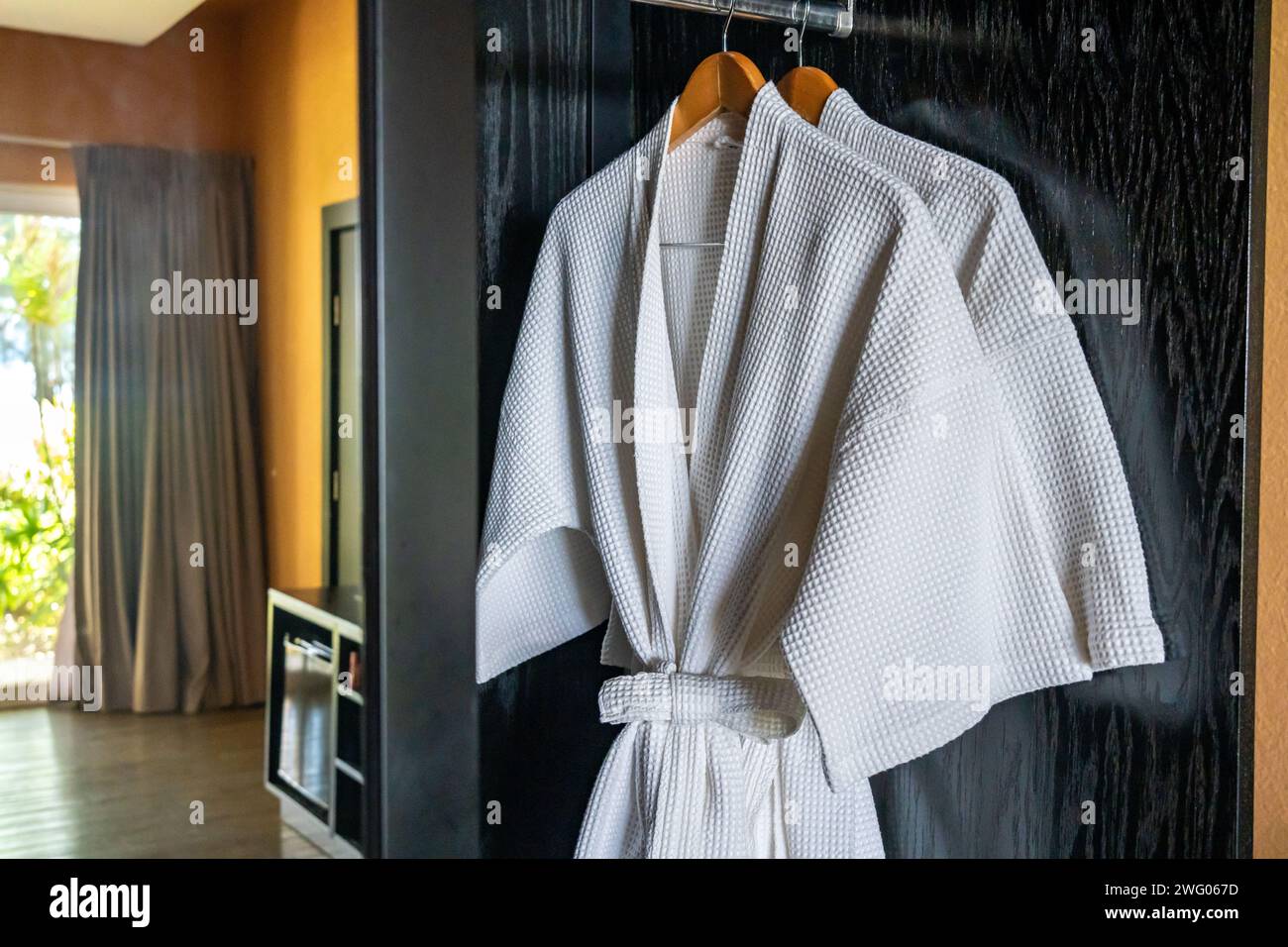
Waffle (Honeycomb) Weave: Woven in a three-dimensional grid pattern that absorbs moisture through surface tension while allowing air to flow freely. Waffle robes fold compactly and dry rapidly.
Sateen and Jacquard: Flat, smooth weaves commonly used for silk and fine cotton robes. Jacquard weaves can incorporate intricate structural patterns directly into the fabric, adding visual depth and structural integrity.
Terry Cloth: Uncut loops trap water
Waffle Weave: Grid pattern allows airflow
Critical Construction Details
Quality tailoring ensures that a bathrobe maintains its structure and comfort over years of daily wear:
- Collar Styles: Shawl collars wrap comfortably around the neck to retain warmth; kimono collars stay flat against the collarbone for a sleek visual profile; hooded styles provide maximum coverage and dry wet hair.
- Seam Construction: Premium robes utilize double-needle stitching or French seams. Enclosed seams prevent internal fraying and eliminate raw edges that could irritate sensitive skin.
- Pocket Reinforcement: Pockets experience constant tension. Top-tier garments feature bar-tack stitching or reinforced backing patches at the upper pocket corners to prevent tearing.
- Belt Loop Architecture: Dual-height belt loops allow users to adjust the waistline position to match their specific torso length, ensuring the closure remains secure without bunching.
Comparing Premium Bathrobe Materials
The following matrix compares common bathrobe fabric options across essential functional and aesthetic criteria:
| Fabric Material | Average GSM Range | Absorbency Level | Breathability | Drying Speed | Ideal Season / Primary Use |
|---|---|---|---|---|---|
| Turkish Terry Cotton | 450 – 700 GSM | Exceptional | Moderate | Moderate | Year-Round Post-Bath & Spa |
| Egyptian Terry Cotton | 500 – 800 GSM | Maximum | Low to Moderate | Slow | Winter / Cold-Climate Drying |
| Waffle-Weave Cotton | 200 – 350 GSM | Moderate to High | Very High | Fast | Summer / Travel & Gym |
| French Linen | 180 – 300 GSM | Moderate | Maximum | Very Fast | Warm Weather / Casual Lounging |
| Mulberry Silk | 90 – 150 (Momme 19-22) | Low | High | Fast | Evening Wear / Layering |
| Microfiber / Fleece | 300 – 500 GSM | Low to Moderate | Low | Moderate | Deep Winter / Warmth & Softness |
Selecting the Right Bathrobe for Climate, Season, and Lifestyle
Choosing a bathrobe involves balancing personal routines with environmental conditions. Selecting a robe tailored to your specific environment prevents discomfort caused by overheating or inadequate coverage.
Warm Climates & Summer Use
In hot or humid environments, heavy terry cloth traps heat against the body, causing discomfort. Opt for lightweight fabrics between 180 and 300 GSM. Linen, low-density waffle-weave cotton, and silk are ideal choices. Linen excels at drawing sweat away from skin while letting air circulate freely, while waffle-weave cotton offers efficient drying after showers without adding unnecessary bulk.
Cold Climates & Winter Lounging
For cold mornings and winter evenings, maximum thermal retention is essential. High-GSM Egyptian cotton, heavy velvet-finished velour, or high-density plush fleece perform best. A thick shawl collar can be folded up to cover the neck, while full-length cuts extending down to the mid-calf protect the legs from drafts.
Spa, Bath, and Post-Shower Absorbency
If your primary goal is stepping directly out of a shower or bath, absorbency is the top priority. Choose uncut Turkish terry cotton between 450 and 600 GSM. Avoid synthetic microfibers, coated cottons, or silk for post-shower use, as these materials push water across the skin rather than absorbing it.
Care and Maintenance: Preserving Softness, Absorbency, and Structural Integrity
Proper care ensures that high-quality bathrobes retain their feel, absorbency, and shape over time. Different materials require specific maintenance practices.
Post-Purchase Care Flowchart:
- Wash in Warm/Cool Water
- Skip Fabric Softener
- Tumble Dry Low / Line Dry
Laundering Natural Cotton and Linen
- Detergent Selection: Use a mild liquid detergent free of optical brighteners and synthetic bleaching agents. Powder detergents can leave un-dissolved crystals trapped inside dense cotton loops, stiffening the fabric over time.
- Water Temperature: Wash cotton terry and linen in warm water (around 40°C / 104°F) to dissolve body oils without shrinking the fibers.
- Avoid Fabric Softeners: Fabric softeners deposit a thin silicon film over textile fibers. While this makes garments feel smooth temporarily, it clogs the open loops of terry cloth, significantly reducing water absorbency. Use half a cup of distilled white vinegar during the rinse cycle to break down soap buildup naturally and restore soft texture.
Caring for Silk Garments
Silk requires delicate handling. Hand-wash or use a dedicated silk cycle on a washing machine using cool water and a pH-neutral liquid detergent specifically formulated for silk. Never wring silk dry; instead, gently press the garment between two clean towels to remove excess water, then hang it out of direct sunlight to dry.
Drying Procedures
Tumble drying on medium heat helps re-fluff uncut cotton terry loops, restoring maximum loft and softness. However, avoid over-drying on high heat, which breaks down plant fibers and causes shrinkage. Remove the robe from the dryer while it retains a slight trace of moisture, hang it on a wide-shouldered wooden hanger, and let it finish air-drying.
Common Mistakes When Buying a Luxury Bathrobe
Avoiding frequent buying mistakes helps ensure your chosen bathrobe delivers lasting comfort and performance:
- Prioritizing Initial Softness Over Fiber Quality: Chemical finishes applied during manufacturing can make low-grade synthetic robes feel soft in store displays. These coatings wash away after two or three laundry cycles, leaving behind a rough, degraded garment. Focus on long-staple natural fibers rather than surface coatings.
- Ignoring Sizing and Proportions: Bathrobes should feature a relaxed, generous cut to allow comfortable movement. Choosing a size that is too small leads to gapping along the front opening when seated, while an oversized robe can drag along floors and catch on objects.
- Selecting Heavy Terry for Warm Climates: Buying a high-GSM plush robe solely for its appearance can result in an uncomfortably hot garment in warm homes or summer weather. Matches fabric density directly to indoor temperatures.
- Neglecting Belt Loop Placement: Fixed belt loops set at an uncomfortable height force the robe to gather awkwardly around the ribcage or hips. Look for robes featuring two-tier adjustable belt loops to customize the fit.
Frequently Asked Questions
What is the ideal GSM for a year-round bathrobe?
A density between 350 and 450 GSM provides a balanced weight for year-round use. This mid-weight range offers enough substance for thermal comfort during cooler months while remaining sufficiently breathable for warm summer mornings.
Why do some bathrobes lose their absorbency after washing?
Loss of absorbency is usually caused by using liquid fabric softeners or dryer sheets containing silicones. These additives coat the fibers, preventing them from soaking up water. Washing the garment with a neutral detergent and half a cup of white distilled vinegar restores absorbency by stripping away residue.
Is Turkish cotton better than Egyptian cotton for bathrobes?
Neither is strictly superior; they serve different primary needs. Turkish cotton features long fibers that dry quickly, making it ideal for daily post-shower use in humid bathrooms. Egyptian cotton features even longer fibers that create denser, heavier textiles, making it ideal for warm, high-absorbency winter robes.
How do I prevent thread pulls on terry cloth bathrobes?
Thread pulls occur when uncut terry loops catch on jewelry, zippers, or rough surfaces. If a pull appears, clip the loose loop flush with the surface of the fabric using sharp scissors. Because terry cloth is woven securely, clipping a single surface loop will not cause the fabric to unravel.
Final Verdict: Investing in Lasting Comfort
A beautiful bathrobe is more than basic loungewear; it is an investment in daily comfort and emotional well-being. By selecting natural fibers like long-staple cotton, crisp linen, or smooth silk, and matching fabric density to your home environment, you can enjoy a garment that enhances your daily routine. Prioritizing sound tailoring, proper sizing, and careful laundering ensures your robe maintains its softness, functional absorbency, and classic silhouette over years of regular use.
Image Gallery