Do Pakistan Loans Really Help the Economy? An Objective Analysis of Debt and Growth
Pakistan’s international and domestic loans serve as a vital lifeline to prevent immediate sovereign default and stabilize the national currency, yet they simultaneously impose a heavy debt-servicing burden that constrains long-term de...
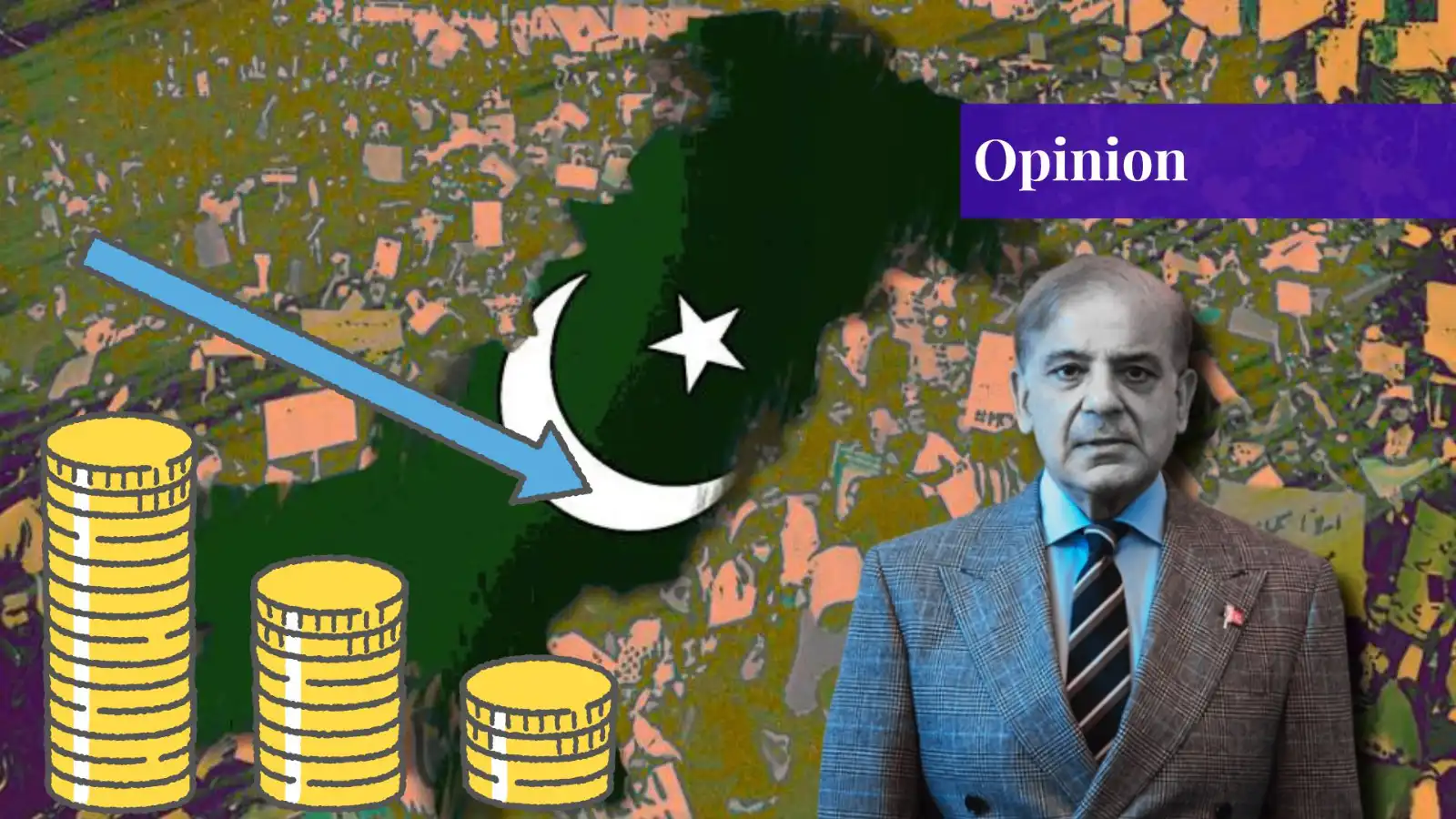
Pakistan’s international and domestic loans serve as a vital lifeline to prevent immediate sovereign default and stabilize the national currency, yet they simultaneously impose a heavy debt-servicing burden that constrains long-term development. While these funds provide necessary liquidity for imports and reserves, their ultimate success depends on structural reforms rather than the mere injection of capital.
Contents
For decades, the question of whether loans truly "help" Pakistan has been a central theme in national discourse. To understand the impact, one must distinguish between short-term stabilization and long-term economic health. In the context of 2026, the Pakistani economy continues to navigate the complexities of multi-lateral agreements, bilateral rollovers, and the persistent need for fiscal discipline.
The Dual Role of International Loans in Pakistan
International loans generally enter the Pakistani economy through two primary channels: balance of payments support and project-based financing. Each has a distinct impact on the nation's financial stability.
Immediate Crisis Mitigation and Liquidity
The most immediate benefit of loans, particularly those from the International Monetary Fund (IMF), is the prevention of a balance of payments crisis. Pakistan frequently faces "twin deficits"—a fiscal deficit (spending more than earning) and a current account deficit (importing more than exporting). When foreign exchange reserves fall to critical levels, the country risks defaulting on its international obligations.
In this scenario, a loan acts as a bridge. It replenishes the State Bank of Pakistan (SBP) reserves, which in turn stabilizes the Pakistani Rupee (PKR). A stable currency prevents runaway inflation on imported goods like petroleum and palm oil, providing a temporary cushion for the general public and businesses. Without these "bailouts," the economy would likely face a complete standstill, characterized by an inability to fuel industry or provide basic utilities.
Long-term Debt Servicing and the "Circular Debt" Trap
The downside of this reliance is the mounting cost of interest. As of 2026, a significant portion of Pakistan’s federal budget is earmarked for debt servicing. When a large percentage of tax revenue goes toward paying back interest on old loans, there is less money available for education, healthcare, and infrastructure.
This creates a cycle often referred to as a "debt trap." Pakistan frequently borrows new money simply to pay the interest on previous loans. This does not add new value to the economy; it merely delays a financial reckoning. Furthermore, the energy sector's circular debt—a chain of unpaid bills across the power value chain—often swallows a large portion of borrowed funds, failing to address the underlying inefficiencies in power generation and distribution.
Types of Loans and Their Economic Impact
Not all debt is created equal. The source and terms of a loan dictate how much it helps or hinders the economy.
Multilateral vs. Bilateral vs. Commercial Debt
Pakistan utilizes a mix of lending sources, each with different strings attached:
- Multilateral Loans (IMF, World Bank, ADB): These are usually the cheapest in terms of interest rates but come with the strictest "conditionalities." The IMF, for instance, requires structural reforms such as increasing tax collection, ending energy subsidies, and privatizing loss-making state-owned enterprises (SOEs).
- Bilateral Loans (China, Saudi Arabia, UAE): These are often "friendly" loans or deposits intended to shore up reserves. Chinese loans, particularly under the China-Pakistan Economic Corridor (CPEC), are focused on infrastructure and energy. While these build physical assets, the repayment terms can be opaque compared to multilateral sources.
- Commercial Debt: Borrowing from international banks or issuing Eurobonds/Sukuks involves much higher interest rates. These are generally used when the country has a positive outlook and wants to raise quick capital without the policy interference of the IMF.
Comparison of Loan Sources and Their Functions
| Source | Primary Purpose | Interest Rate | Key Conditionality |
|---|---|---|---|
| IMF | Balance of Payments / Stabilization | Low to Moderate | Fiscal discipline, tax reforms, subsidy withdrawal. |
| World Bank | Structural & Social Development | Low | Policy reforms in education, health, and climate. |
| Bilateral (CPEC) | Infrastructure and Energy | Moderate | Strategic partnerships and project-specific use. |
| Commercial Banks | General Budgetary Support | High | Market-driven credit ratings and timely repayment. |
| Saudi/UAE Deposits | Foreign Exchange Reserve Support | Moderate | Usually "rolled over" to maintain liquidity levels. |
The IMF Paradox: Stabilization vs. Austerity
The role of the IMF is perhaps the most controversial aspect of Pakistan’s borrowing history. Critics argue that IMF programs stifle growth through "austerity," while proponents suggest they are the only way to force necessary changes.
Structural Reform Requirements
IMF programs typically demand that Pakistan reduce its fiscal deficit. In practice, this means the government must increase electricity and gas prices, raise petroleum levies, and expand the tax net. While these measures are economically "correct" for long-term sustainability, they cause short-term pain in the form of high inflation and reduced purchasing power for the middle and lower classes.
However, these loans "help" by acting as a seal of approval. When Pakistan is under an active IMF program, other lenders—such as the World Bank and bilateral partners—feel confident enough to provide their own funds. Without the IMF's oversight, Pakistan would be effectively cut off from global capital markets.
Why Loans Often Fail to Translate into Sustainable Growth
The reason many people feel that loans do not help is that the underlying structure of the Pakistani economy remains unchanged despite the influx of billions of dollars.
Governance and Revenue Mobilization
The primary failure is not the loans themselves, but the inability to use them to generate future revenue. For a loan to be "productive," it should be invested in sectors that increase exports (like specialized manufacturing or IT services) or reduce imports (like renewable energy).
Instead, borrowed funds are often used to:
- Subsidize inefficient state-owned enterprises (like PIA or Steel Mills).
- Maintain an overvalued exchange rate (historically, though this has changed recently).
- Cover the gap created by a narrow tax base, where the elite often remain outside the tax net while the documented sector is overtaxed.
The Problem of "Productivity Gap"
If a country borrows $1 billion at a 5% interest rate, it must ensure that the investment made with that money generates an economic return higher than 5%. In Pakistan, the return on investment (ROI) for borrowed funds has frequently been lower than the cost of borrowing, leading to a net loss for the national treasury over time.
The Path Forward: From Debt Dependence to Investment-Led Growth
As of 2026, the strategy has shifted slightly toward the Special Investment Facilitation Council (SIFC). The goal is to move away from "loans" and toward "Foreign Direct Investment" (FDI).
Shifting the Paradigm
FDI is superior to loans because:
- Risk-Sharing: Investors take the risk; if the project fails, the government doesn't owe a debt.
- Technology Transfer: Foreign companies bring modern management and technology.
- No Interest Burden: Profits are shared, but there is no fixed interest payment regardless of performance.
For loans to truly help the economy moving forward, they must be strictly earmarked for developmental projects that have a clear path to increasing Pakistan's export capacity. Only by earning more foreign exchange through trade can Pakistan break the cycle of borrowing to pay back debt.
Frequently Asked Questions
Does the IMF control Pakistan’s economy?
The IMF does not "control" the economy, but it does set strict conditions for its loans. These conditions are designed to ensure that Pakistan becomes financially stable enough to pay the loan back. This often involves the government making difficult decisions regarding taxes and subsidies that it might otherwise avoid for political reasons.
Why can't Pakistan just stop taking loans?
If Pakistan stopped taking loans abruptly, it would likely be unable to pay for essential imports like oil, tea, and industrial machinery. This would lead to a "sovereign default," which would crash the banking system, cause hyperinflation, and potentially lead to a complete economic collapse similar to what occurred in Sri Lanka in 2022.
Do loans increase inflation in Pakistan?
Indirectly, yes. To meet loan conditions, the government often has to increase taxes on fuel and electricity. Since energy is an input for almost everything, these costs are passed on to consumers, leading to higher prices for food and services. However, the loans also help stabilize the currency; without them, the Rupee would devalue much faster, which would cause even worse inflation.
How much of Pakistan's budget goes to debt repayment?
While the exact figure fluctuates, in recent fiscal cycles, debt servicing (paying interest and principal) has consumed nearly 40% to 50% of the total federal budget. This is the single largest expenditure, often exceeding the budget for defense and significantly outweighing the budget for development and social safety nets.
Are Chinese loans different from IMF loans?
Yes. Chinese loans are typically "bilateral" and often tied to specific infrastructure projects under CPEC. They usually have different interest rates and longer grace periods, but they lack the broad structural reform requirements that the IMF imposes. Critics often worry about the "lack of transparency" in Chinese debt, while supporters point to the tangible assets (roads, power plants) created.
Practical Recommendation
For those observing or participating in the Pakistani market in 2026, the focus should remain on export-oriented industries. Borrowing is only a sustainable tool when it is used to build the capacity to earn. Investors and businesses should monitor the "Debt-to-GDP" ratio and "Export-to-Import" coverage as the primary indicators of whether the latest round of loans is actually moving the needle toward economic health or merely providing a temporary reprieve.
Image Gallery