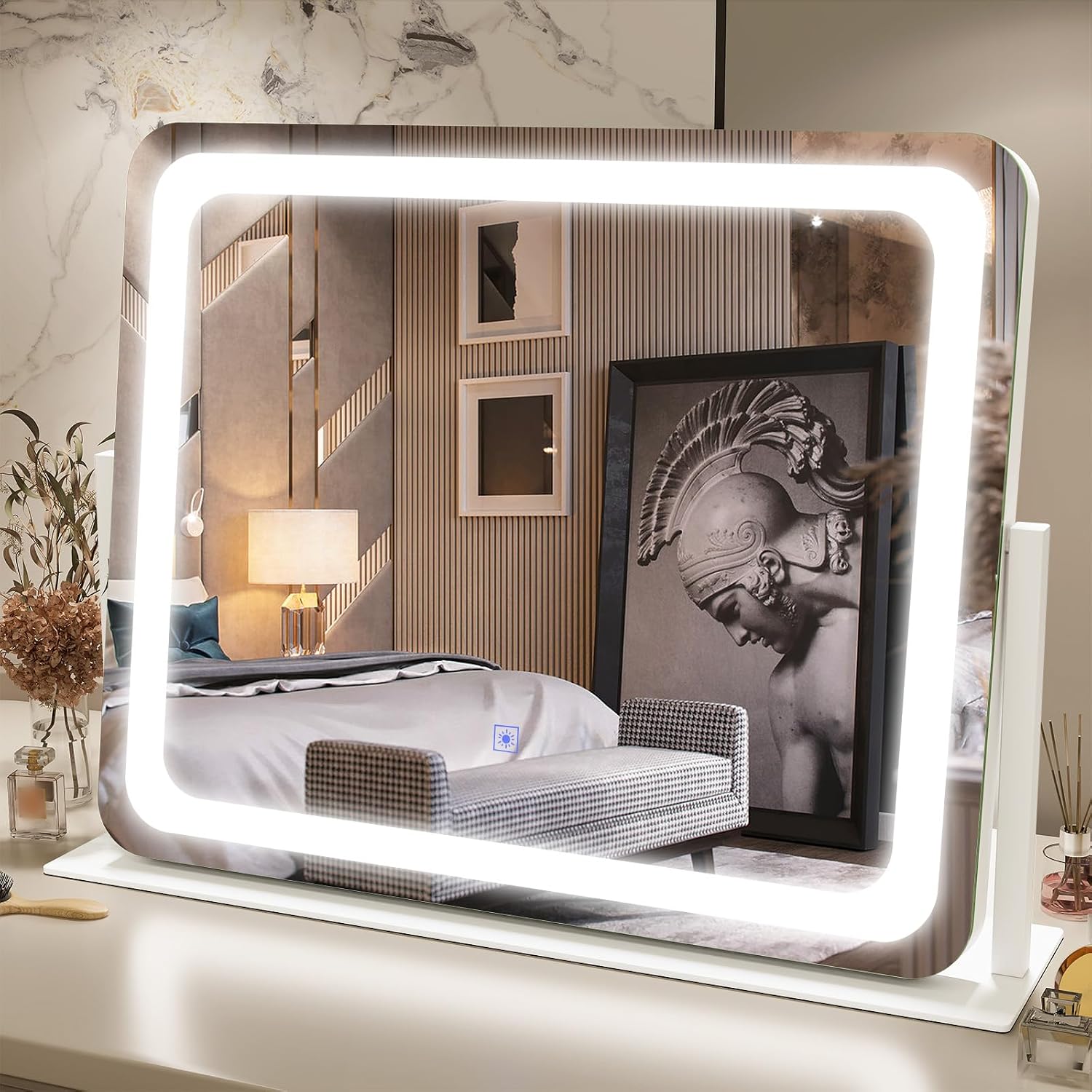
Choosing a Professional Makeup Mirror with Lights
Selecting a professional makeup mirror requires balancing a high Color Rendering Index (CRI of 90+), adjustable color temperatures ranging from 3,200K to 5,600K, and consistent, flicker-free LED output. Prioritize high-quality glass th...
Selecting a professional makeup mirror requires balancing a high Color Rendering Index (CRI of 90+), adjustable color temperatures ranging from 3,200K to 5,600K, and consistent, flicker-free LED output. Prioritize high-quality glass that prevents distortion and ensures even light distribution to eliminate shadows, allowing for precise application and true-to-life color representation in any environment.
Contents
The Technical Foundation: Light Quality and Color Accuracy
When evaluating professional-grade mirrors, the most critical factor is the quality of the light emitted. In the professional beauty industry, light is not merely about brightness; it is about the spectral composition of that light. For makeup artists and enthusiasts alike, the goal is to see colors as they will appear in the specific environment where the subject will be seen, whether that is under harsh office fluorescent lights, the golden hour of an outdoor event, or the dim warmth of a gala.
Understanding Color Rendering Index (CRI)
The Color Rendering Index (CRI) is a quantitative measure of a light source's ability to reveal the colors of various objects faithfully in comparison with a natural light source. For professional makeup application, a CRI of 90 or higher is non-negotiable. Lower CRI values (often found in consumer-grade mirrors) can make skin look sallow or cause specific pigments, such as blushes or eyeshadows, to appear muddy. By 2026, the industry standard has moved toward mirrors that offer a R9 value (saturated red) above 50, ensuring that skin tones—which rely heavily on red spectral data—look healthy and accurate.
The Role of Color Temperature (Kelvins)
Color temperature, measured in Kelvins (K), dictates the "warmth" or "coolness" of the light. A professional mirror must offer adjustable settings to simulate various environments:
- 3,200K (Warm White): Simulates indoor, incandescent, or evening lighting. This is crucial for event makeup to ensure the application doesn't look overly heavy in dim settings.
- 4,000K to 4,500K (Neutral White): Replicates standard office or retail environments.
- 5,000K to 5,600K (Daylight): The gold standard for application. This mimics natural sunlight and reveals the most detail, making it the least "forgiving" but most accurate setting.
Lighting Architecture and Distribution
The physical layout of the lights on the mirror significantly impacts the utility of the device. Professional mirrors typically utilize one of two primary configurations: "Hollywood-style" bulbs or integrated LED strips (often called "edge lighting").
Hollywood-Style vs. Integrated LED Strips
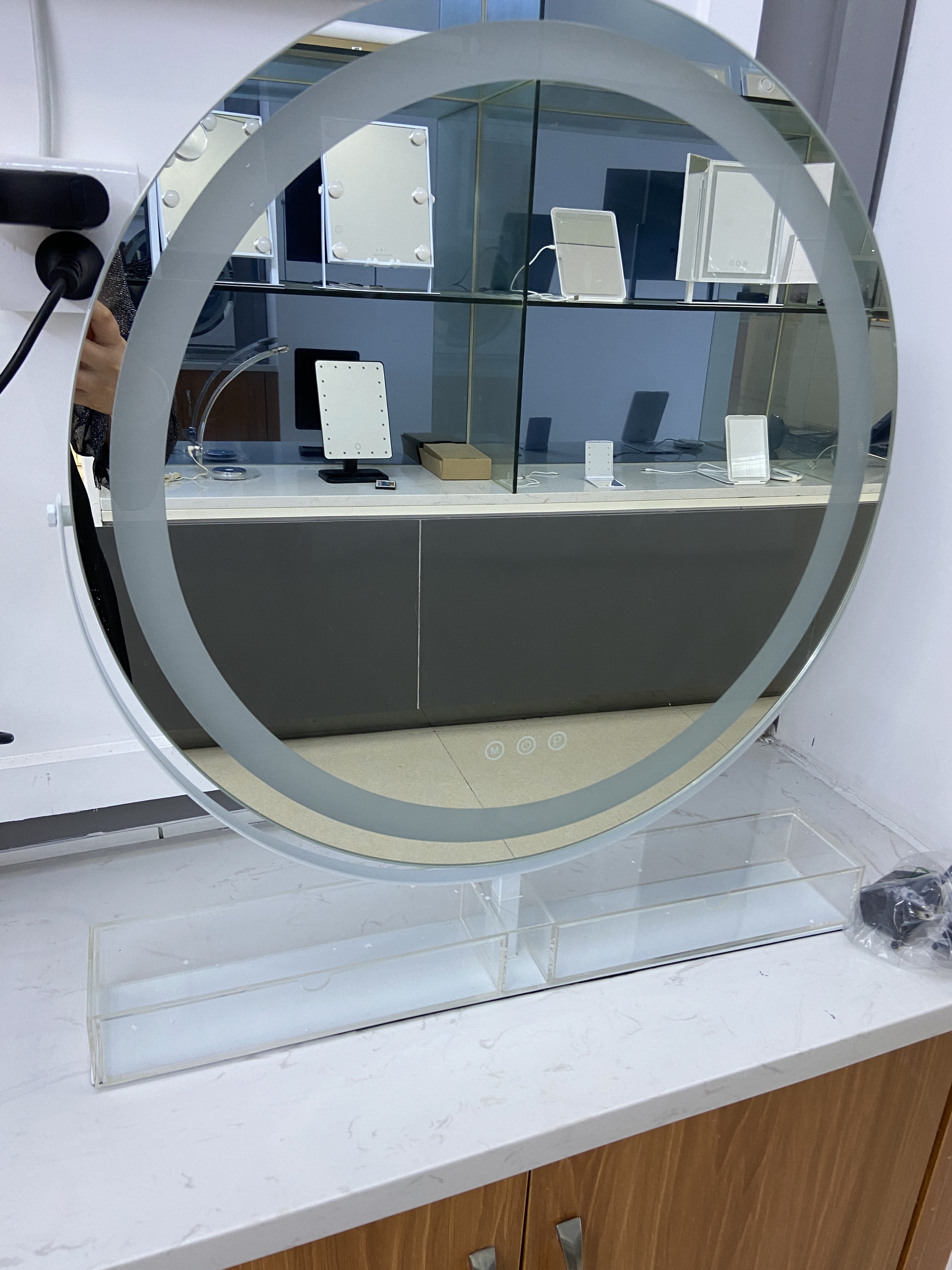
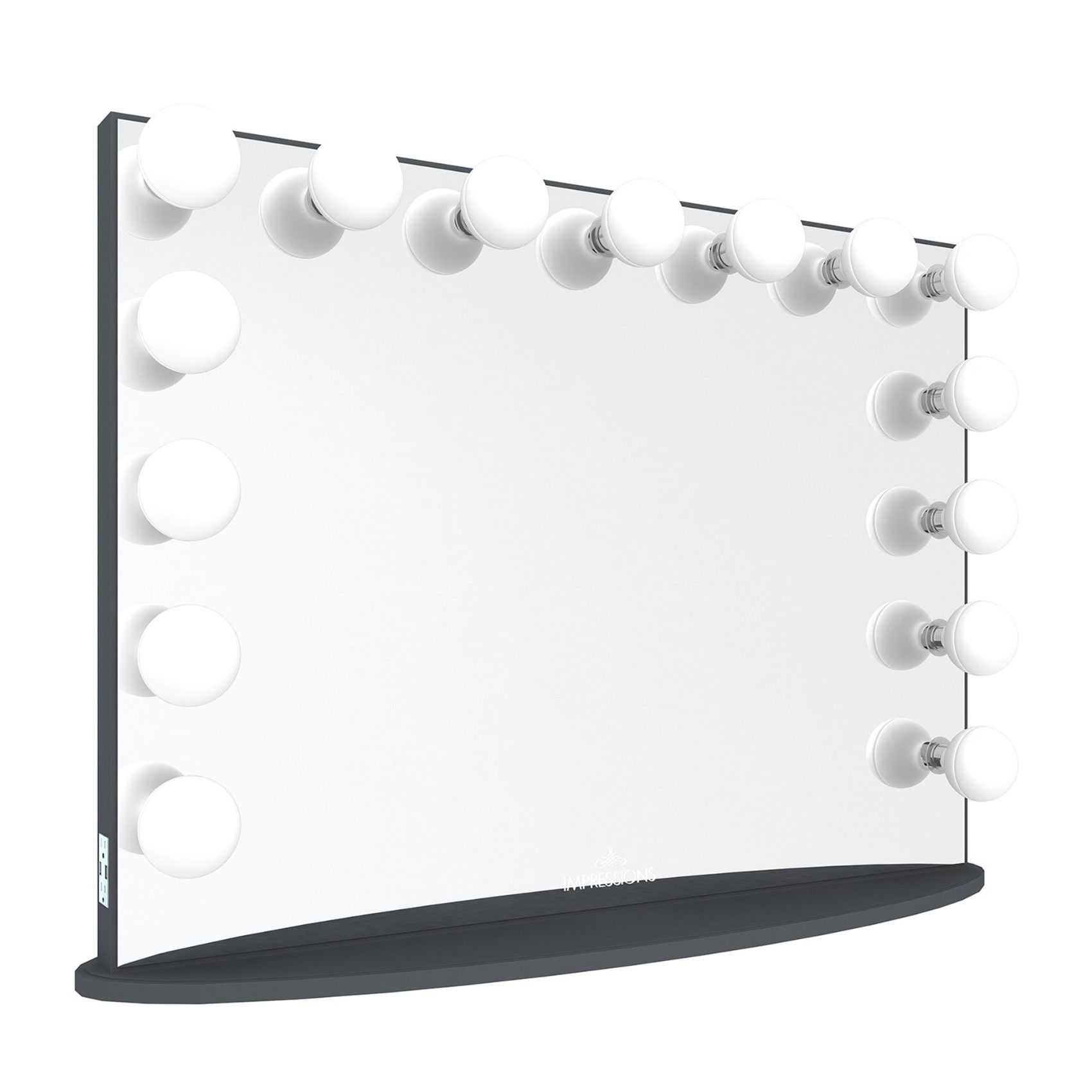
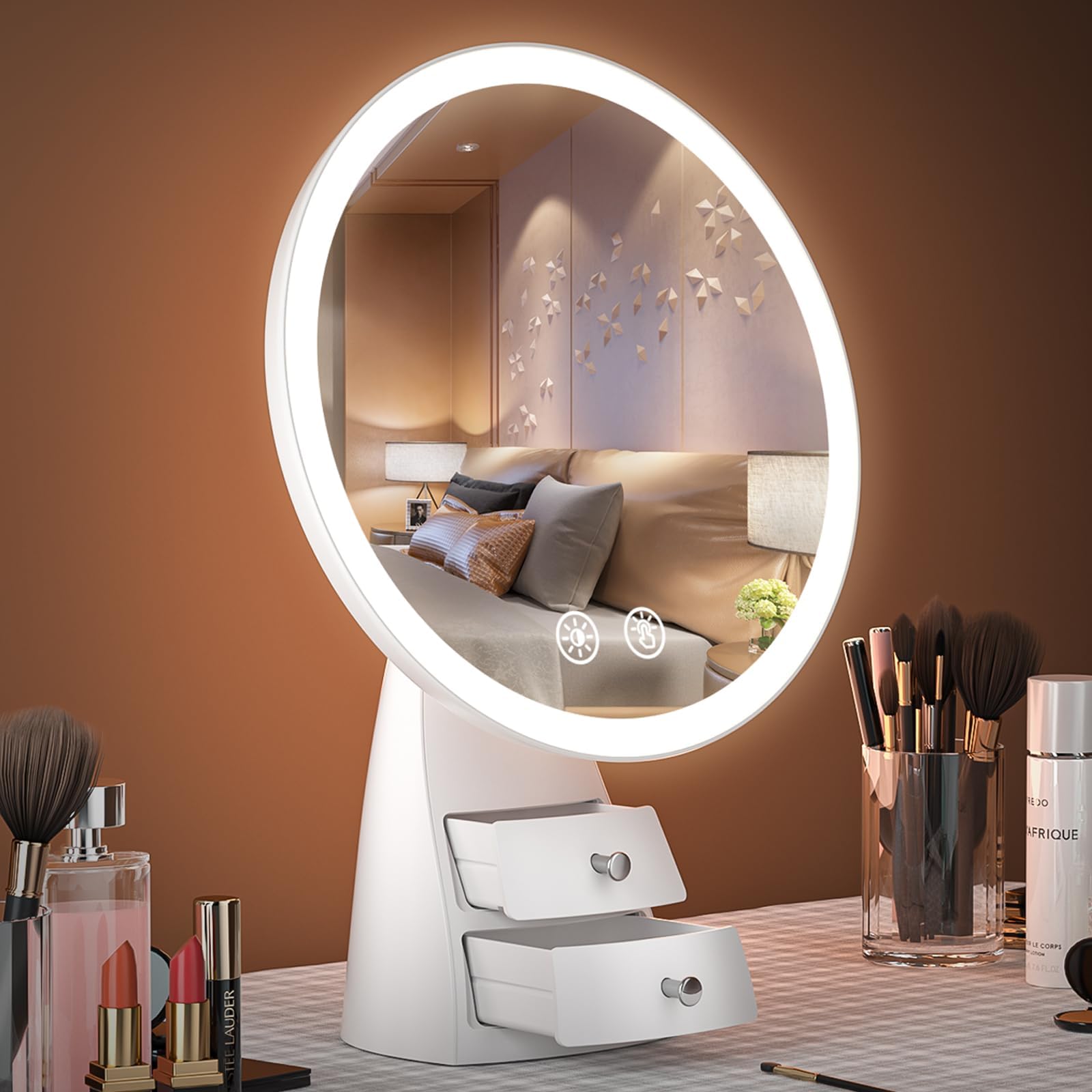
Hollywood-style mirrors feature large, exposed bulbs surrounding the frame. Historically, these used incandescent bulbs, but modern 2026 models utilize high-efficiency, frosted LED globes. These provide a classic aesthetic and excellent front-facing light. However, integrated LED strips, often hidden behind a frosted glass border, provide more uniform diffusion. This reduces the "hot spots" of light that can cause eye fatigue during long sessions.
Eliminating Shadows and Hot Spots
A professional mirror must provide cross-lighting. If the light only comes from the top or the sides, it creates shadows under the eyes, nose, and chin. These shadows lead to "over-correcting" with concealer or contour. Professional mirrors are designed to cast light from at least three sides (left, right, and top) or in a continuous 360-degree circle to ensure the face is evenly illuminated from all angles.
Glass Quality and Magnification Standards
The mirror itself is as much a technical component as the lighting. In 2026, professional mirrors use high-definition, copper-free silver glass. This type of glass provides superior clarity and is more resistant to the humidity common in bathrooms or backstage dressing rooms, preventing the black-edge corrosion seen in cheaper alternatives.
The Magnification Balance
While it is tempting to seek the highest magnification possible, professional artists generally advise caution.
- 1x (Standard): Essential for checking overall symmetry and blending.
- 5x to 7x: The "sweet spot" for detail work like eyeliner, brow shaping, and lash application.
- 10x and higher: These often introduce spherical distortion, where the image appears warped at the edges. They also require the user to be very close to the glass, which can block the light source.
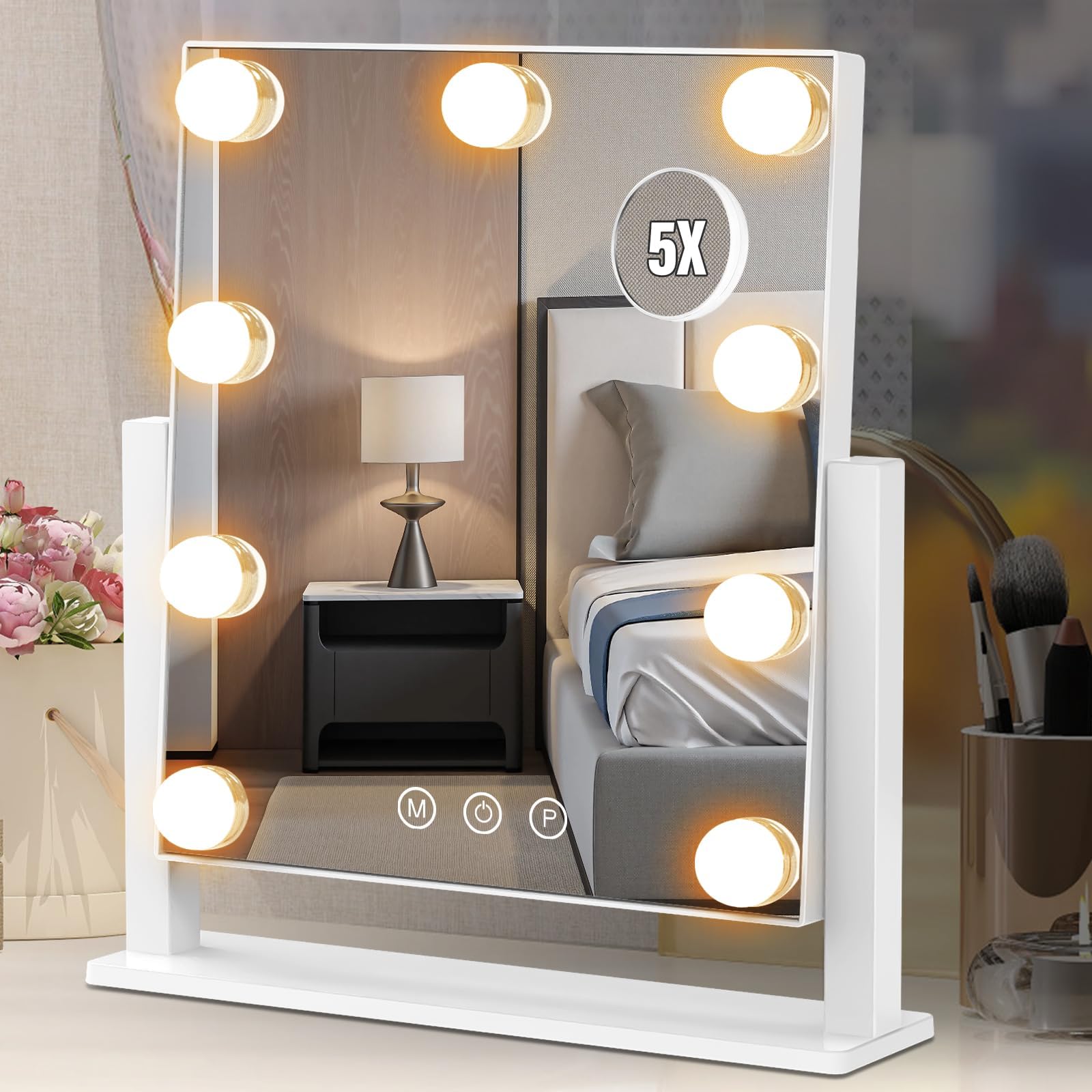
If choosing a mirror with magnification, look for a "dual-view" setup or a smaller magnetic attachment that can be removed when not in use. This preserves the primary 1x viewing area for general application.
Form Factor and Ergonomic Considerations
How you intend to use the mirror dictates the ideal form factor. A mirror that is perfect for a dedicated vanity might be useless for a freelance artist who travels frequently.
Tabletop vs. Wall-Mounted
Tabletop mirrors offer the most flexibility and often include weighted bases for stability. Many now feature adjustable height and tilt, which is vital for maintaining proper posture during application. Wall-mounted mirrors are ideal for saving counter space and can often be hardwired into the electrical system for a cleaner look. If opting for a wall-mounted version, ensure it has an extendable "swing arm" to bring the light closer to your face when needed.
Portability and Power Sources
For professionals on the go, portability is paramount. Look for mirrors that are foldable or come with dedicated hardshell travel cases. In the current 2026 market, high-end portable mirrors utilize high-capacity lithium-ion batteries that provide 5 to 10 hours of continuous use at maximum brightness, allowing for work in locations without reliable power outlets. USB-C charging has become the universal standard, enabling artists to charge their mirrors via the same bricks used for laptops or tablets.
Comparison of Professional Mirror Tiers
The following table compares the typical specifications you should expect based on the intended use case.
| Feature | Desktop Vanity (Studio) | Portable Professional | Wall-Mounted (Permanent) |
|---|---|---|---|
| Typical Size | 20" x 24" or larger | 9" x 12" (Tablet size) | 18" x 18" to 30" x 40" |
| CRI Rating | 95+ | 90+ | 95+ |
| Power Source | AC Plug-in | Battery (USB-C) | Hardwired or AC Plug |
| Light Control | Stepless Dimming | Preset Tiers | Stepless Dimming / Smart Home |
| Primary Use | Dedicated makeup room | Freelance/Travel | Bathroom/Professional Salon |
| Typical Magnification | 1x with 5x attachment | 1x / 10x flip | 1x with swing arm |
Advanced Features and Smart Integration
By 2026, professional mirrors have moved beyond simple illumination. Features that were once considered gimmicks are now integrated into professional workflows to increase efficiency.
- Ambient Light Sensors: Some high-end models automatically adjust their color temperature to match the room's ambient light, ensuring the makeup remains consistent as natural light changes throughout the day.
- Bluetooth and Audio: While not strictly necessary for application, many studio mirrors include high-fidelity speakers and voice-assistant integration, allowing artists to control lighting hands-free or play music for clients.
- Memory Functions: Professional mirrors often "remember" your last used brightness and temperature settings, saving time during setup.
- HD Reflection Technology: This refers to specialized coatings that minimize "ghosting" (a double image effect) and maximize light return, providing a crisper view of skin texture and pores.
Maintenance and Longevity
A professional makeup mirror is an investment. To ensure it lasts, consider the following maintenance protocols:
- Cleaning: Use a microfiber cloth and a dedicated glass cleaner. Avoid ammonia-based products on the frame, especially if it has a metallic or powder-coated finish, as these can strip the coating.
- LED Lifespan: Most professional LEDs are rated for 50,000 hours. While the bulbs are rarely replaceable in integrated units, ensuring the mirror has adequate ventilation (don't cover the back) will prevent heat buildup that can shorten the LED's life.
- Battery Health: For portable mirrors, avoid leaving them plugged in 24/7 once they reach 100% charge, as this can degrade the battery capacity over several years.
FAQ
What is the best color temperature for applying foundation?
The best color temperature for foundation is daylight, roughly 5,000K to 5,600K. This temperature reveals the true undertones of the skin and foundation, preventing the "mask" effect where the face doesn't match the neck. It is the most accurate setting for ensuring seamless blending and color matching.
Are LED lights better than incandescent bulbs for makeup?
Yes, LEDs are superior for several reasons. They stay cool to the touch, which prevents the user from sweating or the makeup from melting during application. Additionally, LEDs are much more energy-efficient and offer a wider range of color temperatures and higher CRI values than standard incandescent bulbs, which tend to be overly warm.
Can I use a mirror with lights for professional filming or photography?
While a makeup mirror provides excellent "key lighting" for the face, it is usually not a replacement for a full studio lighting kit. However, many 2026 professional mirrors are designed with flicker-free technology, making them compatible with high-speed cameras. They can serve as a great fill light or ring-light alternative for social media content.
How much should I expect to pay for a professional-grade mirror?
As of 2026, a true professional mirror with a CRI of 95+ and adjustable temperature settings typically starts at $150 for portable models and can range from $300 to $800 for large, studio-quality vanity mirrors. Prices vary based on size, glass quality, and integrated smart features.
Is magnification necessary for a professional makeup mirror?
It is not strictly necessary for everyone, but it is highly beneficial for detail-oriented tasks. Most professionals prefer a 1x mirror for the majority of the application to keep the face in perspective, using a 5x or 7x magnification only for intricate eye or lip work.
Final Recommendation
For a dedicated professional setup in 2026, the ideal choice is a tabletop Hollywood-style or integrated LED mirror that offers a CRI of 95, stepless dimming, and a temperature range of 3,200K to 5,600K. If you are a freelance artist, prioritize a high-CRI portable model with a minimum 5,000mAh battery. Always verify the CRI rating through independent reviews or manufacturer specifications before purchasing, as this remains the single most important factor in achieving professional-grade results.
Image Gallery