The Ultimate James Bond Chronology: Understanding the EON Film Timeline
Navigating the James Bond film series requires distinguishing between the official EON Productions canon and the various non-canonical productions released over the decades. The primary James Bond chronology is defined by the 25 offici...
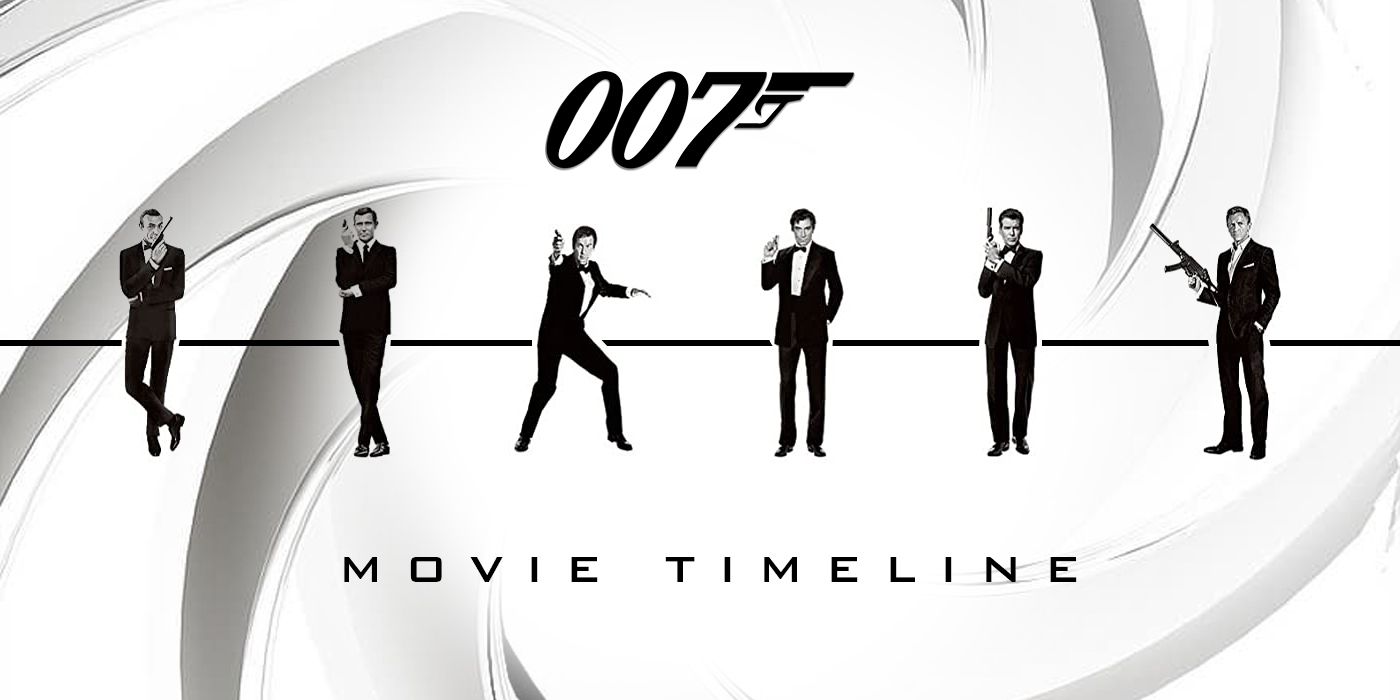
Navigating the James Bond film series requires distinguishing between the official EON Productions canon and the various non-canonical productions released over the decades. The primary James Bond chronology is defined by the 25 official films produced by EON Productions, which follow a fluid, evolving timeline featuring six distinct actors, rather than a single, strictly linear historical narrative.
Contents
Defining the Official EON Canon
The James Bond franchise is unique in cinema history for its longevity and its approach to continuity. Since 1962, EON Productions—founded by Albert R. Broccoli and Harry Saltzman—has maintained the rights to the character created by Ian Fleming. When discussing the "James Bond chronology," the focus is almost exclusively on the EON-produced films.
These films do not operate on a traditional chronological timeline where the character ages linearly from the 1960s to the 2020s. Instead, the series utilizes a "floating timeline." This means that while individual films often reflect the contemporary geopolitical climate, technology, and culture of their release year, the character of James Bond is generally treated as a man in his prime, regardless of the era. This allows the franchise to remain relevant across generations without necessitating a reboot of the character's origin story until the production of Casino Royale (2006), which served as a soft reset for the Daniel Craig era.
The Production Chronology
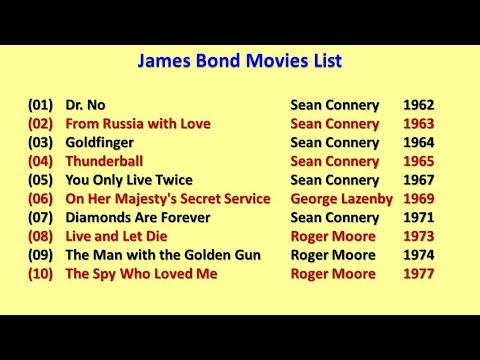
Understanding the sequence of the official films is the most common way to categorize the series. The following table organizes the 25 canonical films by their original theatrical release, grouping them by the actor who portrayed the protagonist.
| Era / Actor | Film Title | Release Year |
|---|---|---|
| Sean Connery | Dr. No | 1962 |
| Sean Connery | From Russia with Love | 1963 |
| Sean Connery | Goldfinger | 1964 |
| Sean Connery | Thunderball | 1965 |
| Sean Connery | You Only Live Twice | 1967 |
| George Lazenby | On Her Majesty's Secret Service | 1969 |
| Sean Connery | Diamonds Are Forever | 1971 |
| Roger Moore | Live and Let Die | 1973 |
| Roger Moore | The Man with the Golden Gun | 1974 |
| Roger Moore | The Spy Who Loved Me | 1977 |
| Roger Moore | Moonraker | 1979 |
| Roger Moore | For Your Eyes Only | 1981 |
| Roger Moore | Octopussy | 1983 |
| Roger Moore | A View to a Kill | 1985 |
| Timothy Dalton | The Living Daylights | 1987 |
| Timothy Dalton | Licence to Kill | 1989 |
| Pierce Brosnan | GoldenEye | 1995 |
| Pierce Brosnan | Tomorrow Never Dies | 1997 |
| Pierce Brosnan | The World Is Not Enough | 1999 |
| Pierce Brosnan | Die Another Day | 2002 |
| Daniel Craig | Casino Royale | 2006 |
| Daniel Craig | Quantum of Solace | 2008 |
| Daniel Craig | Skyfall | 2012 |
| Daniel Craig | Spectre | 2015 |
| Daniel Craig | No Time to Die | 2021 |
Addressing Non-Canonical Productions
To achieve a full understanding of the James Bond universe, one must recognize that certain films starring the character of James Bond exist outside the EON Productions timeline. These films were produced by different entities, often due to complex legal disputes regarding the rights to Ian Fleming's source material.
- Casino Royale (1967): This was a satirical comedy produced by Columbia Pictures. Because EON did not hold the rights to the Casino Royale novel at the time, this version remains entirely separate from the main cinematic canon.
- Never Say Never Again (1983): Produced by Kevin McClory, this film stars Sean Connery as James Bond. It is a remake of the plot of Thunderball (1965). Because it was not produced by EON Productions, it is excluded from the official 25-film count, despite the return of Connery to the role.
The Impact of the "Floating Timeline"
The "floating timeline" is a critical technical aspect for new viewers to understand. In the earlier films, such as Goldfinger, the Cold War is a central thematic element. However, when the series transitioned through the decades, it adapted. Characters like M, Q, and Miss Moneypenny have been portrayed by different actors, and while their roles remain constant, their backstories are often updated to suit the contemporary setting.
The Daniel Craig era (2006–2021) is the only period where a strictly defined internal chronology is prioritized. Casino Royale establishes Bond’s origin as a 00-agent, and the subsequent films in the Craig era build upon the events of the previous ones. This creates a cohesive "beginning-to-end" narrative arc that is distinct from the episodic, loosely connected nature of the Connery, Moore, or Brosnan eras.
Prerequisites for Understanding the Canon
If your goal is to experience the evolution of the character, the production order is the most logical way to view the films. However, if you are looking for a grounded, modern narrative experience, starting with the Daniel Craig era is the most efficient method.
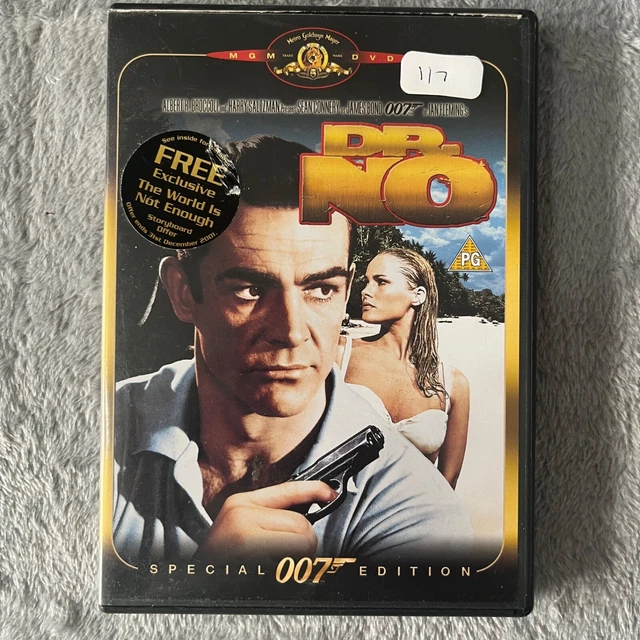
- For the Purist: Begin with Dr. No (1962). This provides the essential context for how the cinematic version of Bond—and the "Bond formula"—was established.
- For the Modern Viewer: Begin with Casino Royale (2006). This film explains the genesis of Bond’s status as a double-O agent and provides the narrative foundation for the following four films in that specific cycle.
Common Misconceptions Regarding Chronology
A frequent mistake for audiences is attempting to bridge the gap between the actors using narrative logic. There is no official "in-universe" explanation for why Bond looks different in every era. While some fan theories suggest that "James Bond" is a code name passed from one operative to another, EON Productions has never confirmed this. Instead, the character is best viewed as a theatrical archetype—like Hamlet or Sherlock Holmes—who is interpreted anew by each lead actor while remaining fundamentally the same individual within his own respective series of films.
Frequently Asked Questions
Is the 1967 version of Casino Royale part of the Bond series? No. It is a spoof production and is not part of the official 25-film EON Productions canon. It does not fit into any narrative timeline with the official films.
Does the order of the films matter? For the Daniel Craig era, the order is essential because the plot points, character development, and emotional stakes are interconnected. For the eras of Connery through Brosnan, the films are largely episodic, though they do contain callbacks and recurring villains that make chronological viewing rewarding.
Why does James Bond never age? The series utilizes a "floating timeline." The films are designed to reflect the era in which they were released, rather than tracking a single, human lifespan for the character. This allows the franchise to sustain itself indefinitely.
Are the Ian Fleming novels chronological? The original novels were written in a specific sequence beginning with Casino Royale (1953) and ending with The Man with the Golden Gun (1965). While they follow a more consistent personal chronology than the films, they are a separate body of work and do not dictate the timeline of the EON film series.
Where does Never Say Never Again fit? It does not fit into the official chronology. Despite featuring Sean Connery, it was an independent production resulting from legal rights battles over the Thunderball screenplay.
Recommendation
For a comprehensive viewing experience, follow the production order established by EON Productions, starting from 1962. This allows you to witness the technical, aesthetic, and cultural evolution of the genre. If you prefer a streamlined, continuous story, prioritize the five films of the Daniel Craig era as a self-contained narrative unit.
Image Gallery