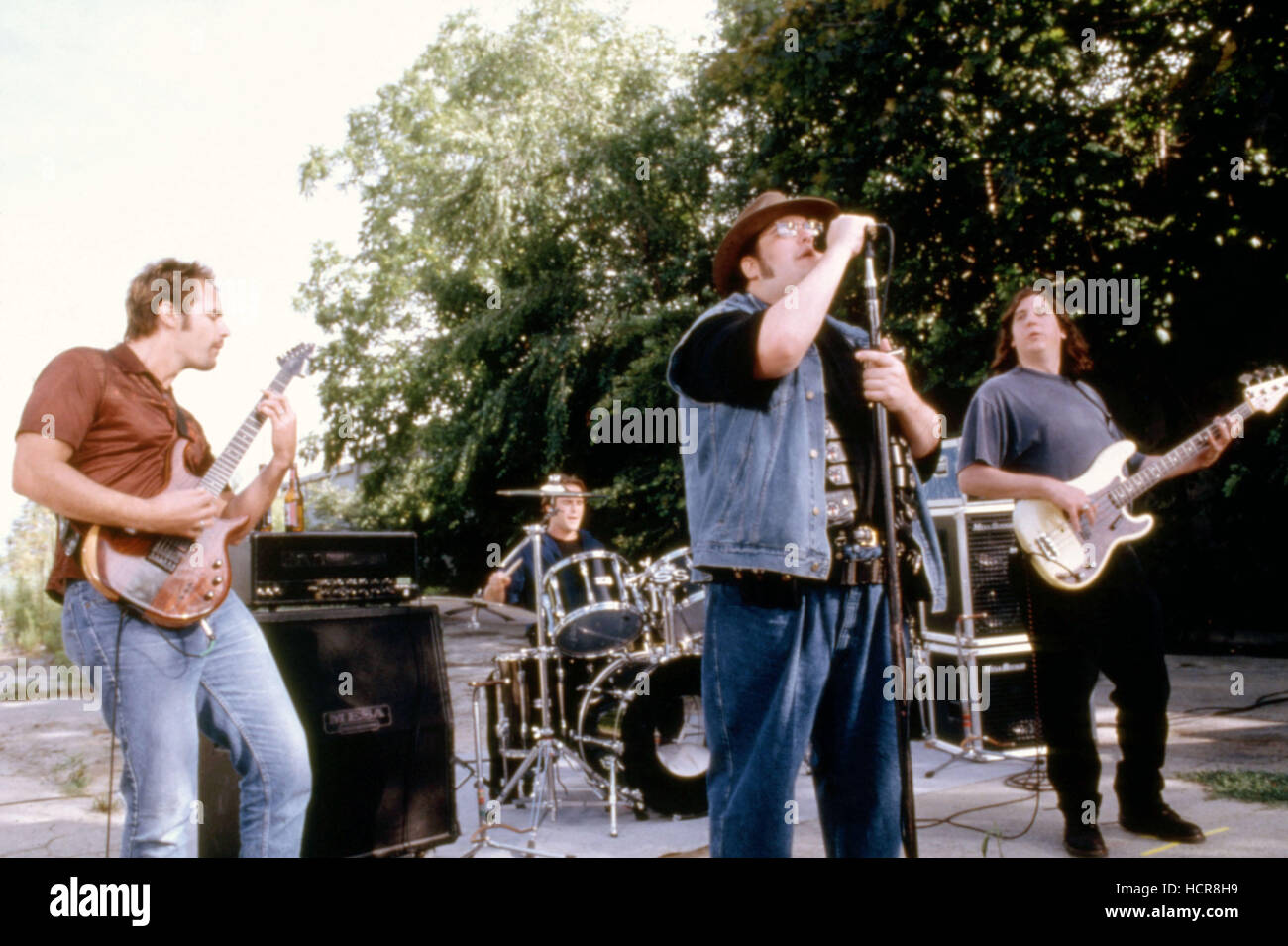
John Popper and Blues Traveler: The Legacy of an American Blues-Rock and Jam Band
Blues Traveler, fronted by virtuoso harmonica player and vocalist John Popper, is an American rock band rooted in blues, folk, and jam traditions. Formed in 1987 in Princeton, New Jersey, the group redefined modern roots music by fusin...
Blues Traveler, fronted by virtuoso harmonica player and vocalist John Popper, is an American rock band rooted in blues, folk, and jam traditions. Formed in 1987 in Princeton, New Jersey, the group redefined modern roots music by fusing high-tempo blues harp melodies with improvisational rock, achieving mainstream stardom and founding the iconic H.O.R.D.E. tour.
Contents
Disambiguating the Sound: Folk Blues or Modern Jam Rock?
Listeners frequently categorize Blues Traveler under the banner of an American folk blues band, yet their sonic architecture extends far beyond traditional acoustic folk or twelve-bar rural blues. While the fundamental vocabulary of early country blues, Delta blues, and Greenwich Village folk music runs through their compositions, Blues Traveler forged a hybrid identity. They combined the storytelling ethos and acoustic textures of American folk with blistering electric blues riffs, funk bass lines, and the extended, open-ended improvisational structures characteristic of the 1990s jam band movement.
At the epicenter of this sound is frontman John Popper. Armed with a signature chest rig loaded with diatonic harmonicas in every key, Popper transformed an instrument traditionally relegated to accompaniment or gritty, rhythmic chugging into a searing lead instrument capable of matching any virtuosic electric guitar solo. Blues Traveler took the harmonic sensibilities of folk-rock narrative traditions—typified by Bob Dylan, Neil Young, and the Grateful Dead—and supercharged them with the breakneck pacing of classic rock and electric urban blues.
Understanding Blues Traveler requires evaluating both their historical roots and their formal genre classifications. While their catalog features acoustic, narrative-driven tracks that fit comfortably within the folk-blues tradition, their enduring legacy rests on high-energy musicianship, festival culture, and multi-genre experimentation.
The Origins: From Princeton Garage to New York Underground
The foundation of Blues Traveler was laid in the mid-1980s in Princeton, New Jersey. High school friends John Popper (harmonica, lead vocals) and Brendan Hill (drums) began jamming together, initially forming a group called The Blues Band. They soon integrated guitarist Chan Kinchla and bassist Bobby Sheehan, solidifying a tight-knit four-piece unit driven by mutual chemistry and a desire to blend blues idioms with unbridled improvisational freedom.
After relocating to New York City in the late 1980s, the band immersed itself in the burgeoning downtown club scene. Along with contemporaries like the Spin Doctors, Phish, and Joan Osborne, Blues Traveler revitalized live music venues across Greenwich Village and Tribeca, most notably the legendary club Wetlands Preserve. Wetlands provided an incubator for bands that rejected the polished, synthesizer-heavy production dominating late-1980s commercial radio in favor of authentic, performance-first rock music.
Blues Traveler spent several grueling years on the road, establishing an uncompromising grassroots touring model. Rather than waiting for major-label radio promotion, the group cultivated a dedicated following through endless live performances, taped concert trades among fans, and marathon sets that rarely featured the same setlist twice. By the time they signed with A&M Records and released their self-titled debut album in 1990, the band had already established an ironclad reputation as one of the most hardworking live acts in North America.
John Popper’s Harmonica Mastery and Musical Technique
The definitive sonic hallmark of Blues Traveler is John Popper’s harmonica playing. Before Popper, the harmonica in popular rock was predominantly utilized for emotional accentuation, simple blues shuffles, or acoustic folk accents. Popper reimagined the technical boundaries of the 10-hole diatonic harmonica.
Technical Innovations and Style
- Rapid-Fire Articulation: Popper adapted horn and guitar phrasing, employing advanced triple-tonguing and circular breathing techniques to execute blistering arpeggios at speeds rarely heard on the instrument.
- Custom Rigging: To navigate complex key modulations during extended live jams, Popper designed a specialized military-style vest equipped with dozens of custom-tuned Hohner Special 20 harmonicas organized by key.
- Amplification and Overdrive: Popper paired high-impedance handheld microphones directly with vintage Fender tube amplifiers, producing a thick, overdriven tone that allowed his harmonica to cut through heavy drums and distorted electric guitar.
- Microtonal Bending: Through precise embouchure control, Popper bent notes across both the draw and blow cycles, achieving microtonal nuance and blues inflections without abandoning diatonic tuning.
Beyond his instrumental virtuosity, Popper’s vocal delivery—characterized by a soulful, rapid, and expressive cadence—served as the driving engine for his introspective and self-deprecating lyricism. His songwriting merged folk-style narrative confessions with wry humor, exploring themes of longing, mortality, addiction, and creative restlessness.
The Breakthrough: four, "Run-Around", and Mainstream Success
Although Blues Traveler built a massive underground following through albums like Travelers and Thieves (1991) and Save His Soul (1993), their seismic commercial breakthrough arrived with their fourth studio LP, appropriately titled four (1994).
Produced by Steve Thompson and Michael Barbiero, four struck an elusive balance between the band’s loose, improvisational live character and pristine pop-rock hooks. The album’s lead single, "Run-Around," became a ubiquitous cultural phenomenon. Propelled by its infectious diatonic chord progression, lightning-fast harmonica solos, and Popper's rapid-fire lyrical cadence, the track spent 49 weeks on the Billboard Hot 100, peaking at number eight. The song earned Blues Traveler the 1995 Grammy Award for Best Rock Performance by a Duo or Group with Vocal.
The follow-up single, "Hook," proved just as culturally durable. Built on a melodic progression satirizing the Pachelbel Canon, the song ironically dissected the formulaic nature of commercial pop music while delivering an irresistible chorus that demonstrated the very pop appeal it critiqued. The album earned a 6× Multi-Platinum certification from the Recording Industry Association of America (RIAA), vaulting the Princeton jam outfit into arena headliners.
Founding the H.O.R.D.E. Festival: Architects of 1990s Live Culture
Blues Traveler's impact extended far beyond their own record sales. In 1992, frustrated by mainstream rock radio’s reluctance to promote improvisational, roots-oriented bands and tired of restrictive multi-band package tours, John Popper and the band conceptualized the H.O.R.D.E. (Horizons of Rock Developing Everywhere) tour.
H.O.R.D.E. became one of the most influential touring festivals of the 1990s, rivaling alternative rock's Lollapalooza. The tour brought together a loose collective of independent-minded, performance-centric bands, creating an ecosystem where grassroots acts could cross-pollinate fanbases in amphitheaters nationwide.
Core Bands Associated with Early H.O.R.D.E. Tours
- Blues Traveler: Festival founders, regular headliners, and cultural anchors.
- Phish: Key early participant that helped draw dedicated East Coast tapers and jam enthusiasts.
- Spin Doctors: Longtime New York club scene peers who bridged alternative pop with blues roots.
- Widespread Panic: Southern jam-rock titans that brought heavy improvisational grooves to the bill.
- Col. Bruce Hampton and The Aquarium Rescue Unit: The avant-garde blues-bluegrass collective featuring virtuosos Jimmy Herring and Oteil Burbridge.
- The Black Crowes and Dave Matthews Band: Later additions that pushed the festival into massive mainstream attendance during the mid-1990s.
The festival proved that an artist-curated, live-first philosophy could achieve enormous commercial viability without adhering to prevailing radio trends, permanently altering the landscape of American summer concert tours.
Discography Comparison: Key Eras and Musical Evolution
The evolution of Blues Traveler traces a path from gritty blues-club beginnings to polished commercial heights, followed by resilient independent experimentation.
| Album Title | Release Year | Primary Genre Blend | Commercial Peak / Certification | Signature Tracks |
|---|---|---|---|---|
| Blues Traveler | 1990 | Electric Blues, Roots Rock | Gold (RIAA) | "But Anyway", "Gina", "100 Years" |
| Travelers and Thieves | 1991 | Blues Rock, Folk Jam | Gold (RIAA) | "Sweet Pain", "Mountain Cry" |
| Save His Soul | 1993 | Blues Rock, Alternative | Top 100 Billboard / Gold | "Defense & Desire", "Conquer Me" |
| four | 1994 | Pop Rock, Blues Rock | 6× Multi-Platinum | "Run-Around", "Hook", "Crash Burn" |
| Straight On till Morning | 1997 | Jam Rock, Pop Rock | Platinum (RIAA) | "Carolina Blues", "Most Precarious" |
| Bridge | 2001 | Alternative Rock, Blues | Billboard 200 Entry | "Girl Inside My Head", "Back in the Day" |
| Suzie Cracks the Whip | 2012 | Roots Rock, Pop Americana | Independent Charting | "You Don't Have to Love Me", "Things Are Looking Up" |
| Traveler's Blues | 2021 | Traditional Blues, Folk Blues | Grammy-Nominated (Best Traditional Blues Album) | "Ball and Chain", "Funky Bitch", "Needle and the Spoon" |
The release of Traveler's Blues in 2021 earned the band a Grammy nomination for Best Traditional Blues Album, completing a full musical circle by returning directly to the deep American folk blues and electric blues covers that inspired their founding.
Hardship, Resilience, and Lineup Evolution
The late 1990s tested the survival of Blues Traveler. In 1999, John Popper underwent emergency angioplasty after suffering severe cardiac distress caused by years of extreme touring and health challenges. Just months later, in August 1999, founding bassist Bobby Sheehan tragically passed away in New Orleans at the age of 31 from an accidental drug overdose.
Devastated by the loss of their musical brother and creative anchor, the band faced dissolution. However, Popper, Kinchla, and Hill elected to honor Sheehan’s memory by continuing. They recruited Chan Kinchla’s younger brother, Tad Kinchla, to assume bass duties, and added multi-instrumentalist Ben Wilson on keyboards.
This reconstituted five-piece lineup proved exceptionally stable, remaining intact for over two decades. Wilson’s keyboard textures introduced new harmonic depth, allowing Popper to step back during long instrumental jams and facilitating richer, more varied song arrangements across their 2000s and 2010s output.
Evaluating the Blues Traveler Legacy
To understand Blues Traveler's standing in modern American music, critics and listeners must balance their commercial achievements against their instrumental innovations:
Strengths and Innovations
- Revolutionized the Harmonica: John Popper elevated the technical and compositional capacity of the diatonic harmonica in popular music more than any player since Paul Butterfield or Little Walter.
- Independent Live Model: The band pioneered independent touring, concert recording culture, and festival packaging long before digital streaming platforms disrupted the traditional music business.
- Enduring Songwriting: Tracks like "Run-Around" and "Hook" remain enduring fixtures on classic rock and alternative radio, celebrated for their sharp lyrical construction and instrumental energy.
Common Criticisms and Limitations
- Improvisational Excess: Extended live solos and freeform song structures occasionally alienated listeners who preferred compact, radio-friendly rock arrangements.
- Stylistic Fragmentation: Efforts to experiment with contemporary electronic textures or outside songwriters in the 2000s received mixed critical reactions from longtime purists.
Frequently Asked Questions
Is Blues Traveler considered a folk blues band or a rock band?
Blues Traveler is primarily classified as an American blues-rock and jam band. While they incorporate deep elements of folk blues, roots music, and acoustic storytelling, their dominant presentation features amplified electric instrumentation, extended improvisation, and fast-paced rock arrangements.
What kind of harmonica does John Popper play?
John Popper primarily plays standard 10-hole diatonic harmonicas, favoring Hohner Special 20 models. He uses instruments customized by master technicians to handle extreme air pressure and high-speed bending across different musical registers.
Who wrote the hit song "Hook," and what is it about?
"Hook" was written by John Popper. The song serves as a satirical commentary on the music industry, pointing out that listeners will absorb meaningless lyrics as long as a composition features an irresistible melodic and structural "hook." Popper proved his point by borrowing the harmonic progression of Johann Pachelbel's famous Canon in D.
Did Blues Traveler ever win a Grammy Award?
Yes. Blues Traveler won the Grammy Award for Best Rock Performance by a Duo or Group with Vocal in 1995 for their hit single "Run-Around." They also earned a nomination in 2021 for Best Traditional Blues Album for their release Traveler's Blues.
Are the original members of Blues Traveler still in the band?
Three of the four founding members—John Popper (vocals, harmonica), Chan Kinchla (guitar), and Brendan Hill (drums)—continue to anchor the band. Following the death of founding bassist Bobby Sheehan in 1999, the lineup expanded to include bassist Tad Kinchla and keyboardist Ben Wilson.
Recommended Next Steps: Exploring the Music
To develop an authentic appreciation for John Popper and Blues Traveler, explore their work through a balanced listening strategy:
- Start with the Core Discography: Listen to the studio albums four (1994) and Save His Soul (1993) to grasp the band's peak intersection of radio craft and instrumental prowess.
- Experience the Live Dynamic: Acquire their definitive two-disc live recording, Live from the Fall (1996), which showcases their improvisational transitions, audience banter, and Popper's unedited harmonica solos.
- Trace Their Traditional Roots: Listen to Traveler's Blues (2021) to hear the band tackle the folk and blues standards that originally shaped their signature sound.
Image Gallery