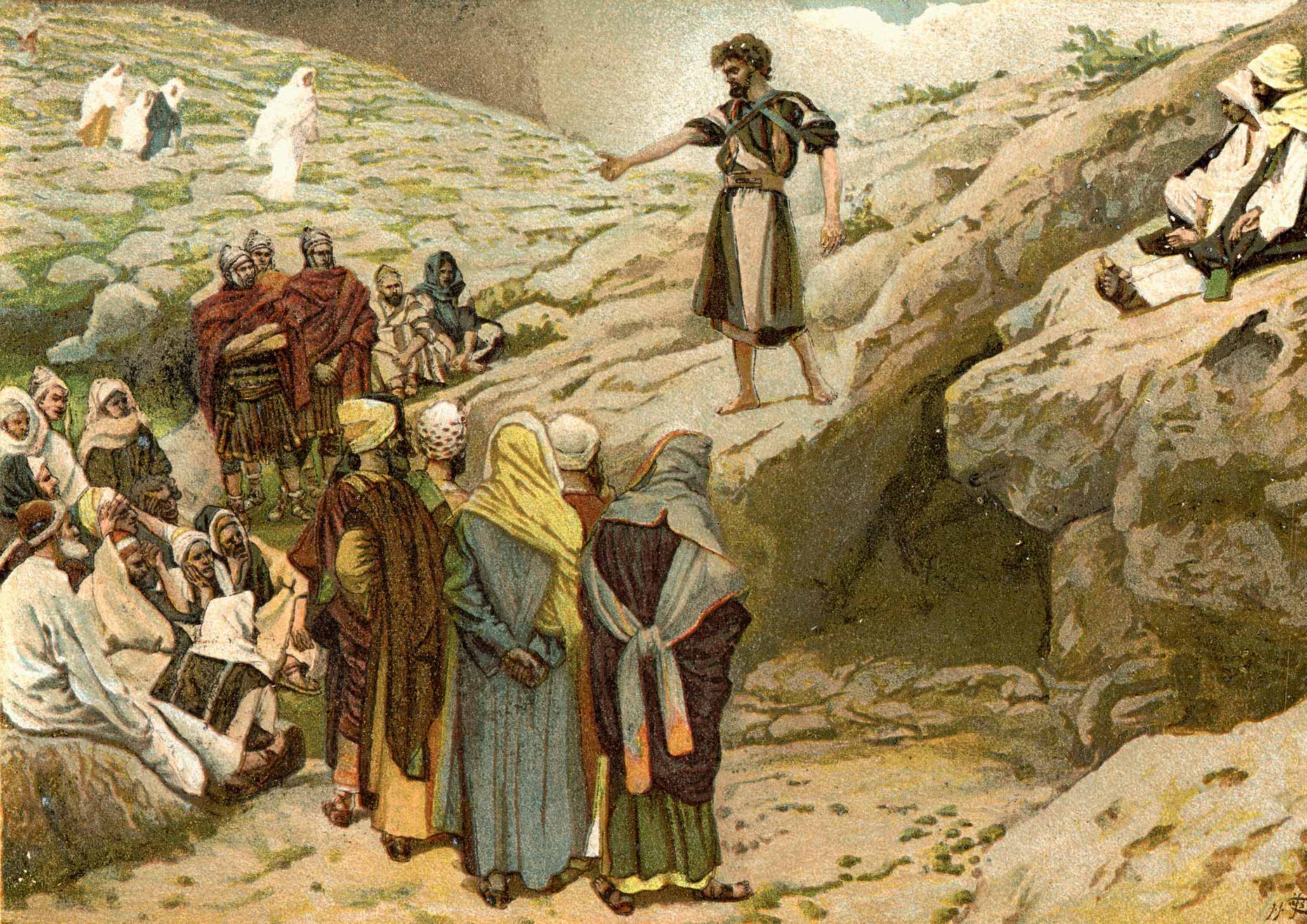
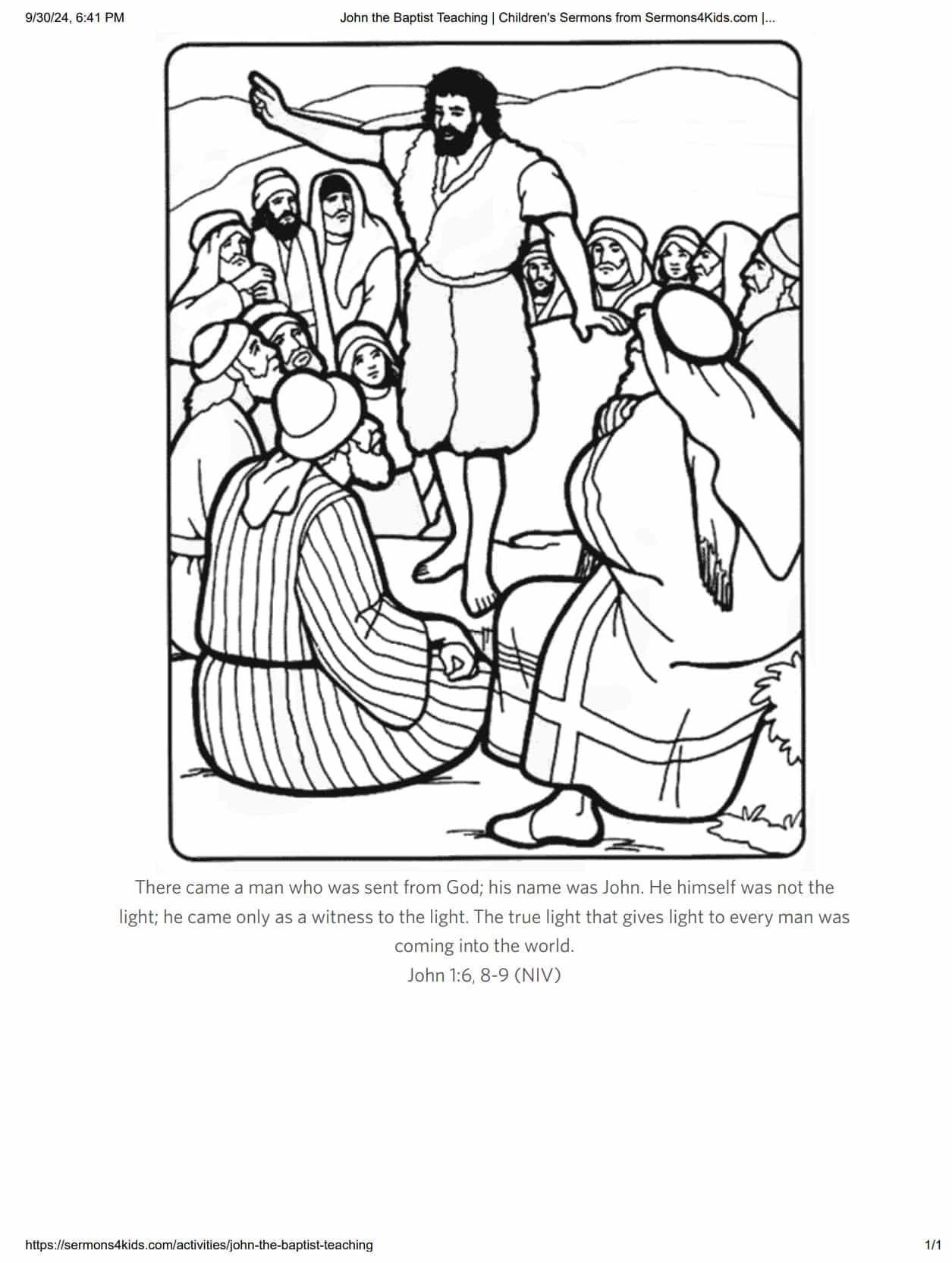
The Teachings of John the Baptist: Repentance, Ethics, and Messianic Preparation
The teaching of John the Baptist centered on an urgent call to radical repentance (metanoia), moral integrity, and immediate preparation for God's coming kingdom. Operating in the Judean wilderness, John administered a baptism of repen...
The teaching of John the Baptist centered on an urgent call to radical repentance (metanoia), moral integrity, and immediate preparation for God's coming kingdom. Operating in the Judean wilderness, John administered a baptism of repentance for the forgiveness of sins, preached concrete social ethics, and declared the imminent arrival of a greater Messianic figure who would baptize with the Holy Spirit and fire.
Contents
The Core Message: Radical Repentance and Imminent Judgment
At the heart of John the Baptist's proclaimed message was a severe, uncompromising call to personal and collective transformation. Unlike the established religious parties of first-century Judea, who often emphasized ritual purity or political liberation, John positioned himself in the tradition of classical Hebrew prophets such as Elijah and Isaiah. His core mandate was to awaken a sleeping nation to its moral accountability before God.
- John the Baptist's Core Message
- Radical Repentance (Metanoia of Heart)
- Practical Ethics (Justice & Generosity)
- Messianic Announcement (Baptism of Spirit & Fire)
Defining Metanoia: Beyond Emotional Remorse
In the Greek text of the New Testament, the word translated as "repentance" is metanoia (μετάνοia). In contemporary speech, repentance is frequently reduced to feeling sorry for wrongdoing. However, in John’s teaching, metanoia denoted a fundamental reorientation of the mind, will, and lifestyle. It required a complete reversal of direction—turning away from self-centered sin and realigning one's entire existence with God’s covenantal commands.
John insisted that repentance could not remain a mere internal disposition or ritual pretense. In Luke 3:8, he demanded that his hearers "produce fruit in keeping with repentance." Genuine turning to God, according to John, must yield observable changes in behavior, relational honesty, and financial fairness.
The Urgency of Divine Judgment
John’s call to repentance was driven by an acute sense of divine urgency. He warned that God’s judgment was not a distant, theoretical event, but an impending reality. Using vivid agrarian imagery common to rural Judea, John warned:
"The ax is already at the root of the trees, and every tree that does not produce good fruit will be cut down and thrown into the fire." (Matthew 3:10)
This metaphor signified that judgment was already set in motion. The tree represented the covenant community or individual believers, while the ax at the root indicated that no second chances remained for those who delayed their moral reformation.
Confronting Religious Complacency
A key target of John's critiques was religious presumption based on heritage. Many of his contemporaries believed that membership in the covenant line of Abraham conferred automatic immunity from God’s wrath. John explicitly refuted this nationalistic assurance:
- Rejection of Presumed Privilege: John declared, "Do not think you can say to yourselves, 'We have Abraham as our father.' I tell you that out of these stones God can raise up children for Abraham" (Matthew 3:9).
- Individual Accountability: Covenant identity provided no shield against unrighteousness; each person was personally evaluated based on their moral fruitfulness.
- Universal Scope: Both privileged religious leaders (such as Pharisees and Sadducees) and marginalized social outcasts were held to the exact same standard of divine righteousness.
Practical Ethics: Social Justice and Daily Integrity
While John’s message carried severe apocalyptic warnings, his actual instructions to those seeking guidance were practical, moderate, and focused on social ethics. Luke 3:10–14 records specific inquiries from various social groups asking, "What should we do then?" John's answers reveal a profound concern for economic justice and the responsible exercise of authority.
| Targeted Group | Specific Command | Ethical Principle Preserved |
|---|---|---|
| General Public | "Anyone who has two shirts should share with the one who has none, and anyone who has food should do the same." | Radical generosity and relief of neighborly poverty. |
| Tax Collectors (Publicani) | "Don't collect any more than you are required to." | Honesty, rejection of extortion, and systemic fairness. |
| Soldiers / Security Forces | "Don't extort money and don't accuse people falsely—be content with your pay." | Prevention of physical abuse, false accusations, and economic coercion. |
Directives for the General Population
To the general crowd, John advocated direct mutual assistance. Rather than demanding that everyone sell all possessions or enter a monastic community, he commanded basic compassion: those with surplus clothing or food were obligated to share directly with those in absolute lack. This reflected the ethical requirements found in Isaiah 58 and Deuteronomy 15, grounding covenant loyalty in active neighborly care.
Directives for Tax Collectors
Tax collectors (publicani) in Roman Judea were widely despised, often viewed as traitors who enriched themselves by bidding for tax-collection rights and extracting excessive payments from local populations. Remarkably, John did not tell tax collectors to resign their occupations. Instead, he commanded them to act with strict financial integrity within their professional roles, taking only the designated rate and eliminating predatory surplus charges.
Directives for Soldiers
Similarly, when Roman or Herodians security personnel asked how to live out repentance, John did not command them to desert. He prohibited common military abuses of power: physical intimidation (extortion), filing fraudulent legal complaints to seize property (false accusation), and mutinous discontent regarding compensation. John demanded that institutional power be exercised under moral restraint.
The Theological Meaning of John’s Baptism
The ritual mark of John’s movement was immersion in the Jordan River, an act so central to his public identity that history remembers him as "the Baptist" or "the Immerser." Understanding his baptism requires examining how it differed from existing Jewish purification practices.
- Jewish Mikveh vs. John's Baptism
- Jewish Mikveh
- Repeated self-washing
- Removal of ritual uncleanness
- Self-administered immersion
- Prerequisite for temple entrance
- John's Baptism
- One-time initiation
- Removal of moral guilt
- Prophetically administered
- Preparation for Messiah
- Jewish Mikveh
Ritual Washings vs. Moral Transformation
In first-century Judaism, ritual ablutions were common. The Levitical law mandated washing for ceremonial uncleanness (tum'ah), and communities like the Essenes at Qumran practiced daily self-administered immersion in step-in pools called mikva'ot. However, John’s baptism differed fundamentally in three ways:
- Moral vs. Ritual Focus: Standard mikveh immersions removed ritual impurity contracted through bodily fluids or contact with the dead. John’s baptism was explicitly "a baptism of repentance for the forgiveness of sins" (Mark 1:4), addressing moral guilt and spiritual alienation from God.
- Administered Character: Traditional Jewish ritual washings were self-administered. John physically baptized candidates, acting as an authorized agent who initiated individuals into a reformed covenant remnant.
- Unrepeatable Act: Unlike daily or frequent ceremonial washings, John’s baptism was a decisive, one-time commitment marking a person's life transition in view of the coming Messianic era.
Historical Context: The Qumran Connection
Modern scholars often compare John the Baptist’s ministry to the Essene community at Qumran, authors of the Dead Sea Scrolls. Both movements operated in the Judean desert, held strong apocalyptic worldviews, cited Isaiah 40:3 ("A voice of one calling in the wilderness, 'Prepare the way for the Lord'"), and practiced water immersions.
However, significant differences separate John from the Qumran sect:
- Accessibility: Qumran was an isolated, highly exclusive monastic community that required multi-year novitiate periods. John preached openly to all Israelites, including tax collectors, sinners, and soldiers.
- Social Engagement: Qumran withdrew from society to maintain strict purity; John remained accessible near public travel routes along the Jordan River, directing followers back into their communities to live righteously.
- Theological Scope: While Qumran focused heavily on meticulous law observance and sectarian isolation, John preached widespread moral reform, social mercy, and universal judgment.
Herald of the Messiah: Preparing the Way for Jesus
John never claimed to be the final figure of redemptive history. Across all four New Testament Gospels, his self-understanding is defined entirely by his subordinate role relative to the coming Messiah.
The Greater One to Come
John consistently directed his followers' focus away from himself and toward an imminent, vastly superior figure:
"After me comes one more powerful than I, the straps of whose sandals I am not worthy to stoop down and untie. I baptize you with water, but he will baptize you with the Holy Spirit." (Mark 1:7–8)
In ancient Near Eastern culture, untying a master's sandal was considered a menial task reserved for slaves. By declaring himself unworthy to perform this task for the Coming One, John highlighted the absolute majesty of the Messiah.
- John's Baptism (Preacher: John)
- Element: Physical Water
- Effect: Symbol of Repentance
- Scope: Preparatory Mark
- Messianic Baptism (Preacher: Messiah)
- Element: Holy Spirit & Fire
- Effect: Internal Regeneration & Judgment
- Scope: Ultimate Transformation
The Dual Baptism of Spirit and Fire
Matthew 3:11 and Luke 3:16 expand John’s statement: the Messiah would baptize "with the Holy Spirit and fire." In biblical prophecy, this dual imagery conveys two related aspects of Messianic ministry:
- Baptism of the Spirit: The pouring out of God's divine presence to cleanse, renew, and indwell believers, fulfilling Old Testament promises such as Ezekiel 36:26–27 and Joel 2:28–29.
- Baptism of Fire: The consuming work of divine judgment that purges wickedness and purifies God's people.
John illustrated this with the metaphor of the winnowing fork: the Messiah would toss threshed grain into the air, gathering the heavy wheat into his barn while the weightless chaff was burned with unquenchable fire (Matthew 3:12).
"The Lamb of God" in Johannine Theology
The Gospel of John emphasizes John the Baptist's testimony regarding the identity of Jesus. Upon seeing Jesus, John declared:
"Look, the Lamb of God, who takes away the sin of the world!" (John 1:29)
This announcement combined several major Hebrew Bible streams: the Passover lamb whose blood brought redemption from death, the sacrificial lambs of the temple daily offerings, and the suffering Servant of Isaiah 53, who was led like a lamb to the slaughter to bear the sins of many.
Comparative Overview: John’s Teachings vs. First-Century Jewish Groups
To appreciate the distinctiveness of John’s message, it is helpful to compare his teachings with the primary religious and political factions active in Judea during the early first century.
| Feature / Movement | John the Baptist | Pharisees | Sadducees | Essenes (Qumran) |
|---|---|---|---|---|
| Primary Focus | Radical repentance, moral ethics, Messianic preparation | Oral Law compliance, personal and ritual holiness | Temple worship, aristocratic control, political stability | Sectarian isolation, strict ritual purity, cosmic warfare |
| View of Baptism / Immersion | Single, prophetically administered baptism for moral repentance | Ritual washings for ceremonial uncleanness | Traditional temple-based ablutions only | Repeated daily self-immersions for community purity |
| View of Covenant Lineage | Rejected as defense against judgment; moral fruits required | Valued, but stressed active Torah observance | Stressed priestly lineage and aristocratic status | Rejected broader Israel; viewed themselves as the only true remnant |
| Eschatological Outlook | Imminent judgment and arrival of the Messiah | Awaited resurrection and Messianic deliverance | Rejected resurrection and apocalyptic messianism | Dualistic expectation of priestly and kingly Messiahs |
| Social Setting | Wilderness open to all social classes | Urban and village synagogue networks | Jerusalem Temple elite | Isolated monastic settlements (e.g., Dead Sea) |
Historical Evidence: Gospel Accounts and Flavius Josephus
The historical existence and core teaching of John the Baptist are documented both within the New Testament canon and in non-Christian secular historical sources.
The New Testament Record
The four Gospels (Matthew, Mark, Luke, John) present unified testimony on John’s role as the herald of Jesus, while reflecting distinct narrative emphases:
- Matthew: Highlights John's confrontation with the Pharisees and Sadducees, emphasizing the kingdom of heaven and apocalyptic judgment.
- Mark: Emphasizes John as the fulfillment of Isaiah’s prophecy ("the voice of one crying in the wilderness") and focuses on his baptism of Jesus.
- Luke: Details John’s miraculous birth, provides explicit moral teachings for specific social groups, and records his arrest by Herod Antipas.
- John: Focuses on John’s formal legal witness to Jesus as the Son of God and the Lamb of God, highlighting his humility ("He must become greater; I must become less").
The Testimony of Flavius Josephus
The first-century Jewish historian Flavius Josephus provides significant independent confirmation of John the Baptist in his major work, Antiquities of the Jews (Book 18, Chapter 5, Paragraph 2). Writing in the late first century, Josephus confirms key details of John’s life and teaching:
"Now some of the Jews thought that the destruction of Herod’s army came from God, and that very justly, as a punishment of what he did against John, that was called the Baptist; for Herod slew him, who was a good man, and commanded the Jews to exercise virtue, both as to righteousness towards one another, and piety towards God, and so to come to baptism..."
Josephus’s account confirms several major facts:
- Title and Repute: John was widely known by the surname "the Baptist" (Ioannes ho baptistes) and was recognized as a righteous leader.
- Core Ethic: Josephus summarizes John's message as demanding "righteousness towards one another" (social ethics) and "piety towards God" (spiritual devotion).
- Nature of Baptism: Josephus notes that John taught baptism was acceptable to God only when the soul was already thoroughly purified by righteousness beforehand, confirming that John rejected baptism as a magical or automatic ritual.
- Execution by Herod Antipas: Josephus records that Herod imprisoned and executed John at the fortress of Machaerus because Herod feared John's vast public influence might spark a political uprising.
Influence of John’s Disciples in the Early Church
John the Baptist’s ministry created an enduring movement that extended beyond his own lifetime and execution. Even after his death, communities of John’s disciples continued to operate throughout the Mediterranean world.
Continuation in the Book of Acts
The New Testament Book of Acts reveals that John’s teachings were spread across the Roman Empire by his followers:
- Apollos at Ephesus: In Acts 18:24–26, an eloquent Jewish scholar named Apollos arrived in Ephesus preaching boldly about Jesus, though "he knew only the baptism of John." Aquila and Priscilla subsequently mentored him to provide a complete understanding of Christian theology.
- Disciples at Ephesus: In Acts 19:1–7, the Apostle Paul encountered about twelve men in Ephesus who had received only "John’s baptism." Paul explained that John’s baptism was designed to point people toward Jesus. Upon hearing this, they were baptized in the name of the Lord Jesus and received the Holy Spirit.
Historical Legacy
John's emphasis on moral repentance, symbolic water immersion, and expectation of the Holy Spirit laid direct foundational groundwork for Christian baptism and early church doctrine. Historically, John stands as the decisive bridge between the Old Testament prophetic tradition and the New Testament church era.
Frequently Asked Questions
What was the main point of John the Baptist's teaching?
The central point of John the Baptist's teaching was an urgent call to radical repentance (metanoia) and moral living in preparation for God's coming kingdom. He proclaimed that divine judgment was imminent and that individuals must demonstrate genuine repentance through ethical actions, social generosity, and public baptism.
How did John the Baptist's baptism differ from Christian baptism?
John’s baptism was a preparatory act focusing on repentance for sins and anticipating the coming Messiah. Christian baptism, instituted after Jesus's resurrection, is administered in the name of the Father, Son, and Holy Spirit, symbolizing a believer's union with Christ's death, burial, and resurrection, accompanied by the indwelling of the Holy Spirit.
Why did John the Baptist criticize the Pharisees and Sadducees?
John criticized these religious leaders because they relied on their ancestral heritage as descendants of Abraham rather than demonstrating genuine moral reform. He called them a "brood of vipers" and warned that spiritual privilege would not protect them from divine judgment if they failed to produce good ethical fruit.
What practical moral guidance did John give to ordinary workers?
John commanded ordinary people to share surplus food and clothing with the poor. He instructed tax collectors to collect only authorized amounts, eliminating extortion. He commanded soldiers not to extort money through violence or false charges and to be content with their pay.
Is John the Baptist mentioned in non-biblical historical sources?
Yes. The Jewish historian Flavius Josephus mentions John the Baptist in Antiquities of the Jews (Book 18). Josephus describes John as a good man who taught virtue, piety, and baptism, and records that Herod Antipas executed him at Machaerus out of fear of his public influence.
Next Steps for Further Study
To gain a deeper academic and theological understanding of John the Baptist’s teachings, consider the following research avenues:
- Examine Gospel Textual Comparisons: Read Matthew 3, Mark 1, Luke 3, and John 1 side-by-side to analyze how each Gospel writer highlights different facets of John’s message and his relationship to Jesus.
- Explore Primary Historical Sources: Read Book 18, Chapter 5 of Flavius Josephus's Antiquities of the Jews to understand how first-century secular historians evaluated John’s political impact and execution by Herod Antipas.
- Investigate Second Temple Jewish Backgrounds: Study archaeological and textual findings from Qumran and the Dead Sea Scrolls to compare John's wilderness movement with contemporary Jewish ascetic sects.
Image Gallery