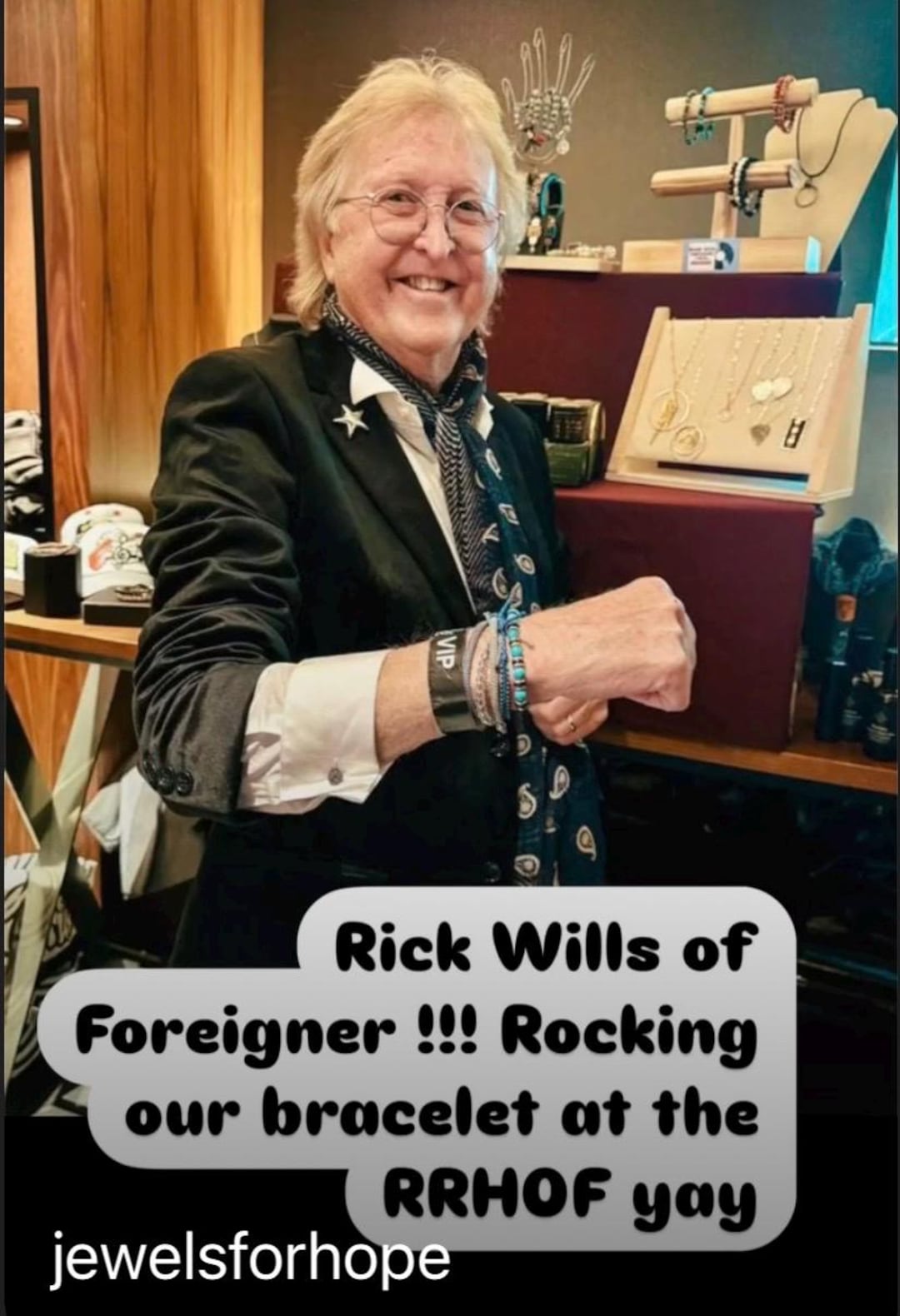
Rick Wills: The Evolution from Classic Rock Bassist to Touring Legend
Rick Wills is a definitive pillar of classic rock history, having served as the rhythmic backbone for multi-platinum acts including Foreigner, Peter Frampton, and Bad Company. His career spans over six decades, evolving from the 1960s...
Rick Wills is a definitive pillar of classic rock history, having served as the rhythmic backbone for multi-platinum acts including Foreigner, Peter Frampton, and Bad Company. His career spans over six decades, evolving from the 1960s Cambridge scene to becoming one of the most sought-after "touring legends" in the industry. As of 2026, Wills remains a celebrated figure whose precision and "pocket-focused" playing style defined the sound of arena rock.
Contents
The Foundation: Cambridge and Early Collaborations
Before achieving global stardom, Rick Wills was a fundamental part of the vibrant UK music scene in the mid-1960s. Growing up in Cambridge, he was a member of Jokers Wild, a band that is now legendary among rock historians primarily because it also featured future Pink Floyd guitarist David Gilmour. This early period was crucial for Wills; it was here that he developed the disciplined, supportive playing style that would become his trademark.
Jokers Wild specialized in harmonies and tight arrangements, covering R&B and soul hits. This training meant that Wills was never just a "loud" rock bassist. He understood the nuances of groove and the importance of vocal-centric arrangements. When the band dissolved in the late 60s, Wills transitioned into session work and short-lived projects, including stints with Cochise and a brief tenure in the final iteration of the Small Faces during their mid-70s reunion.
These early experiences served as a masterclass in versatility. By the time the 1970s began to roar, Wills was no longer just a local musician; he was a professional ready for the demands of international touring and high-stakes studio sessions.
The Breakthrough: Peter Frampton and the "Alive" Era
Rick Wills’ transition into a household name began in earnest when he joined Peter Frampton’s band. Wills was recruited for the album Frampton's Camel (1973) and continued through the most successful period of Frampton’s career. His contribution to the 1976 landmark album Frampton Comes Alive! cannot be overstated.
While Peter Frampton’s "talk box" guitar effects and soaring vocals captured the headlines, the rhythm section of Rick Wills and drummer Bob Mayo provided the rock-solid foundation that allowed Frampton to improvise. Frampton Comes Alive! became one of the best-selling live albums of all time, and Wills found himself at the center of a cultural phenomenon.
During this era, Wills demonstrated his ability to maintain a consistent "pocket" while performing in massive stadiums. This period established his reputation as a "touring legend"—a musician who could not only handle the technical requirements of complex rock arrangements but also the grueling physical and mental demands of world tours that lasted years.
The Foreigner Years: Defining the Arena Rock Sound
In 1979, Rick Wills made a career-defining move by joining Foreigner, replacing original bassist Ed Gagliardi. He debuted on the album Head Games, but it was the 1981 release of 4 that cemented his status in rock history. Working with producer Mutt Lange, Wills played a vital role in creating one of the most polished and successful rock albums ever recorded.
Wills stayed with Foreigner for 14 years, the longest tenure of any bassist in the band’s history. His work during the 1980s helped the band bridge the gap between hard rock and pop-sensible ballads. Key characteristics of his Foreigner tenure included:
- Rhythmic Precision: On tracks like "Urgent," Wills’ bass line is the driving force that anchors the syncopated rhythm.
- Vocal Support: Wills provided essential backing vocals, contributing to the "wall of sound" harmonies that defined Foreigner’s choruses.
- Adaptability: He transitioned seamlessly from the heavy riffs of "Juke Box Hero" to the synth-driven melodicism of "I Want to Know What Love Is."
His departure from Foreigner in 1991 marked the end of an era, but it did not signal the end of his career. Instead, it allowed him to explore new creative avenues with other legendary acts.
Bad Company and Continued Legacy
In 1992, Wills joined Bad Company, following the departure of Boz Burrell. He remained with the band until 1999, touring extensively and contributing to the album Company of Strangers. This period reinforced his reputation as the "go-to" bassist for classic rock bands needing a veteran presence who could honor original parts while bringing a fresh, professional energy to the stage.
Throughout the 2000s and 2010s, Wills remained active, collaborating with Kenney Jones (of The Who and Small Faces) in The Jones Gang and frequently appearing as a special guest for Foreigner reunion shows. His induction into the Rock & Roll Hall of Fame as a member of Foreigner in 2024 served as the ultimate validation of his contributions to the genre.
Key Milestones in the Career of Rick Wills
| Era/Band | Notable Album(s) | Role & Impact |
|---|---|---|
| Jokers Wild (1964-1968) | Singles only | Early collaboration with David Gilmour; developed R&B sensibilities. |
| Peter Frampton (1973-1976) | Frampton Comes Alive! | Provided the foundation for the 1970s' biggest live album. |
| Roxy Music (1976) | Viva! Roxy Music | Briefly toured with the art-rock pioneers, showcasing versatility. |
| Foreigner (1979-1991) | 4, Agent Provocateur | Longest-serving bassist; defined the 80s arena rock bass sound. |
| Bad Company (1992-1999) | Company of Strangers | Maintained the legacy of the band during a transition period. |
| The Jones Gang (2000s) | Any Day Now | Collaborative project with Kenney Jones and Robert Hart. |
Technical Depth: The Style and Gear of a Legend
Rick Wills is often described by peers as a "musician’s musician." He never sought the limelight with flashy solos; instead, he focused on what the song required. His playing style is characterized by a heavy use of the "root-fifth" foundation, often played with a pick to achieve the sharp attack necessary to cut through loud guitar and keyboard mixes in an arena setting.
The "Less is More" Philosophy
Wills understood that in a band like Foreigner, the bass must lock in perfectly with the kick drum to create a powerful, unified sound. His lines are often deceptively simple but require immense rhythmic consistency. This "less is more" approach is what made him a legend on the touring circuit—producers and bandleaders knew they could count on him to never overplay.
Equipment Profile
Over the decades, Wills has been associated with several iconic pieces of gear that contributed to his signature tone:
- Fender Precision Bass: His primary instrument for most of his career. The "P-Bass" provided the mid-range punch required for classic rock.
- Music Man StingRay: Used frequently during the late 70s and early 80s for its active electronics and brighter tone.
- Ampeg SVT Amplification: The industry standard for touring bassists, providing the "growl" and volume needed for stadium performances.
Frequently Asked Questions
Which Foreigner songs feature Rick Wills’ most iconic bass lines?
Rick Wills is most prominent on the albums 4 and Agent Provocateur. His bass work on "Urgent" is perhaps his most recognizable, featuring a tight, funky syncopation. Other notable tracks include "Juke Box Hero," where his driving eighth notes provide the tension in the verses, and "Waiting for a Girl Like You," showcasing his ability to play with melodic restraint.
Was Rick Wills an original member of Foreigner?
No, Rick Wills joined Foreigner in 1979 for the Head Games album. He replaced the original bassist, Ed Gagliardi. However, Wills is considered the "definitive" bassist of the band by many fans due to his 14-year tenure during their peak commercial years.
What is Rick Wills' relationship with David Gilmour?
Rick Wills and David Gilmour were bandmates in the mid-1960s Cambridge band Jokers Wild. They remained friends throughout their careers. Wills even played on Gilmour’s self-titled solo debut album in 1978, further cementing their lifelong professional connection.
Is Rick Wills still performing in 2026?
As of 2026, Rick Wills has largely stepped back from full-time global touring, though he continues to make occasional "legend" appearances at major festivals and charity events. He remains an active participant in the legacy of Foreigner, often appearing for special anniversary performances or Hall of Fame related events.
Why is Rick Wills called a "touring legend"?
The title stems from his ability to seamlessly integrate into established, high-pressure environments. Whether stepping into Peter Frampton’s band at the height of "Frampton-mania" or replacing founding members in Foreigner and Bad Company, Wills proved that a professional bassist is defined by reliability, technical precision, and the ability to enhance the band's existing chemistry.
Final Recommendation for Fans and Aspiring Bassists
For those looking to understand the mechanics of stadium rock, studying Rick Wills is essential. His career serves as a roadmap for how to sustain a long-term profession in the music industry: prioritize the song over the ego, master the "pocket," and build lasting professional relationships. Aspiring bassists should listen to the isolated bass tracks of Foreigner’s 4 to understand how Wills utilized space and timing to create a massive sound. To stay updated on his current legacy projects and archival releases, fans should follow the official Foreigner and Rock & Roll Hall of Fame portals.
Image Gallery