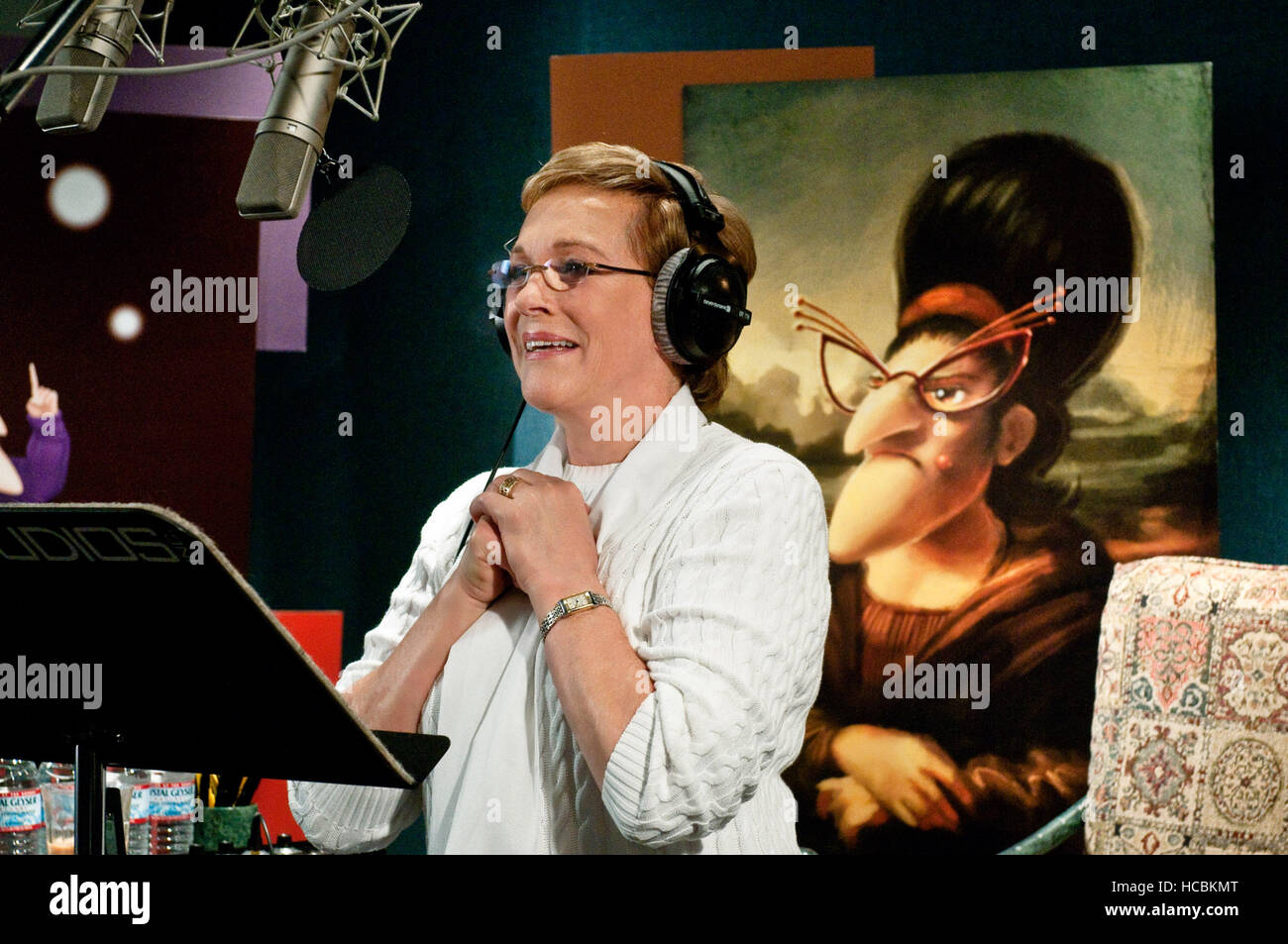
Julie Andrews in Despicable Me: A Voice Cameo That Divides Fans
In the Despicable Me franchise, legendary actress Julie Andrews provides the voice for Marlena Gru, the cold and frequently unimpressed mother of the protagonist, Gru. While her performance is praised by many for its comedic subversion...
In the Despicable Me franchise, legendary actress Julie Andrews provides the voice for Marlena Gru, the cold and frequently unimpressed mother of the protagonist, Gru. While her performance is praised by many for its comedic subversion of her "nanny" persona, it remains divisive among fans who either find the character’s cruelty jarring or feel Andrews' immense talents are underutilized in a relatively minor supporting role.
Contents
As we look back from the perspective of 2026, the Despicable Me cinematic universe has grown into one of the highest-grossing animation franchises in history. Central to its success is a stellar voice cast that balances high-energy comedic actors with Hollywood royalty. Dame Julie Andrews, known globally for her iconic roles in Mary Poppins and The Sound of Music, joined the franchise in 2010. Her portrayal of Marlena Gru was a sharp departure from the warmth and grace typically associated with her career, sparking a debate that persists more than fifteen years after her debut in the series.
The Identity of Marlena Gru: Julie Andrews’ Unexpected Pivot
Marlena Gru is not the nurturing figure one might expect from a character voiced by Julie Andrews. She is a woman of few words, most of which are aimed at deflating her son's ego. From Gru’s childhood aspirations of going to the moon—which she dismisses with a flat "Eh"—to her lack of interest in his villainous gadgets, Marlena serves as the primary psychological catalyst for Gru’s desperate need for validation.
For many viewers, this casting was a masterstroke of "stunt casting" that actually worked. By hiring the world’s most famous cinematic mother figure to play a character who is essentially the "Anti-Mary Poppins," Illumination Entertainment created a layer of meta-humor that resonated with adult audiences. However, this same irony is what created the initial rift in the fanbase. Some fans felt that hearing that distinct, elegant voice used to deliver such biting, dismissive lines was a bridge too far, while others celebrated the subversion of her typecast.
The Evolution of the Role
Throughout the franchise, Marlena’s role has fluctuated:
- Despicable Me (2010): Introduced as the catalyst for Gru's insecurities.
- Despicable Me 3 (2017): Revealed the family secret regarding Gru’s twin brother, Dru, adding a layer of complexity to her character's past.
- Minions: The Rise of Gru (2022): Showcased a younger Marlena, emphasizing her long-standing neglectful parenting style as a source of comedy.
Why the Role Divides the Fanbase
The division regarding Julie Andrews’ participation in the franchise generally falls into two camps: those who see it as a brilliant display of range and those who see it as a "waste" of a legend or a tonal mismatch.
The Argument for Brilliance: Subverting the Legend
Fans who champion Andrews' performance argue that the role allowed her to flex comedic muscles she rarely got to use in live-action cinema. By 2010, Andrews had already established herself as a voice-acting powerhouse (most notably as Queen Lillian in the Shrek sequels), but Marlena Gru was different.
Marlena is cynical, dry, and physically active in a way that creates a hilarious juxtaposition with Andrews' sophisticated vocal delivery. The "divisive" nature here is seen as a positive; the performance is meant to be uncomfortable because the character herself is an uncomfortable presence in Gru's life. Supporters argue that the nuance Andrews brings to Marlena—a slight softening in later films—proves that even in a "cameo-style" supporting role, her acting caliber elevates the material.
The Argument for Disappointment: Character Depth and Utilization
Conversely, a significant portion of the audience expresses disappointment. The critique often centers on the idea that Julie Andrews is "too big" for such a small, mean-spirited role. These fans argue that the character of Marlena Gru is one-dimensional and that any capable voice actress could have provided a "grumpy mother" voice without needing to involve an EGOT (Emmy, Grammy, Oscar, Tony) winner.
Furthermore, some fans of Andrews' classic work find the character's cruelty toward Gru—even in a slapstick, animated context—to be off-putting. For a generation that grew up with Maria von Trapp, seeing Andrews (even just her voice) play a mother who ignores her child’s achievements can feel like a betrayal of her brand. This tension between the "brand" of Julie Andrews and the "utility" of Marlena Gru is the core of the fan division.
Comparing Marlena Gru’s Appearances and Impact
To understand why fans are divided, it is helpful to look at how the character has been utilized across the main films. The following table highlights her role and the primary fan reaction to her involvement in each installment.
| Film Title | Year | Role Significance | Primary Character Interaction | Fan Consensus |
|---|---|---|---|---|
| Despicable Me | 2010 | Supporting / Flashback | Ignoring young Gru's moon plans | Shocked but amused by the "Anti-Poppins" vibe. |
| Despicable Me 3 | 2017 | Plot Catalyst | Explaining the divorce and Dru's existence | Mixed; some felt the backstory was forced. |
| Minions: The Rise of Gru | 2022 | Cameo / Supporting | Doing yoga while Gru is kidnapped | High praise for the comedic timing of her indifference. |
| Despicable Me 4 | 2024 | Brief Appearance | Interaction with Gru Jr. | Generally seen as a missed opportunity for more screen time. |
The Technical Execution of the Voice
One technical aspect that often goes overlooked in the debate is the vocal transformation Andrews underwent for the role. Unlike her role in Bridgerton (as the narrator Lady Whistledown), where she uses her natural, polished English accent, Andrews adopts a more ambiguous, slightly European-coded "villainous" lilt for Marlena Gru.
Vocal Range and Control
After a tragic throat surgery in 1997 that limited her singing ability, Andrews pivoted heavily into voice-over and speaking roles. Marlena Gru requires a lower register and a specific "deadpan" delivery that is difficult to master. The technical precision required to make a line like "Eh" funny rather than just flat is a testament to her training.
Critics of the role often argue that the voice is "unrecognizable" as Andrews, which they view as a negative. However, from a technical perspective, the ability of a world-famous actress to disappear into a character so completely that the audience forgets who is behind the microphone is the hallmark of elite voice acting.
Impact on the Despicable Me Brand
The presence of Julie Andrews provided the Despicable Me franchise with immediate "prestige" during its infancy. In 2010, Illumination Entertainment was a new player in the animation field, competing with giants like Pixar and DreamWorks. Securing a legend like Andrews signaled to the industry and audiences that this was a high-caliber production.
From a marketing standpoint, her involvement was a "hook." It created headlines and drew in an older demographic who might not have been interested in a movie about yellow minions. By 2026, we can see that this strategy of mixing "A-list" prestige with high-concept comedy became the blueprint for the entire Illumination business model.
Career Context: The Voice-Over Legacy of Julie Andrews
To fully appreciate the division over her Despicable Me role, one must look at it within the context of her broader voice-over career. Andrews has become the go-to choice for authoritative, maternal, or royal figures in modern cinema.
- Queen Lillian (Shrek): A more traditional, kind-hearted queen mother. This role is generally beloved and lacks the "divisive" nature of Marlena Gru.
- Karathen (Aquaman): A massive, ancient sea monster. This role proved she could do "epic" and "intimidating" without being "mean."
- Lady Whistledown (Bridgerton): Perhaps her most famous modern voice role, where she plays a witty, sharp-tongued narrator.
When compared to these roles, Marlena Gru stands out as her most "unlikable" character. This uniqueness is exactly why the performance divides fans. It is the outlier in a career defined by grace.
Frequently Asked Questions
Why did Julie Andrews take the role in Despicable Me?
Julie Andrews has stated in various interviews that she enjoys the freedom of voice acting and the opportunity to play characters that are different from her usual roles. The chance to play a "grumpy" character provided a comedic challenge that appealed to her after decades of playing more upright, "perfect" figures.
Is Julie Andrews in every Despicable Me movie?
No, she is not in every film. While she has appeared in Despicable Me, Despicable Me 3, and Minions: The Rise of Gru, she did not have a role in the original Minions (2015) and had a very limited, almost non-existent presence in Despicable Me 2.
Why do some fans think she is "wasted" in the role?
The "wasted" argument usually stems from the character's limited screen time. Fans of Andrews want to see her in roles that allow for more emotional depth or longer monologues, whereas Marlena Gru is often used for quick, "one-note" comedic beats.
Does she use her real accent as Marlena Gru?
She uses a modified version of her natural accent. While her distinctive clarity remains, she adds a certain sharpness and a slightly more "Eastern European" undertone to fit the aesthetic of Gru’s family heritage, which is distinct from her natural British RP (Received Pronunciation) accent.
Final Recommendation for Fans
If you are a fan of Julie Andrews, the best way to approach her performance in the Despicable Me franchise is to view it as a comedic exercise in irony. Rather than looking for the warmth of The Sound of Music, look for the expert comedic timing and the intentional subversion of her public image. For those who find the character divisive, it may help to revisit Despicable Me 3, which provides the most "human" look at Marlena, explaining that her hardened exterior is a result of a complicated past. Regardless of where you stand, there is no denying that Andrews’ involvement added a layer of sophisticated humor to a franchise that could have easily relied on Minion slapstick alone.
Image Gallery