The Definitive Guide to Salmon Internal Temperature and Doneness for 2026
To achieve the perfect balance of safety and flavor, salmon should be cooked to an internal temperature of 145°F (63°C) according to USDA safety standards. However, for optimal texture and moisture, many culinary experts recommend pull...
To achieve the perfect balance of safety and flavor, salmon should be cooked to an internal temperature of 145°F (63°C) according to USDA safety standards. However, for optimal texture and moisture, many culinary experts recommend pulling salmon off the heat at 125°F to 135°F, allowing carryover cooking to finish the process.
Contents
Understanding the Standard: USDA vs. Culinary Preference
When discussing salmon cooked temp, there is often a tension between regulatory safety guidelines and gastronomic quality. As of 2026, the United States Department of Agriculture (USDA) maintains its recommendation that all finfish, including salmon, reach an internal temperature of 145°F (63°C) measured at the thickest part of the fillet. This temperature is the benchmark for ensuring that any potential foodborne pathogens or parasites are destroyed, making the fish safe for all consumers, including high-risk groups like the elderly or pregnant women.
From a culinary perspective, however, 145°F is frequently regarded as "well-done" or even overcooked. At this temperature, the muscle fibers in the salmon contract tightly, squeezing out moisture and resulting in a firm, somewhat dry texture. High-end restaurants and seasoned home cooks often aim for lower temperatures to preserve the buttery, silken mouthfeel that characterizes premium salmon.
The "ideal" temperature often depends on the variety of salmon and the consumer's personal risk tolerance. If you are working with high-quality, previously frozen "sushi-grade" salmon, you may feel more comfortable aiming for the lower end of the temperature spectrum. If you are serving individuals with compromised immune systems, adhering strictly to the 145°F guideline is the most responsible course of action.
Salmon Temperature and Doneness Chart
The following table breaks down the various stages of salmon doneness, the corresponding temperatures, and the resulting physical characteristics of the fish.
| Doneness Level | Pull Temp (Off Heat) | Final Temp (After Rest) | Texture and Appearance |
|---|---|---|---|
| Rare | 110°F (43°C) | 115°F (46°C) | Translucent center, very soft, bright red/pink. |
| Medium-Rare | 120°F (49°C) | 125°F (52°C) | Partially translucent, succulent, flakes easily. |
| Medium | 130°F (54°C) | 135°F (57°C) | Opaque throughout, moist, firm but tender. |
| Medium-Well | 140°F (60°C) | 145°F (63°C) | Opaque, very firm, beginning to lose moisture. |
| Well-Done | 145°F+ (63°C+) | 150°F+ (66°C+) | Chalky texture, dry, significant albumin (white protein) leakage. |
The Science of Carryover Cooking
One of the most common mistakes in cooking salmon is ignoring carryover cooking. When you remove a piece of fish from a high-heat environment—such as a hot cast-iron skillet or a 400°F oven—the exterior of the fish is significantly hotter than the interior. This residual heat continues to travel inward even after the fish is removed from the heat source.
Typically, a salmon fillet will rise another 5°F to 8°F while resting. Therefore, if your goal is a final internal temperature of 135°F, you must "pull" the fish when the thermometer reads 127°F or 128°F. Failure to account for this leads to the common complaint that the fish was "perfect in the pan but dry on the plate." For thicker steaks or larger center-cut fillets, the carryover effect is more pronounced than in thin tail pieces.
Why Variety Matters: Wild vs. Farmed Salmon
In 2026, the distinction between wild-caught and farmed salmon remains a critical factor in determining the correct cooking temperature. These two categories of fish have different biological compositions, specifically regarding fat content and muscle structure.
Farmed Salmon (Atlantic Salmon)
Farmed salmon generally has a higher fat content and more intramuscular marbling. This extra fat acts as an insulator and a lubricant, making the fish more forgiving if overcooked. You can take farmed salmon to 135°F or 140°F, and it will likely remain relatively moist.
Wild Salmon (Sockeye, Coho, King)
Wild salmon, particularly Sockeye and Coho, are much leaner than their farmed counterparts. Because they have less fat, the proteins can bridge and toughen very quickly once they pass the 120°F mark. Sockeye is especially notorious for becoming "wood-like" if cooked to the full USDA 145°F. For wild varieties, many chefs insist on a medium-rare finish (125°F final temp) to maintain any semblance of moisture. King (Chinook) salmon is the exception among wild fish, as its high fat content allows it to be treated more like farmed salmon.
Essential Tools for Precision
To accurately monitor salmon cooked temp, a high-quality instant-read digital thermometer is non-negotiable. Traditional methods like "testing with a fork" or "checking the color" are subjective and often lead to overcooking.
When using a thermometer:
- Insert the probe into the thickest part of the fillet.
- Ensure you are not touching the pan or the heating element.
- If cooking a skin-on fillet, it is often easier to probe from the side or the top rather than through the tough skin.
- For thin fillets, insert the probe horizontally through the side to ensure the sensor (usually located in the last half-inch of the tip) is fully submerged in the protein.
Understanding Albumin: The White Substance
You may notice a white, gooey substance appearing on the surface of your salmon as it cooks. This is albumin, a protein that exists in the fish in liquid form when raw. As the muscle fibers contract during cooking, they squeeze the liquid albumin to the surface, where it coagulates and turns white.
While albumin is perfectly safe to eat, its presence in large quantities is a visual indicator that the fish is being cooked too fast or to too high a temperature. To minimize albumin:
- Brine the fish: A quick 10-minute soak in a basic salt-water brine can partially dissolve the muscle fibers on the exterior, preventing them from contracting as violently.
- Lower the heat: Gentle cooking methods like slow-roasting or poaching result in less albumin than high-heat searing.
- Don’t overcook: The higher the internal temperature, the more albumin will be forced out.
Cooking Methods and Temperature Nuances
The method you choose dictates how you should approach your target temperature.
Pan-Searing
In pan-searing, you are dealing with intense, direct heat. The goal is a crispy skin and a tender interior. Because the pan is so hot, carryover cooking is aggressive. Pull the fish 10 degrees before your target.
Oven Roasting
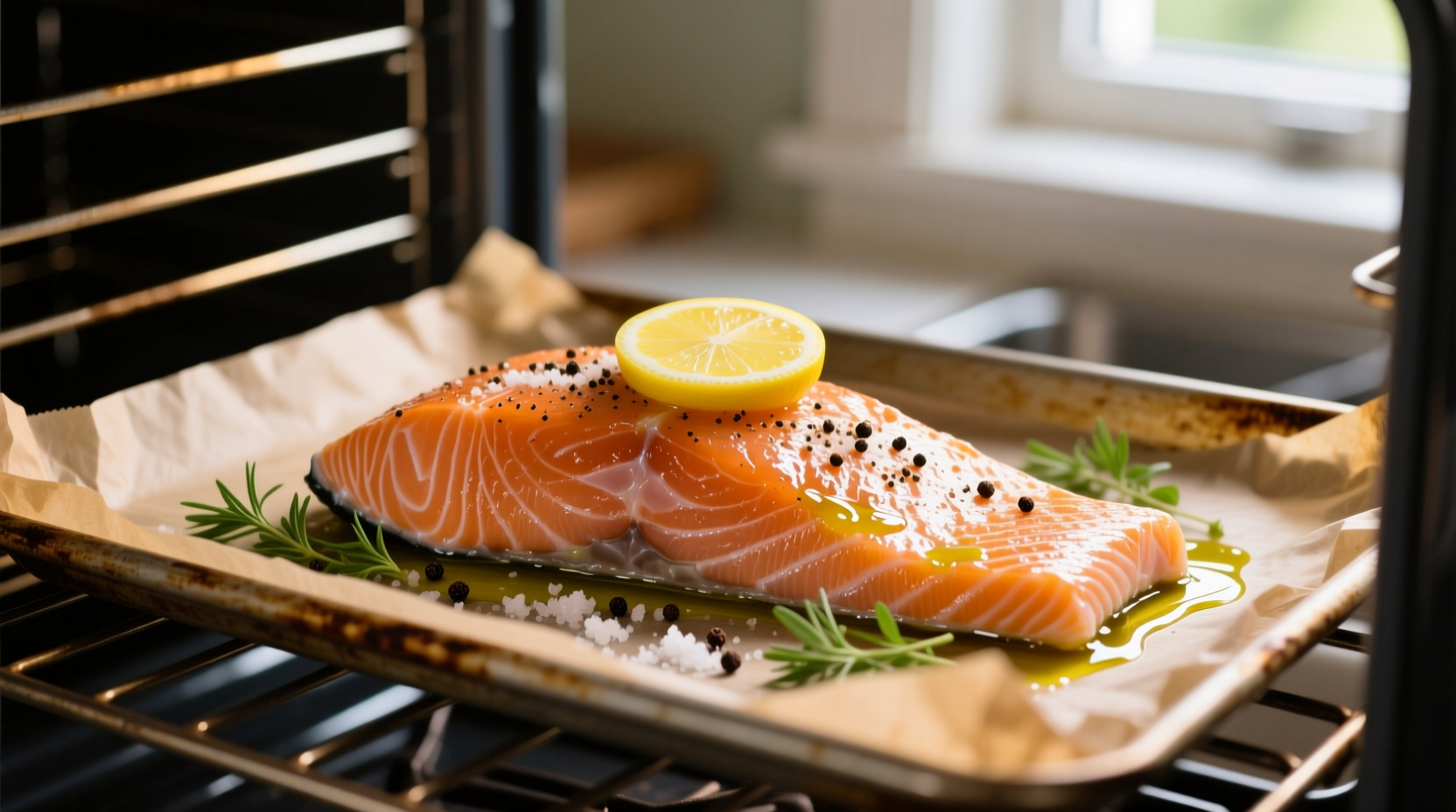
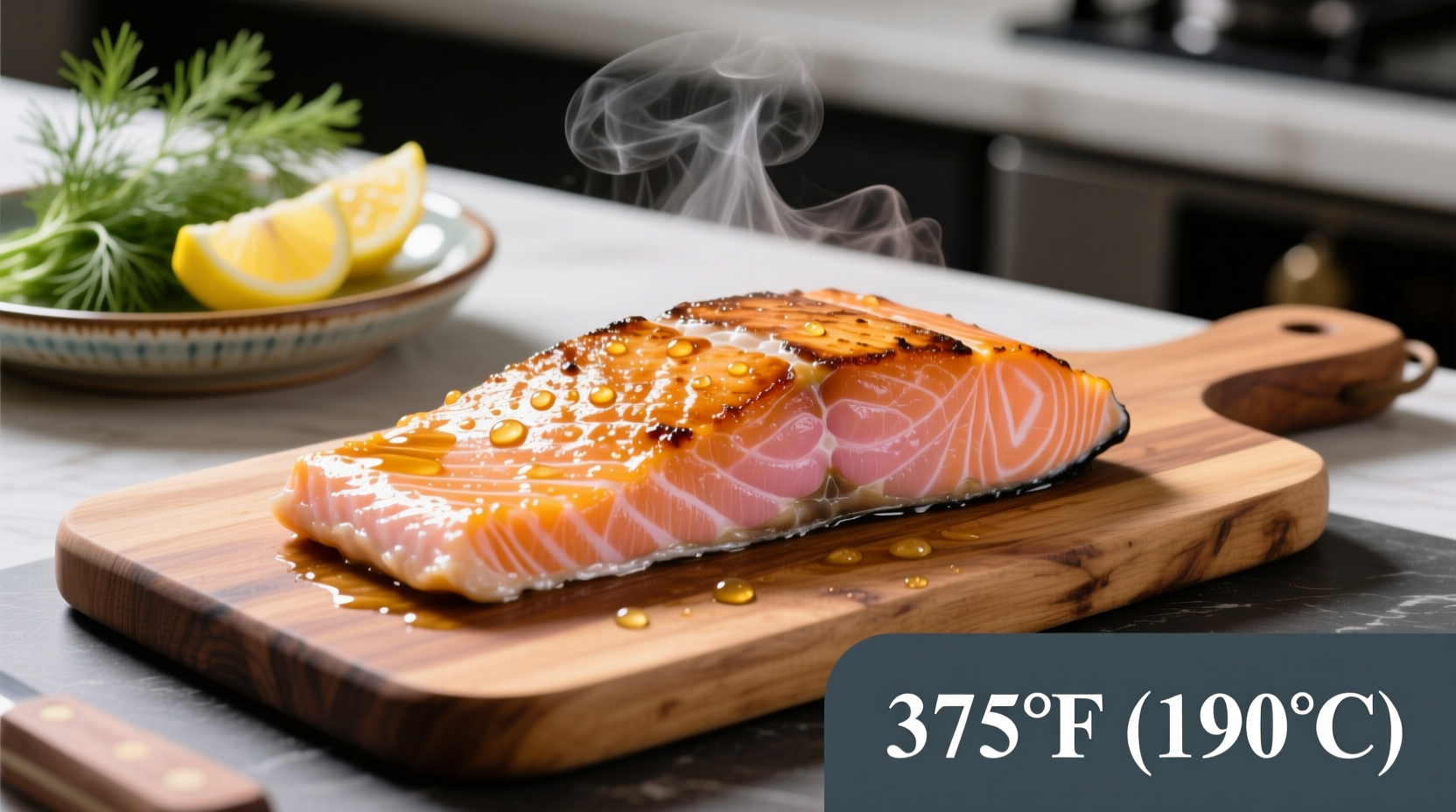
Oven roasting (usually at 375°F to 400°F) is more ambient. It is easier to track the temperature rise slowly. This is the preferred method for large "sides" of salmon intended for a crowd.
Sous Vide
Sous vide offers the ultimate control. Because the water bath is set to the exact final temperature you desire (e.g., 125°F), the fish can never overcook. It will reach 125°F and stay there, resulting in a unique, buttery texture that is impossible to achieve with traditional high-heat methods.
Air Frying
The air fryer is essentially a high-powered convection oven. It cooks salmon very rapidly. Because of the intense air circulation, the exterior can dry out before the interior reaches temp. It is vital to check the temperature early—usually around the 7- or 8-minute mark for a standard fillet.
Safety and Parasite Considerations
A primary reason for the USDA's 145°F recommendation is the risk of Anisakis parasites, which are naturally occurring in wild fish. While these parasites are killed by cooking to 145°F, they are also killed by professional-grade freezing.
Most salmon sold in US supermarkets has been "flash-frozen" at extremely low temperatures (-31°F or below) for a specific duration, which effectively destroys parasites. If you intend to cook your salmon to a "culinary" temperature of 125°F-130°F, ensure the fish was previously frozen according to FDA guidelines for raw consumption. Fresh, never-frozen wild salmon should ideally be cooked closer to the USDA standard for maximum safety.
Frequently Asked Questions
Is it safe to eat salmon if it’s still pink in the middle?
Yes, salmon is naturally pink or orange due to its diet (astaxanthin). "Pink in the middle" usually refers to translucency. If the salmon has reached 145°F, it may still look slightly different in the center than on the edges, but it is safe. If you prefer a medium-rare center (around 125°F), it is safe provided the fish was handled properly and previously frozen to kill parasites.
How can I tell if salmon is done without a thermometer?
While a thermometer is best, you can use the "flake test." Gently press down on the top of the fillet with a fork or your finger. If the flakes of the fish begin to separate along the white lines (fat layers), the fish is at least medium-rare. If the fish feels "squishy" and doesn't flake, it needs more time.
Why does my salmon feel tough?
Toughness is a direct result of overcooking. When the internal temperature exceeds 140°F, the proteins contract and the moisture is expelled. To avoid this, always use a thermometer and account for carryover cooking by pulling the fish off the heat earlier than you think.
Does the thickness of the fillet change the temperature?
The target temperature remains the same regardless of thickness, but the time required to reach that temperature changes significantly. A 1.5-inch thick King salmon fillet will take much longer to reach 130°F than a thin tail piece of Sockeye. Thicker fillets also experience more carryover cooking.
Final Recommendation
For the best results in 2026, aim for an internal "pull" temperature of 130°F (54°C) for farmed or King salmon, allowing it to rest until it hits 135°F. For leaner wild salmon like Sockeye, pull the fish at 120°F (49°C). Always use a digital instant-read thermometer to ensure you are meeting your specific goals for both safety and culinary enjoyment.
Image Gallery