What Are the Most Popular Hair Growth Products?
The most popular hair growth products include FDA-approved over-the-counter topicals like minoxidil, prescription oral medications such as finasteride and spironolactone, low-level laser therapy (LLLT) devices, and clinical-grade nutra...
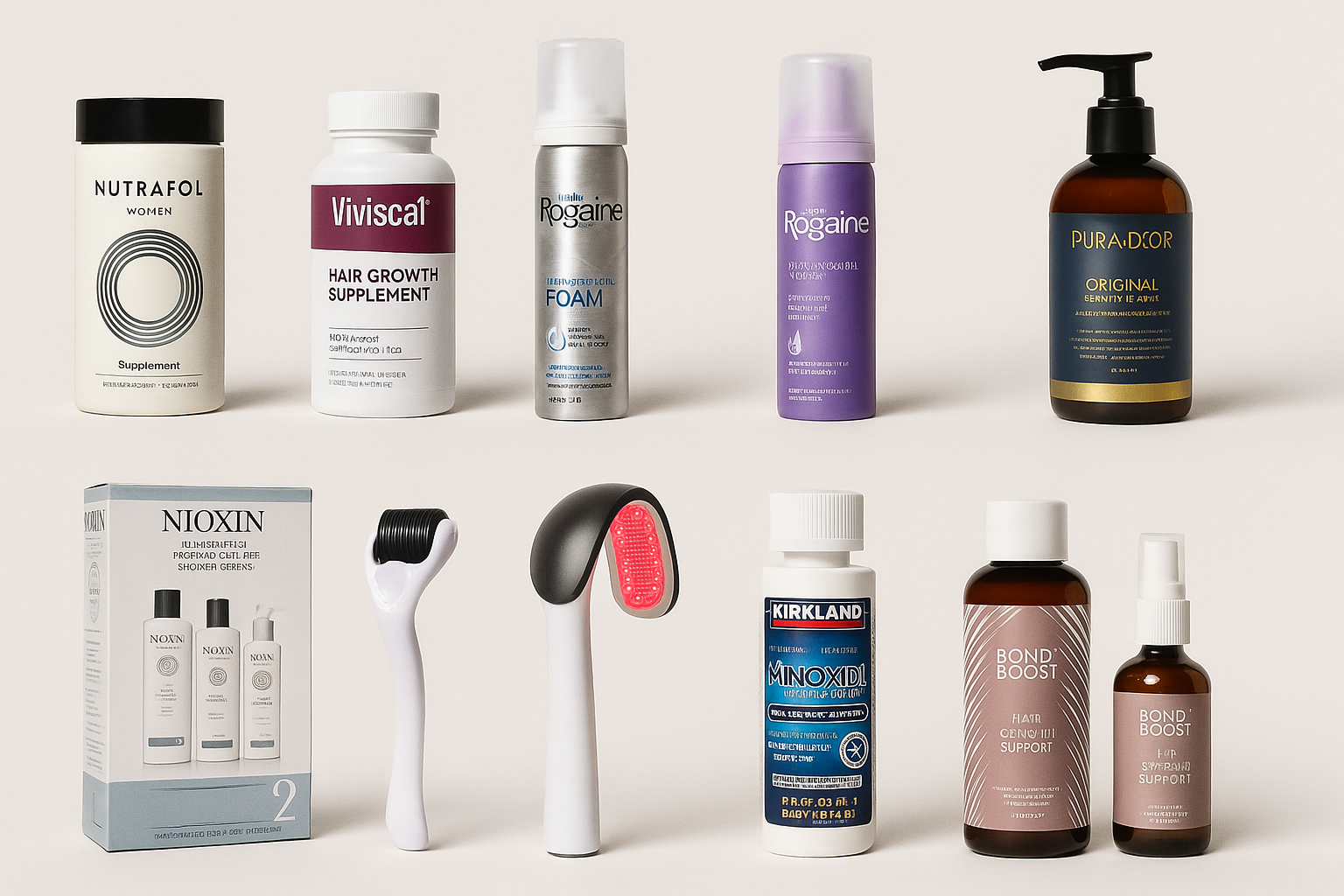
The most popular hair growth products include FDA-approved over-the-counter topicals like minoxidil, prescription oral medications such as finasteride and spironolactone, low-level laser therapy (LLLT) devices, and clinical-grade nutraceuticals like Nutrafol and Viviscal. Botanical oils, particularly rosemary oil, have also gained significant consumer traction as evidence-backed natural alternatives.
Contents
Understanding Hair Loss Causes Before Selecting a Product
Selecting an effective hair growth product requires understanding the underlying mechanism driving hair thinning or shedding. Hair loss is not a single medical condition; it manifests in several distinct forms, each responding differently to specific active ingredients and delivery mechanisms.
Androgenetic Alopecia (Pattern Hair Loss)
Androgenetic alopecia is the most common cause of hair loss in both men and women. Driven by genetics and hormonal sensitivity to dihydrotestosterone (DHT)—a byproduct of testosterone—this condition causes hair follicles to undergo progressive miniaturization. Over time, the growth phase (anagen) shortens, producing thinner, shorter hair shafts until the follicle stops producing visible hair entirely. Effective products for androgenetic alopecia generally focus on either inhibiting DHT production or stimulating follicle blood flow.
Telogen Effluvium (Reactive Shedding)
Telogen effluvium occurs when physical or emotional stress, nutritional deficiencies, major surgery, thyroid imbalances, or post-partum hormonal shifts push a large number of hair follicles prematurely into the resting phase (telogen). Months later, diffuse shedding occurs across the scalp. Unlike pattern baldness, telogen effluvium does not miniaturize follicles permanently. Treatment typically focuses on resolving underlying nutritional gaps, managing systemic health, and using scalp stimulants to encourage re-entry into the growth phase.
Alopecia Areata
Alopecia areata is an autoimmune condition in which the immune system mistakenly attacks hair follicles, leading to patchy, sudden hair loss. Over-the-counter cosmetic products and general supplements are usually ineffective for autoimmune hair loss, which requires dermatological intervention using immunomodulators, corticosteroids, or JAK inhibitors.
FDA-Approved Over-the-Counter Topicals: Minoxidil
Minoxidil remains the gold standard for over-the-counter hair growth solutions. Originally developed as an oral blood pressure medication, researchers observed hypertrichosis (excess hair growth) as a side effect, leading to its topical formulation for pattern hair loss.
Hair Growth Cycle Impact:
- Telogen / Resting Phase
- Minoxidil / Vasodilation
- Extended Anagen / Growth Phase
How Minoxidil Works
Minoxidil functions primarily as a potassium channel opener and vasodilator. While its exact molecular mechanism continues to be researched, topical minoxidil increases blood flow, oxygen, and nutrient delivery to miniaturized hair follicles. It forces resting follicles in the telogen phase to shed (often causing a temporary initial shedding period known as "minoxidil dread shed") and transition quickly into an extended active growth phase (anagen).
Formulations and Strengths
Topical minoxidil is available in two main concentrations:
- 5% Concentration: Available as a liquid solution or topical foam. Clinical studies consistently show that 5% minoxidil yields faster and more substantial hair regrowth than lower concentrations, making it the preferred standard for men and women with pattern thinning.
- 2% Concentration: Formulated primarily as a liquid solution, historically marketed for women to minimize the risk of facial hypertrichosis (unwanted facial hair growth). However, modern dermatological consensus frequently recommends 5% foam for women due to higher efficacy and lower local irritation from alcohol-free vehicle bases.
Usage and Long-Term Commitment
Minoxidil must be applied directly to a clean, dry scalp once or twice daily, depending on the product instructions and delivery form (foam or liquid solution). Results typically require four to six months of consistent daily application. Importantly, minoxidil is a disease-managing treatment rather than a permanent cure: discontinuing application causes newly sustained hair follicles to regress to their baseline state within three to six months.
Prescription Hair Loss Medications
For individuals experiencing moderate to advanced androgenetic alopecia, over-the-counter topicals may be combined with or replaced by systemic prescription medications that directly address the hormonal drivers of follicular miniaturization.
Finasteride (Oral and Topical)
Finasteride is a selective type II 5-alpha-reductase inhibitor. 5-alpha-reductase is the enzyme responsible for converting systemic testosterone into dihydrotestosterone (DHT), the primary androgen responsible for follicular damage in genetically susceptible individuals.
- Oral Finasteride (1 mg): Taken daily, oral finasteride reduces serum DHT levels by approximately 60% to 70%. Clinical trials demonstrate that it halts hair loss progression in over 80% of men and promotes measurable regrowth in a majority of users over a two-year period.
- Topical Finasteride: Developed to provide localized DHT suppression within the scalp while minimizing systemic absorption. Compounded topical finasteride solutions, often combined with minoxidil, offer an effective alternative for patients concerned about systemic side effects associated with oral administration.
Dutasteride
Dutasteride is a potent dual inhibitor of both type I and type II 5-alpha-reductase enzymes. It suppresses systemic DHT levels by more than 90%. While approved by the US FDA for benign prostatic hyperplasia (BPH), doctors frequently prescribe it off-label for men with aggressive pattern hair loss who do not respond adequately to finasteride.
Spironolactone and Oral Minoxidil for Women
Because finasteride and dutasteride are generally contraindicated for women of childbearing potential due to risk of fetal abnormalities, alternative prescription strategies are utilized:
- Spironolactone: An oral potassium-sparing diuretic with anti-androgenic properties. It blocks androgen receptors and slows down the production of hormones that exacerbate hair thinning in female pattern hair loss.
- Low-Dose Oral Minoxidil (LDOM): Prescribed off-label at sub-therapeutic cardiovascular doses (typically 0.25 mg to 2.5 mg daily). LDOM has gained widespread popularity among dermatologists for patients who experience contact dermatitis from topical minoxidil or fail to comply with daily topical scalp applications.
Popular Botanical Oils and Natural Alternatives
Driven by consumer interest in natural wellness, plant-derived hair care formulations have undergone rigorous scientific scrutiny to evaluate their efficacy relative to synthetic pharmaceuticals.
Rosemary Oil
Rosemary essential oil (Rosmarinus officinalis) has emerged as one of the most popular natural alternatives for hair thinning. A landmark clinical study published in 2015 compared rosemary oil directly against minoxidil 2% in subjects with androgenetic alopecia. After six months of daily use, both groups demonstrated a statistically significant increase in hair count, with the rosemary oil group reporting less scalp itching compared to the minoxidil 2% cohort.
To prevent contact dermatitis, pure essential rosemary oil must be diluted in a carrier oil (such as jojoba, argan, or pumpkin seed oil) at a 1–2% concentration before application to the scalp.
Pumpkin Seed Oil
Pumpkin seed oil acts as a natural 5-alpha-reductase inhibitor. Cold-pressed pumpkin seed oil supplements have demonstrated efficacy in double-blind, placebo-controlled trials, producing measurable increases in mean hair count in men with mild-to-moderate pattern baldness over 24 weeks.
Saw Palmetto (Serenoa repens)
Extracted from the berries of the saw palmetto plant, this botanical extract is a frequent component of natural hair loss oral supplements and topical serums. Like pumpkin seed oil, saw palmetto exhibits mild 5-alpha-reductase blocking properties, reducing local DHT binding at the follicular site.
Nutraceuticals and Oral Hair Supplements
Nutritional supplementation plays a vital role when hair thinning stems from dietary gaps, metabolic stress, or micronutrient malabsorption. Clinical-grade nutraceuticals combine multi-targeted ingredients to optimize the follicular microenvironment.
Multi-Ingredient Brands: Nutrafol and Viviscal
- Nutrafol: Formulated with standardized botanicals aimed at addressing stress, hormonal balance, and oxidation. Key active components include ashwagandha (to lower cortisol), saw palmetto (to target DHT), marine collagen, and curcumin. Peer-reviewed clinical trials support its ability to improve hair growth, density, and thickness in men and women experiencing stress-related or hormonal hair thinning.
- Viviscal: Grounded in a proprietary marine protein complex (AminoMar C™) derived from deep-sea marine species, combined with biotin, silica, and vitamin C. Clinical studies indicate that Viviscal promotes hair thickness and reduces daily shedding by delivering essential glycosaminoglycans and proteins required for hair shaft synthesis.
Critical Micronutrients for Hair Growth
Deficiencies in specific vitamins and minerals can impair the hair matrix cell division necessary for healthy growth:
| Micronutrient | Physiological Role in Hair Health | Key Biomarker Target |
|---|---|---|
| Ferritin (Iron Stores) | Required for hemoglobin production and cellular oxygenation of the hair bulb. | Target serum ferritin above 50 ng/mL |
| Vitamin D3 | Regulates keratinocyte differentiation and initiates new hair follicle cycling. | Target serum 25(OH)D above 30–50 ng/mL |
| Zinc | Essential enzyme cofactor for protein synthesis and DNA repair within hair cells. | Serum zinc level evaluation |
| Biotin (Vitamin B7) | Supports keratin structure; beneficial primarily in confirmed deficiency states. | Standard metabolic screening |
Light-Based Devices: Low-Level Laser Therapy (LLLT)
Low-Level Laser Therapy (LLLT), also referred to as photobiomodulation, offers a non-invasive, drug-free medical device option clearance by the FDA for treating androgenetic alopecia.
Mechanism of Action
LLLT devices emit red visible light at wavelengths typically ranging between 630 nm and 670 nm. This light penetrates the epidermal layer of the scalp and is absorbed by cytochrome c oxidase within cellular mitochondria. This absorption stimulates adenosine triphosphate (ATP) production, boosts cellular metabolism, reduces localized inflammation, and encourages microvascular circulation around the hair follicle bulb.
- Light Emission (630–670 nm)
- Mitochondrial Cytochrome C Oxidase Absorption
- Increased ATP Production & Enhanced Microcirculation
- Follicular Reactivation & Thickened Hair Shaft
Device Formats
- Laser Caps and Helmets: Flexible or rigid caps lined with laser diodes (and sometimes light-emitting diodes, or LEDs). They offer full scalp coverage and hands-free operation, typically used for 10 to 30 minutes every other day.
- Laser Combs and Bands: Handheld devices that require manual movement across the scalp. While generally less expensive, they require manual effort and offer less consistent uniform light distribution compared to full caps.
Clinical studies demonstrate that consistent use of FDA-cleared laser devices over four to six months produces statistically significant increases in hair density and shaft diameter, particularly when combined with topical minoxidil or oral DHT inhibitors.
Comparative Matrix of Popular Hair Growth Products
| Product / Active Ingredient | Primary Mechanism | FDA Status for Hair Loss | Best Suited For | Expected Timeframe | Common Considerations |
|---|---|---|---|---|---|
| Topical Minoxidil (5%) | Vasodilation; extends anagen growth phase | FDA-Approved (OTC) | Men & Women with early-to-moderate pattern thinning | 3 to 6 months | Requires ongoing daily use; potential initial shedding or scalp dryness |
| Oral Finasteride (1 mg) | Type II 5-alpha-reductase inhibitor; lowers DHT | FDA-Approved (Prescription) | Men with androgenetic alopecia | 6 to 12 months | Requires prescription; potential side effects include sexual dysfunction (low incidence) |
| Topical Rosemary Oil | Vasodilation; antioxidant & anti-inflammatory | Unregulated / Cosmetic | Natural alternative preference; mild pattern hair loss | 6 months | Must be diluted in carrier oil; lower potency than prescription drugs |
| Nutrafol | Multi-target nutraceutical (anti-stress, anti-DHT) | Dietary Supplement | Stress-induced shedding; early hormonal thinning | 3 to 6 months | Multiple capsules per dose; higher monthly cost structure |
| LLLT Laser Caps | Photobiomodulation; enhances mitochondrial ATP | FDA-Cleared (Medical Device) | Drug-sensitive individuals; combination therapy | 4 to 6 months | High initial hardware purchase cost; requires strict protocol compliance |
| Oral Spironolactone | Anti-androgen; blocks androgen receptor binding | Off-label Prescription | Women with androgenetic alopecia or PCOS | 6 months | Requires medical monitoring of serum potassium and blood pressure |
Safety, Side Effects, and Dermatological Guidance
While over-the-counter products and natural supplements are widely accessible, users must remain aware of potential adverse reactions, contraindications, and realistic outcome expectations.
Common Side Effects by Category
- Topical Minoxidil: May cause contact dermatitis, scalp erythema, scaling, and hypertrichosis on adjacent skin surfaces if liquid runs down the forehead or face. Formulations using propylene glycol as a vehicle cause more irritation than alcohol-free foams.
- 5-Alpha-Reductase Inhibitors (Finasteride/Dutasteride): A small percentage of patients (typically 1% to 3% in clinical trials) report sexual adverse events, including decreased libido, erectile dysfunction, or ejaculatory disorders. These medications are strictly contraindicated in pregnant women or women who may become pregnant due to the risk of abnormal development of male fetal genitalia.
- High-Dose Biotin Supplements: Excessive biotin intake can interfere with clinical laboratory immunoassay tests, causing dangerously false low or false high results for troponin (used to diagnose heart attacks), thyroid hormones (TSH, Free T4), and vitamin D. Patients should stop high-dose biotin at least 48 to 72 hours before diagnostic blood testing.
Medical Advice Limitation: Hair loss can be a symptom of underlying systemic conditions, such as thyroid disorders, autoimmune diseases, or severe metabolic deficiencies. Always consult a board-certified dermatologist or qualified healthcare provider for a clinical diagnosis via scalp dermatoscopy and lab evaluation before initiating systemic or prescription treatments.
How to Choose the Right Product Strategy
To maximize treatment success, select products based on your clinical hair loss profile:
- Establish a Baseline Diagnosis: Determine whether your hair loss is pattern-based (androgenetic), diffuse shedding (telogen effluvium), or localized patches (alopecia areata).
- Combine Complementary Therapies: Dermatologists frequently recommend multi-modal therapy. Combining a scalp stimulant (minoxidil) with a hormonal regulator (finasteride or spironolactone) and photobiomodulation (LLLT) yields higher response rates than monotherapy because each targets a different biological pathway.
- Prioritize Consistency Over Novelty: Hair follicles operate on long developmental cycles. Switching products every few weeks prevents any single active ingredient from completing a full anagen cycle. Commit to a verified protocol for at least six full months before evaluating efficacy.
- Monitor Progress Objectively: Take standardized photographs of your scalp (crown, hairline, and mid-scalp) under consistent lighting every 60 days to track subtle changes that are difficult to notice daily.
Frequently Asked Questions
What is the most effective over-the-counter product for hair growth?
Topical minoxidil 5% (available in foam or liquid) is widely considered the most effective over-the-counter product for hair growth. It is backed by decades of clinical trial data demonstrating its ability to increase hair count and hair shaft density in both men and women with pattern baldness.
Does rosemary oil work as well as minoxidil?
A 2015 comparative clinical study demonstrated that 2% diluted rosemary oil performed comparably to 2% topical minoxidil over a six-month period for individuals with androgenetic alopecia, showing significant increases in hair count with less scalp itching. However, minoxidil 5% remains the clinical gold standard with stronger overall efficacy data.
How long does it take to see results from hair growth products?
Most evidence-based hair growth treatments require consistent, daily application for four to six months before visible improvement appears. Because the hair growth cycle is slow, early signs of progress often present as reduced daily shedding before new hair growth or thickening becomes visually apparent at 9 to 12 months.
Why do some hair growth products cause initial shedding?
Products that extend the growth phase—such as minoxidil—work by forcing miniaturized, resting follicles in the telogen phase to shed their weak hair shafts quickly. This process allows the follicle to reset and grow a thicker, stronger hair shaft in the subsequent anagen phase. Initial shedding typically subsides within 2 to 8 weeks.
Can supplements like biotin reverse pattern hair loss?
Biotin supplements will not reverse genetic pattern hair loss (androgenetic alopecia) caused by DHT sensitivity. Biotin only resolves hair thinning if the shedding is directly caused by a documented nutritional biotin deficiency, which is rare in balanced diets.
Practical Next Steps for Hair Restoration
If you are experiencing unexpected hair shedding or thinning, follow these steps to build an actionable recovery plan:
- Schedule a Dermatological Evaluation: Obtain a formal trichological exam including scalp dermoscopy (trichoscopy) to confirm your exact hair loss etiology.
- Request Core Laboratory Panels: Ask your physician to test your serum ferritin, total iron binding capacity, 25-hydroxy vitamin D, thyroid panel (TSH), and complete blood count (CBC).
- Start a Proven Baseline Routine: For pattern hair loss, start with an FDA-approved topical treatment like minoxidil 5% foam alongside evidence-based botanical support, ensuring daily compliance.
- Track and Re-evaluate at Month Six: Maintain your treatment regimen continuously for six months, keeping photographic records before altering dosages or adding prescription-strength systemic agents.
EDITORIAL CATEGORY METADATA:
Image Gallery