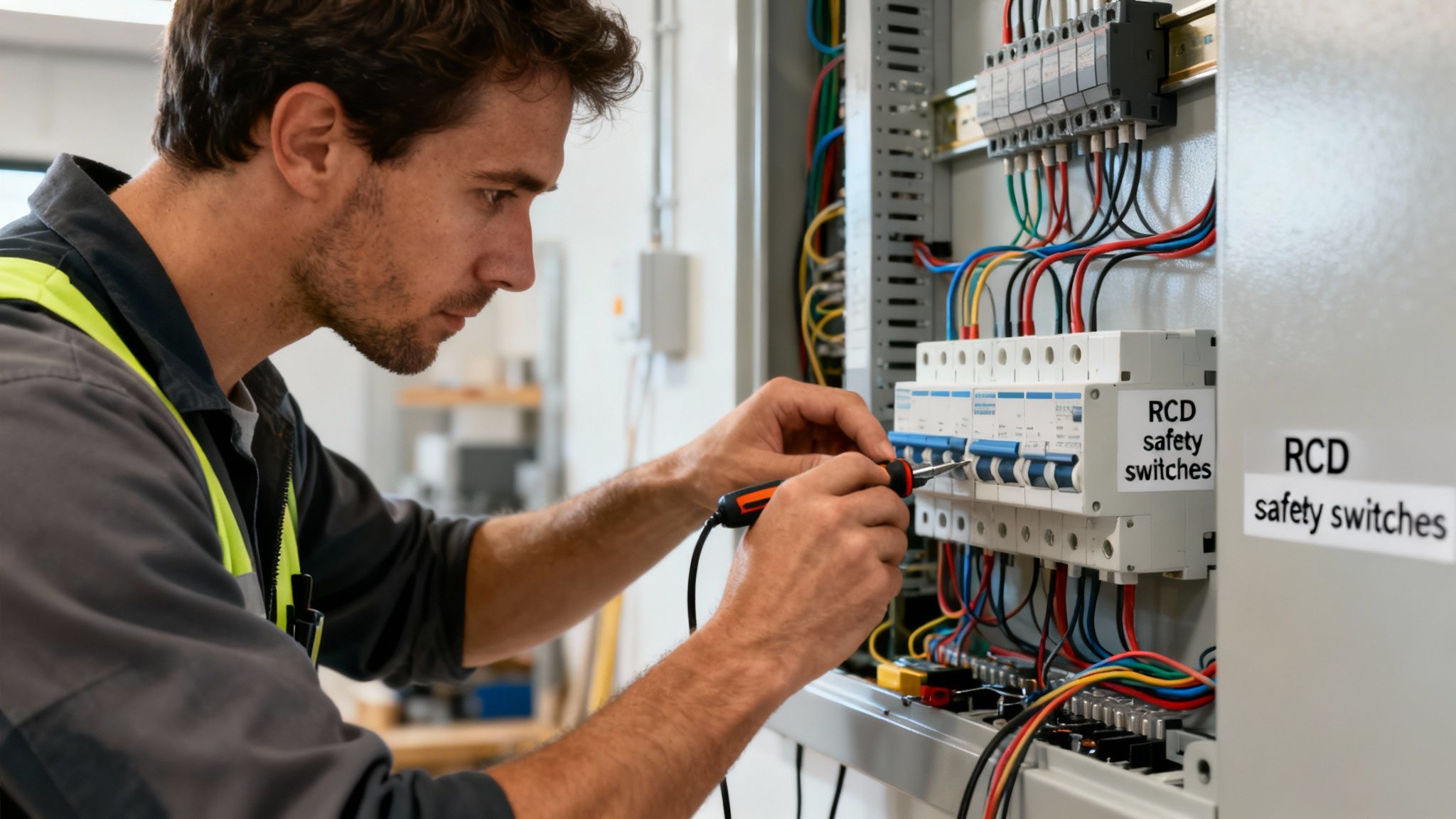
How to Hire an Electrician for Home Projects: A Professional Guide
Hiring an electrician requires verifying professional credentials, confirming local licensing compliance, and obtaining detailed project estimates to ensure your home’s electrical system remains safe and code-compliant. Homeowners must...
Hiring an electrician requires verifying professional credentials, confirming local licensing compliance, and obtaining detailed project estimates to ensure your home’s electrical system remains safe and code-compliant. Homeowners must prioritize hiring state-licensed professionals who carry active liability insurance and have a verifiable track record of performing work under current building codes to avoid safety hazards or insurance coverage disputes.
Contents
Understanding Electrical Licensing and Requirements
Before you begin your search for an electrician, it is essential to understand that electrical work is one of the most strictly regulated trades in the construction industry. Most jurisdictions require electricians to hold a valid license, which is categorized based on experience and scope of practice.
- Apprentice Electricians: These individuals are in training and must work under the direct, physical supervision of a licensed journeyman or master electrician. They are not legally authorized to work independently.
- Journeyman Electricians: These professionals have completed their apprenticeship and passed a state-administered exam. They are qualified to perform most residential installations and repairs but may be required to work under a master electrician in certain jurisdictions.
- Master Electricians: These individuals hold the highest level of certification. They have extensive experience and are typically the only ones qualified to pull permits, oversee complex wiring systems, and sign off on inspections for residential projects.
Always verify that the individual you hire possesses an active license for your specific municipality. You can confirm this through your state’s Department of Labor or the local building and safety department’s online portal.
Evaluating Potential Contractors
When researching "electricians near me," avoid relying solely on generic search results. Instead, use a systematic approach to vet candidates based on safety, reliability, and technical capability.
- Request Proof of Insurance: A reputable electrician should carry both general liability insurance and workers' compensation coverage. Liability insurance protects your property in the event of accidental damage during the project, while workers' compensation ensures you are not financially liable if a worker is injured on your premises.
- Verify Permit-Pulling History: If your project involves new circuits, panel upgrades, or significant rewiring, a permit is mandatory. Ask candidates if they handle the permitting process—a legitimate contractor will include this as part of their service scope.
- Check References and Reviews: Look for long-standing businesses with a consistent history. While online reviews offer a snapshot, asking for a professional reference from a past client who had a similar project size—such as a kitchen remodel or EV charger installation—is more indicative of quality.
Comparing Project Estimates
When you receive quotes, do not automatically choose the lowest price. Electrical work is high-stakes; cheap, substandard work can lead to fire hazards or insurance claim denials in the future.
| Feature | Low-Cost/Handyman Approach | Licensed Professional Contractor |
|---|---|---|
| Licensing | Often unverified or generic | State-certified and active |
| Permits | Frequently skipped | Always pulled and documented |
| Insurance | Likely missing or lapsed | Current and verifiable |
| Warranty | None or verbal only | Written guarantee on labor |
| Safety | High risk of code violations | Adheres to NEC standards |
Ensure every estimate you receive is itemized. A professional proposal should list the labor costs, the estimated cost of materials, and an expected timeline for completion. If one quote is significantly lower than others, it may indicate that the contractor plans to cut corners, omit necessary hardware, or use inferior materials that do not meet the National Electrical Code (NEC).
The Importance of Adhering to the National Electrical Code (NEC)
The NEC is the benchmark for safe electrical design and installation in the United States. Even if your local jurisdiction has its own specific amendments, they are usually built upon the NEC framework. When interviewing contractors, ask how they ensure their work meets current NEC requirements.
A knowledgeable electrician will discuss grounding and bonding requirements, appropriate wire gauges for specific loads, and the necessity of AFCI (Arc-Fault Circuit Interrupter) or GFCI (Ground-Fault Circuit Interrupter) protection in specific areas of the home, such as kitchens, bathrooms, and garages. If a contractor suggests bypassing these safety features to save time or money, treat this as a major red flag and discontinue consideration of that professional.
Steps for a Successful Engagement
Once you have selected a contractor, follow this structured process to minimize risks and ensure clear communication:
- Define the Scope: Provide a written description of the work. If you are adding outlets, specify the number and location. If you are upgrading a panel, request a load calculation to ensure the new equipment can handle your home's total electrical demand.
- Agree on Payment Terms: Never pay the full amount upfront. A standard practice is to pay a modest deposit (usually 10%–30% depending on project scale) and hold the final balance until the work is completed and passed by a municipal inspector.
- Documentation: Retain copies of the contract, the permit application, and the final inspection certificate. These documents are vital if you ever decide to sell your home, as future buyers will want proof that major electrical modifications were performed legally.
Common Pitfalls to Avoid
Many homeowners encounter problems by attempting to manage the work themselves or hiring unlicensed individuals to perform "side work." Common risks include:
- Hidden Safety Risks: Poor connections inside walls, often caused by lack of torque-spec awareness or improper wire stripping, can lead to arcing and potential house fires years after the work was done.
- Insurance Invalidation: Most homeowners' insurance policies explicitly state that electrical work must be performed by a licensed professional to be covered under the policy. Illegal or unpermitted work can void your coverage for fire-related damages.
- Incorrect Load Balancing: Overloading a single circuit or improperly balancing phases in a panel can lead to tripped breakers, damaged appliances, and premature wear on your electrical infrastructure.
Frequently Asked Questions
Do I need a permit for minor electrical work like replacing a light fixture? Generally, no. Simple, "like-for-like" replacements such as swapping out a light switch, outlet, or light fixture do not usually require a permit. However, any modification involving new wiring, circuit additions, or panel work requires a permit and inspection. Check with your local building department to verify your specific city’s requirements.
Why should I hire a licensed electrician instead of a general handyman? Electrical work requires specialized training in physics, circuit theory, and fire safety codes. A handyman may have broad knowledge of home repairs, but a licensed electrician possesses the technical training to prevent catastrophic failures. Furthermore, licensing bodies ensure the individual carries the mandatory liability insurance required to protect your home.
How can I verify if an electrician’s license is currently active? Most states provide a searchable database on their professional regulation website. You can look up the contractor’s license number or business name to see if it is in "Active" or "Good Standing" status. If you are unable to find the professional in this database, do not proceed with the contract.
What should I do if the inspector fails the electrical work? If an inspector identifies issues, it is the contractor’s responsibility to correct them at no additional cost to you. Ensure your contract includes a clause stating that final payment is contingent upon passing the official municipal inspection.
How do I handle payment for a large project? For major renovations, break payments into milestones. For example, 25% upon contract signature, 25% after rough-in inspection, 25% after fixture installation, and the final 25% after the final inspection sign-off.
Next Steps for Your Project
Begin by clearly documenting the electrical issue or project requirement you have. Use a digital tool or a simple folder to keep track of the contractors you contact, their license numbers, and the itemized quotes they provide. Once you have narrowed your list to three licensed professionals, schedule an on-site visit to discuss the specific technical requirements of your home. By prioritizing verification and documentation, you ensure that your home's electrical system remains safe, efficient, and fully compliant with all governing standards for 2026 and beyond.
Image Gallery