Understanding What Primary Market Research Means: A Comprehensive Guide
Primary market research means gathering original, firsthand data directly from consumers, target audiences, or specific business sectors to answer unique questions that have never been studied or published before. Unlike secondary rese...
Primary market research means gathering original, firsthand data directly from consumers, target audiences, or specific business sectors to answer unique questions that have never been studied or published before. Unlike secondary research—which relies on previously compiled books, industry reports, academic journals, and government statistics—primary research puts an organization directly in touch with its target demographic through tailored surveys, focus groups, interviews, and observations. This investigative approach allows decision-makers to obtain targeted insights specifically calibrated to their exact brand, product, geographic region, or strategic challenge.
Contents
The Core Concept: Defining Primary Market Research
At its foundational level, primary market research is about generating proprietary data. When a company designs a questionnaire, rents a facility for a consumer focus group, or tracks user interactions in a live product testing lab, it is executing primary research. The key differentiator is ownership and intent. The data gathered belongs exclusively to the organization commissioning the study, and the questions asked are custom-tailored to solve a specific business problem rather than addressing a broad industry trend.
Businesses utilize primary research when existing data sources fail to provide the granularity needed for major decisions. For instance, a software startup planning to launch a localized productivity tool in 2026 cannot rely on generic 2024 global SaaS adoption statistics. It needs to know how local professionals interact with specific feature sets, what pricing thresholds they tolerate, and which pain points remain unaddressed by current market leaders. Primary research bridges this information gap by speaking directly to the source.
Understanding this definition requires recognizing that primary research operates across two main methodological tracks: exploratory and specific. Exploratory research is open-ended, designed to uncover unknown trends, user behaviors, or psychological drivers through qualitative methods like in-depth interviews. Specific research is structured and quantitative, testing concrete hypotheses, measuring market size through surveys, or evaluating customer satisfaction metrics on a statistical scale.
Key Types of Primary Research Methodologies
Executing primary market research requires choosing the right methodological tools to match your core questions. Researchers typically divide these methods into two overarching categories: qualitative and quantitative. Each serves a distinct purpose, addresses different research questions, and yields unique types of data that inform business strategy.
| Primary Market Research Methodologies | |
|---|---|
| Qualitative Methods | Quantitative Methods |
| • In-depth interviews (IDIs)• Focus groups• Ethnographic observation• Usability testing sessions | • Structured online/offline surveys• Closed-ended questionnaires• A/B testing and digital tracking• Longitudinal cohort tracking |
Qualitative Research: Uncovering the "Why"
Qualitative primary research focuses on understanding motivations, underlying attitudes, emotions, and decision-making processes. It relies on smaller sample sizes but dives deep into individual experiences.
- In-Depth Interviews (IDIs): One-on-one conversations between a trained researcher and a participant. These are invaluable for complex B2B markets or sensitive consumer topics where group dynamics might inhibit honesty.
- Focus Groups: Guided discussions with a small group of target consumers (usually 6 to 10 people) led by a moderator. They help gauge reactions to new concepts, advertising campaigns, or packaging designs through dynamic group interaction.
- Ethnographic Research: Observing consumers in their natural environments—such as their homes, offices, or retail shopping spaces—to see how they actually interact with products rather than how they claim to interact in an interview.
Quantitative Research: Measuring the "What" and "How Many"
Quantitative primary research gathers numerical data that can be analyzed statistically. This approach allows brands to project findings onto a broader target population with measurable confidence intervals.
- Surveys and Questionnaires: Distributed digitally, via telephone, or in person, structured surveys use closed-ended questions, Likert scales, and multiple-choice formats to quantify consumer preferences, brand awareness, and purchasing habits.
- Experimental Research and A/B Testing: Deliberately altering one variable—such as pricing, website layout, or promotional copy—to measure its direct impact on consumer behavior in real time.
- Observational and Tracking Data: Recording quantitative metrics such as foot traffic counts in a retail store or click-through rates on specific digital assets during a controlled trial.
Comparing Primary and Secondary Research
To fully appreciate the value of primary research, it is essential to compare it directly against secondary research. Both play vital roles in a comprehensive market intelligence strategy, but they differ significantly in cost, timeline, customization, and ownership.
| Feature | Primary Market Research | Secondary Market Research |
|---|---|---|
| Data Ownership | Proprietary; owned exclusively by the commissioning organization. | Publicly or commercially available; accessible to competitors. |
| Customization | Tailored precisely to specific business questions, products, and audiences. | Generic; addresses broad industry trends or general demographics. |
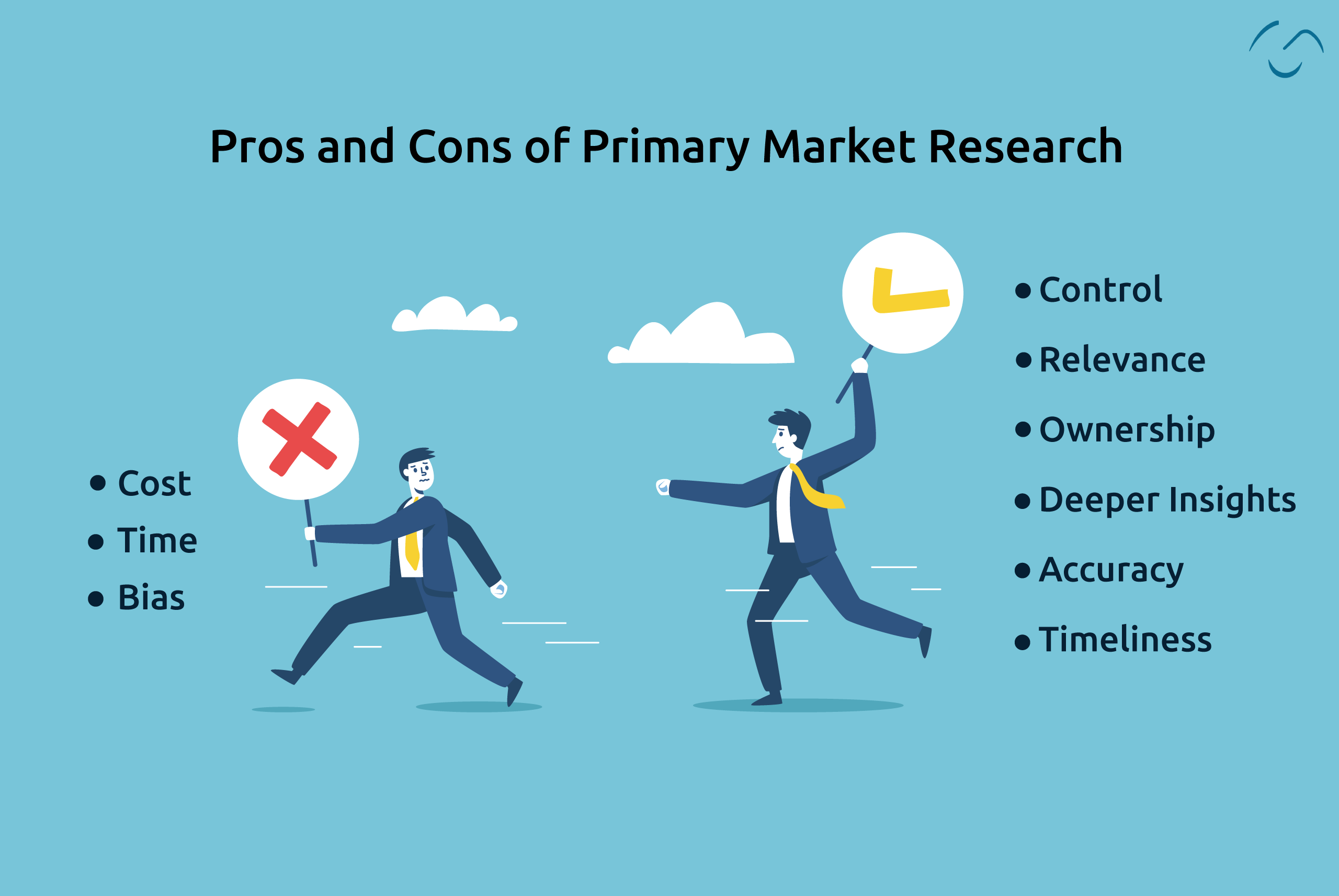
| Cost | Typically higher due to custom design, recruitment, execution, and analysis. | Generally lower cost or free (e.g., government databases, public reports). |
| Time Investment | Slower; requires planning, recruitment, data collection, and cleaning. | Faster; data is already compiled and ready for immediate analysis. |
| Data Recency | Highly current; collected in real time for immediate strategic needs. | Varies; data may be historical or outdated depending on publication date. |
Most successful organizations do not choose one over the other; instead, they use secondary research to establish baseline industry knowledge, identify gaps, and formulate hypotheses, which they then test and validate using primary research.
Step-by-Step Process for Conducting Primary Research
Executing effective primary research requires a disciplined, step-by-step workflow. Skipping phases often results in skewed data, wasted financial resources, and flawed business decisions.
1. Define Objectives and Research Questions
Every research project must start with a clearly articulated business objective. Ask yourself: What decision will this data influence? What specific question must be answered? Vague objectives lead to unusable data. If your goal is to launch a new eco-friendly consumer product, your research question should focus on consumer willingness to pay a premium for sustainable packaging within a specific demographic.
2. Define the Target Audience and Sample Size
Identify the exact demographic, geographic, or psychographic profile of the participants you need to reach. Determining the appropriate sample size is crucial for quantitative studies to ensure statistical significance, while qualitative studies focus on reaching "saturation"—the point where new interviews stop yielding novel insights.
3. Choose the Methodology and Design Instruments
Select whether qualitative or quantitative methods (or a hybrid approach) best fit your objectives. Draft your survey questions, interview guides, or observation protocols. Pilot test these instruments with a small internal group to eliminate leading questions, ambiguous phrasing, and technical glitches before launching publicly.
4. Execute Fieldwork and Data Collection
Distribute surveys, conduct interviews, or host focus groups. Ensure ethical standards are maintained, including obtaining informed consent, protecting participant privacy, and complying with data protection regulations such as the General Data Protection Regulation (GDPR) or the California Consumer Privacy Act (CCPA).
5. Analyze and Synthesize Findings
Clean the collected data, remove anomalous or fraudulent responses, and run statistical analysis for quantitative datasets or thematic coding for qualitative transcripts. Translate raw numbers and interview quotes into actionable insights that directly answer your initial research questions.
Common Pitfalls and How to Avoid Them
Even experienced professionals can make critical errors during primary research. Recognizing these traps ensures higher data integrity and more reliable strategic outcomes.
- Confirmation Bias: Designing questions that subtly lead respondents toward a desired answer. Researchers must remain neutral and phrase questions objectively to capture true sentiment rather than validation.
- Sampling Bias: Relying exclusively on easily accessible groups—such as existing company employees or current newsletter subscribers—rather than the broader target market. This skews results and misrepresents the wider consumer base.
- Survey Fatigue: Creating excessively long questionnaires that exhaust participants, leading to rushed, inaccurate, or abandoned responses. Keep surveys concise, focusing only on data points directly tied to actionable business decisions.
- Ignoring Non-Response Error: Failing to analyze why certain segments of your sample refused to participate. If a particular demographic systematically drops out of your study, your final dataset may harbor blind spots.
Frequently Asked Questions
What is the main difference between primary and secondary market research?
Primary research involves collecting original, firsthand data directly from target audiences for a specific project. Secondary research involves analyzing pre-existing data, reports, and studies published by third parties, such as government agencies or industry analysts.
When should a business invest in primary market research?
A business should invest in primary research when facing major strategic decisions—such as launching a novel product, entering an unfamiliar international market, rebranding, or overhauling pricing structures—where existing public data is insufficient or outdated.
Is primary research always more expensive than secondary research?
Yes, primary research is generally more expensive and time-consuming because it requires custom study design, participant recruitment incentives, specialized software, and dedicated analytical personnel, whereas secondary data is often accessible immediately at low or no cost.
Can small businesses conduct primary market research on a budget?
Small businesses can conduct cost-effective primary research by utilizing digital survey platforms, conducting targeted social media polls, interviewing existing customers directly, or leveraging customer service interaction logs to identify common user pain points.
How do ethical standards apply to primary market research?
Researchers must protect participant anonymity, secure explicit informed consent before collecting personal data, store information securely in compliance with regional privacy laws like GDPR, and ensure that participation is entirely voluntary without deceptive practices.
Strategic Next Actions
To operationalize primary market research within your organization, begin by auditing your current strategic roadmap to identify upcoming product launches, market expansions, or major brand shifts that lack verified consumer data. Draft a single, high-priority research objective, allocate a realistic budget and timeline, and consult compliance guidelines before selecting your methodology. By treating primary research as a disciplined, foundational investment rather than an afterthought, you eliminate guesswork and build strategies rooted in verifiable market reality.
Image Gallery