Uses for Red Algae in Industry and Health: A 2026 Perspective on Marine Innovation
Red algae, or Rhodophyta, serve as critical raw materials in the global food, pharmaceutical, and manufacturing industries primarily due to their unique hydrocolloids—agar and carrageenan—and high concentrations of bioactive compounds....
Red algae, or Rhodophyta, serve as critical raw materials in the global food, pharmaceutical, and manufacturing industries primarily due to their unique hydrocolloids—agar and carrageenan—and high concentrations of bioactive compounds. In 2026, these marine organisms are essential for creating sustainable stabilizers, vegan nutrient sources, and advanced therapeutic agents used in modern healthcare and bio-based manufacturing.
Contents
Botanical Foundations of Red Algae (Rhodophyta)
Red algae represent one of the oldest and largest groups of eukaryotic algae, with over 7,000 recognized species. Unlike green or brown algae, red algae contain the accessory pigment phycoerythrin, which masks their chlorophyll and allows them to perform photosynthesis at greater depths where blue light penetrates more effectively. This physiological adaptation is not merely a biological curiosity; it influences the chemical composition of the cell walls, which are rich in sulfated polysaccharides.
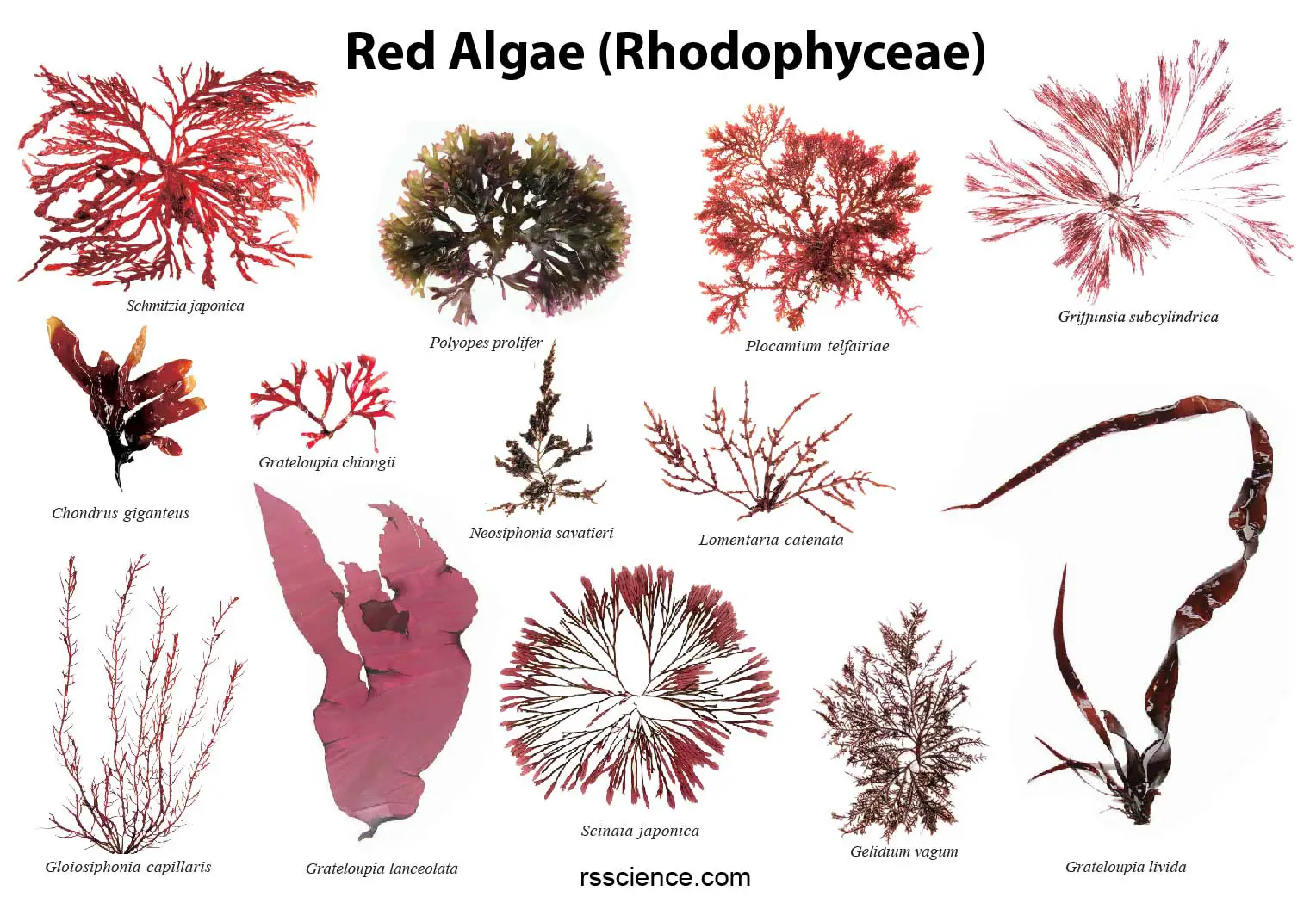
From a commercial perspective, the most significant species include Chondrus crispus (Irish Moss), Gracilaria, Gelidium, and Porphyra (Nori). The cell walls of these species provide the structural matrix for the extraction of phycocolloids—substances that can turn liquids into gels or stable emulsions. As we move through 2026, the cultivation of these species has transitioned from wild harvesting to sophisticated land-based and offshore aquaculture systems to meet rising industrial demand while preserving marine biodiversity.
Industrial Applications: The Power of Phycocolloids
The industrial utility of red algae is dominated by three primary substances: agar-agar, carrageenan, and furcellaran. These are often referred to as "hydrocolloids" because of their ability to bind with water to create viscosity or gel structures.
Agar-Agar: The Gold Standard for Microbiology and Food
Agar is derived primarily from Gelidium and Gracilaria. Its unique property is its "hysteresis"—the fact that it melts at a high temperature (around 85°C) but stays solid until cooled to about 32–40°C.
- Microbiology: In 2026, agar remains the indispensable substrate for culturing bacteria and fungi in laboratory settings. Its resistance to being digested by most microorganisms ensures that the structural integrity of the growth medium remains intact.
- Food Science: As a vegan alternative to gelatin, agar is used in the production of gummies, jams, and canned meats. It provides a firm, brittle texture that is heat-stable, making it ideal for tropical climates where gelatin-based products might melt.
- Dentistry and Prosthetics: High-quality agar is used to create precision impressions for dental work and prosthetic molding due to its dimensional stability.
Carrageenan: Texture and Stability in Consumer Goods
Extracted from Chondrus crispus and Eucheuma, carrageenan is more versatile than agar and is categorized into three types: Kappa (firm gels), Iota (elastic gels), and Lambda (thickener).
- Dairy and Plant-Based Milks: Carrageenan prevents the separation of fats and solids in products like chocolate milk, almond milk, and infant formula.
- Personal Care: It provides the "slip" and consistency in toothpastes, shampoos, and lotions.
- Textile Printing: In the textile industry, carrageenan acts as a thickener for dyes, ensuring sharp patterns and preventing the bleeding of colors on fabric.
Emerging Bio-plastics and Sustainable Packaging
In the 2026 industrial landscape, red algae are at the forefront of the circular economy. Researchers have successfully utilized the cellulose and polysaccharides from red algae to develop biodegradable plastics. Unlike traditional petroleum-based plastics, these seaweed-derived alternatives decompose within weeks in marine or soil environments. Industrial applications now include water-soluble laundry pods, edible food coatings, and rigid bioplastic containers that reduce the carbon footprint of the packaging sector.
Red Algae in Modern Healthcare and Pharmaceuticals
The transition of red algae from a food supplement to a pharmaceutical powerhouse has accelerated significantly. The primary value lies in the "secondary metabolites" produced by the algae to survive harsh oceanic conditions.
Bioactive Compounds and Antioxidant Properties
Red algae are rich in polyphenols, carotenoids, and vitamins. These compounds serve as potent antioxidants that neutralize free radicals in the human body. In 2026, clinical applications focus on:
- Anti-inflammatory Effects: Sulfated polysaccharides from species like Porphyridium are used in topical treatments to reduce skin inflammation and systemic treatments for joint health.
- Neuroprotection: Studies have indicated that specific extracts from red algae may inhibit the formation of beta-amyloid plaques, offering a supportive pathway for managing neurodegenerative conditions.
Antiviral and Therapeutic Potential
One of the most significant breakthroughs in recent years is the use of carrageenan as an antiviral agent. In 2026, nasal sprays containing Iota-carrageenan are standard over-the-counter treatments for the common cold and various respiratory viruses. The polymer creates a physical barrier on the nasal mucosa, trapping viral particles and preventing them from entering host cells. Furthermore, research into red algae-derived lectins has shown promise in inhibiting the entry of enveloped viruses, including certain strains of influenza.
Bone Health and Mineral Supplementation
Lithothamnion, a genus of red algae that calcifies, is a highly bioavailable source of calcium and magnesium. Unlike limestone-derived calcium, red algae calcium has a unique porous structure that increases the surface area for absorption. This makes it a preferred ingredient in high-end bone density supplements and fortified foods for aging populations.
Beauty and Nutraceuticals: The Cosmetic Frontier
The "Blue Beauty" movement has propelled red algae into the center of the skincare industry. The hydration capabilities of red algae are often compared to or even surpass hyaluronic acid.
- UV Protection: Some red algae produce mycosporine-like amino acids (MAAs), which act as natural sunscreens. These compounds absorb UV radiation and dissipate it as heat, protecting the algae—and subsequently human skin—from DNA damage.
- Anti-Aging: By inhibiting the enzymes that break down collagen (collagenase) and elastin (elastase), red algae extracts help maintain skin firmness and reduce the appearance of fine lines.
- Detoxification: The high mineral content aids in "osmotic exchange," helping the skin purge impurities while absorbing essential trace elements like zinc and selenium.
Environmental and Agricultural Utility
Beyond direct human consumption and industry, red algae play a vital role in ecological and agricultural management in 2026.
- Methane Reduction in Livestock: Specific red algae, notably Asparagopsis taxiformis, are processed into cattle feed supplements. Small amounts of this algae can reduce methane emissions from enteric fermentation in cows by up to 90%, offering a critical tool for meeting global climate targets.
- Bio-fertilizers: Red algae extracts are used as "biostimulants" in organic farming. They improve soil structure, enhance moisture retention, and trigger the natural defense mechanisms of plants against pests and drought.
- Carbon Sequestration: Large-scale red algae farms act as carbon sinks. Because they grow rapidly and do not require freshwater or fertilizers, they are an efficient means of sequestering atmospheric CO2.
Comparison of Major Red Algae Hydrocolloids
| Hydrocolloid | Primary Source Species | Key Property | Common 2026 Use Case |
|---|---|---|---|
| Agar-Agar | Gelidium, Gracilaria | High hysteresis; firm, brittle gel | Microbiological culture media; vegan gummies |
| Kappa-Carrageenan | Kappaphycus alvarezii | Strong, rigid gel with potassium salts | Meat processing; dairy stabilization |
| Iota-Carrageenan | Eucheuma denticulatum | Elastic, clear, freeze-thaw stable gel | Antiviral nasal sprays; toothpaste |
| Lambda-Carrageenan | Gigartina | Non-gelling thickener | Instant puddings; high-viscosity syrups |
| Phycoerythrin | Porphyridium | Fluorescent pigment | Biological markers; natural food coloring |
Frequently Asked Questions
Is the carrageenan in red algae safe for consumption?
Yes, food-grade carrageenan is recognized as safe by major regulatory bodies including the FDA and the EFSA. While there was historical debate regarding "degraded" carrageenan (poligeenan), modern processing standards in 2026 ensure that only high-molecular-weight, non-inflammatory carrageenan is used in the food supply. Consumers with specific digestive sensitivities, however, may still choose to limit intake.
Can red algae replace all animal-based gelatin?
Technically, yes. Agar and carrageenan can replicate most functions of gelatin. However, the texture differs slightly; agar is more "snappy" while carrageenan is more "creamy." In 2026, most industrial food formulations use a blend of red algae hydrocolloids to perfectly mimic the melt-in-the-mouth feel of animal gelatin.
Does red algae contain high levels of iodine?
Red algae generally contain less iodine than brown algae (like kelp), but they are still a significant source. While this is beneficial for thyroid health in many people, those with pre-existing thyroid conditions like Hashimoto's should consult a healthcare provider before significantly increasing their intake of red algae supplements.
How is red algae harvested sustainably?
In 2026, sustainability is achieved through "Integrated Multi-Trophic Aquaculture" (IMTA). This involves growing red algae alongside fish or shellfish farms. The algae absorb the excess nutrients (nitrogen and phosphorus) produced by the marine animals, cleaning the water while creating a valuable secondary crop.
Are there any side effects to using red algae in skincare?
Red algae are generally non-comedogenic and soothing. However, because they are marine-derived, individuals with severe shellfish or iodine allergies should perform a patch test first. Most 2026 formulations are highly refined to remove potential allergens while retaining bioactive polysaccharides.
Professional Recommendation for Implementation
For businesses looking to integrate red algae into their supply chains in 2026, the priority should be source verification. The efficacy of red algae extracts depends heavily on the water quality and the specific harvest season. Industrial buyers should prioritize suppliers utilizing land-based bioreactors for high-purity pharmaceutical grades, or certified IMTA sources for food and agricultural applications.
For health-conscious consumers, red algae represent a multifaceted tool for longevity. Whether used as a mineral-rich whole food (like Nori or Dulse) or as a targeted supplement for bone and immune health, it is essential to look for "standardized extracts" to ensure consistent levels of bioactive compounds such as carrageenan or MAAs.
Image Gallery