Best Exfoliator for Sensitive Skin Face: A Guide to Gentle Resurfacing
The best exfoliator for sensitive skin involves using Polyhydroxy Acids (PHAs) or fruit enzymes rather than harsh physical scrubs. These ingredients provide controlled chemical exfoliation with a larger molecular structure that penetra...
The best exfoliator for sensitive skin involves using Polyhydroxy Acids (PHAs) or fruit enzymes rather than harsh physical scrubs. These ingredients provide controlled chemical exfoliation with a larger molecular structure that penetrates the skin slowly. This process minimizes irritation while simultaneously strengthening the moisture barrier and refining skin texture without inducing redness.
Contents
Understanding the Sensitive Skin Barrier in 2026
Sensitive skin is characterized by a hyper-reactive immune response and a frequently compromised stratum corneum—the outermost layer of the epidermis. When this barrier is weak, transepidermal water loss (TEWL) increases, and external irritants can penetrate more easily, leading to stinging, burning, and inflammation. For years, individuals with sensitive skin were told to avoid exfoliation entirely to prevent further damage.
However, as we move through 2026, dermatological consensus has shifted. Exfoliation is now recognized as a vital step for sensitive skin, provided the methodology is sound. Dead skin cell buildup can actually exacerbate sensitivity by preventing moisturizers from penetrating and by trapping bacteria, leading to "maskne" or inflammatory breakouts. The goal for sensitive skin is not to "scrub" but to gently encourage the natural desquamation process using humectant-based acids and proteolytic enzymes.
The Role of Molecular Weight in Irritation
To understand why some exfoliators fail while others succeed, one must look at molecular weight, measured in Daltons. Glycolic acid, a popular Alpha Hydroxy Acid (AHA), has a very small molecular weight, allowing it to zip through the skin layers quickly. For sensitive skin, this rapid penetration is often interpreted by the body as a trauma, resulting in an immediate inflammatory response.
In contrast, the best exfoliators for sensitive skin utilize larger molecules. These molecules sit on the surface longer and work their way down at a measured pace. This "slow-release" effect ensures that the skin’s nerves are not overwhelmed, providing the benefits of resurfacing without the downtime of traditional chemical peels.
Top Chemical Exfoliants for Sensitive Skin
In the current 2026 skincare landscape, chemical exfoliation has largely superseded physical "scrubbing" for reactive skin types. The following three categories represent the gold standard for safety and efficacy.
1. Polyhydroxy Acids (PHAs)
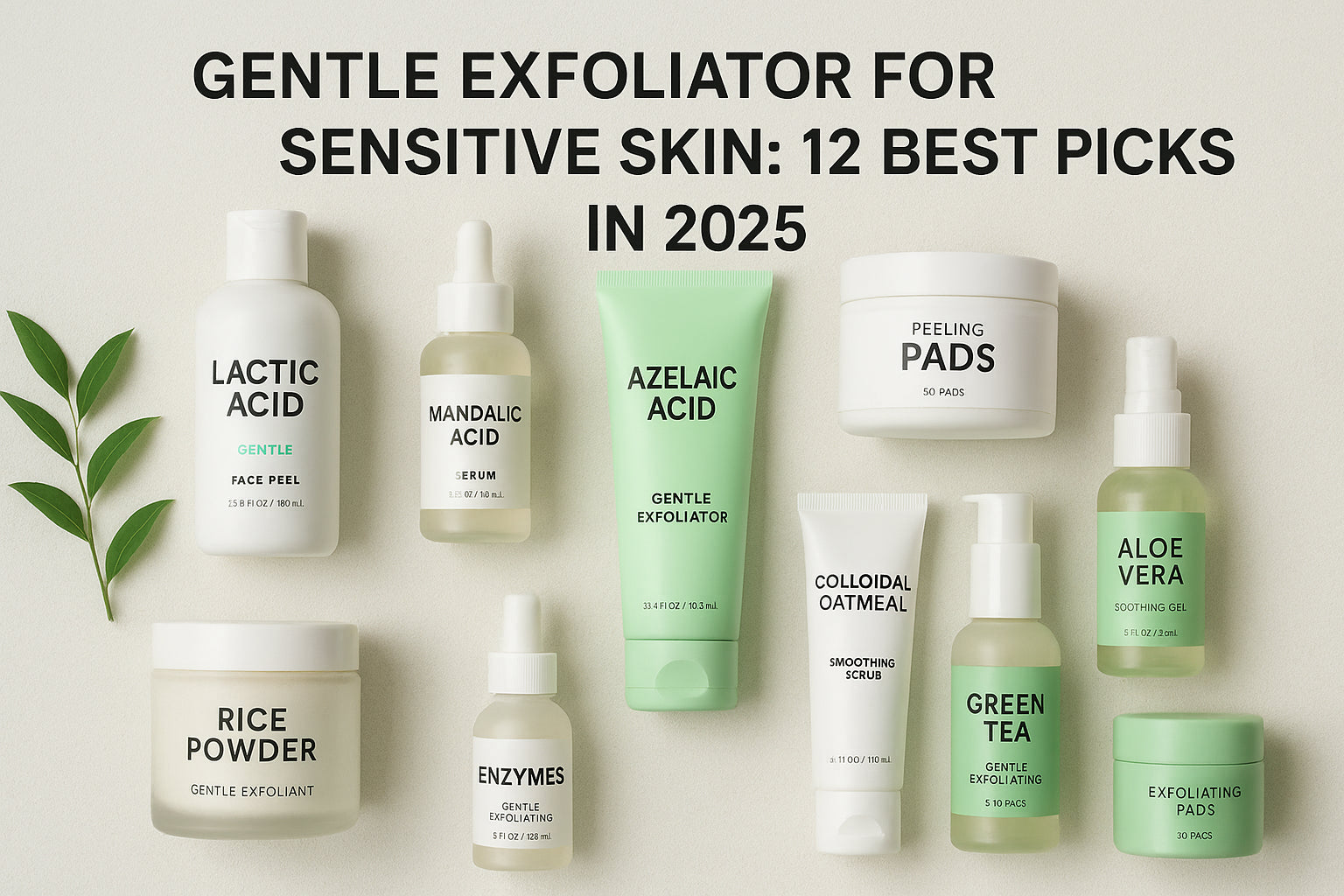
PHAs, such as Gluconolactone and Lactobionic Acid, are the primary recommendation for sensitive skin. They are essentially the "cousins" of AHAs but are much larger in size. Beyond exfoliation, PHAs act as humectants, meaning they attract water to the skin. Research published by the American Academy of Dermatology highlights that PHAs are non-irritating enough for use even on skin prone to rosacea or atopic dermatitis. They also provide antioxidant benefits, helping to protect the skin from environmental stressors.
2. Mandelic Acid
Derived from bitter almonds, Mandelic acid is an AHA with a much larger molecular size than glycolic or lactic acid. It is oil-soluble, making it an excellent choice for those who have sensitive skin but also struggle with congestion or adult acne. Because it penetrates slowly, it is significantly less likely to cause post-inflammatory hyperpigmentation, a common concern for sensitive skin of color.
3. Lactic Acid (Low Concentrations)
Lactic acid is a naturally occurring carboxylic acid that forms part of the skin’s Natural Moisturizing Factor (NMF). At low concentrations (under 5%), it acts more as a hydrating agent than a peeling agent. It gently breaks the bonds between dead skin cells while increasing the skin’s ability to hold onto moisture.
The Rise of Enzyme Exfoliation
For those whose skin cannot tolerate even the gentlest acids, enzyme exfoliation offers a biological alternative. Enzymes, typically derived from fruits like papaya (papain), pineapple (bromelain), or pumpkin, work by digesting the keratin proteins that hold dead skin cells together on the surface.
Unlike acids, which lower the skin's pH and can disrupt the acid mantle, enzymes usually operate at a pH level closer to the skin’s natural state. They are "self-neutralizing"; once they have consumed the protein on the surface, they stop working. This makes it nearly impossible to over-exfoliate with a well-formulated enzyme mask, providing a significant safety net for beginners.
Physical Exfoliation: Proceed with Caution
While many dermatologists advise against physical scrubs for sensitive skin, certain "micro-exfoliants" are acceptable in 2026 formulations. The key is the shape and hardness of the particles.
- Avoid: Crushed walnut shells, apricot pits, or large sugar crystals. These have jagged edges that cause "micro-tears" in the skin barrier.
- Acceptable: Jojoba esters (which are perfectly spherical beads that melt with friction), rice bran powder, or colloidal oat flour.
Rice bran, in particular, contains phytic acid, providing a dual-action mechanical and very mild chemical exfoliation that has been used in Japanese skincare for centuries to brighten sensitive complexions.
Comparison Table: Best Exfoliator Types for Sensitive Skin
| Exfoliant Type | Primary Ingredient | Mechanism of Action | Best For | Irritation Risk |
|---|---|---|---|---|
| PHA | Gluconolactone | Large molecule; slow penetration; humectant properties. | Dry, ultra-sensitive, or aging skin. | Very Low |
| Enzyme | Papain / Bromelain | Digests surface keratin proteins biologically. | Reactive skin; those new to exfoliation. | Very Low |
| Mandelic Acid | Mandelic Acid | Large-molecule AHA; oil-soluble. | Oily-sensitive skin; congestion; acne-prone. | Low |
| Lactic Acid | Lactic Acid (5%) | Breaks cellular bonds; increases NMF. | Dullness; mild dehydration. | Low-Medium |
| Micro-Physical | Rice Bran / Jojoba | Gentle mechanical lifting of loose cells. | Texture issues; immediate "glow" seekers. | Low-Medium |
How to Safely Exfoliate Sensitive Face Skin
The "how" is just as important as the "what" when dealing with sensitivity. Following a strict protocol prevents the dreaded "red face" syndrome.
The Patch Test Protocol
Before applying any new exfoliator to your entire face, perform a patch test. Apply a small amount of the product behind your ear or on the inside of your forearm. Wait 24 to 48 hours to check for delayed allergic reactions or inflammatory responses.
Frequency and Timing
In 2026, "skin cycling" remains a popular and effective method for managing actives. For sensitive skin, the following schedule is recommended:
- Night 1: Exfoliate.
- Night 2: Recover (focus on ceramides and lipids).
- Night 3: Recover (focus on hydration/hyaluronic acid).
- Repeat.
Always exfoliate in the evening. Removing the top layer of dead skin cells makes the underlying tissue more vulnerable to UV damage. Even the gentlest PHA can increase photosensitivity.
The Application Technique
If using a chemical exfoliator, apply it to bone-dry skin. Applying acids to damp skin can increase the rate of penetration, which often leads to irritation. If using a physical micro-exfoliant, use the "feather-touch" method—let the particles do the work rather than pressing your fingers into your skin.
Ingredients to Avoid in Your Exfoliator
When shopping for the best exfoliator for sensitive skin, the "free-from" list is critical. Sensitive skin is often exacerbated by secondary ingredients that have nothing to do with the exfoliant itself.
- Synthetic Fragrance: The number one cause of contact dermatitis in skincare.
- High-Percentage Alcohol (Alcohol Denat): Strips the lipid barrier, making acids sting more.
- Essential Oils: Oils like peppermint, eucalyptus, or citrus can be highly sensitizing when combined with exfoliants.
- Sodium Lauryl Sulfate (SLS): Often found in exfoliating cleansers, it is too harsh for a compromised barrier.
Essential Aftercare: Protecting the New Cells
Exfoliation is half the battle; the other half is protecting the vulnerable skin you’ve just revealed. After exfoliating, your routine should focus on "barrier replenishment." Look for moisturizers containing Ceramides, Cholesterol, and Fatty Acids. These are the building blocks of the skin barrier and help "seal" the gaps between cells.
Additionally, use a mineral-based sunscreen (Zinc Oxide or Titanium Dioxide) the following morning. Mineral sunscreens are generally better tolerated by sensitive skin than chemical filters and provide a physical shield against the UV rays that the newly exfoliated skin is now more sensitive to.
Frequently Asked Questions
Can I exfoliate if I have Rosacea?
Yes, but you must be extremely cautious. PHAs (Polyhydroxy Acids) are often recommended for rosacea-prone skin because they do not induce the same inflammatory cascade as AHAs. However, you should consult with a dermatologist before starting, as active flare-ups may require medical intervention rather than exfoliation.
Should I use an exfoliating wash or a leave-on treatment?
For very sensitive skin, an exfoliating wash is often better. This is known as "short-contact therapy." The active ingredients are on the skin for only 30-60 seconds before being rinsed away, which provides a mild effect with a drastically reduced risk of irritation compared to a leave-on serum that stays on for eight hours.
What are the signs that I have over-exfoliated?
Common signs include a "plastic-like" shiny appearance to the skin (without being oily), increased redness, stinging when applying normally "safe" products like plain moisturizer, and localized peeling or flaking. If these occur, stop all actives immediately and use only a gentle cleanser and a thick barrier cream for at least two weeks.
Is it better to use a liquid or a scrub for sensitive skin?
Liquids (chemical exfoliants) are generally superior for sensitive skin because they provide an even application. Scrubs rely on human pressure, which is inconsistent and often too aggressive, leading to localized irritation or broken capillaries.
Can I use Vitamin C or Retinol on the same day I exfoliate?
It is generally discouraged for sensitive skin. Combining multiple "active" ingredients in one session can overwhelm the skin barrier. Use your exfoliator on one night and your Retinol on a different night to ensure your skin has time to recover between treatments.
Recommendation for 2026
If you are looking for the absolute safest entry point into exfoliation for sensitive skin, begin with a PHA-based toner or a fruit enzyme mask. These products provide the most controlled, predictable results. Start once a week, observing your skin’s reaction carefully before increasing frequency. The ultimate goal is a healthy, functioning barrier, not just a "smooth" one. By prioritizing hydration and slow-acting ingredients, you can achieve a clear, radiant complexion without the risk of inflammation.
Image Gallery