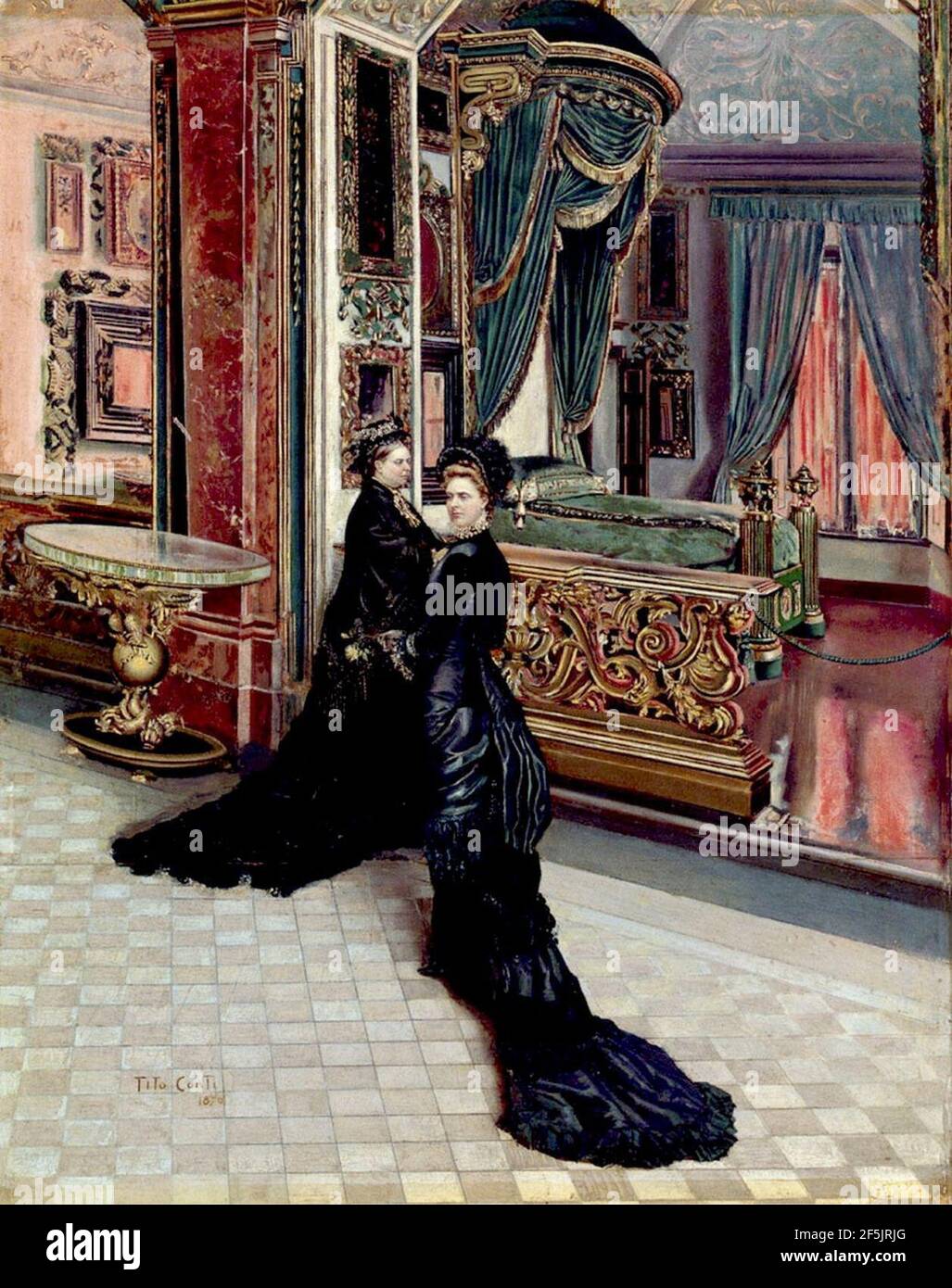
Victoria, Princess Royal: The Life and Legacy of Queen Victoria’s Eldest Daughter
Victoria, Princess Royal, known affectionately as "Vicky," was the eldest child of Queen Victoria and Prince Albert. As the German Empress and Queen of Prussia through her marriage to Frederick III, she was a pivotal intellectual and p...
Victoria, Princess Royal, known affectionately as "Vicky," was the eldest child of Queen Victoria and Prince Albert. As the German Empress and Queen of Prussia through her marriage to Frederick III, she was a pivotal intellectual and political figure who sought to liberalize the German Empire before her husband’s untimely death in 1888.
Contents
The Intellectual Protégé: Early Life and Education
Born on November 21, 1840, Victoria Adelaide Mary Louisa was the first of nine children. From her earliest years, it was clear that "Vicky" possessed an intellect that mirrored her father’s. Prince Albert, often frustrated by the academic struggles of his heir, the future Edward VII, found in Vicky a brilliant student and a kindred spirit. By the age of five, she was fluent in English, French, and German, and her education was far more rigorous than was typical for a royal daughter of the mid-19th century.
Prince Albert personally supervised her curriculum, which included history, philosophy, and the sciences. He imbued her with his own liberal ideals—a belief in constitutional monarchy, social reform, and the power of education. This intellectual bond between father and daughter shaped Vicky’s worldview, but it also set the stage for the significant challenges she would face in the more conservative and autocratic atmosphere of the Prussian court.
As the "Princess Royal," she occupied a unique position in the British household. She was her mother's confidante and her father's pride. However, her life was destined for a broader stage, as her parents viewed her as the primary instrument for their "Great Plan": the unification of a liberal, pro-British Germany.
A Marriage of Love and Geopolitics
In 1851, the ten-year-old Vicky met Prince Frederick William of Prussia ("Fritz") at the Great Exhibition in London. Although it was an arranged diplomatic encounter, a genuine romance blossomed. Fritz was a man of liberal leanings himself, and he found in Vicky an intellectual partner who shared his vision for a modernized Germany.
The couple married in the Chapel Royal at St James's Palace on January 25, 1858. Vicky was only 17 years old. While the British public celebrated the union, the marriage was viewed with deep suspicion by the Prussian elite. To the conservative Junkers and the burgeoning power of Otto von Bismarck, Vicky was "the Englishwoman"—a foreign influence who threatened the traditional military and autocratic structures of the Hohenzollern dynasty.
The Challenge of the Prussian Court
Upon moving to Berlin, Vicky faced immediate cultural and political isolation. The Prussian court was starkly different from the domesticity of the British royal family. It was rigid, militaristic, and deeply conservative. Vicky’s attempts to introduce British customs or express liberal political opinions were met with hostility.
Despite this, her marriage to Fritz remained one of the few stable pillars of her life. They were deeply devoted to one another and produced eight children. However, their household became a "liberal island" in a sea of Prussian conservatism. Vicky’s influence over Fritz was profound, and together they waited for the day they would ascend the throne and implement the reforms Albert had envisioned.
The Tragedy of 1888: The Year of Three Emperors
The most significant turning point in Vicky’s life occurred in 1888, a year known in German history as the Dreikaiserjahr (Year of Three Emperors). For decades, Vicky and Fritz had waited in the shadow of the long-reigning Wilhelm I. When the old Emperor finally passed away in March 1888, Fritz was already dying of throat cancer.
His reign lasted only 99 days. During this brief window, he was too ill to speak, communicating with Vicky via written notes. The couple’s dreams of a liberalized Germany died with him. Vicky’s grief was compounded by the immediate political fallout. Her eldest son, Wilhelm II, ascended the throne at age 29, representing a complete rejection of his parents’ liberal values.
The Conflict with Wilhelm II and Bismarck
The relationship between Vicky and her son, Kaiser Wilhelm II, is one of the most studied and tragic dynamics in royal history. Born with a withered left arm due to a traumatic breech birth, Wilhelm was subjected to various grueling and often painful "cures" during his childhood, many directed by Vicky in her desperate hope that he would be a "perfect" heir.
As he matured, Wilhelm gravitated toward the militarism of the Prussian Guard and the manipulative tutelage of Otto von Bismarck. Bismarck recognized Vicky as his most formidable opponent and worked tirelessly to drive a wedge between mother and son. By the time Fritz died, Wilhelm’s resentment toward his mother was palpable. He even ordered the palace to be surrounded by troops immediately after his father’s death to prevent Vicky from spiraling away state documents or letters.
Vicky’s Intellectual and Social Contributions
Despite being sidelined politically after 1888, the "Empress Frederick" (as she was known in her widowhood) remained a tireless advocate for social progress. Her legacy is perhaps best seen in her patronage of the arts, nursing, and women's education.
- Nursing Reform: Following the example of Florence Nightingale, Vicky worked to professionalize nursing in Germany. She founded the Victoria House and the Nursing School in Berlin, which set new standards for hygiene and medical training.
- Women’s Education: She was a staunch supporter of the Lette Society, which aimed to provide vocational training and higher education for women.
- The Arts: A talented artist herself, she supported the Berlin museums and was instrumental in the founding of the Museum of Decorative Arts.
Vicky’s correspondence also provides a massive historical record. She wrote nearly 4,000 letters to her mother, Queen Victoria, between 1858 and 1901. These letters, which were smuggled out of Germany shortly before her death, offer an unparalleled look into the political machinations of the era and the personal struggles of a woman caught between two worlds.
Comparison of Queen Victoria’s Eldest Children
To understand Vicky's unique position, it is helpful to compare her role and characteristics with her immediate siblings who also held significant European influence.
| Feature | Victoria (Vicky) | Albert Edward (Bertie) | Alice |
|---|---|---|---|
| Birth Order | 1st Child | 2nd Child (Heir) | 3rd Child |
| Title | Empress of Germany | King of the United Kingdom | Grand Duchess of Hesse |
| Intellectual Focus | Philosophy, Politics, Art | Diplomacy, Socializing | Social Work, Nursing |
| Political Alignment | Radical Liberal | Constitutionalist | Liberal |
| Key Legacy | Anglo-German relations | Entente Cordiale | Nursing during wars |
| Relationship with Mother | Confidante/Intellectual equal | Often strained/Distrusted | Close/Caregiver |
The Final Years and Death
Vicky spent her final years at Schloss Friedrichshof, a castle she built in memory of her husband. Her health began to fail in the late 1890s, and she was eventually diagnosed with breast cancer. In a cruel twist of fate, her decline mirrored that of her husband’s, involving a long and painful battle with the disease.
She died on August 5, 1901, just seven months after the death of her mother, Queen Victoria. Her passing marked the end of the Victorian era's direct influence on the German throne. While her son Wilhelm II would lead Germany into World War I, many historians speculate that had Fritz and Vicky reigned for 20 years instead of 99 days, the trajectory of 20th-century European history might have been vastly different.
Frequently Asked Questions
Why was Vicky called "the Englishwoman" in Germany?
The term was used pejoratively by the Prussian court and Otto von Bismarck to emphasize that she was a foreigner. Her liberal, British-style political views and her refusal to conform to the rigid, subservient role expected of a Prussian princess made her an outsider in the eyes of the Berlin elite.
Did Vicky really hate her son, Wilhelm II?
No, her feelings were far more complex. While she was deeply disappointed by his political choices and hurt by his public disrespect for his father's memory, her letters reveal a mother who was often desperate for his affection and approval. The conflict was a mix of clashing ideologies and the trauma surrounding Wilhelm’s physical disability.
What happened to the letters Vicky wrote to Queen Victoria?
Knowing that her son would likely seize or destroy her private papers, Vicky arranged for her secretary, Frederick Ponsonby, to smuggle nearly 60 volumes of correspondence back to England in 1901. These letters were later edited and published, providing the primary source of our understanding of her life in Prussia.
Was Vicky the grandmother of Tsar Nicholas II?
No, she was not his grandmother, but they were closely related. Vicky was the aunt of Tsar Nicholas II’s wife, Alexandra Feodorovna (Alix of Hesse), who was the daughter of Vicky’s sister, Princess Alice. Vicky was also the grandmother of Sophie of Prussia, who became Queen of the Hellenes.
How did Vicky influence the medical field in Germany?
She was a major proponent of the "Nightingale" system of nursing. She founded schools and hospitals that prioritized sanitation and formal training for nurses, moving the profession away from being a low-status job for the untrained to a respected medical career.
Practical Recommendation for Further Study
To truly understand the nuances of Vicky’s life, it is recommended to visit the National Archives or the Royal Archives at Windsor (for authorized researchers), which hold the original correspondence between the Princess Royal and her parents. For the general public, a visit to Schloss Friedrichshof (now the Schlosshotel Kronberg) in Germany offers a physical look at the estate she built to preserve her husband's legacy and her own British heritage. Reading the collected letters, such as those edited by Roger Fulford, remains the most effective way to hear her voice directly and understand the tragedy of her political marginalization.
Image Gallery