Why Restaurant Payroll Software Matters for Operational Success
Restaurant payroll software is a dedicated technological solution designed to automate the complex, highly variable wage calculations, tax filings, and compliance tracking unique to the food service industry. By integrating time-tracki...
Restaurant payroll software is a dedicated technological solution designed to automate the complex, highly variable wage calculations, tax filings, and compliance tracking unique to the food service industry. By integrating time-tracking, tip distribution, and labor law reporting into a single platform, these systems mitigate the risk of costly calculation errors and ensure that restaurant operators remain compliant with fluctuating regional labor regulations.
Contents
The restaurant industry is fundamentally different from other sectors when it comes to compensation. Unlike a standard office environment where employees receive a predictable, salaried income, restaurant staff often work irregular shifts, receive variable tips, and are subject to complex minimum wage structures that fluctuate based on regional laws and tip credit applicability. Relying on manual spreadsheets or generic accounting software often fails to account for these specific nuances, leading to friction in operations and legal exposure.
The Complexity of Restaurant Compensation
The primary reason restaurant payroll software matters is the sheer complexity of the "pay cycle" in a hospitality setting. In most businesses, payroll is a straightforward multiplication of hours by an hourly rate. In a restaurant, the calculation is multi-layered.
First, there is the issue of tip management. Many jurisdictions require employers to report and withhold taxes on tips, which must be correctly attributed to the specific employees who earned them. If a system is not integrated with the Point of Sale (POS) software, the payroll manager must manually reconcile these amounts, which is prone to human error. Second, restaurant labor law often involves "tip credits," where employers pay a lower base hourly wage that is supplemented by tips. Tracking whether these tips bring an employee's total hourly earnings above the mandated minimum wage requires continuous, real-time monitoring—a task that is virtually impossible to maintain manually for a full staff.
Compliance and Risk Mitigation
Labor laws are not static. In 2026, regulations regarding overtime, mandatory breaks, and wage statements continue to evolve at the city, state, and federal levels. Restaurant payroll software acts as a compliance engine. These systems are updated by vendors to reflect current tax tables and labor statutes, ensuring that withholdings for Social Security, Medicare, and unemployment insurance are calculated precisely.
Beyond tax compliance, these platforms provide a clear, timestamped audit trail. Should a labor board investigate wage and hour claims, or if an employee disputes their pay, a digitized, automated system provides verifiable evidence of hours worked, breaks taken, and total compensation paid. This reduces the risk of expensive class-action lawsuits or regulatory fines that have historically plagued the hospitality sector.
Operational Efficiency and Labor Cost Control
Restaurant margins are notoriously slim, often ranging between 3% and 5% in high-volume environments. Managing labor costs—the largest controllable expense in a restaurant—is critical to profitability. Payroll software provides deep visibility into these costs.
By linking payroll software with scheduling tools, operators can view labor costs as a percentage of total sales in real-time. If payroll software is siloed from scheduling, an operator might only realize they have overspent on labor days or weeks after the fact, when it is too late to adjust operations. Integrated software allows for "labor forecasting," where the system alerts management if they are scheduled to exceed their labor budget for the upcoming week based on projected revenue.
| Feature | Manual/Legacy Payroll | Dedicated Restaurant Payroll Software |
|---|---|---|
| Tip Integration | Manual reconciliation; high error rate | Automated sync with POS systems |
| Labor Cost Reporting | Delayed/Monthly | Real-time dashboards |
| Tax Filing | Manual submission; high risk | Automated e-filing for all jurisdictions |
| Compliance | Requires manual updates/tracking | Automatic updates for labor laws |
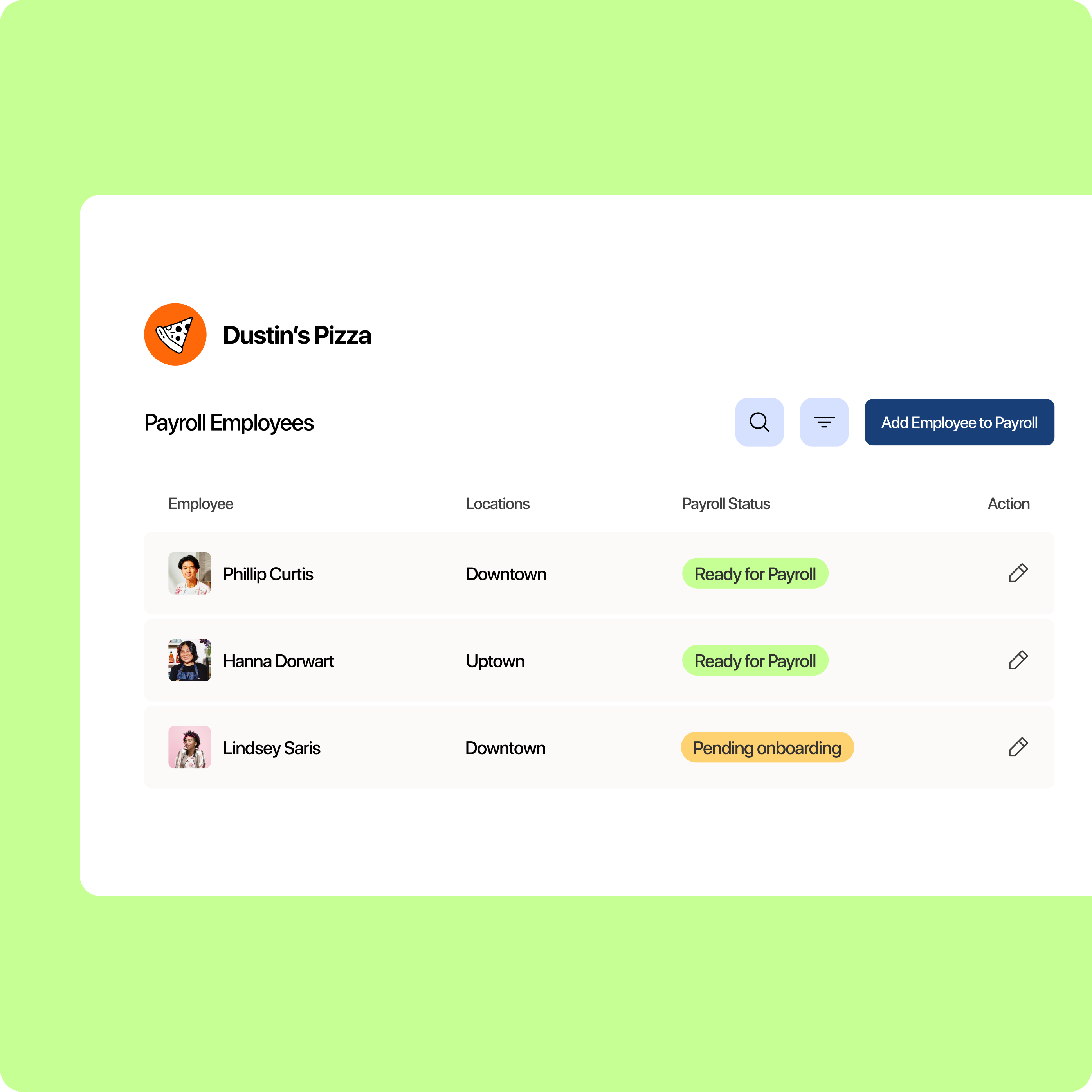
| Employee Access | Paper pay stubs | Self-service mobile apps |
The Role of Self-Service Portals
A significant, often overlooked benefit of modern payroll software is the self-service portal for employees. In the restaurant industry, turnover is historically high. Administrative tasks like distributing pay stubs, answering questions about tax withholdings, and processing direct deposit changes consume valuable management time.
When employees have access to a mobile app or portal, they can manage their own payroll information, access tax documents (W-2s, 1099s), and track their earnings without involving the manager. This empowerment not only saves hours of administrative labor but also increases transparency, which can contribute to higher employee satisfaction and, subsequently, lower turnover rates.
Prerequisites for Implementing Payroll Software
Transitioning to a specialized restaurant payroll system requires careful preparation. Before selecting a vendor, operators should conduct a thorough internal assessment of their current setup:
- POS Compatibility: Confirm that the payroll software integrates directly with your existing POS (e.g., Toast, Clover, Square, or Aloha). Without this, the administrative burden of manually uploading tip data remains.
- Current Workflow Mapping: Document your current process for tip pooling, overtime calculations, and split-shift pay. This will help during the "mapping" phase of the implementation.
- Historical Data Migration: Decide how much historical payroll data needs to be imported into the new system. Often, keeping the last two years of data is sufficient for tax purposes.
- Stakeholder Training: Identify a "super-user" among the management team who will handle the initial onboarding and troubleshooting of the new platform.
Common Pitfalls to Avoid
Even with the best software, implementation can fail if specific best practices are ignored. One common mistake is neglecting to audit the data before the "go-live" date. If an employee’s tax identification number or address is incorrect in the old system, it will remain incorrect in the new one. Always perform a data cleanse before migrating to a new platform.
Another common error is failing to utilize the "overtime alerts" feature. Many restaurants disable notifications to avoid being bothered by the software, but these alerts are critical for maintaining tight labor margins. Treat these alerts as vital operational intelligence rather than background noise.
Frequently Asked Questions
Does restaurant payroll software automatically handle complex tip pooling laws? Yes, most enterprise-level restaurant payroll solutions allow for the configuration of specific tip-pooling rules. However, you must verify that your configuration aligns with local state and municipal regulations, as tip-pooling laws vary significantly across jurisdictions.
Will this software work if I operate multiple restaurant locations with different legal entities? Yes. Modern platforms are designed for "multi-entity" management. They allow you to maintain distinct payroll profiles, tax IDs, and reporting structures for every location while providing a single dashboard for the owner or operations manager to oversee total labor costs.
Can payroll software help with the Affordable Care Act (ACA) reporting? Yes. Most dedicated restaurant payroll systems include ACA compliance features that track employee hours to determine eligibility for employer-sponsored health benefits, and they assist in generating the necessary documentation for annual filings.
How does this software help during tax season? It automates the preparation and electronic submission of year-end tax forms (such as W-2s and 1099s). Furthermore, it ensures that quarterly payroll tax deposits are calculated and paid to the appropriate state and federal authorities on time, preventing interest and penalty accruals.
Next Steps for Operators
If you are currently relying on manual processes or non-specialized accounting software, your next step should be an audit of your "hidden" labor costs—specifically, the hours your managers spend each week processing payroll and correcting errors. Once you have a clear picture of this time investment, compare that cost against the monthly subscription fee of a specialized restaurant payroll provider. In nearly all cases, the efficiency gains and risk reduction provide a positive return on investment within the first year of implementation. Consult with your accountant or a specialized restaurant operational consultant to select a provider that offers both robust integration with your POS and dedicated support for the hospitality industry.
Image Gallery