How Does a Mini Refrigerator Work? A Detailed Look at Compact Cooling Technology
A mini refrigerator works by removing heat from its internal compartment and transferring it to the external environment, typically using either a vapor-compression cycle or the thermoelectric Peltier effect. While compressor-based mod...
A mini refrigerator works by removing heat from its internal compartment and transferring it to the external environment, typically using either a vapor-compression cycle or the thermoelectric Peltier effect. While compressor-based models circulate a chemical refrigerant to absorb heat through evaporation, thermoelectric models use electrical current and semi-conductors to create a temperature differential.
Contents
Compact refrigeration has evolved significantly by 2026, moving beyond simple dorm-room accessories to highly efficient, specialized appliances. To understand how these devices keep your beverages cold and your snacks fresh, it is necessary to examine the two primary technologies that drive them: vapor compression and thermoelectric cooling. Each system operates on different physical principles, impacting everything from energy consumption and noise levels to the ultimate cooling capacity of the unit.
The Vapor Compression Cycle: The Industry Standard
The vast majority of full-sized refrigerators and high-performance mini-fridges use the vapor-compression cycle. This process relies on the physics of thermodynamics—specifically the principle that fluids absorb heat when they evaporate into a gas and release heat when they condense back into a liquid.
1. The Compressor
The heart of the system is the compressor, a pump usually located at the bottom back of the unit. When the internal thermostat detects that the temperature has risen above the set point, it triggers the compressor. The compressor takes in low-pressure, cool refrigerant gas and squeezes it. This mechanical compression increases the pressure and, according to the laws of thermodynamics, dramatically raises the temperature of the gas.
2. The Condenser Coils
The hot, high-pressure gas then travels through the condenser coils, which are typically located on the exterior back of the mini-fridge or hidden within the side walls. As the gas flows through these coils, it dissipates its heat into the surrounding room air. As it loses heat, the refrigerant cools down and condenses into a high-pressure liquid. This is why the back or sides of a mini-fridge often feel warm to the touch during operation.
3. The Expansion Valve
The high-pressure liquid refrigerant then passes through an expansion valve or a capillary tube—a very narrow opening. This acts as a pressure-drop point. As the liquid is forced through this restriction into a wider area (the evaporator), its pressure drops instantly. This sudden drop in pressure causes the refrigerant to cool down significantly, preparing it to absorb heat from the fridge's interior.
4. The Evaporator Coils
The cold, low-pressure refrigerant now enters the evaporator coils, which are located inside the insulated compartment of the mini-fridge. In many mini-fridges, these coils are integrated into the "chiller box" or the small freezer flap at the top. Because the refrigerant is much colder than the air inside the fridge, it absorbs heat from the food and beverages. This heat absorption causes the refrigerant to boil and turn back into a low-pressure gas, which then returns to the compressor to begin the cycle again.
Thermoelectric Cooling: The Silent Alternative
If you have a very small "desktop" mini-fridge designed to hold only six cans, or a wine cooler that advertises "silent operation," it likely uses thermoelectric technology. This system does not use a compressor, coils, or liquid refrigerant. Instead, it relies on the Peltier Effect.
The Peltier Effect occurs when an electric current is passed through a junction of two different types of semiconductors. This causes heat to move from one side of the device to the other. One side becomes very cold (the side facing the interior of the fridge), while the other side becomes very hot.
Heat Sinks and Fans
Because thermoelectric modules (Peltier plates) are relatively small, they require help to move heat effectively. On the "cold" side inside the fridge, an aluminum heat sink absorbs the internal heat. On the "hot" side outside the fridge, a larger heat sink and a small electric fan work together to blow the heat away into the room.
Limitations of Thermoelectric Models
While quiet and vibration-free, thermoelectric mini-fridges are generally less powerful than compressor models. They are "ambient dependent," meaning they can typically only cool to about 20°F to 30°F below the temperature of the room. If the room is 80°F, a thermoelectric fridge may struggle to get below 50°F, which is not safe for perishable items like milk or raw meat. In 2026, these units remain popular primarily for skincare products, medications, and canned drinks in climate-controlled environments.
Comparing Compressor vs. Thermoelectric Mini-Fridges
Choosing the right mini-fridge requires understanding how these two technologies perform in real-world conditions.
| Feature | Compressor-Based Mini-Fridge | Thermoelectric Mini-Fridge |
|---|---|---|
| Cooling Power | High; can reach freezing temperatures easily. | Moderate; limited by ambient room temperature. |
| Noise Level | Audible humming and clicking (compressor). | Very quiet (only a small fan). |
| Vibration | Slight vibration when the motor runs. | No vibration. |
| Reliability | Long-lasting but has moving parts. | Few moving parts; solid-state technology. |
| Energy Efficiency | High efficiency for the cooling provided. | Lower efficiency; runs constantly to maintain temp. |
| Best For | Perishables, dairy, long-term food storage. | Beverages, snacks, beauty products, meds. |
Essential Components Beyond the Cooling Loop
Whether it uses a compressor or a Peltier plate, several other components are critical to how a mini refrigerator works effectively.
The Thermostat and Control Board
The thermostat acts as the "brain" of the appliance. It monitors the internal temperature using a sensor. In 2026 models, electronic thermostats have largely replaced old-fashioned dial bimetallic strips, offering precision within 0.5 degrees. When the sensor detects a rise in temperature, it completes the electrical circuit to the cooling system.
Thermal Insulation
A refrigerator is essentially an insulated box. Most mini-fridges use Polyurethane Foam injected between the inner plastic liner and the outer metal shell. This foam has a high R-value (resistance to heat flow), which prevents heat from the room from seeping into the cold interior. The quality of this insulation determines how often the compressor needs to run.
The Door Gasket
The rubber seal around the door, known as the gasket, is a common point of failure. It uses a magnetic strip to create an airtight seal. If this seal is compromised, warm air enters the fridge, causing the evaporator coils to frost over and forcing the cooling system to work overtime, which can lead to premature motor failure.
Environmental Factors and Ventilation
A common mistake users make is placing a mini-fridge in a tight cabinet or under a desk without proper airflow. Because all refrigerators work by moving heat rather than creating cold, that heat must have somewhere to go.
For a compressor-based unit, if the condenser coils cannot shed heat because of poor ventilation, the refrigerant will remain too warm, and the cooling cycle will fail. This leads to the "short-cycling" of the compressor, where it turns on and off rapidly, eventually burning out the start relay or the compressor windings. As of 2026, many high-end "built-in" mini-fridges feature front-venting systems to solve this issue, but standard freestanding models still require at least 2-3 inches of clearance on all sides.
Maintenance and Troubleshooting
Understanding the mechanics helps in diagnosing common issues. If a mini-fridge is running but not cooling, the problem is often related to the heat exchange process.
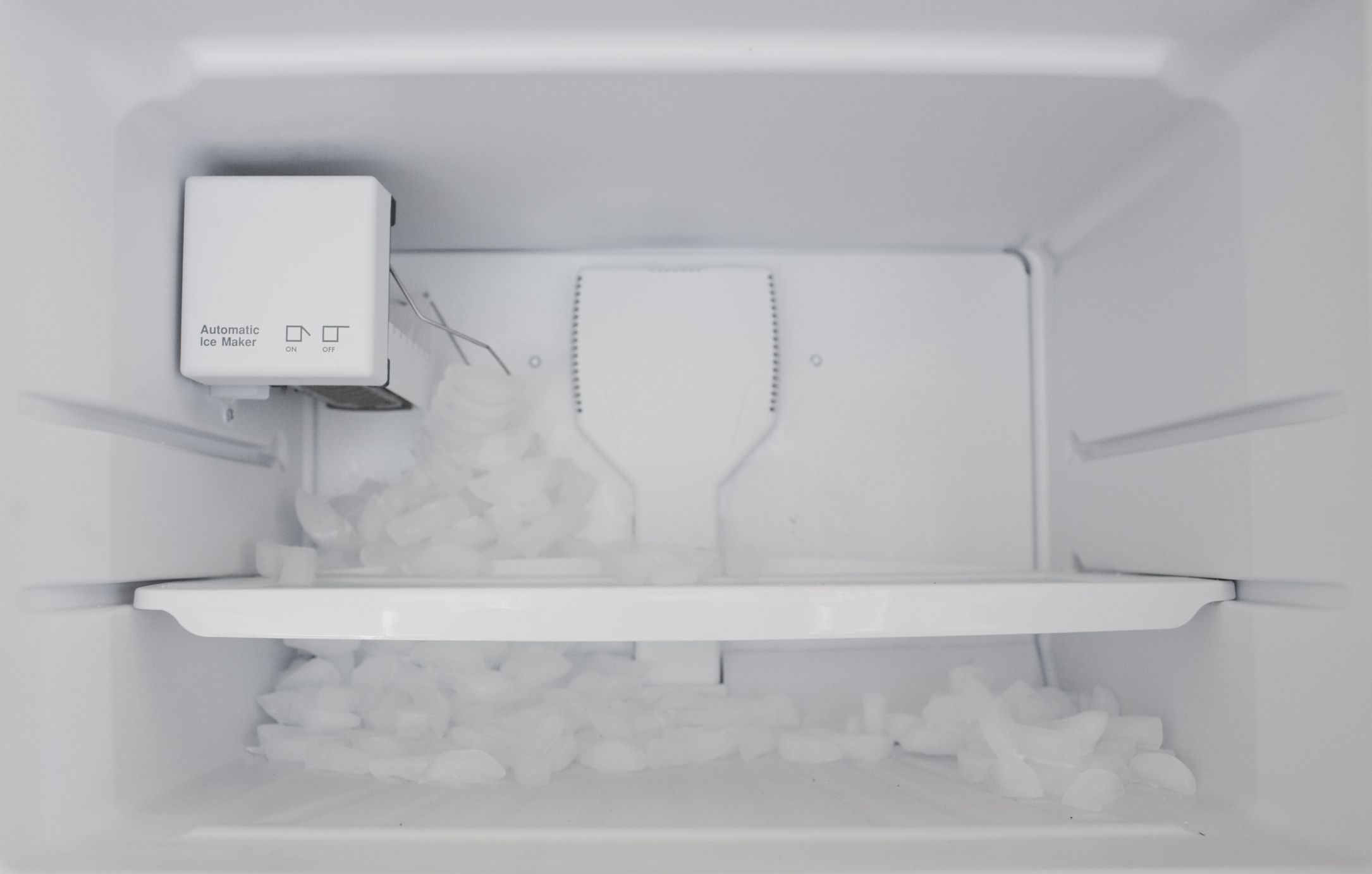
- Frost Buildup: In many mini-fridges, the evaporator is exposed. When you open the door, moisture from the air hits the freezing cold evaporator and turns to ice. Over time, this ice acts as an insulator, preventing the coils from absorbing heat from the fridge. Manual defrosting is usually required every few months.
- Dirty Condenser Coils: If the coils on the back are covered in dust or pet hair, they cannot release heat efficiently. Cleaning these coils annually can improve efficiency by up to 20%.
- Failed Start Relay: If you hear a "click" followed by a hum that stops quickly, the compressor's start relay may have failed. This is a common and relatively inexpensive part to replace.
Frequently Asked Questions
Why does my mini-fridge make a gurgling sound?
This is usually the sound of the liquid refrigerant transitioning into a gas as it moves through the evaporator coils. It is a normal part of the vapor-compression cycle and indicates that the refrigerant is flowing correctly.
Can I use a mini-fridge to store raw meat safely?
If the unit is a compressor-based model, yes, provided the thermostat is set to keep the internal temperature below 40°F (4°C). Thermoelectric models are generally not recommended for raw meat or highly perishable dairy because they cannot consistently maintain low temperatures in warm environments.
How much electricity does a mini-fridge use in 2026?
Modern Energy Star-rated compressor mini-fridges are incredibly efficient, often consuming between 200 and 300 kWh per year. This typically translates to less than $50 USD annually in energy costs, depending on local utility rates.
Why is there water at the bottom of my mini-fridge?
This is usually caused by a clogged drain hole or excessive frost melt. Most mini-fridges have a small channel to collect condensation from the evaporator and direct it to a drip pan above the compressor, where the heat evaporates the water. If this channel is blocked, water will pool inside.
Does a mini-fridge need a dedicated circuit?
While they use less power than full-sized units, mini-fridges have a high "startup surge" when the compressor kicks in. It is best to avoid plugging them into overloaded power strips or sharing a circuit with other high-draw appliances like microwave ovens.
Practical Recommendation for Users
When selecting a mini-fridge, first identify your primary storage needs. If you require a unit for a dorm or office to store lunch and milk, prioritize a compressor-based model with an Energy Star rating. If you only need to keep canned sodas or beauty serums cool on a vanity, a thermoelectric model is a more compact and quieter choice. Regardless of the type, always ensure the unit has at least two inches of clearance from walls to allow for proper heat dissipation, ensuring the cooling cycle remains efficient and the appliance lasts for years to come.
Image Gallery