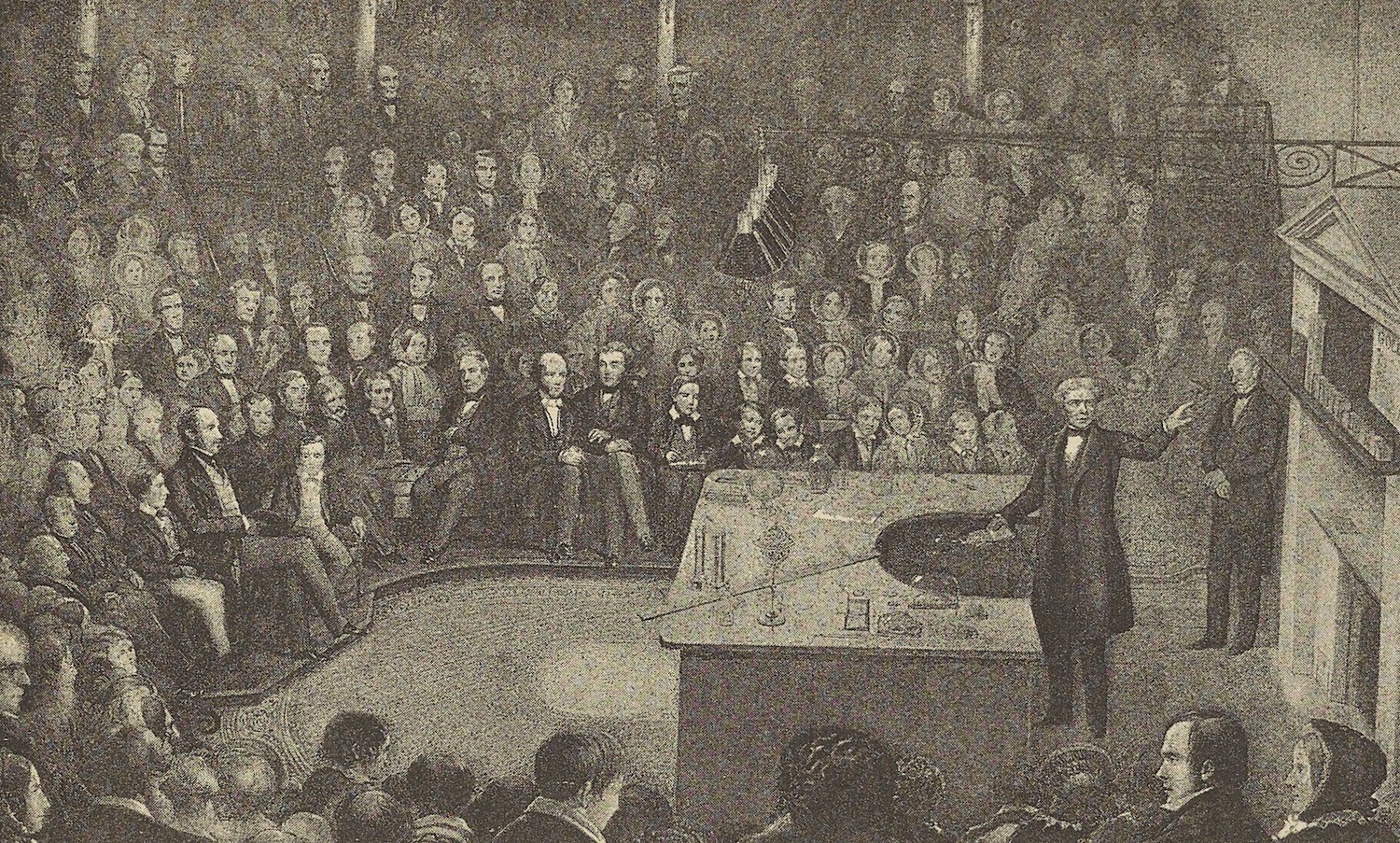
What Michael Faraday Invented for Science: A Legacy of Electromagnetism and Chemistry
Michael Faraday’s inventions and discoveries laid the essential groundwork for modern physics and chemistry. His most notable scientific contributions include the development of the first electric motor, the creation of the first elect...
Michael Faraday’s inventions and discoveries laid the essential groundwork for modern physics and chemistry. His most notable scientific contributions include the development of the first electric motor, the creation of the first electric generator (the dynamo), the discovery of electromagnetic induction, and the identification of benzene. These breakthroughs transformed electricity from a laboratory curiosity into a powerful, practical technology that powers our world in 2026.
Contents
Beyond his mechanical inventions, Faraday pioneered the concept of the electromagnetic field, discovered the laws of electrolysis, and developed the Faraday cage. His work remains the foundation upon which James Clerk Maxwell later built the classical field theory, and his experimental methods continue to be a gold standard for scientific inquiry.
The Birth of the Electric Motor: Electromagnetic Rotation
In 1821, Michael Faraday achieved a breakthrough that would eventually change the face of global industry: he created the first device to convert electrical energy into mechanical motion. This invention, known as electromagnetic rotation, was the direct ancestor of the modern electric motor.
At the time, the scientific community was reeling from Hans Christian Ørsted’s discovery that an electric current in a wire could deflect a magnetic needle. Faraday took this further by hypothesizing that if a magnet could move a wire, the wire could be made to move continuously around a magnet.
To prove this, Faraday constructed a simple but ingenious apparatus. He placed a permanent magnet at the bottom of a glass vessel filled with mercury (a liquid conductor). He then suspended a wire from above, allowing the end of the wire to dip into the mercury. When he connected a battery to the system, the wire began to rotate in a continuous circle around the magnet.
This experiment proved that electricity could produce mechanical work. While Faraday’s original "motor" was more of a laboratory demonstration than a practical engine, it established the fundamental principle used in every electric motor today—from the tiny vibrators in 2026 smartphones to the massive industrial motors in electric vehicles and manufacturing plants.
Electromagnetic Induction and the First Generator
If the electric motor was Faraday’s first great gift to science, his discovery of electromagnetic induction in 1831 was perhaps his most significant. This discovery solved the "reverse" problem of his earlier work: if electricity could produce motion, could motion produce electricity?
Faraday discovered that moving a magnet through a coil of wire, or changing the magnetic field around a conductor, "induced" an electric current in that wire. This phenomenon is known as Faraday's Law of Induction. To demonstrate this, he built the Faraday Disk, the world’s first electromagnetic generator, often called a dynamo.
The Faraday Disk consisted of a copper disc rotating between the poles of a horseshoe magnet. As the disc turned, it cut through the magnetic lines of force, generating a continuous direct current (DC). This was the first time humans had a way to generate electricity through mechanical means rather than chemical batteries. Without this invention, our modern power grid—from hydroelectric dams to wind turbines—would be impossible.
The Invention of the Transformer: The Induction Ring
Shortly before perfecting the generator, Faraday invented the first transformer, although he did not call it by that name. During his experiments with induction, he created a device known as the Induction Ring.
The device consisted of a soft iron ring with two insulated coils of wire wound around opposite sides. Faraday noticed that when he connected one coil to a battery, a momentary "pulse" of electricity was induced in the second coil. When he disconnected the battery, another pulse was induced in the opposite direction.
This was the first demonstration of mutual induction. It proved that a changing magnetic field in one circuit could induce a current in a separate, unconnected circuit. This principle is the heart of the modern electrical transformer, which allows us to step voltages up or down for efficient long-distance power transmission.
Discovery of Benzene and Contributions to Chemistry
While Faraday is most famous for his work in physics, he was equally influential in chemistry. In 1825, while working at the Royal Institution, he was asked to analyze a residue left behind in the gas cylinders used for street lighting in London.
Through a process of distillation, Faraday isolated a new substance he called "bicarburet of hydrogen." This substance was later renamed benzene. Benzene is one of the most important organic compounds in science; it is the building block for thousands of chemicals, including plastics, dyes, detergents, and pharmaceuticals.
Faraday’s chemical expertise also led to several other "firsts" for science:
- Liquefaction of Gases: He was the first to successfully liquefy several gases, including chlorine and ammonia, by using high pressure and low temperatures. This work proved that gases are simply the vapors of liquids with very low boiling points, a concept central to thermodynamics.
- The Bunsen Burner Precursor: Before Robert Bunsen perfected the device, Faraday invented an early version of a high-temperature burner that mixed gas with air before combustion.
- Optical Glass: He spent years perfecting heavy lead-borosilicate glass, which possessed high refractive indices. While the project was commercially difficult, this "heavy glass" later allowed him to discover the Faraday Effect.
The Faraday Cage and Electrostatic Shielding
In 1836, Faraday conducted a famous experiment to investigate how electricity behaves on a conductor. He built a room coated in metal foil and applied high-voltage discharges to the outside of the enclosure. Using an electroscope, he demonstrated that there was no electrical charge present on the interior of the room.
This led to the invention of the Faraday cage. The cage works because an external electrical field causes the electric charges within the cage's conducting material to be distributed such that they cancel the field's effect in the cage's interior.
In 2026, Faraday cages are more relevant than ever. They are used to:
- Protect sensitive electronics: Shielding computers and medical equipment from electromagnetic interference (EMI).
- Safety in Aviation: Protecting aircraft from lightning strikes by ensuring the current travels along the exterior "skin" of the plane.
- Data Security: Creating "dead zones" where signals cannot enter or leave, preventing electronic eavesdropping.
- Microwave Ovens: The mesh on your microwave door is a Faraday cage that keeps the radiation inside while allowing you to see your food.
Faraday’s Laws of Electrolysis
Faraday revolutionized the study of electrochemistry by defining the relationship between electricity and chemical bonding. He formulated two laws of electrolysis that quantify how much material is deposited on an electrode during a chemical reaction.
- First Law: The mass of a substance altered at an electrode during electrolysis is directly proportional to the quantity of electricity transferred at that electrode.
- Second Law: For a given quantity of electricity, the mass of an elemental material altered is proportional to the element's chemical equivalent weight.
To describe these processes, Faraday (along with polymath William Whewell) coined the terminology still used in chemistry today: ion, electrode, anode, cathode, and electrolyte.
Comparing Faraday’s Major Inventions and Discoveries
The following table summarizes the primary inventions and their impact on modern scientific applications.
| Invention/Discovery | Year | Core Scientific Principle | Modern Application (2026) |
|---|---|---|---|
| Electric Motor | 1821 | Electromagnetic Rotation | EVs, drones, industrial robots |
| Benzene Discovery | 1825 | Organic Chemistry / Distillation | Manufacturing of plastics and drugs |
| Induction Ring | 1831 | Mutual Induction | Electrical transformers, wireless charging |
| Electric Generator | 1831 | Electromagnetic Induction | Power plants (Hydro, Wind, Nuclear) |
| Faraday Cage | 1836 | Electrostatic Shielding | MRI rooms, EMP protection, cell shielding |
| Laws of Electrolysis | 1834 | Electrochemistry | Battery tech, electroplating, hydrogen fuel |
| Faraday Effect | 1845 | Magneto-optics | Fiber optic sensors, isolators |
The "Lines of Force" and the Field Concept
Perhaps Faraday’s greatest "invention" was not a physical object, but a conceptual one: the magnetic field.
In the 19th century, most scientists believed in "action at a distance," where objects affected each other instantly across empty space. Faraday, who was largely self-taught and lacked a formal mathematical background, relied on his visual intuition. He imagined space being filled with invisible "lines of force."
When he sprinkled iron filings around a magnet, he saw the filings align along these lines. He proposed that the space itself was modified by the presence of magnets and currents. While his peers were skeptical of this non-mathematical approach, James Clerk Maxwell eventually took Faraday’s "lines of force" and translated them into the four famous Maxwell’s Equations. This shifted the paradigm of physics from a focus on matter to a focus on the fields that permeate space.
Frequently Asked Questions
Did Michael Faraday invent the first battery?
No, the first chemical battery (the voltaic pile) was invented by Alessandro Volta in 1800. Faraday used batteries for his experiments, but his contribution was inventing the electric generator, which provided a way to produce electricity through mechanical motion rather than chemical reactions.
How did Faraday discover benzene?
Faraday discovered benzene by analyzing the oily residue left over from the production of "portable gas," which was used for lighting in London. By distilling this residue at specific temperatures, he was able to isolate the pure hydrocarbon compound.
Why is the Faraday cage important in 2026?
The Faraday cage is vital today for protecting our digital infrastructure. As we rely more on sensitive microchips, the threat of solar flares or electromagnetic pulses (EMPs) increases. Faraday cages protect telecommunications hubs, aircraft electronics, and even the hardware inside your smartphone from being fried by external electrical surges.
Was Michael Faraday a mathematician?
Surprisingly, no. Faraday had very little formal education and was not proficient in advanced mathematics. He famously described his findings in plain English and through visual diagrams. It was James Clerk Maxwell who later provided the mathematical framework for Faraday’s experimental discoveries.
What is the Faraday Effect?
The Faraday Effect was his discovery in 1845 that a strong magnetic field could rotate the plane of polarized light. This was a landmark moment for science because it provided the first experimental evidence that light and electromagnetism were related.
Practical Recommendations for Students and Researchers
If you are researching what Michael Faraday invented for science, it is important to distinguish between his mechanical inventions and his theoretical discoveries. For those looking to delve deeper into his work, the following steps are recommended:
- Review the Original Diaries: Faraday was a meticulous record-keeper. His laboratory journals, often cited by the Royal Institution, offer a day-by-day look at how he troubleshot his experiments.
- Study Faraday's Law: For students of physics, mastering the mathematical expression of Faraday's Law ($E = -d\Phi_B/dt$) is essential for understanding how modern power systems operate.
- Experimental Replication: Many of Faraday’s experiments, such as building a simple homopolar motor or a Faraday cage, are safe and accessible for classroom demonstrations even in 2026.
- Explore the Chemical Terminology: Understanding the origins of terms like "anode" and "cathode" helps in grasping the fundamentals of electrochemistry and battery design.
Faraday’s legacy is a testament to the power of observation and persistent experimentation. From the motor that drives our transport to the shielding that protects our data, his 19th-century inventions remain the backbone of 21st-century civilization.
Image Gallery