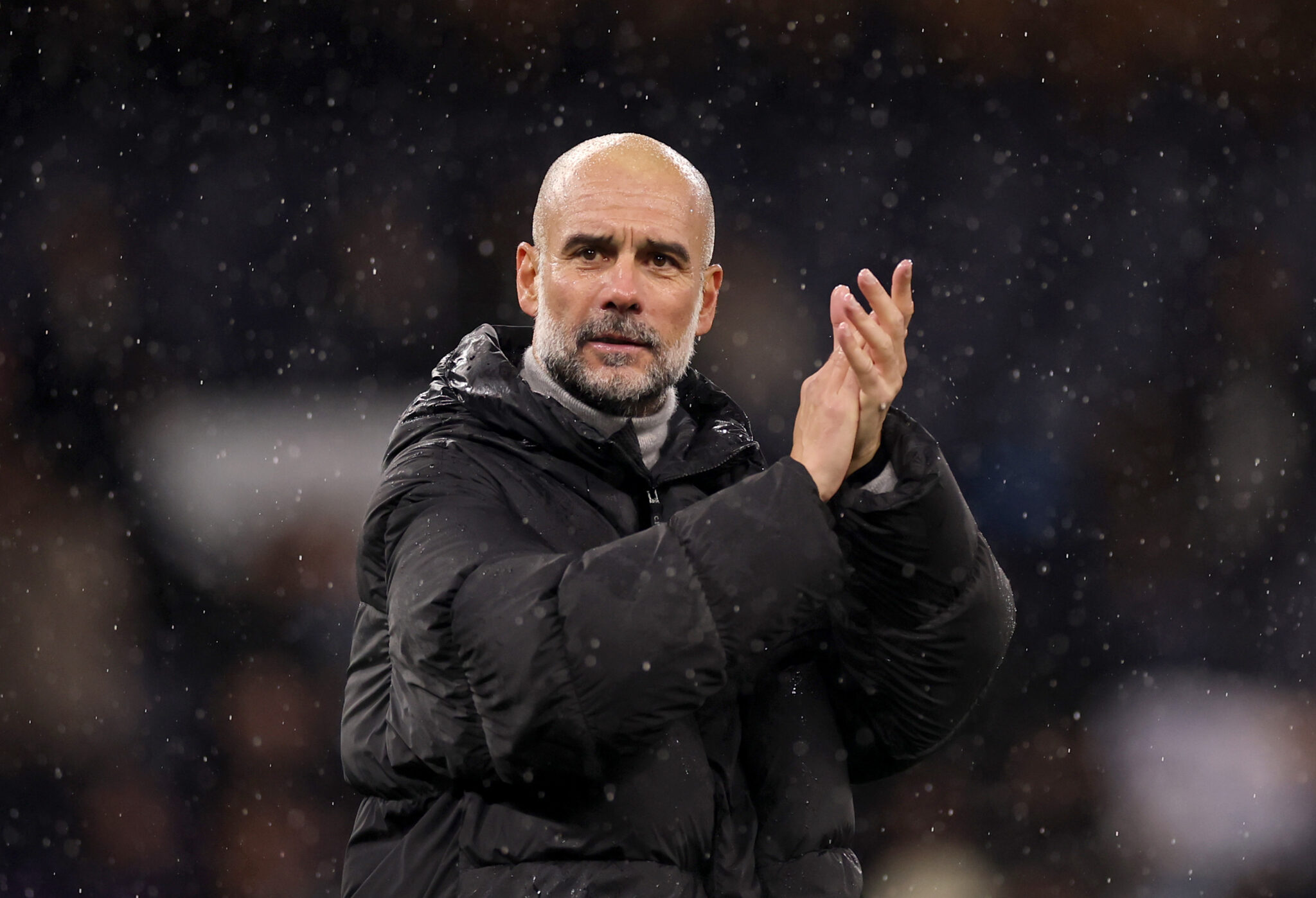
Pep Guardiola Managerial Profile: Tactical Innovation, Philosophy, and Career Record
Pep Guardiola is widely regarded as one of the most influential football managers in the history of the sport. Recognized for pioneering modern positional play (Juego de Posición), high-intensity pressing, and fluid tactical flexibilit...
Pep Guardiola is widely regarded as one of the most influential football managers in the history of the sport. Recognized for pioneering modern positional play (Juego de Posición), high-intensity pressing, and fluid tactical flexibility, Guardiola transformed the strategic landscape during elite tenures at FC Barcelona, Bayern Munich, and Manchester City, securing dozens of major domestic and international trophies.
Contents
The Tactical Philosophy: Understanding Juego de Posición
At the heart of Pep Guardiola’s success as a manager lies Juego de Posición (Positional Play), a structured tactical framework derived from the Total Football principles of Rinus Michels and Johan Cruyff. Rather than viewing position as a fixed spatial area on a pitch diagram, Guardiola treats positioning as a dynamic mechanism to create numerical, qualitative, and positional superiority across specific zones of the pitch.
- Pitch: Divided into vertical channels (5 corridors)
Guardiola divides the field into five vertical channels: two wide wings, two inner half-spaces (Zwischenräume), and a central channel. The fundamental rules of his positional system stipulate that no more than three players may occupy the same horizontal line simultaneously, and no more than two players may occupy the same vertical channel. This deliberate structural discipline serves several distinct tactical purposes:
- Numerical Superiority (+1 Advantage): Generating an extra player near the ball during build-up play, allowing team members to bypass opposition pressing lines through short, rapid passing triangles.
- Qualitative Superiority: Isolating world-class 1v1 wingers against opposition full-backs by drawing the defending team toward the opposite flank before executing a rapid diagonal switch.
- Positional Superiority: Placing attacking players between opposition lines of defense and midfield, forcing defenders to abandon their structural assignments or leave creative playmakers unmarked.
- Rest Defense (Restverteidigung): Structuring off-ball positioning while attacking, ensuring that players are immediately positioned to execute counter-pressing (Gegenpressing) the moment possession is lost.
Guardiola’s teams do not pass the ball merely to maintain possession statistics. Possession is utilized as an offensive and defensive tool: offensively, to disorganize the opponent's defensive block; defensively, to control the tempo of the match and prevent the opposition from establishing offensive rhythm.
Career Chronology: Evolution Across Three Elite Eras
Guardiola’s managerial career is defined by three distinct eras, each characterized by structural adaptations to match the physical and cultural demands of different domestic leagues.
| FC Barcelona (2008–2012) | Bayern Munich (2013–2016) | Manchester City (2016–Present) |
|---|
FC Barcelona (2008–2012): The Tiki-Taka Revolution
Guardiola assumed control of FC Barcelona’s first team in the summer of 2008 after a successful period managing Barcelona B. He immediately instituted sweeping changes, departing from established stars like Ronaldinho and Deco to build a squad centered around academy talents from La Masia, including Xavi Hernández, Andrés Iniesta, Lionel Messi, and Sergio Busquets.
During his four seasons at Camp Nou, Barcelona played an expressive, short-passing style labeled by the media as "Tiki-Taka" (a term Guardiola himself publicly resisted). Key innovations included placing Lionel Messi into the "False Nine" role—a deep-dropping central striker position that baffled traditional center-backs—and using Sergio Busquets as a single pivot anchor capable of breaking lines with accurate ground passes under heavy pressure. Barcelona achieved an unprecedented calendar-year sextuple in 2009, winning La Liga, the Copa del Rey, the UEFA Champions League, the Supercopa de España, the UEFA Super Cup, and the FIFA Club World Cup.
Bayern Munich (2013–2016): German Directness Meets Positional Control
After a year-long sabbatical in New York, Guardiola joined Bayern Munich in 2013, inheriting a squad that had just won a treble under Jupp Heynckes. Rather than imposing the exact Barcelona blueprint onto a physically imposing German squad, Guardiola adapted his ideas to incorporate direct wing play and vertical transitions.
In Bavaria, Guardiola refined the use of inverted full-backs. He famously shifted Philipp Lahm from right-back into a central defensive midfielder, utilizing Lahm's tactical intelligence to control transitions and overload the central midfield area. He similarly developed David Alaba into a hybrid full-back, center-back, and midfielder. While a UEFA Champions League title eluded Bayern during his tenure, Guardiola delivered three consecutive Bundesliga titles with unprecedented dominance, achieving record-breaking points totals and ball-possession figures.
Manchester City (2016–Present): System Perfection and English Dominance
Guardiola arrived at Manchester City in 2016. After an initial adjustment season in the Premier League, where his team finished third while adapting to the physical intensity and transition speed of English football, Guardiola transformed Manchester City into a dominant domestic force.
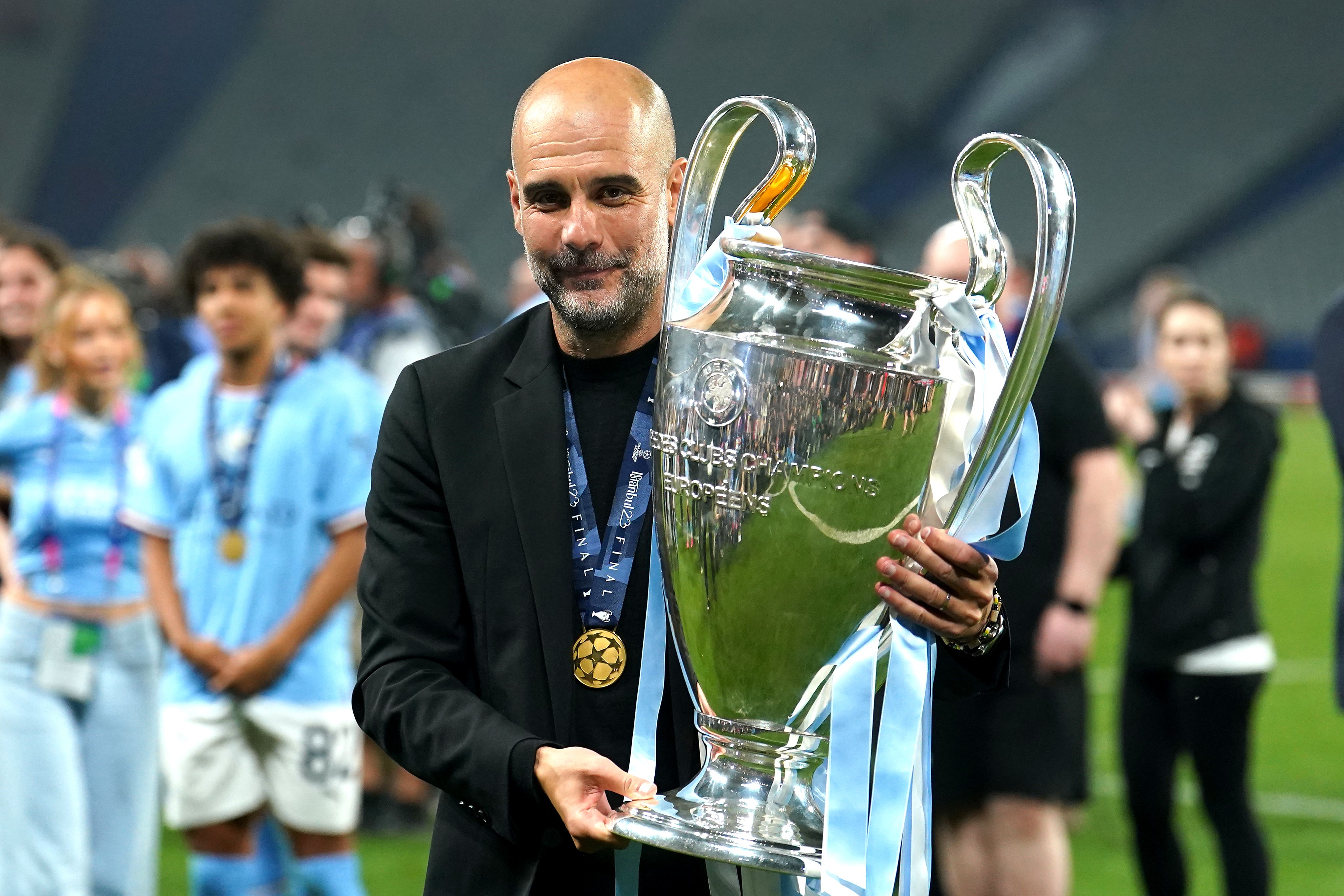
In the 2017–18 season, Manchester City became the first team in Premier League history to reach 100 points in a single campaign ("The Centurions"). Guardiola subsequently led City to an unprecedented domestic treble in 2018–19 and a historic European Treble in 2022–23, capturing the long-sought UEFA Champions League trophy alongside the Premier League and FA Cup.
At City, Guardiola continued to innovate technically, transitioning from inverted full-backs like João Cancelo to using central defenders like John Stones and Manuel Akanji as hybrid mid-field pivots alongside Rodri, providing physical resilience against counter-attacks without sacrificing technical buildup.
Managerial Performance and Trophy Record Comparison
The following table synthesizes Pep Guardiola's competitive managerial record across his three major tenures.
| Metric / Domain | FC Barcelona (2008–2012) | Bayern Munich (2013–2016) | Manchester City (2016–Present) |
|---|---|---|---|
| Primary Matches Managed | 247 | 161 | 450+ |
| Win Percentage (Approx.) | 72.5% | 75.2% | 72.0%+ |
| League Titles Won | 3 (La Liga) | 3 (Bundesliga) | 6+ (Premier League) |
| Domestic Cups Won | 2x Copa del Rey | 2x DFB-Pokal | 2x FA Cup, 4x EFL Cup |
| UEFA Champions League | 2 (2008–09, 2010–11) | Semi-Finalist (3x) | 1 (2022–23), Runner-up (2020–21) |
| Signature System Landmark | False 9 Messi, Xavi-Iniesta Midfield | Inverted Full-backs (Lahm/Alaba) | 3-2-2-3 Box Midfield (Stones Hybrid) |
| Average Ball Possession | ~68% - 72% | ~66% - 70% | ~64% - 68% |
Key Tactical Innovations Pioneered by Guardiola
Guardiola's tactical legacy extends beyond trophy tallies; his specific innovations have permanently altered global football coaching standards.
1. The Modern False Nine
While central forwards dropping deep existed historically (such as Nándor Hidegkuti or Matthias Sindelar), Guardiola modernized the concept by deploying Lionel Messi in the role during a 6-2 victory against Real Madrid in May 2009. By vacating the central striker area, Messi created a 4v3 advantage in midfield, drawing center-backs out of position and opening vertical corridors for wingers Thierry Henry and Samuel Eto'o to run into.
2. Inverted Full-Backs
Traditional full-backs provide width by overlapping wide wingers along the touchline. Guardiola inverted this setup, instructing full-backs to tuck inside into the central half-spaces during phase-one and phase-two buildup play. This move:
- Prevents opponent counter-attacks through the center of the pitch by adding defensive bodies near the ball.
- Frees attacking midfielders to operate higher up in the half-spaces without compromising defensive cover.
- Allows natural wide wingers to stay isolated on the touchline for 1v1 situations.
3. The Box Midfield and Hybrid Defensive Positions
To counter narrow 4-4-2 or 5-3-2 low-block defensive structures, Guardiola deployed a 3-2-4-1 operational shape in possession. A center-back (most notably John Stones) pushes forward from the backline into a central defensive midfield role alongside a natural holding midfielder (such as Rodri).
- Attack Formation (3-2-4-1 In-Possession Structure):
- Forward Line: [ Winger ], [ Att Mid ], [ Striker ], [ Att Mid ], [ Winger ]
- Midfield Pivot: [ Holding Mid ], [ Hybrid CB/DM ]
- Defensive Line: [ Left CB ], [ Central CB ], [ Right CB ]
This creates a central "box midfield" (two holding midfielders behind two advanced attacking midfielders), giving the team four players in central areas to overload opposition central midfields while maintaining three fixed defenders at the back for rest defense.
Leadership Style, Player Development, and Management
Guardiola’s management extends beyond whiteboard tactics; it relies heavily on rigorous training field instruction, psychological management, and physical conditioning.
Obsessive Attention to Detail and Micro-Coaching
Guardiola is famous for micro-coaching—instructing players on body orientation (body shape) when receiving a pass, down to the exact foot they should control the ball with. He emphasizes receiving the ball on the back foot to open up the field, reducing the time required to scan options under high-intensity pressing.
Player Repositioning and Tactical Elevation
Throughout his career, Guardiola has repeatedly identified unexploited attributes in established players, converting them to elevated roles:
- Javier Mascherano: Converted from a central defensive midfielder to an elite line-breaking center-back at Barcelona.
- Philipp Lahm: Transformed from a world-class right-back into a high-level central controller at Bayern Munich.
- Joshua Kimmich: Transitioned from a young central midfielder to an elite full-back and tactical pivot.
- Fernandinho & Rodri: Refined into singular tactical anchors capable of managing transition defenses single-handedly.
Squad Rotation and High Standards
Guardiola demands relentless physical exertion during off-ball pressing triggers, typically operating under the "5-second rule"—demanding his players aggressively counter-press to win the ball back within five seconds of losing it. To maintain this intensity across a 60-game season, he employs extensive squad rotation, challenging high-profile stars to maintain focus or forfeit their places in the starting lineup.
Challenges, Criticisms, and Strategic Overthinking
Despite his record, Pep Guardiola’s managerial approach has faced specific tactical criticisms over the years.
High-Stakes Over-Engineering ("Overthinking")
The primary criticism directed at Guardiola during his UEFA Champions League campaigns between 2012 and 2022 was a tendency to over-engineer tactical setups for big knockout fixtures. Notable instances included:
- Deploying an unfamiliar three-at-the-back system against Lyon in the 2020 Champions League quarter-finals.
- Starting the 2021 Champions League final against Chelsea without a recognized holding midfielder (omitting both Rodri and Fernandinho), which exposed City to central counter-attacks in a 1-0 defeat.
Critics argued that by altering structural patterns that had proven successful throughout regular season play, Guardiola unintentionally created tactical confusion among his players during high-pressure moments.
Resource and Financial Requirements
Another recurring argument made by detractors is that Guardiola’s complex positional system requires exceptionally skilled, highly intelligent, and technically gifted players to execute effectively. Consequently, his achievements have occurred at clubs with substantial financial resources capable of procuring top-tier talent for every position, including specialized sweepers-keepers (such as Manuel Neuer and Ederson) who are fundamental to initiating play from the back.
Frequently Asked Questions
What is Pep Guardiola's primary managerial tactical system?
Pep Guardiola uses Juego de Posición (Positional Play). Although his base formations vary (shifting between 4-3-3, 4-2-3-1, and 3-2-4-1), the core system relies on controlling central zones, occupying half-spaces, generating numerical overloads during buildup, and immediate counter-pressing upon losing possession.
How many UEFA Champions League titles has Pep Guardiola won as a manager?
Guardiola has won three UEFA Champions League titles as a manager: two with FC Barcelona (2008–09 and 2010–11) and one with Manchester City (2022–23).
What is an "inverted full-back" in Guardiola's tactics?
An inverted full-back is a defender who moves inside from the wide defensive areas into the central midfield channel when their team has possession. This creates a central numerical overload, assists in controlling the tempo of the game, and guards against counter-attacks down the middle of the pitch.
Why is the "False Nine" position so closely associated with Guardiola?
Guardiola popularized the modern False Nine by moving Lionel Messi from the right wing to a central forward position against Real Madrid in 2009. Instead of staying up front against the center-backs, Messi dropped deep into midfield, leaving defenders with a dilemma: step out of line to follow him and leave space behind, or stay back and let him control the game unmarked.
How does Guardiola handle team defense compared to traditional managers?
Guardiola views defense through the lens of possession and spatial structure. His teams defend primarily by keeping the ball to deny the opponent attacking opportunities, and by maintaining a compact "rest defense" structural shape while attacking so they can immediately execute high-intensity counter-pressing when possession is turned over.
Tactical Takeaway and Application for Coaches
For football coaches, tacticians, and analysts studying Pep Guardiola’s managerial footprint, his success demonstrates that tactical systems must balance static structure with dynamic movement. Applying Guardiola's principles effectively requires prioritizing three fundamental pillars:
- Body Shape and First Touch: Ensure players receive the ball on their back foot facing forward to maximize field vision under pressure.
- Structural Occupation of Space: Maintain strict positional discipline across vertical corridors so the ball can be moved cleanly to open teammates.
- Proactive Rest Defense: Structure your off-ball positions while attacking, ensuring your squad is always set up to stop counter-attacks before they start.
By examining Guardiola's career across Barcelona, Bayern Munich, and Manchester City, it becomes clear that while player profiles change, the underlying commitment to spatial dominance, numerical superiority, and technical precision remains constant.
Image Gallery