How Old Is Warren Moon: Age, Biography, and Legendary Football Career
Warren Moon is 69 years old, having been born on November 18, 1956. As a legendary Hall of Fame quarterback, his age reflects an extraordinary life spanning multiple decades of gridiron dominance, pioneering achievements in professiona...
Warren Moon is 69 years old, having been born on November 18, 1956. As a legendary Hall of Fame quarterback, his age reflects an extraordinary life spanning multiple decades of gridiron dominance, pioneering achievements in professional football, and a lasting legacy as a trailblazing athlete who transformed the quarterback position across both the Canadian Football League and the National Football League.
Contents
Early Life and Collegiate Beginnings at University of Washington
Understanding the context of Warren Moon's life and career requires looking back at his formative years in Los Angeles, California. Born in 1956, Moon attended Hamilton High School, where he developed his athletic skills on the football field. Despite showing immense promise as a high school quarterback, opportunities at major NCAA Division I programs in the United States were severely restricted for Black quarterbacks during that era. Many programs attempted to shift talented Black signal-callers to alternative positions such as defensive back or wide receiver.
Refusing to switch positions, Moon chose to attend West Los Angeles College before transferring to the University of Washington. At Washington, he flourished under head coach Don James. His collegiate career culminated in a stellar senior season in 1977, leading the Huskies to a Pac-8 championship and a victory in the 1978 Rose Bowl, where he earned the game's Most Valuable Player honors. Despite this undeniable success on the collegiate stage, racial biases in professional scouting still heavily influenced perceptions, leading to him going unselected in the 1978 NFL Draft.
The Pioneering Years in the Canadian Football League
Faced with a lack of traditional opportunities in the NFL, Moon made the bold decision to take his talents north of the border to the Canadian Football League (CFL). Signing with the Edmonton Eskimos in 1978, Moon entered a league that offered a fair evaluation of his abilities as a franchise quarterback. This phase of his career proved foundational to his development and cemented his status as a legendary competitor.
In Edmonton, Moon operated a high-powered passing offense under head coach Hugh Campbell. He steadily refined his passing mechanics, leadership qualities, and deep-ball accuracy. His breakthrough came when he guided the Eskimos to an unprecedented five consecutive Grey Cup championships from 1978 to 1982.
Key CFL Achievements and Milestones
- Grey Cup Championships: Won five titles (1978, 1979, 1980, 1981, 1982), sharing starting duties early on before becoming the undisputed offensive focal point.
- CFL MVP Award: Named the league's Most Outstanding Player in 1983 after passing for an astonishing 5,648 yards.
- Passing Records: Became the first professional quarterback to pass for over 5,000 yards in a single season, achieving the feat in 1982 and 1983.
Transition to the National Football League and Houston Oilers Era
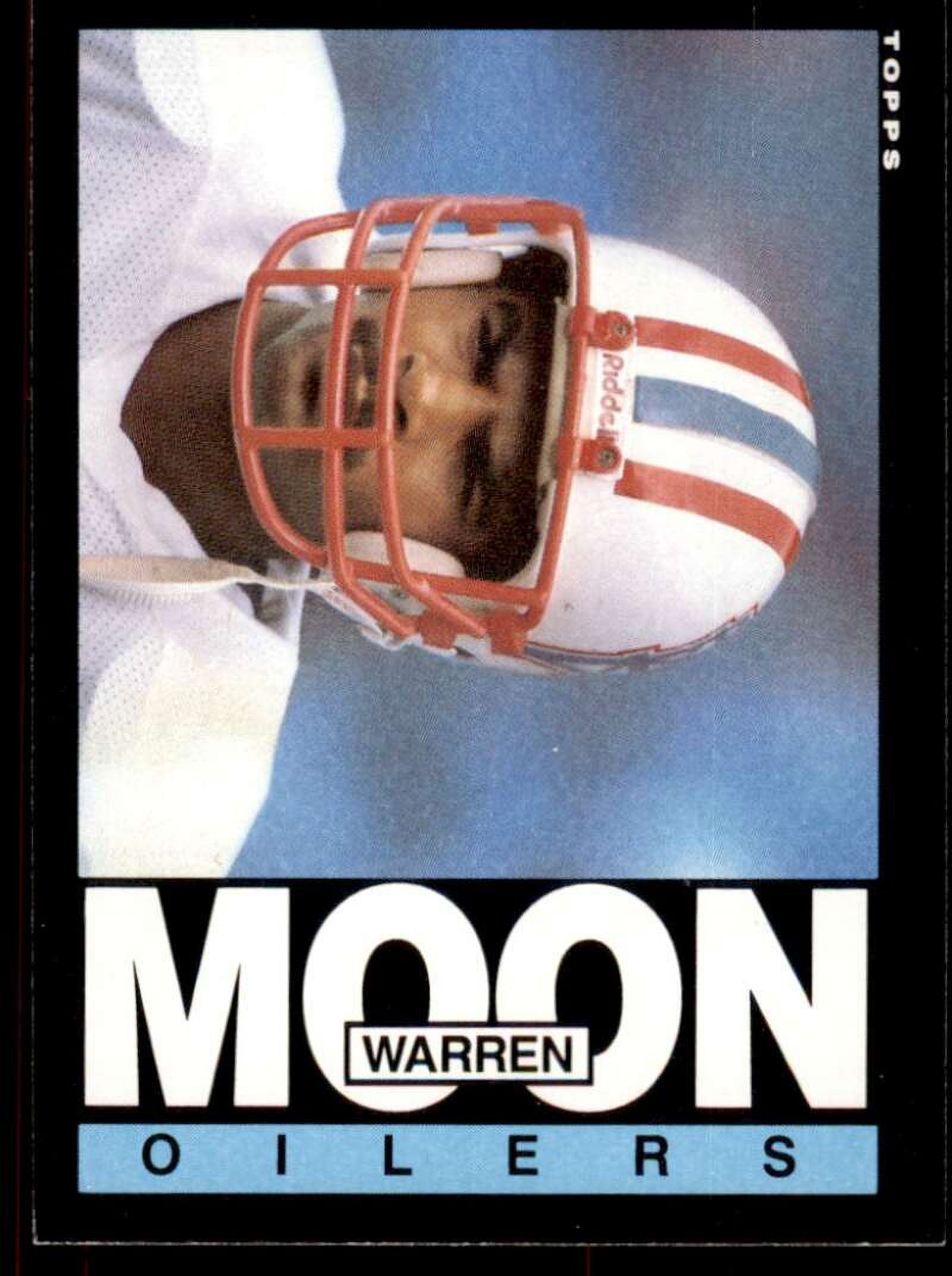
After dominating the Canadian Football League, NFL franchises could no longer ignore Moon's elite passing ability. In 1984, he signed with the Houston Oilers, sparking a bidding war that resulted in the most lucrative contract for a rookie in NFL history at that time. Joining the Oilers under head coach Jerry Glanville and later offensive coordinator Jack Pardee, Moon brought his sophisticated timing and vertical passing game to the American professional stage.
In Houston, Moon spearheaded the high-octane run-and-shoot offense, which relied heavily on precise route-running, four-receiver sets, and the quarterback's exceptional ability to read coverages post-snap. He earned his first Pro Bowl selection in 1988 and orchestrated numerous memorable comebacks. The pinnacle of his Oilers tenure came during the 1990 season, when he led the NFL in passing yards (4,689) and passing touchdowns (33), earning the Associated Press NFL Offensive Player of the Year award.
| Season | Team | Passing Yards | Touchdowns | Interceptions | Pro Bowl Selection |
|---|---|---|---|---|---|
| 1988 | Houston Oilers | 2,377 | 17 | 8 | Yes |
| 1989 | Houston Oilers | 3,631 | 23 | 14 | Yes |
| 1990 | Houston Oilers | 4,689 | 33 | 13 | Yes |
| 1991 | Houston Oilers | 4,690 | 27 | 21 | Yes |
| 1992 | Houston Oilers | 2,522 | 18 | 12 | Yes |
Later NFL Career: Minnesota, Seattle, and Kansas City
Rather than slowing down as he entered his late thirties, Moon demonstrated remarkable physical conditioning and durability. In 1994, he was traded to the Minnesota Vikings, where he immediately revitalized the franchise. In his debut season with Minnesota, he threw for 4,264 yards and 18 touchdowns, guiding the Vikings to an NFC Central division title and earning consecutive Pro Bowl nods in 1994 and 1995.
As his career progressed into his forties, Moon transitioned into a highly respected veteran mentor and backup. He signed with the Seattle Seahawks in 1997, where an injury to starter John Friesz thrust him back into the starting lineup. He responded by earning his ninth and final Pro Bowl selection at the age of 41, becoming the oldest quarterback to ever be selected to the Pro Bowl—a testament to his longevity and preparation. He finished his playing career with the Kansas City Chiefs, retiring after the 2000 season at the age of 44.
Post-Playing Career, Honors, and Legacy
Following his retirement from professional football, Moon seamlessly transitioned into sports broadcasting. He served as a radio analyst for the Seattle Seahawks for over a decade, providing expert commentary and deep tactical insights derived from his 23 professional seasons. His voice became a familiar staple for fans in the Pacific Northwest, bridging his on-field greatness with modern analysis.
Honors and inductions followed swiftly. In 2001, Moon was inducted into the Canadian Football Hall of Fame, recognizing his historic run with the Edmonton Eskimos. The ultimate validation of his global football impact occurred in 2006 when he was elected to the Pro Hall of Fame in Canton, Ohio. This milestone marked the first time an African American quarterback who played primarily as a pocket passer entered the Hall of Fame, breaking down cultural and schematic barriers for future generations of athletes.
Frequently Asked Questions
When was Warren Moon born?
Warren Moon was born on November 18, 1956. His birth date places him in a cohort of exceptional athletes who redefined longevity and physical conditioning in professional team sports.
How many years did Warren Moon play professional football?
Moon played professional football for 23 seasons overall. He played six seasons in the Canadian Football League (1978–1983) and 17 seasons in the National Football League (1984–2000), accumulating statistics that rank among the most prolific in football history.
Was Warren Moon the first Black quarterback in the Pro Football Hall of Fame?
Yes. When Moon was inducted into the Pro Football Hall of Fame in 2006, he became the first African American quarterback to achieve the honor, cementing his legacy as a pioneer who altered how front offices evaluate signal-callers.
What are Warren Moon's most notable career records?
Among his numerous accolades, Moon held multiple passing records, including most passing yards in professional football history at the time of his retirement. He was also the oldest quarterback selected to an NFL Pro Bowl, earning the nod in 1997 at age 41.
Did Warren Moon win a Super Bowl?
While Moon did not win an NFL Super Bowl championship during his time with the Oilers, Vikings, Seahawks, and Chiefs, he achieved ultimate championship success five times in the Canadian Football League with the Edmonton Eskimos, winning the Grey Cup consecutively from 1978 to 1982.
Next Actions and Further Reading
To deepen your understanding of football history and the evolution of the quarterback position, explore comprehensive archives maintained by the Pro Football Hall of Fame and the Canadian Football Hall of Fame. Reviewing game film from the Houston Oilers' run-and-shoot era also provides practical insight into how Moon executed complex offensive schemes against elite defensive fronts.
Image Gallery