The Role and Professional Path of an Equity Research Associate
An equity research associate is a financial professional who supports senior analysts by performing quantitative and qualitative analysis on companies, industries, and market sectors. Their primary objective is to produce detailed rese...
An equity research associate is a financial professional who supports senior analysts by performing quantitative and qualitative analysis on companies, industries, and market sectors. Their primary objective is to produce detailed research reports, financial models, and investment recommendations that guide institutional investors, portfolio managers, and hedge funds in making informed capital allocation decisions.
Contents
Core Responsibilities of an Equity Research Associate
The daily life of an equity research associate is defined by the rigorous demands of the investment research cycle. While the senior analyst—often the "face" of the research team—focuses on client relationships and high-level strategy, the associate functions as the analytical engine of the desk.
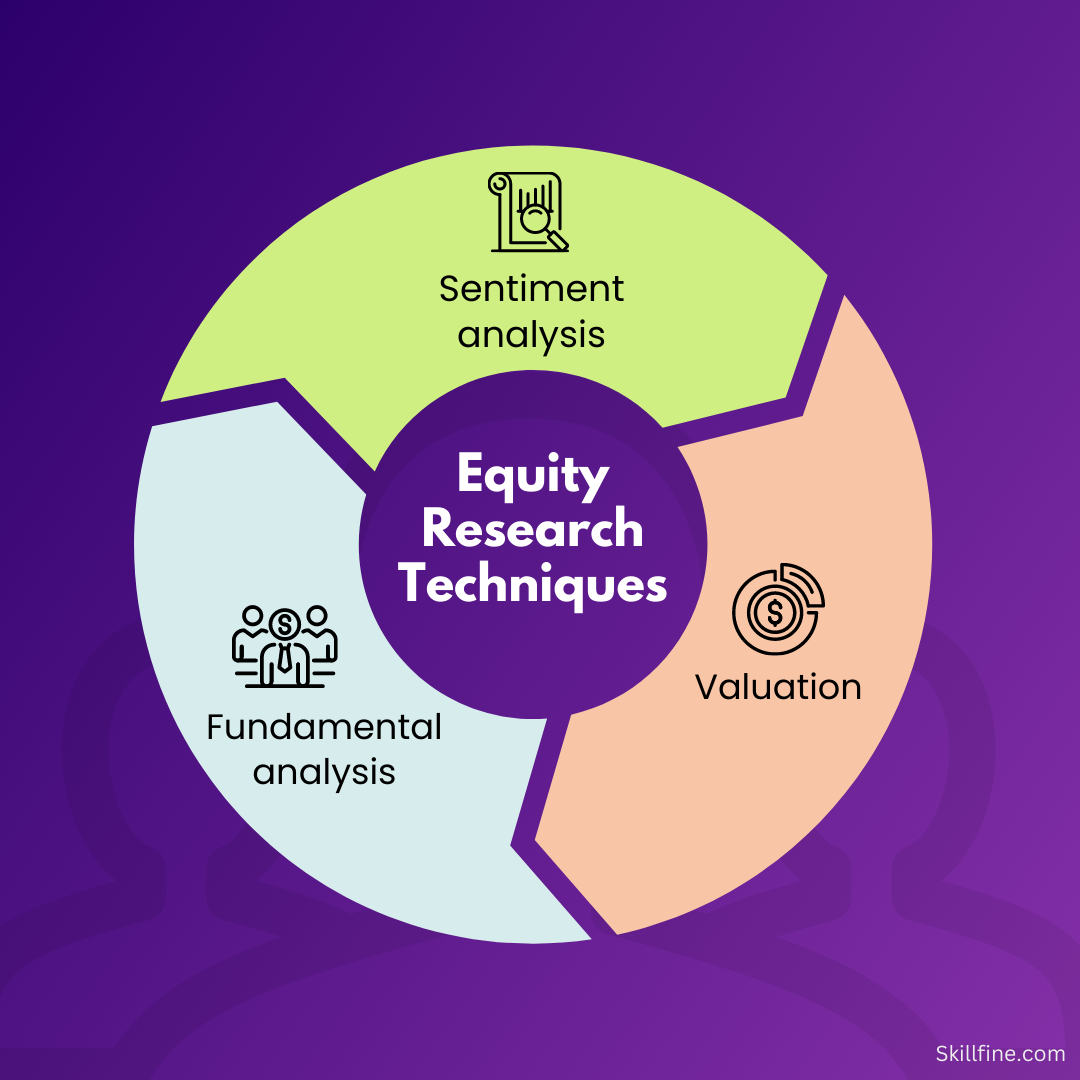
Financial Modeling and Valuation
The cornerstone of the role is the construction and maintenance of complex financial models. Associates build discounted cash flow (DCF) models, comparable company analysis (comps), and precedent transaction analysis to determine the intrinsic value of stocks. In 2026, proficiency in Excel remains mandatory, though many firms are increasingly integrating specialized data platforms like Bloomberg, FactSet, or S&P Capital IQ to pull real-time financial data directly into their models. Accuracy is paramount, as an error in a projection can lead to incorrect investment theses.
Data Collection and Due Diligence
Beyond numerical modeling, associates spend significant time gathering primary and secondary research. This includes:
- Reading Regulatory Filings: Parsing 10-K, 10-Q, and 8-K reports from the Securities and Exchange Commission (SEC) to identify shifts in corporate strategy or financial health.
- Earnings Call Analysis: Transcribing and analyzing management commentary during quarterly earnings calls to compare performance against consensus estimates.
- Industry Channel Checks: Conducting interviews with industry experts, suppliers, and competitors to gain an "information edge" that is not captured in public filings.
- Data Visualization: Synthesizing disparate data points into coherent charts and summaries that support a clear investment argument.
Drafting Research Reports
Associates are responsible for the "grunt work" of drafting research notes. Whether updating clients on a minor news event or co-authoring a massive initiation-of-coverage report, the associate ensures that the tone, formatting, and factual citations meet the firm's compliance standards. Every report must be scrubbed for potential conflicts of interest, adhering to the stringent regulatory guidelines mandated by the Financial Industry Regulatory Authority (FINRA) and global counterparts.
Prerequisites and Skill Requirements
Securing a position as an equity research associate is highly competitive. Candidates generally possess a background in finance, economics, or accounting, often complemented by professional certifications.
| Requirement Category | Typical Expectation | Importance |
|---|---|---|
| Education | Bachelor’s or Master’s in Finance/Economics/Accounting | High |
| Certifications | CFA Charter (or progress toward it) | Very High |
| Technical Skills | Advanced Excel, Financial Modeling, SQL/Python (increasingly) | Critical |
| Communication | Exceptional professional writing and presentation skills | Critical |
| Regulatory | FINRA Series 7, 86, and 87 exams | Mandatory |
Regulatory Licensing
In the United States, an equity research associate must be properly licensed to provide investment recommendations. The Series 86 and 87 exams are specific to research analysts. These exams cover the regulatory framework of research production, including the separation of research from investment banking to prevent conflicts of interest. Without these licenses, an individual may perform the work but cannot legally sign off on or publish the research.
The Professional Lifecycle and Career Progression
The career trajectory of an equity research associate is often seen as a gateway to institutional asset management, hedge funds, or corporate development.
- The Associate Years (Years 1-3): This period is characterized by long hours and a steep learning curve. Success is measured by the accuracy of models, the speed of response to market events, and the ability to anticipate the information needs of the senior analyst.
- The Senior Associate / Vice President Transition: As an associate demonstrates deeper domain expertise and the ability to manage client relationships, they may move toward a role where they take more ownership of specific company coverage.
- Exit Opportunities: Many associates transition to the "buy-side," joining pension funds, mutual funds, or hedge funds as investment analysts. Others may move into investor relations roles at corporations or into private equity, leveraging their deep understanding of valuation and market positioning.
Challenges and Operational Realities
The industry is inherently cyclical. During market volatility, the pressure to produce actionable intelligence increases exponentially. Associates often work under extreme deadlines, particularly during the quarterly "earnings season," where dozens of companies report results within a narrow window.
Ethical and Compliance Boundaries
Research must remain independent. Under existing financial regulations, firms maintain a "Chinese Wall" between the research department and the investment banking division. An associate must be hyper-aware of these boundaries; for example, they cannot share non-public information received from a client or a company insider. Failure to adhere to these rules can result in career-ending professional sanctions and significant legal liability for the firm.
Evolving Technology in 2026
In 2026, the workflow of the equity research associate is being reshaped by automated data processing. While the need for deep analytical thought remains unchanged, repetitive tasks such as manual data entry are increasingly handled by automated pipelines. Associates who differentiate themselves are those who can synthesize technological output with subjective, human-led qualitative insights—such as evaluating management quality or assessing the long-term impact of emerging geopolitical trends.
Frequently Asked Questions
What is the main difference between an equity research associate and an investment banking analyst? While both roles require intense modeling and long hours, investment bankers work on transactions (mergers, acquisitions, IPOs) for clients. Equity research associates focus on analyzing the fundamental value of public companies to provide advice to investors, regardless of whether a transaction is occurring.
Do I need a CFA Charter to be an equity research associate? While not always a strict hiring requirement for entry-level roles, the CFA Charter (or significant progress toward it) is considered the gold standard. It demonstrates a commitment to ethical standards and technical mastery, which are essential for long-term progression in the field.
How does the "earnings season" affect an associate's schedule? Earnings season is the most intense period. Associates are expected to stay late into the night, often working weekends to update models, prepare "pre-earnings" previews, and write "post-earnings" reaction notes immediately upon the release of a company's financial results.
Is travel common for an equity research associate? Yes. Associates often accompany senior analysts on "roadshows" or site visits to meet with company management teams. This provides vital context that cannot be gained from reading financial statements alone.
What is the primary way an associate adds value to a team? The associate adds value by acting as the team's "second pair of eyes" on the data. By performing deep-dive due diligence and identifying anomalies in financial trends, they allow the senior analyst to focus on synthesizing an investment thesis and articulating it to clients.
Next Steps for Aspiring Candidates
If you are pursuing a career as an equity research associate, focus on building a robust portfolio of sample work. Develop an "investment pitch" for a stock you follow, including a valuation model, industry research, and a clear buy/sell/hold thesis. Master Excel keyboard shortcuts and financial modeling techniques, and prioritize clearing the foundational FINRA requirements. Networking with current analysts and reaching out to the research departments of mid-market or boutique brokerage firms can often provide better entry points than applying solely to bulge-bracket banks.
Image Gallery