Understanding Cash Value in North American Term Life Insurance
In North American insurance markets, pure term life insurance does not accrue cash value, as it is designed exclusively to provide a death benefit for a specified period. While permanent policies like whole or universal life accumulate...
In North American insurance markets, pure term life insurance does not accrue cash value, as it is designed exclusively to provide a death benefit for a specified period. While permanent policies like whole or universal life accumulate savings-like components, term life insurance remains a temporary, low-cost risk management tool without an investment or equity-building mechanism.
Contents
The Fundamental Nature of Term Life Insurance
To understand why cash value is absent from term life insurance, it is essential to define the architecture of the product. Term life insurance is classified as "pure" insurance. It functions similarly to auto or homeowners insurance: you pay a premium in exchange for coverage against a specific risk—in this case, your death—within a set timeframe, such as 10, 20, or 30 years.
When you purchase a term policy, 100% of your premium goes toward the cost of insurance (the insurer’s administrative costs, overhead, and the actuarial probability of paying out a death benefit). There is no "overfunding" of the policy. Because the premium is calculated solely to cover the risk of mortality during the term, there is no surplus capital remaining to be invested or held in a reserve account for the policyholder. This is the primary reason why term life insurance is the most affordable way to secure high death benefit coverage for families and businesses.
Distinguishing Term from Permanent Life Insurance
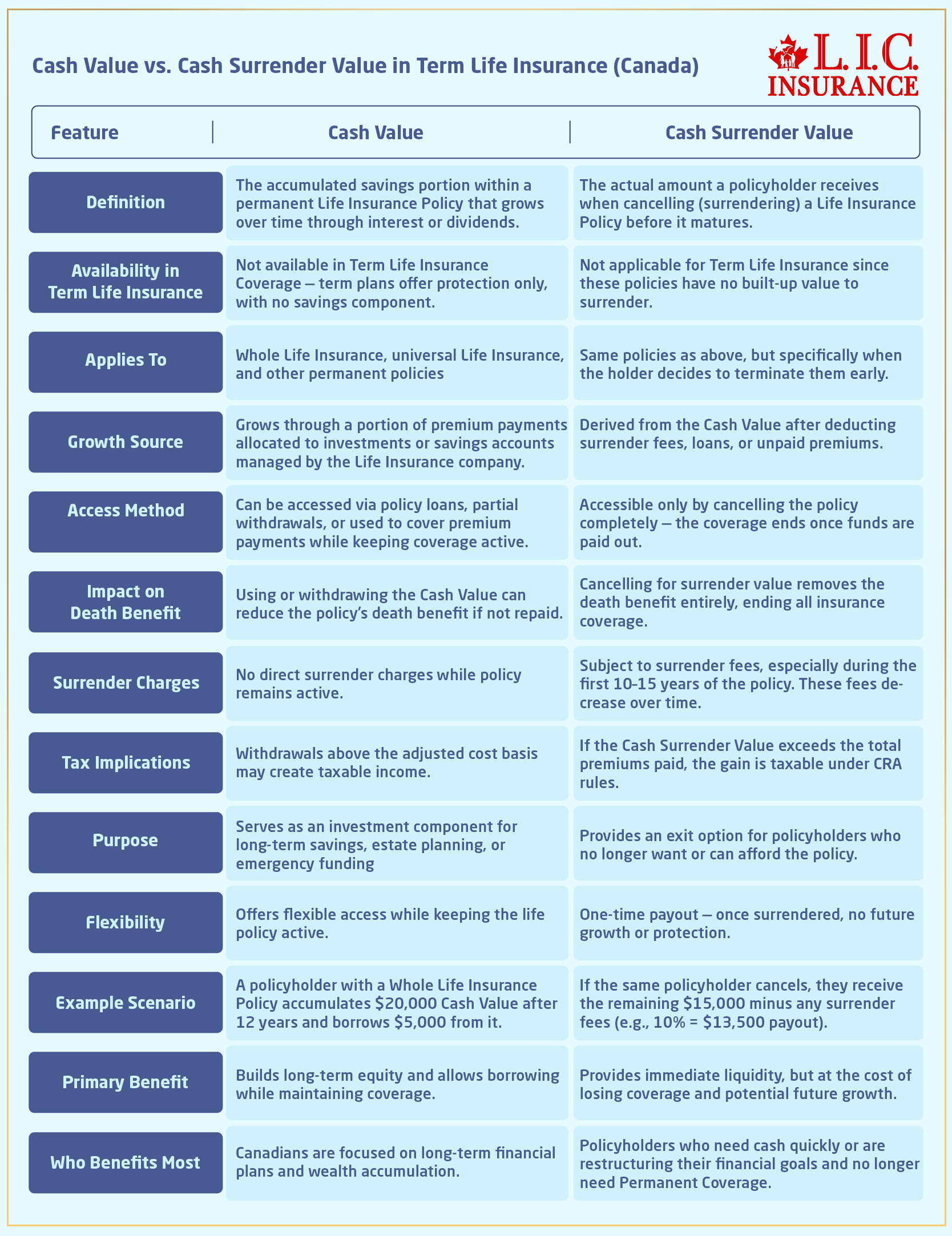
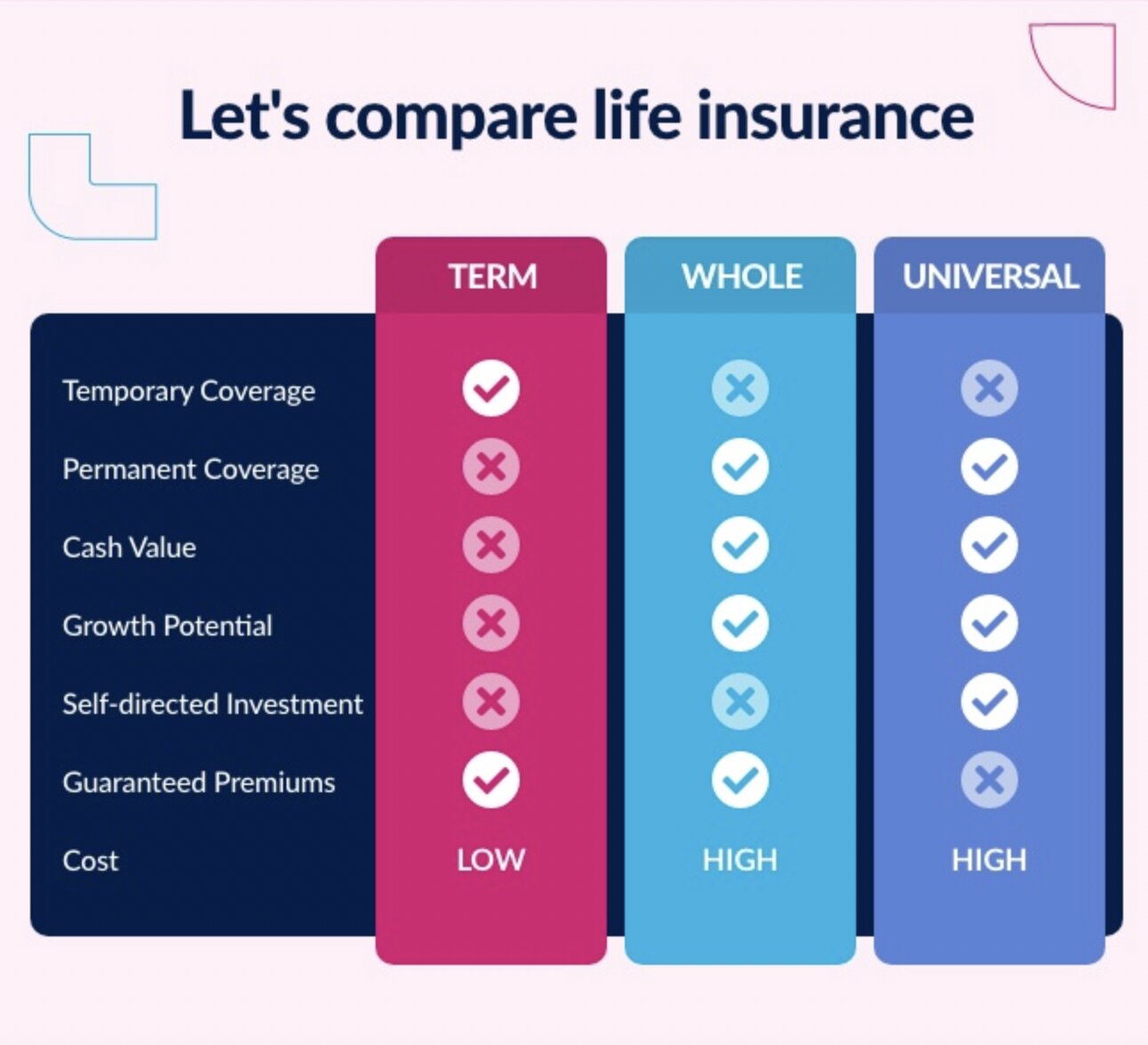
The confusion surrounding "cash value" often stems from comparing term policies with permanent life insurance products, such as Whole Life, Universal Life, or Variable Life. In permanent insurance, the premium is higher than the actual cost of insurance in the early years. This excess premium is directed into a cash value account.
This cash value grows over time, typically through interest crediting, dividends, or market performance, depending on the policy type. Policyholders may eventually access this value through withdrawals or policy loans. However, these features are absent in term life insurance because the contract does not include a savings component. If you encounter a marketing claim suggesting a term policy has a cash value, it is likely referring to a "Return of Premium" (ROP) rider, which is a specialized feature rather than inherent cash value.
Return of Premium (ROP) Riders: A Common Point of Confusion
Because term insurance does not build cash value, some insurers offer an optional Return of Premium rider. This is frequently mistaken for a cash value component.
An ROP rider allows the policyholder to receive a refund of all premiums paid at the end of the term if the insured is still living and the policy has not been used. While this provides a form of "money back" guarantee, it is fundamentally different from the cash value in a permanent policy:
- No Growth: Unlike permanent life cash value, which grows via interest or market returns, an ROP refund is simply the return of the nominal dollars you paid. It does not accumulate interest.
- Cost: Adding an ROP rider significantly increases the monthly or annual premium cost compared to a standard term policy.
- Conditions: If you cancel the policy early, you often forfeit the right to a full refund, or you may receive only a prorated portion, depending on the specific contract terms.
Comparison of Financial Features
The following table highlights the structural differences between standard term insurance and products that do contain cash value or ROP features.
| Feature | Term Life Insurance | Whole Life Insurance | Term with ROP Rider |
|---|---|---|---|
| Cash Value Growth | None | Yes (Interest/Dividends) | No |
| Premium Cost | Low | High | Moderate to High |
| Primary Purpose | Protection | Protection + Savings | Protection + Refund |
| Accessibility | N/A | Loans and Withdrawals | Only at end of term |
| Contract Duration | Specified term (e.g., 20 yr) | Lifetime | Specified term (e.g., 20 yr) |
Why Term Life Remains the Preferred Choice for Many
The lack of cash value in term life insurance is not a design flaw; it is a feature that enables affordability. For most consumers, the goal of life insurance is to provide a financial safety net for dependents during the "income-earning years"—the period when mortgages are unpaid, children are young, and career progression is ongoing.
By stripping away the investment components found in permanent policies, term insurance allows policyholders to purchase significantly higher death benefit amounts for a fraction of the cost. Financial planners often recommend the strategy of "buying term and investing the difference." This involves purchasing an affordable term policy and allocating the remaining budget toward tax-advantaged investment vehicles like 401(k) plans or IRAs, which often provide greater liquidity and higher growth potential than the cash value component of an insurance policy.
Common Misconceptions
Policyholders sometimes confuse the "conversion option" of a term policy with cash value. Many term policies allow you to convert your coverage into a permanent policy without a medical exam. While the permanent policy you convert into will have cash value, the term policy itself does not retroactively gain value. The cash value only begins to accrue once the new permanent policy is active and premiums are paid at the higher, permanent rates.
Another misconception is that the "living benefits" of a term policy—such as accelerated death benefits for terminal illness—constitute cash value. Accelerated benefits are an advance on your death benefit, not a savings account. You are simply accessing a portion of your coverage early because of a specific medical trigger; you are not withdrawing accumulated wealth.
Regulatory and Legal Context in North America
In both the United States and Canada, insurance products are highly regulated. Regulators ensure that the distinction between life insurance as a risk transfer mechanism and life insurance as a wealth accumulation vehicle is clear. If a product claims to have cash value, it must be explicitly defined under the policy’s schedule of benefits. If your policy contract does not list a "cash value schedule" or "non-forfeiture values," it is a pure term policy.
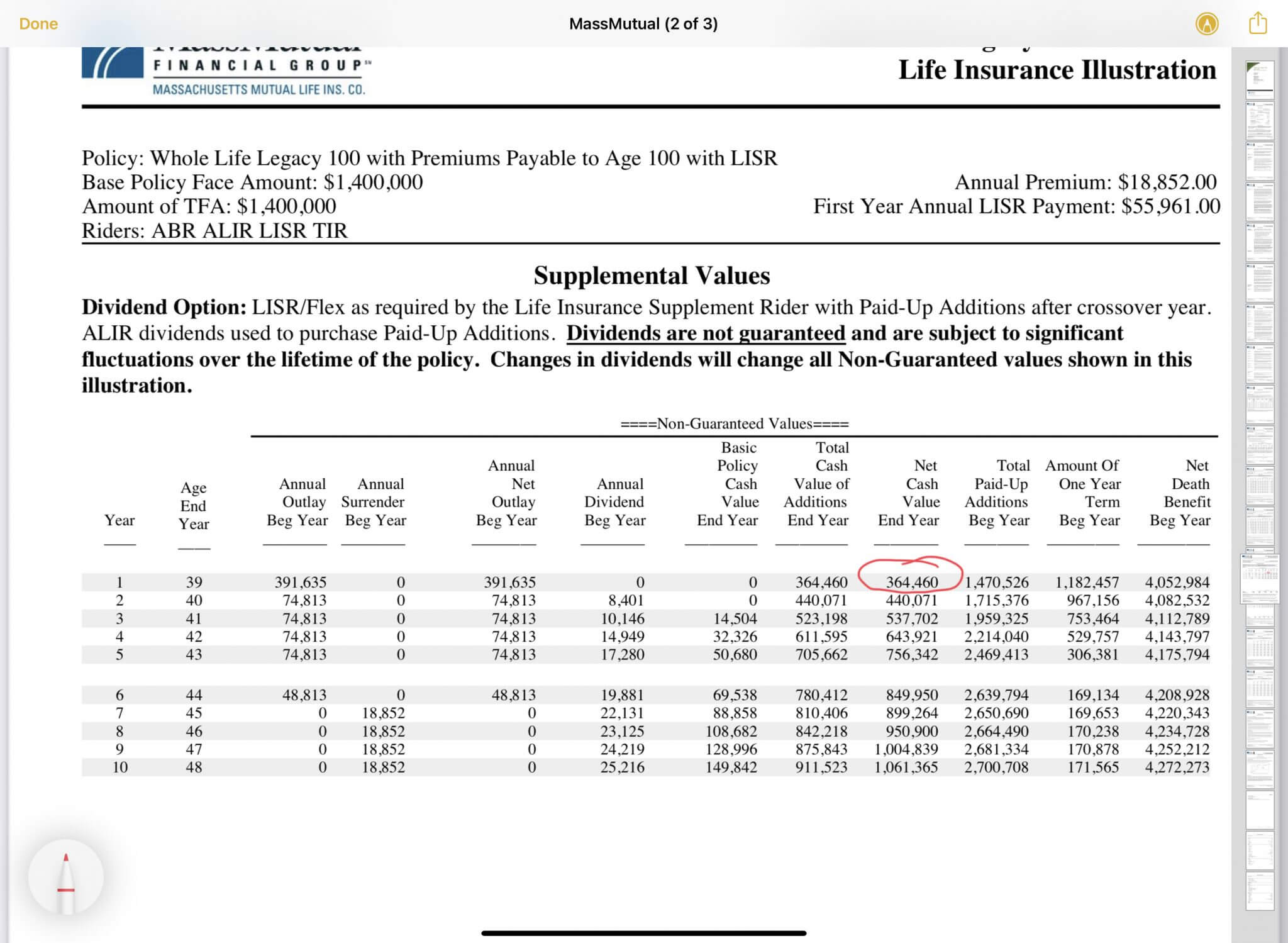
Before signing a policy, always review the Specimen Policy or the Summary of Benefits. These documents act as the legal contract governing your rights. If you are uncertain whether your existing policy has any equity, check your annual statement. A policy with cash value will explicitly show a "Current Cash Value" or "Net Surrender Value" amount. If your statement shows a zero balance or does not mention a cash value account, your policy is a standard term life product.
Next Steps for Policy Review
- Verify your policy type: Locate your policy declaration page and confirm the product name. If it includes "Term," it generally does not build cash value.
- Review your annual statement: Check for any line items regarding "cash surrender value" or "loan balance."
- Consult with a licensed advisor: If you find you require wealth accumulation alongside protection, speak with a licensed financial professional. They can help you determine if a hybrid approach—such as keeping your term policy while establishing separate investment accounts—is superior to moving into a permanent life policy.
- Evaluate your goals: If you are nearing the end of your term and still require coverage, contact your insurer to ask about their conversion privileges before the term expires, as this may be more cost-effective than applying for a new policy as an older individual.
Frequently Asked Questions
Can I withdraw money from my term life insurance policy? No. Standard term life insurance has no cash value to withdraw. Any money paid in premiums is used to cover the insurance risk, and no balance remains for the policyholder to access.
What happens if I outlive my term policy? The policy expires, and your coverage ends. You stop paying premiums, and you receive no payout. If your policy included a Return of Premium (ROP) rider, you may be eligible to receive your paid premiums back, provided you met all contract conditions.
Is there any way to build wealth with term life insurance? Term life insurance is not an investment vehicle. To build wealth, consider using the money saved on lower term premiums to fund external accounts, such as high-yield savings, brokerage accounts, or employer-sponsored retirement plans.
Does my term policy gain value if I pay it early? No. Paying premiums in advance or paying them on time does not create equity. Term insurance is a consumption-based financial product, not an asset-accumulation product.
Why did a salesperson tell me my term policy would have value? They may have been referring to an ROP rider or describing a conversion option to a permanent policy. Always ask for a written illustration that differentiates between "Return of Premium" and "Cash Value," as these are distinct financial features.
Image Gallery