What a Workers Compensation Construction Accident Attorney Does in Texas
A workers' compensation construction accident attorney in Texas navigates the state’s complex "opt-out" insurance system to secure medical benefits and lost wages for injured laborers. They manage DWC filings, challenge claim denials,...
A workers' compensation construction accident attorney in Texas navigates the state’s complex "opt-out" insurance system to secure medical benefits and lost wages for injured laborers. They manage DWC filings, challenge claim denials, identify negligent third parties for additional damages, and represent workers in hearings to ensure fair impairment ratings and settlements.
Contents
Texas remains the only state in the U.S. that does not require private employers to carry workers' compensation insurance. This unique legal landscape makes the role of a specialized attorney critical for construction workers, who face some of the highest injury risks in the workforce. In 2026, the construction industry continues to grapple with high-density urban development and infrastructure projects, leading to a steady demand for legal expertise in workplace injury law.
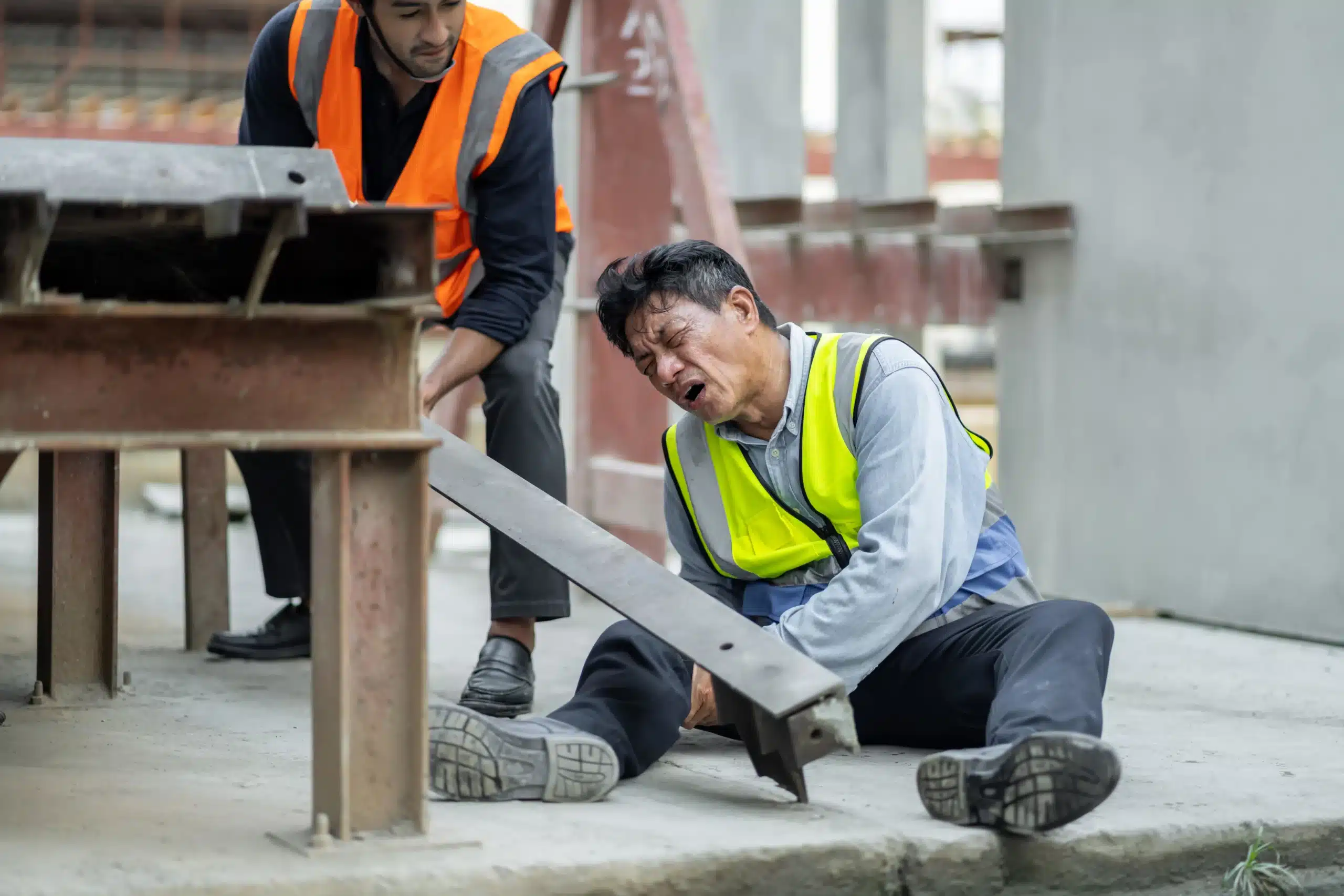
When a worker is injured on a job site—whether from a fall, equipment failure, or structural collapse—the legal path to recovery depends entirely on the employer’s insurance status and the presence of third-party negligence. A Texas attorney must be proficient in both administrative law (for workers' compensation claims) and civil litigation (for non-subscriber and third-party lawsuits).
Determining Coverage and the "Non-Subscriber" Factor
The first and most vital task a Texas construction accident attorney performs is determining whether the employer is a "subscriber" or a "non-subscriber" to the Texas workers' compensation system. Under the Texas Labor Code, employers can choose to opt out of the state-regulated system.
If the employer is a subscriber, the attorney’s role is primarily administrative. They work within the framework of the Texas Department of Insurance, Division of Workers’ Compensation (DWC). In this system, the worker does not have to prove the employer was at fault, but the benefits are capped and generally do not include "pain and suffering."
If the employer is a non-subscriber, they have no immunity from lawsuits. The attorney then pivots to a personal injury model. In these cases, the lawyer must prove the employer’s negligence caused the injury. While the burden of proof is higher, the potential recovery is significantly greater because it can include full lost earning capacity, mental anguish, and physical disfigurement.
Navigating the Division of Workers’ Compensation (DWC) Process
For workers at companies that do carry state-regulated insurance, an attorney acts as an essential guide through the DWC bureaucracy. The system is designed to be self-executing, but insurance carriers frequently dispute the extent of an injury or the necessity of specific medical treatments.
Managing Deadlines and Documentation
Texas has strict deadlines for reporting injuries. A worker generally has 30 days to notify their employer and one year to file a formal claim (DWC Form-041). An attorney ensures these deadlines are met and that the narrative provided to the DWC accurately reflects the mechanics of the construction accident.
Challenging Denials and "Extent of Injury" Disputes
Insurance companies often accept that a "sprain" occurred but deny that a "herniated disc" resulted from the same accident. This is known as an extent-of-injury dispute. An attorney gathers medical evidence, retains expert witnesses, and cross-examines the insurance company’s hand-picked doctors to prove that the more severe conditions are indeed work-related.
Representing Clients at Administrative Hearings
If a dispute cannot be resolved through informal mediation, the attorney represents the worker at two critical stages:
- Benefit Review Conference (BRC): A non-binding mediation led by a DWC official.
- Contested Case Hearing (CCH): A formal trial-like proceeding before an Administrative Law Judge (ALJ). The attorney presents evidence, examines witnesses, and makes legal arguments based on the Texas Workers' Compensation Act.
Identifying and Pursuing Third-Party Liability
Construction sites are rarely managed by a single entity. They typically involve a general contractor, multiple subcontractors, property owners, and equipment manufacturers. This "multi-employer" environment is a hallmark of Texas construction law.
A skilled attorney looks beyond the immediate employer to see if a third party’s negligence contributed to the accident. This is crucial because a third-party claim allows the worker to recover damages that workers' compensation does not cover. Common examples of third-party liability include:
- Defective Equipment: A ladder, scaffold, or power tool fails due to a manufacturing defect.
- Subcontractor Negligence: An employee of a different company drops a tool or operates a crane unsafely, injuring the worker.
- Premises Liability: The property owner failed to warn of a hidden hazard, such as an unsecured trench or electrical danger.
By filing a third-party lawsuit in a Texas district court, the attorney can pursue compensation for the "full value" of the injury, which often dwarfs the weekly checks provided by workers' comp.
Medical Advocacy and Impairment Ratings
The amount of permanent financial assistance a worker receives often hinges on two technical terms: Maximum Medical Improvement (MMI) and the Impairment Rating (IR).
Once a doctor determines the worker has reached MMI—the point at which no further material recovery is expected—they assign an Impairment Rating. This rating is a percentage representing the permanent damage to the body as a whole. Under Texas law, every percentage point of an IR equals three weeks of Impairment Income Benefits (IIBs).
Insurance companies frequently use "designated doctors" who may provide lower ratings to save the carrier money. An attorney will:
- Review the doctor’s application of the AMA Guides to the Evaluation of Permanent Impairment.
- Request a "Letters of Clarification" to challenge inconsistent findings.
- Seek a second opinion from an independent medical examiner to support a higher rating that accurately reflects the worker’s disability.
Comparison of Recovery Paths in Texas
| Feature | Workers' Comp Subscriber | Non-Subscriber Lawsuit | Third-Party Claim |
|---|---|---|---|
| Fault Required? | No (No-fault system) | Yes (Employer negligence) | Yes (Third-party negligence) |
| Medical Bills Covered? | Yes (100% of approved care) | Yes (Through damages) | Yes (Through damages) |
| Pain and Suffering? | No | Yes | Yes |
| Income Benefits | Limited (70% of average wage) | Full lost wages/capacity | Full lost wages/capacity |
| Legal Venue | DWC Administrative Courts | Texas District Court | Texas District Court |
| Impact of Worker Fault | Generally none | Comparative negligence applies | Comparative negligence applies |
Investigating the Construction Accident
A primary duty of the attorney is to preserve evidence before it disappears from the job site. Construction sites change daily; a hole might be filled or a defective scaffold dismantled within hours of an accident.
Attorneys often employ private investigators and safety experts to:
- Take high-resolution photos and drone footage of the site.
- Secure OSHA records: The Occupational Safety and Health Administration (OSHA) often investigates major construction accidents. An attorney uses these findings to establish safety violations.
- Review "Black Box" data: Many modern pieces of heavy machinery, like cranes and bulldozers, record operational data that can prove if a machine was over-torqued or improperly operated.
- Interview witnesses: Getting recorded statements from coworkers while their memories are fresh is vital for both DWC disputes and civil trials.
Handling the Financial Burdens of a Claim
Legal fees in Texas workers' compensation cases are strictly regulated by the DWC. Unlike personal injury cases where a lawyer might take 33% to 40% of the settlement, workers' comp attorneys are typically paid based on an hourly rate approved by the DWC, which is then deducted from the worker's weekly benefits (usually capped at 25% of the benefit).
In non-subscriber and third-party cases, the attorney usually works on a contingency fee basis. This means the worker pays nothing upfront; the attorney covers all litigation costs (filing fees, expert witnesses, depositions) and only gets paid if they successfully recover money for the client. This arrangement allows injured construction workers to challenge large corporations and insurance companies without financial risk.
Frequently Asked Questions
Can my employer fire me for hiring a Texas workers' comp attorney?
Under Texas Labor Code § 451.001, it is illegal for an employer to retaliate against an employee for filing a workers' compensation claim in good faith. If you are terminated or demoted for seeking legal counsel or filing a claim, your attorney can file a separate "retaliatory discharge" lawsuit.
How long do I have to file a lawsuit after a construction accident in Texas?
In Texas, the statute of limitations for personal injury (including non-subscriber and third-party claims) is generally two years from the date of the accident. However, for a standard workers' comp claim with the DWC, you must report the injury to your employer within 30 days.
What if I was partially at fault for the accident?
In a standard workers' comp (subscriber) case, your fault does not matter unless you were intoxicated or engaged in horseplay. In a non-subscriber or third-party lawsuit, Texas follows modified comparative negligence. You can still recover damages as long as you are not more than 50% responsible, though your total award will be reduced by your percentage of fault.
Is the "General Contractor" considered my employer?
In Texas, this is a complex issue known as "Statutory Employer" status. Sometimes, a general contractor provides workers' comp insurance for all subcontractors on a site (a "Wrap-Up" policy). If they do, they may be immune from lawsuits. Your attorney must carefully review the contracts between companies to determine who can be sued and who is protected by "exclusive remedy" provisions.
What benefits can an attorney help me get?
An attorney helps secure four main types of benefits: Temporary Income Benefits (TIBs) while you can't work, Impairment Income Benefits (IIBs) for permanent damage, Supplemental Income Benefits (SIBs) if you have a high impairment rating and can't return to your prior wage, and Lifetime Income Benefits (LIBs) for catastrophic injuries like blindness or loss of limbs.
Recommendation for Injured Workers
If you have been injured on a Texas construction site, do not sign any documents from an insurance adjuster before speaking with a qualified attorney. The Texas legal system is uniquely hostile to unrepresented workers due to the non-subscriber loopholes and the technical nature of MMI/IR ratings.
Your first step should be to confirm the insurance status of your employer through the Texas Department of Insurance online portal. Once confirmed, contact a lawyer who specializes specifically in Texas Labor Code and construction site litigation to ensure you are not leaving significant third-party compensation on the table.
Image Gallery