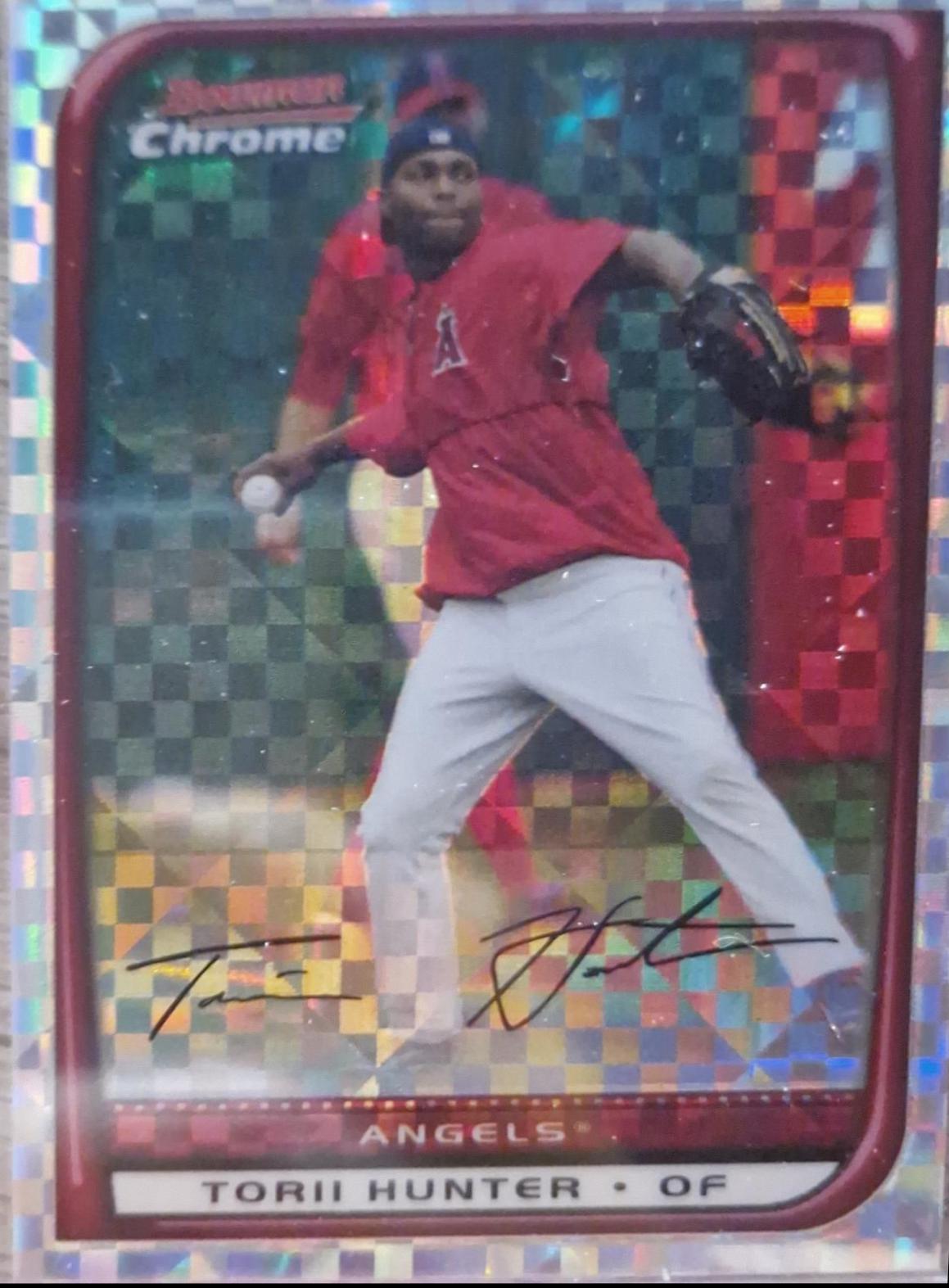
Understanding the Torii Hunter Stats in Modern Baseball
To understand Torii Hunter’s statistics in modern baseball, one must balance his 353 home runs and nine Gold Gloves against advanced metrics like OPS+ and Defensive Runs Saved (DRS). While traditional stats highlight his longevity and...
To understand Torii Hunter’s statistics in modern baseball, one must balance his 353 home runs and nine Gold Gloves against advanced metrics like OPS+ and Defensive Runs Saved (DRS). While traditional stats highlight his longevity and hardware, modern analytics emphasize his consistent 110 OPS+ and a career 50.7 bWAR, placing him in the "Hall of Very Good" tier.
Contents
The Evolution of Evaluating Center Fielders
As of 2026, the way we evaluate major league talent has undergone a radical transformation. When Torii Hunter was in his prime during the early 2000s, the "eye test" and basic counting stats reigned supreme. If a center fielder made a spectacular leaping catch at the wall, he was considered elite. Today, however, we use Statcast data to measure catch probability, sprint speed, and ultimate zone rating (UZR).
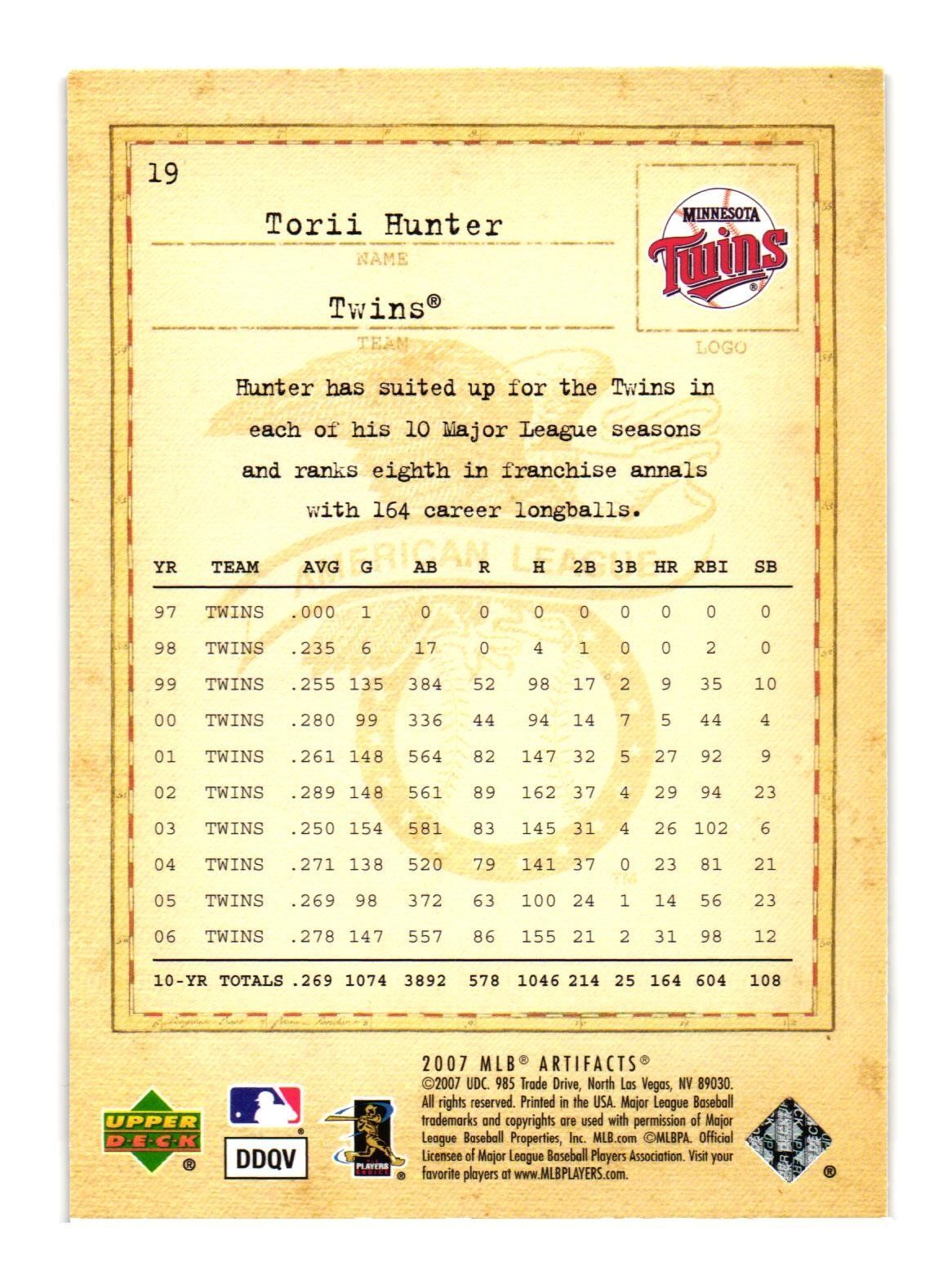
Understanding Torii Hunter's career requires a "retroactive" application of these modern lenses. Hunter played 19 seasons (1997–2015), totaling 2,452 hits and 1,391 RBIs. While those numbers are impressive, the modern analyst looks deeper into how he generated that value. Hunter was a transitional figure, a player whose career began in the height of the "steroid era" and ended just as the Statcast revolution was taking hold.
To truly grasp his impact, we must look at the intersection of his offensive consistency and his defensive reputation, comparing them to the automated precision we expect from players in the current 2026 season.
Defensive Metrics: The "Spider-Man" Under the Microscope
Torii Hunter earned the nickname "Spider-Man" for his ability to scale outfield fences and rob hitters of home runs. His nine consecutive Gold Glove Awards (2001–2009) suggest a level of dominance matched by few in history. However, modern defensive metrics often paint a more nuanced picture than the Gold Glove voters of the 2000s did.
Gold Gloves vs. Defensive Runs Saved (DRS)
In the modern era, we rely heavily on Defensive Runs Saved (DRS), a metric that wasn't popularized until the middle of Hunter’s career. For his career, Hunter finished with approximately 26 DRS. While positive, this number is lower than some of his contemporaries like Andruw Jones, who posted staggering DRS numbers.
The discrepancy exists because modern metrics prioritize range—the ability to get to balls in the gaps—over the "web gem" catches that Hunter was famous for. Hunter often played a "shallow" center field, which allowed him to take away bloop singles but made him more susceptible to balls over his head. In 2026, with the benefit of advanced positioning data, we can see that Hunter’s defensive value was peaked between 2001 and 2005, with a natural decline in range as he entered his 30s, despite continuing to win Gold Gloves based on his reputation and highlight-reel plays.
The Value of the "Wall-Climb"
While metrics like UZR (Ultimate Zone Rating) might suggest other center fielders had more range, they often struggle to account for the psychological impact of robbing a home run. In modern baseball, we now quantify "Outs Above Average" (OAA). Retroactive analysis suggests that Hunter was elite at the "back-to-the-wall" catch, a specific skill set that current players like Byron Buxton or Kevin Kiermaier have mastered. Hunter’s ability to navigate the warning track remains a gold standard for outfield coaching in 2026.
Analyzing the Offensive Profile: The 110 OPS+ Standard
Offensively, Torii Hunter was the model of consistency. He was rarely the best hitter in the league, but he was almost always better than the average. In the context of modern baseball, the most vital stat to look at is OPS+ (Adjusted On-Base Plus Slugging).
An OPS+ of 100 is league average. Torii Hunter finished his career with a 110 OPS+. This means that, over 19 seasons, he was 10% more productive than the average MLB hitter.
Power and Longevity
Hunter hit 20 or more home runs in 11 different seasons. In an era where "launch angle" and "exit velocity" dominate the conversation, Hunter’s swing would have likely translated well. He possessed a compact, powerful stroke that favored line drives but had enough loft to clear the fences.
- Career Highs: His 28 home runs in 2007 and 93 runs scored in 2002 highlight his peak.
- Walk Rates: One area where modern metrics are critical of Hunter is his walk rate. He was a "free swinger," rarely posting an On-Base Percentage (OBP) significantly higher than his batting average. In 2026, where OBP is king, Hunter's career .331 OBP is seen as "solid" but not "elite."
The Silver Slugger Years
Hunter won two Silver Slugger Awards (2009 and 2013). Interestingly, these came later in his career, showing his ability to adapt his hitting approach as his physical speed declined. In 2013, at age 37, he hit .304 with the Detroit Tigers, proving that his "baseball IQ" allowed him to remain a top-tier offensive threat long after most center fielders have retired.
Wins Above Replacement (WAR) and the Hall of Fame Debate
In 2026, the debate over Torii Hunter’s Hall of Fame candidacy often centers on one number: 50.7 bWAR (Baseball-Reference version).
The "standard" for a Hall of Fame center fielder is generally considered to be 60-70 WAR. However, the modern voter looks at "JAWS" (Jaffe War Score System), which averages a player's career WAR with their seven-year peak.
| Metric | Torii Hunter | HOF Average (CF) | Context |
|---|---|---|---|
| Career bWAR | 50.7 | 71.6 | Below the standard threshold |
| 7-Year Peak WAR | 30.7 | 44.7 | Indicates a "steady" rather than "dominant" peak |
| Hits | 2,452 | 2,400+ | Meets the "longevity" test |
| Home Runs | 353 | 250+ | Well above average for the position |
| Gold Gloves | 9 | 6 | Elite defensive hardware |
As the table illustrates, Hunter’s case is built on his hardware and counting stats rather than his advanced "efficiency" metrics. In 2026, he is viewed as a "borderline" candidate—a player who defined an era of Minnesota Twins and Los Angeles Angels baseball but may fall just short of the Cooperstown elite because his peak wasn't "dominant" enough compared to players like Ken Griffey Jr. or Mike Trout.
Comparing Hunter to Modern Era Contemporaries
To understand Hunter's stats, it helps to compare him to other center fielders of his generation who are often analyzed using the same 2026-era metrics.
- Andruw Jones: Jones has a much higher defensive ceiling (62.7 bWAR) but a lower career batting average. Modern metrics favor Jones significantly because of his historical DRS numbers.
- Jim Edmonds: Edmonds (60.4 bWAR) had a higher offensive peak (132 OPS+). While Hunter was more durable, Edmonds was more productive on a per-game basis.
- Carlos Beltran: Beltran (70.1 bWAR) is the gold standard for the era, combining Hunter’s power with much higher walk rates and elite base-running metrics.
Hunter’s niche was reliability. He played at least 140 games in 10 different seasons. In the modern game, where "load management" and frequent IL stints are common, Hunter’s "availability" is a statistic that modern front offices would value at a premium.
The Cultural Impact: Intangibles in a Data-Driven World
While 2026 baseball is driven by spreadsheets, there is still a place for "clubhouse value" and "leadership metrics." Torii Hunter was widely regarded as one of the best teammates in the game. He was a mentor to younger players in Minnesota, Anaheim, and Detroit.
Modern "Win Probability Added" (WPA) tries to capture some of this. Hunter often performed well in high-leverage situations. His career WPA of 23.5 suggests that he significantly increased his team's chances of winning in the "clutch." For fans and analysts trying to understand his stats, it is important to remember that his value wasn't just in the home runs he hit, but when he hit them and the defensive runs he prevented in the 9th inning.
Frequently Asked Questions
What is the most important "modern" stat for Torii Hunter?
The most telling modern stat is his 110 OPS+. It contextualizes his 353 home runs across different ballparks and eras, proving he was consistently 10% better than the average league hitter for nearly two decades.
How do modern defensive metrics view his 9 Gold Gloves?
Modern metrics like DRS and UZR suggest that while Hunter was elite in his early 20s, his later Gold Gloves (2007-2009) were likely awarded based on reputation. His range had declined, but his sure-handedness and highlight catches kept him in the favor of the voters.
Does Torii Hunter have a 2026 Hall of Fame chance?
Hunter remains a "fringe" candidate. While his 9 Gold Gloves and 350+ HRs are a rare combination, his 50.7 bWAR is lower than the typical Hall of Fame center fielder. His path to the Hall likely rests with the Veteran’s Committee rather than the traditional ballot.
How does Hunter's speed compare to today's players?
Hunter was a "smart" runner rather than a pure burner. He stole 195 bases in his career with a 75% success rate. In 2026, with the larger bases and pickoff restrictions, an in-his-prime Hunter would likely have seen a significant jump in his stolen base totals.
Who is the modern-day equivalent of Torii Hunter?
As of 2026, a player like George Springer or a peak Kevin Kiermaier (with more power) serves as a good comparison. Players who provide elite or near-elite defense in center while maintaining a consistent, above-average offensive output.
Final Perspective for 2026 Analysts
To understand Torii Hunter’s statistics in the modern game, one must look past the "Spider-Man" highlights and see a player who excelled at the "grind" of Major League Baseball. He wasn't a statistical outlier like Barry Bonds or a defensive anomaly like Andruw Jones, but he was a high-floor, high-reliability asset.
For those looking to evaluate similar players today, the lesson of Torii Hunter’s stats is clear: longevity and consistency are metrics unto themselves. While his 50.7 WAR might not scream "first-ballot Hall of Famer," his ability to maintain a 110 OPS+ and provide plus-defense for nearly 20 years is a feat that modern data-driven front offices still covet above almost everything else.
Image Gallery