Comprehensive Cloud Security IANS Update Overview for 2026
The IANS cloud security update provides CISOs and security architects with practitioner-led research, faculty insights, and peer-benchmarking data. This overview focuses on the 2026 landscape of cloud-native protection, emphasizing the...
The IANS cloud security update provides CISOs and security architects with practitioner-led research, faculty insights, and peer-benchmarking data. This overview focuses on the 2026 landscape of cloud-native protection, emphasizing the shift toward unified platforms, automated governance, and the strategic integration of artificial intelligence in threat detection and response.
Contents
Understanding the IANS Research Ecosystem
The Institute for Applied Network Security (IANS) operates as a niche, high-touch alternative to broad market research firms. Unlike organizations that focus solely on vendor rankings, IANS centers its cloud security updates on actionable guidance from a "Faculty" of active practitioners. This distinction is critical for security leaders who require technical depth rather than marketing summaries.
In 2026, the IANS cloud security updates are characterized by a move away from siloed tool discussions. Instead, the research emphasizes the Cloud Security Maturity Model, a framework used by organizations to benchmark their progress across domains like identity and access management (IAM), data protection, and infrastructure-as-code (IaC) security. By providing data-driven updates, IANS helps organizations navigate the transition from legacy "lift-and-shift" security models to cloud-native architectures that leverage the unique capabilities of providers like AWS, Azure, and Google Cloud Platform (GCP).
Key Pillars of the 2026 Cloud Security Update
The current research landscape is dominated by three primary pillars: consolidation of the security stack, the "Identity-First" security paradigm, and the operationalization of AI within the Cloud Security Operations Center (SOC).
1. The Evolution of CNAPP Integration
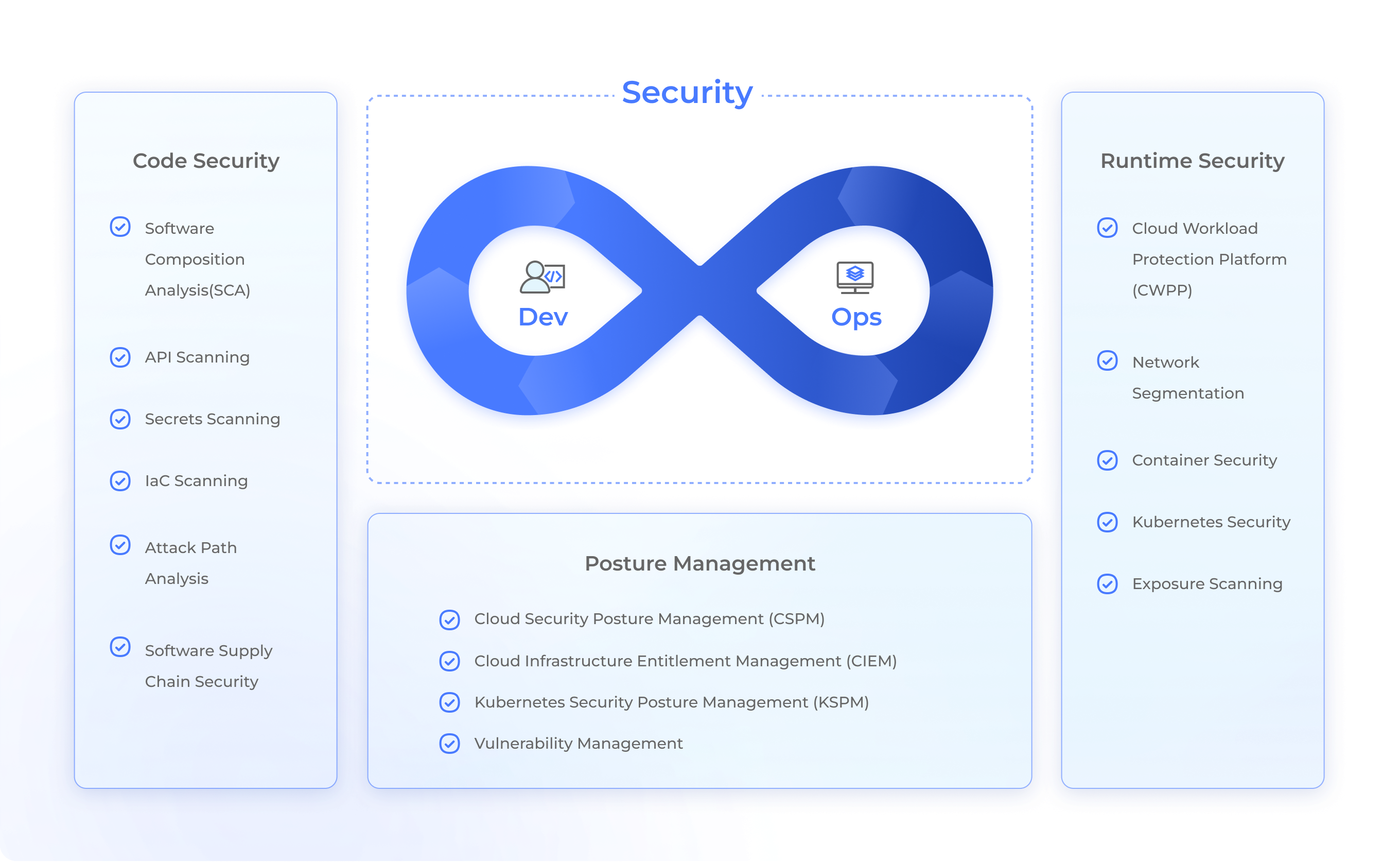
Cloud-Native Application Protection Platforms (CNAPP) have matured significantly. The latest IANS updates highlight that the previous distinction between Cloud Security Posture Management (CSPM) and Cloud Workload Protection Platforms (CWPP) has largely vanished.
Modern updates now focus on Cloud Infrastructure Entitlement Management (CIEM) and Cloud Detection and Response (CDR) as the high-growth areas within the CNAPP umbrella. IANS research suggests that organizations are no longer looking for standalone tools but are instead prioritizing "single-pane-of-glass" visibility that correlates configuration errors with active threats. This consolidation reduces the "alert fatigue" that has plagued security teams for the last decade.
2. Identity as the New Perimeter
As traditional network boundaries continue to dissolve in 2026, IANS has pivoted much of its cloud security guidance toward identity governance. The updates emphasize that misconfigured identities are now the primary vector for cloud breaches.
Recent faculty briefs suggest a move toward Zero Trust Architecture (ZTA) specifically for machine identities. With the explosion of microservices and serverless functions, there are often ten times more non-human identities than human users. IANS provides frameworks for implementing "Least Privilege" at scale using automated remediation tools that can adjust permissions in real-time based on behavior.
3. AI-Augmented Security Operations
For the 2026 calendar year, IANS updates heavily feature the role of generative and predictive AI in cloud defense. While AI-driven attacks are a concern, the research focuses on the defensive side:
- Automated Policy Generation: Using AI to draft IaC policies that comply with internal standards.
- Predictive Threat Modeling: Analyzing cloud logs to forecast potential attack paths before they are exploited.
- Natural Language Querying: Allowing junior analysts to interact with complex cloud telemetry using conversational interfaces.
Comparison of Cloud Security Maturity Levels
The following table outlines the progression of cloud security maturity as defined in recent IANS faculty research and benchmarking updates.
| Domain | Foundational (Level 1-2) | Advanced (Level 3-4) | Optimized (Level 5) |
|---|---|---|---|
| Visibility | Manual inventory of cloud assets; limited logging. | Automated discovery; centralized log management. | Real-time asset graph with context-aware risk scoring. |
| Governance | Ad-hoc policies; manual compliance checks. | Infrastructure-as-Code (IaC) templates with basic linting. | Automated "Guardrails" with self-healing remediation. |
| Identity | Static credentials; MFA for admins only. | Single Sign-On (SSO); Role-Based Access Control (RBAC). | Just-in-Time (JIT) access; machine identity governance. |
| Incident Response | Manual forensic collection; basic alerts. | Scripted response playbooks; SIEM integration. | AI-driven autonomous response and threat hunting. |
The IANS Faculty Model: Practitioner-Led Guidance
A unique element of the IANS cloud security update is its reliance on "Faculty" members—real-world practitioners who spend their time securing large-scale environments. This model ensures that the advice remains grounded in technical reality.
For 2026, the Faculty has focused on Supply Chain Security in the cloud. As organizations rely more on third-party SaaS and open-source modules, the risk of "upstream" compromises has increased. IANS updates provide specific vetting checklists and technical requirements for evaluating cloud service providers (CSPs) and third-party software components. This includes guidance on Software Bill of Materials (SBOM) integration and the verification of cryptographic signatures in the deployment pipeline.
Implementation Strategies for Security Leaders
To effectively use the IANS update overview, organizations should follow a structured approach to integrating this research into their operational cycles.
Prerequisite Assessment
Before implementing new cloud security controls, teams must have a clear understanding of their current cloud footprint. This includes an inventory of all sanctioned and unsanctioned (Shadow IT) cloud accounts. IANS recommends using automated discovery tools as a prerequisite for any maturity improvement project.
Gap Analysis and Benchmarking
Once the footprint is established, the next step is to perform a gap analysis against the IANS Cloud Security Maturity Model. This allows CISOs to identify the areas with the highest risk—often found in unmanaged API endpoints or over-privileged service accounts. Benchmarking against peer data provided in the updates helps justify budget requests by showing how the organization compares to industry standards.
Continuous Policy Evolution
Cloud environments are dynamic. The "update" is not a one-time event but a continuous flow of information. IANS suggests incorporating Faculty research into monthly policy reviews. For instance, if a new vulnerability type in Kubernetes is identified in an IANS Research Brief, the security team should immediately update their IaC scanning rules to detect that specific pattern.
Common Pitfalls in Cloud Security Management
Despite the wealth of information in the IANS updates, many organizations struggle with execution. Awareness of these common mistakes is essential for success:
- Tool Sprawl without Strategy: Purchasing high-end CNAPP tools without having the personnel or processes to manage the resulting alerts.
- Neglecting the "Shared Responsibility" Model: Assuming the cloud provider (AWS/Azure/GCP) handles all security aspects, leading to critical misconfigurations in the customer-managed portion of the stack.
- Inflexible Governance: Implementing security "gates" that slow down DevOps teams, which often leads to developers bypassing security controls altogether.
- Static Risk Assessments: Relying on annual audits rather than continuous monitoring. The 2026 threat landscape moves too fast for point-in-time assessments to remain valid.
Frequently Asked Questions
How does the IANS cloud security update differ from Gartner's Magic Quadrant?
While Gartner focuses on market position, vision, and vendor health, IANS focuses on the technical execution and practitioner experience. The IANS update provides "how-to" guidance, peer-based benchmarking, and direct access to faculty for troubleshooting, whereas Gartner is primarily used for vendor selection and long-term market trends.
Can small businesses benefit from IANS cloud security updates?
IANS is traditionally geared toward mid-market and enterprise organizations with dedicated security teams. However, the foundational research on cloud-native security and identity governance is applicable to any organization using cloud services. Smaller teams may find the "Actionable Insights" particularly useful for prioritizing limited resources.
What is the frequency of these updates?
IANS provides a continuous stream of updates. In 2026, this includes weekly Research Briefs, monthly Faculty-led webinars, and an annual Cloud Security Spotlight report. Peer-benchmarking data is updated quarterly to reflect shifts in the threat landscape and technological advancements.
Does IANS provide specific configuration scripts?
Yes, many IANS updates include technical "Deep Dives" that provide sample code, IaC templates (such as Terraform or CloudFormation), and CLI commands for auditing specific cloud services. These are designed to be used as starting points for internal security engineering teams.
How does IANS handle multi-cloud security?
The 2026 updates place a heavy emphasis on multi-cloud and hybrid-cloud environments. The research focuses on finding common denominators across providers, such as using Open Policy Agent (OPA) for consistent policy enforcement across AWS, Azure, and on-premises Kubernetes clusters.
Strategic Recommendation
For organizations looking to maximize their cloud security posture in 2026, the primary action should be the standardization of identity-centric security controls. The IANS update overview clearly indicates that the technical "center of gravity" has shifted from the network to the identity.
Security leaders should prioritize the implementation of a unified Cloud Infrastructure Entitlement Management (CIEM) strategy and ensure that all cloud deployments are governed by automated policy-as-code. By aligning internal roadmaps with the IANS Maturity Model, organizations can move from reactive firefighting to a proactive, resilient cloud security posture.
Image Gallery