When Do Turkey Vultures Migrate? Timing, Routes, and Seasonal Dynamics
Turkey vultures (Cathartes aura) migrate primarily during two seasonal windows: fall migration spans from late August through November, peaking in October, while spring migration occurs from mid-February through April, peaking in March...
Turkey vultures (Cathartes aura) migrate primarily during two seasonal windows: fall migration spans from late August through November, peaking in October, while spring migration occurs from mid-February through April, peaking in March. However, timing varies significantly by geographic region, as northern breeding populations migrate thousands of miles while southern populations remain resident year-round.
Contents
Seasonal Migration Timelines: Fall vs. Spring
Turkey vulture migration is dictated by seasonal changes in solar radiation, temperature, and food availability. Because these scavengers rely on soaring flight powered by thermal updrafts, their departure and arrival dates align closely with weather patterns that support low-energy aerial transport.
- SPRING MIGRATION (Returns to Northern Grounds)
- Mid-Feb
- Peak: Mar-Apr
- FALL MIGRATION (Departs for Southern Wintering Grounds)
- Late Aug
- Peak: Oct
- Nov
Fall Migration (Late August to November)
Fall migration is a prolonged, highly organized movement across North America. Northern populations breeding in southern Canada and the northern United States begin shifting south as early as late August, though the mass migration across the central and southern United States peaks throughout October.
- Early Migrants (Late August – Mid-September): Birds breeding in northern latitudes (such as Alberta, Saskatchewan, Ontario, and Maine) begin moving southward as nighttime temperatures drop and thermal strength diminishes.
- Peak Movement (October): Major concentration sites, often called hawk-watches, log their highest single-day counts during October. During this period, thousands of vultures funnel along mountain ridges and coastal peninsulas.
- Late Migrants (November): Stragglers and birds delayed by mild autumn weather continue moving through the southern United States into Mexico through early November. By late November, most migratory individuals have reached their wintering grounds in the southern United States, Central America, or South America.
Spring Migration (Mid-February to May)
Spring migration occurs over a slightly tighter timeline than fall migration, driven by the urge to secure quality nesting territories and breeding pairs in northern habitats.
- Early Arrivals (Mid-February – Early March): In the mid-Atlantic, Ohio Valley, and Pacific Northwest, resident numbers swell as early migrants return. Birds traveling from Central America begin passing through major transit bottlenecks in southern Texas and Mexico.
- Peak Movement (Late March – April): The bulk of northern breeding populations arrive across the northern United States and southern Canada. Thermals strengthen rapidly in late spring, allowing vultures to cover up to 100–200 miles per day.
- Late Arrivals (May): Subadults (birds not yet of breeding age) and late-migrating individuals continue heading north through early May to establish summer foraging ranges.
Regional Variations: Resident vs. Migratory Populations
Not all turkey vultures migrate. The species is classified into distinct geographic populations with varying migratory strategies: obligate migrants, partial migrants, and year-round residents.
- NORTHERN LATITUDES (Canada, Northern US)
- Obligate Migrants: 100% vacate breeding grounds for winter
- MID-LATITUDES (Mid-Atlantic, Central Plains)
- Partial Migrants: Some shift south; others remain during mild winters
- SOUTHERN LATITUDES (Gulf Coast, Southwest US, Tropics)
- Year-Round Residents: No seasonal displacement
Northern Obligate Migrants
Vultures that breed in Canada and the northern tier of the United States (such as Minnesota, Montana, and New England) are obligate migrants. Subzero winter temperatures freeze animal carcasses, rendering food inaccessible, while thick snow cover obscures carrion. Additionally, cold ground surfaces produce weak thermals, making soaring flight energetically inefficient. As a result, 100% of northern breeding populations vacate their summer territory every autumn.
Central Partial Migrants
In the central United States, mid-Atlantic, and central Pacific states, turkey vultures display partial migration. Within the same region, some individuals migrate south while others remain local during mild winters. Factors influencing whether an individual migrates include age, physical condition, and local carrion availability (such as agricultural livestock mortality or roadkill density).
Southern Year-Round Residents
In the southern United States—including Florida, the Gulf Coast, Texas, and parts of the desert Southwest—as well as Mexico, Central America, and South America, turkey vultures are year-round residents. These birds do not undertake long-distance migratory flights. However, their local numbers increase dramatically during late autumn and winter when northern migratory birds arrive to share their wintering habitat.
Flight Mechanics and Thermal Dynamics
To understand when turkey vultures migrate, one must understand how they fly. Unlike waterfowl or songbirds, which rely on continuous powered wing-flapping, turkey vultures rely on passive soaring flight.
- Solar Radiation heats ground, creating a rising column of warm air (thermal).
- Vulture enters thermal and soars upward in circles.
- Reaches top of thermal and glides downward toward next thermal (cross-country travel).
Solar Thermals and Mountain Updrafts
Turkey vultures use their broad wingspan (typically 63 to 72 inches) and low wing loading to catch rising columns of warm air called thermals. As the sun heats the earth's surface during the morning, warm air expands and rises. Vultures enter these rising columns, circling upward to gain altitude without flapping their wings. Once they reach the top of a thermal, they glide forward, losing altitude gradually until they intersect the next thermal.
Because solar thermals require ground heating, turkey vultures rarely start their daily migration flights at dawn. Instead, they remain in communal roosts until mid-to-late morning (typically between 8:30 AM and 10:00 AM), waiting for the sun to warm the earth sufficiently to generate flight-sustaining thermals.
In mountainous regions, vultures also use orographic updrafts—winds striking mountain ridges and pushed upward. These ridge updrafts allow vultures to travel linearly along mountain chains like the Appalachians for hundreds of miles with minimal energy expenditure.
The Open-Water Barrier
Because thermals form over land and fail to develop over cold bodies of water, turkey vultures avoid flying over large open waters such as the Great Lakes, the Gulf of Mexico, or the Atlantic Ocean.
When encountering water barriers, migrating vultures alter their trajectories, traveling along coastlines or shorelines until reaching a land bridge or narrow crossing point. This geographic constraint creates high-density funneling locations along coastal peninsulas and narrow river valleys.
Major Migration Corridors and Concentration Sites
During peak migration windows in October and March, turkey vultures gather in large numbers along predictable geographic corridors. Ornithologists and birdwatchers observe these movements at established raptor counting stations across North America.
1. Veracruz, Mexico ("River of Raptors")
The narrow coastal plain of Veracruz, Mexico, forms the single largest bottleneck for migratory birds in the Western Hemisphere. Bordered by the Gulf of Mexico on the east and the Sierra Madre Oriental mountains on the west, millions of migrating raptors—including over 1.5 million turkey vultures—funnel through this narrow land corridor every autumn between September and November.
2. Corpus Christi HawkWatch (Texas)
Located along the central Texas coast, Corpus Christi is a primary transit zone for western and central North American vulture populations. As birds travel south, the Gulf of Mexico blocks their eastward path, driving tens of thousands of vultures directly over coastal Texas watching sites in late September and October.
3. Hawk Mountain Sanctuary (Pennsylvania)
Situated along the Kittatinny Ridge of the Appalachian Mountains, Hawk Mountain Sanctuary monitors one of the longest-running raptor count records in the world. Turkey vultures utilize the ridge's consistent wind updrafts, making late October through early November an ideal time to observe large movements in the eastern United States.
4. Cape May Bird Observatory (New Jersey)
Located at the southern tip of New Jersey, Cape May acts as a natural funnel for southbound migrants. Vultures moving down the Atlantic coast accumulate at Cape May while deciding whether to risk crossing the Delaware Bay or turn north to navigate around it.
Regional Turkey Vulture Migration Characteristics
The following table summarizes the timing, behavior, and wintering destinations of turkey vulture populations across North America:
| Region / Population | Fall Migration Window | Spring Migration Window | Primary Wintering Grounds | Migratory Behavior |
|---|---|---|---|---|
| Northern & Western Canada | Late Aug – Late Oct | Late March – Early May | Central America, Northern South America | Obligate Migrant (100% vacate summer range) |
| Upper Midwest & New England | Sept – Early Nov | March – Late April | Southern US, Mexico, Central America | Obligate Migrant (Complete seasonal turnover) |
| Mid-Atlantic & Central Plains | Late Sept – Nov | Mid-Feb – April | Deep South US, Gulf Coast, Mexico | Partial Migrant (Mix of resident & migratory birds) |
| Pacific Northwest | Sept – Oct | March – April | California, Mexico, Central America | Obligate/Partial Migrant (Varies by elevation) |
| Southern US & Gulf Coast | Non-migratory (Local shifts) | Non-migratory (Local shifts) | Remains in place (Joined by northern birds) | Year-Round Resident (Population density peaks in winter) |
Environmental Cues, Weather Patterns, and Climate Shifts
Turkey vulture migration relies heavily on specific meteorological conditions. Birds monitor environmental triggers to determine when to launch high-altitude directional flights.
- OPTIMAL MIGRATION CONDITIONS
- Clear skies with strong solar heating (Thermal growth)
- Following cold fronts (Strong tailwinds)
- Moderate surface winds (10-20 mph)
- Barometric pressure changes
Prevailing Weather Systems
- Cold Fronts: In autumn, the passage of a cold front brings dropping temperatures, rising barometric pressure, and strong northwest tailwinds. Vultures take advantage of these tailwinds to travel long distances with minimal energy output.
- Headwinds and Rain: High winds, heavy fog, and rain suppress thermal development. During damp or stormy weather, migrating vultures ground themselves in communal roosts, sometimes waiting several days for conditions to clear.
Climate Trends and Shifted Timelines
Data gathered by bird banding operations and community science initiatives like eBird—managed by the Cornell Lab of Ornithology—indicate subtle shifts in turkey vulture migratory timing over recent decades.
- Earlier Spring Arrivals: Warmer early-spring temperatures across mid-latitude zones have caused spring arrival dates to shift 5 to 10 days earlier compared to 20th-century historical averages.
- Northern Range Expansion: Warmer winter conditions have permitted some turkey vulture populations to winter further north than historically recorded, establishing permanent year-round residency in regions like southern New York, southern Ontario, and Michigan.
Identifying Migrating Vultures: Kettles and Roosting Behavior
Observing turkey vultures during migration differs from watching them forage during summer months. Migrating individuals interact dynamically with weather phenomena and gather in groups.
Spotting "Kettles"
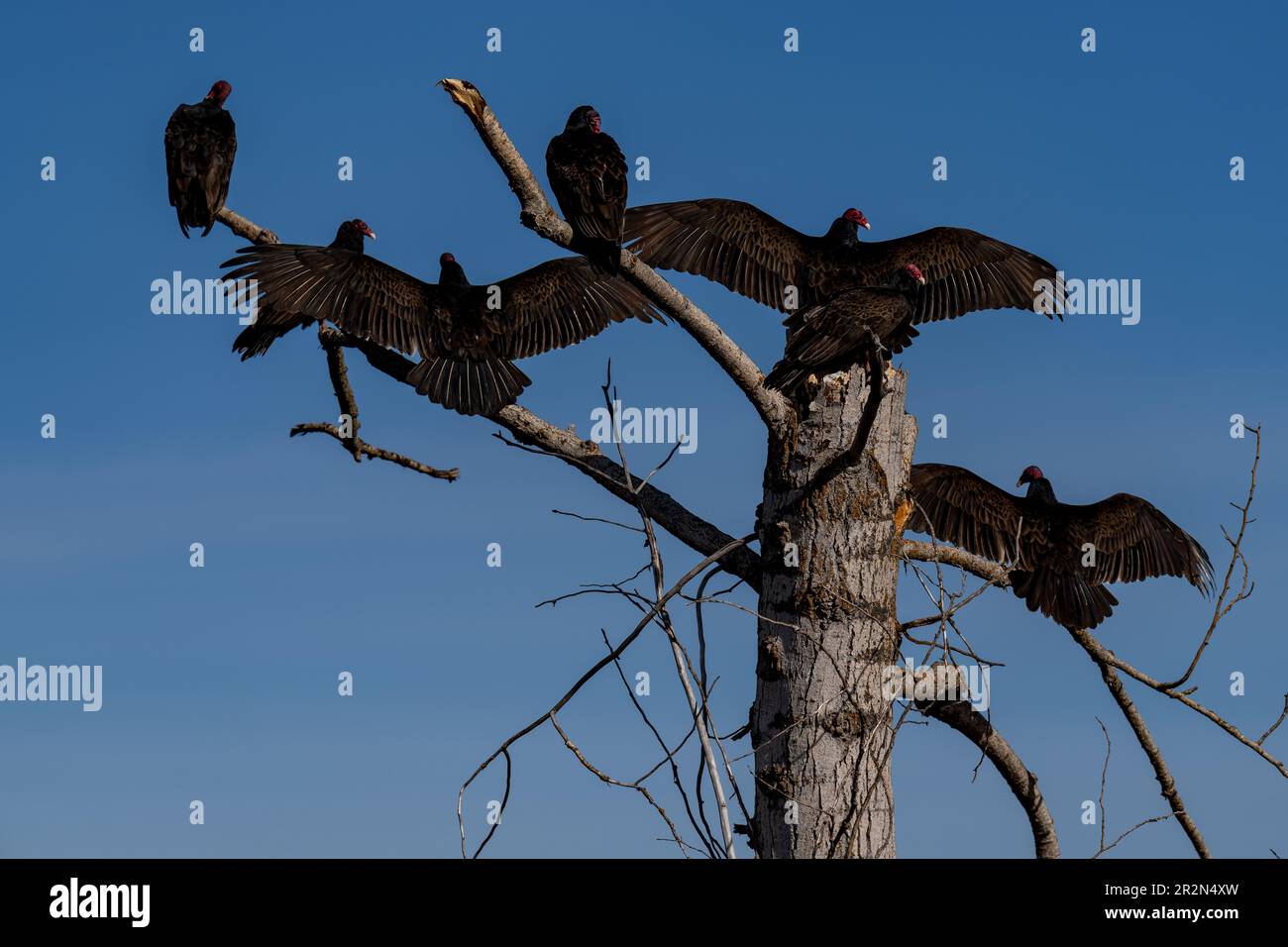
When migrating, turkey vultures form large soaring groups called kettles. Named after the visual effect of soup bubbling inside a pot, a kettle occurs when dozens or hundreds of vultures enter the same thermal column together. They circle tightly within the rising air pocket, gaining altitude simultaneously before peeling off one by one into a straight southward or northward glide.
To differentiate migrating turkey vultures from other soaring birds (such as black vultures or eagles) during migration, look for these physical key marks:
- Dihedral Wing Posture: Wings held in a clear V-shape rather than flat across.
- Rocking Flight: Unsteady, tilting side-to-side flight motion while gliding.
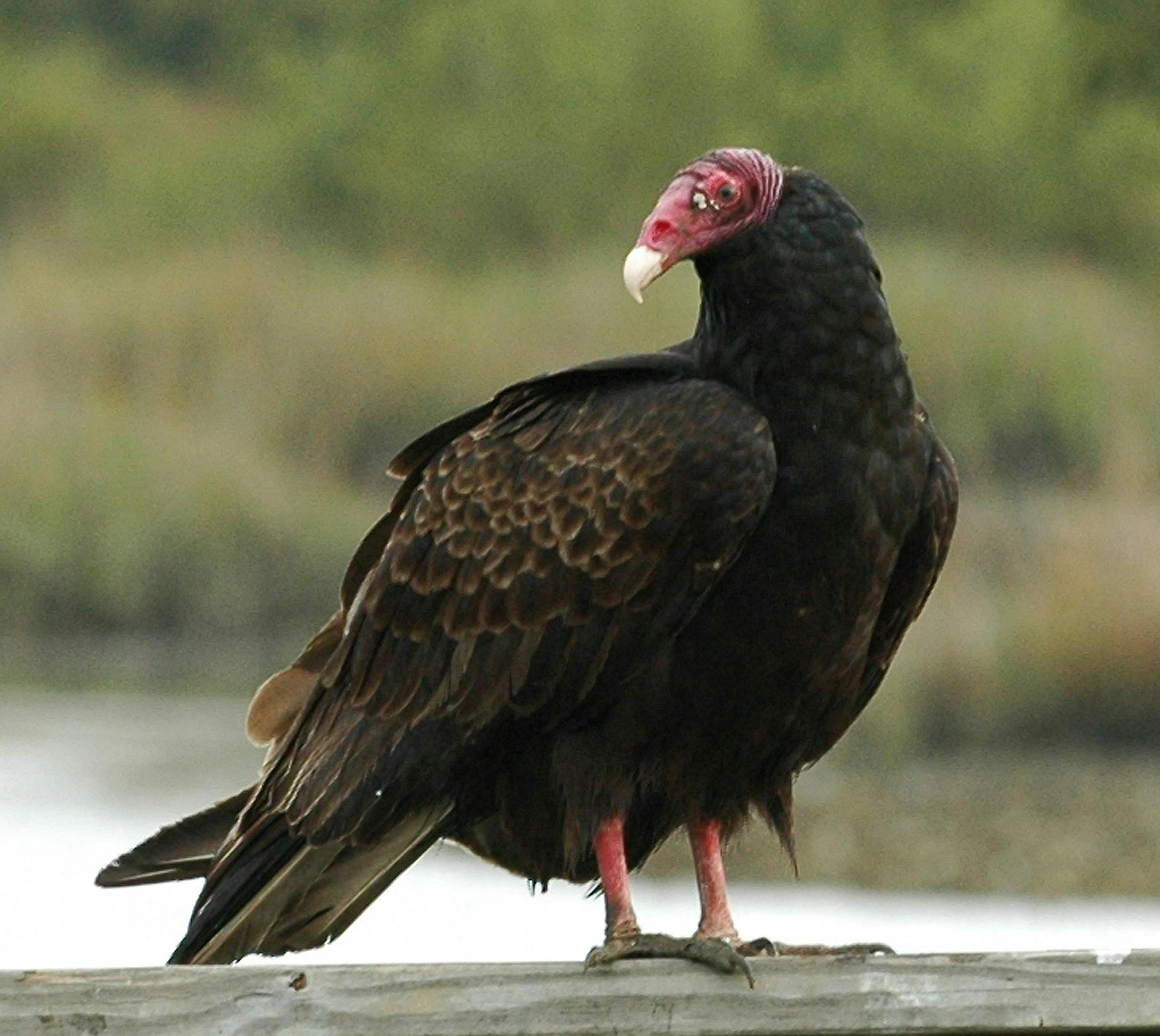
- Wing Pattern: Two-tone underwings with dark feathering along the leading edge and silver-gray flight feathers along the trailing edge.
- TURKEY VULTURE
- Dihedral (V-shape)
- Rocking Motion
- Silver Trailing Edge
- BLACK VULTURE
- Flat Wings
- Stiff Flapping
- Silver Wingtips Only
- BALD EAGLE
- Flat Wings
- Direct Soaring
- Solid/Mottled Pattern
Communal Stopover Roosts
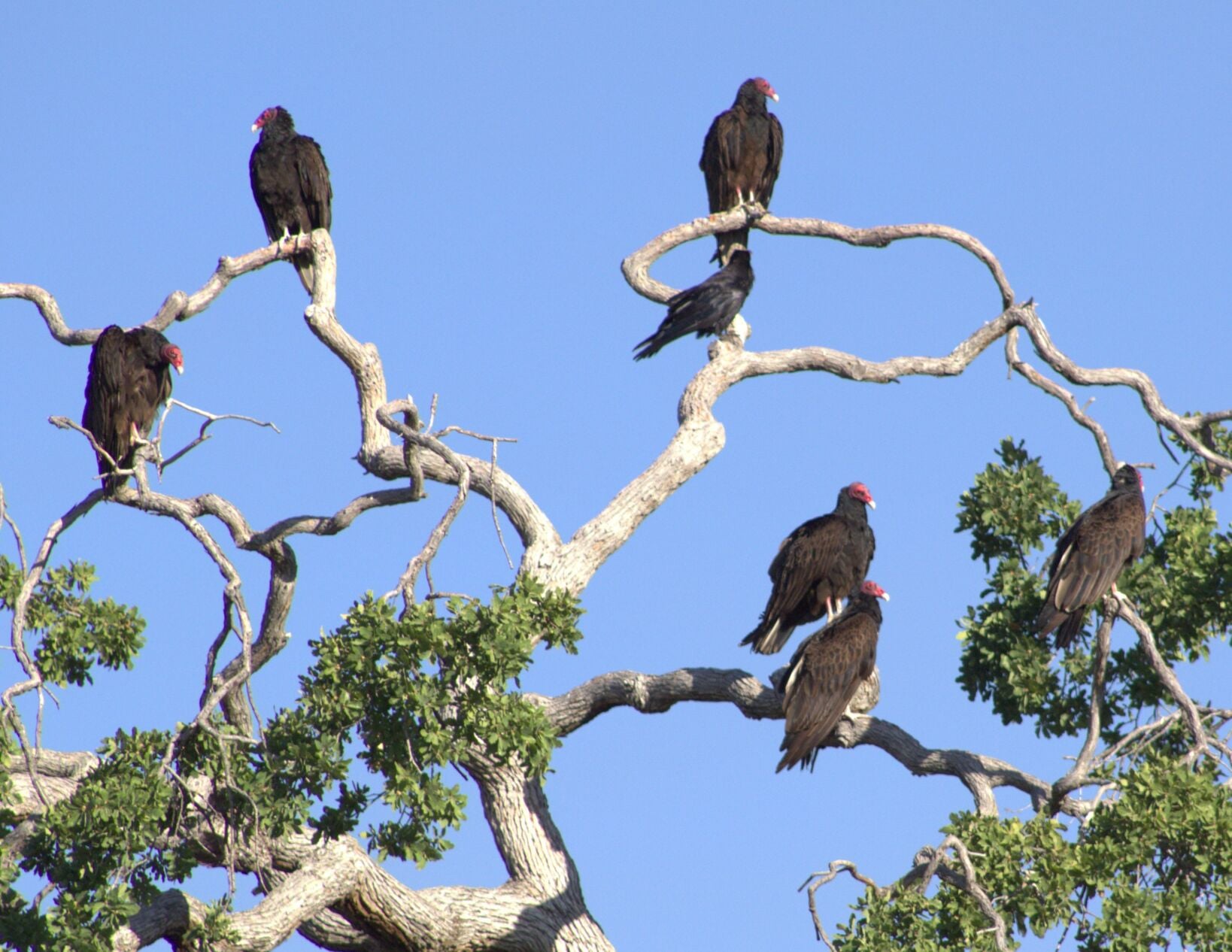
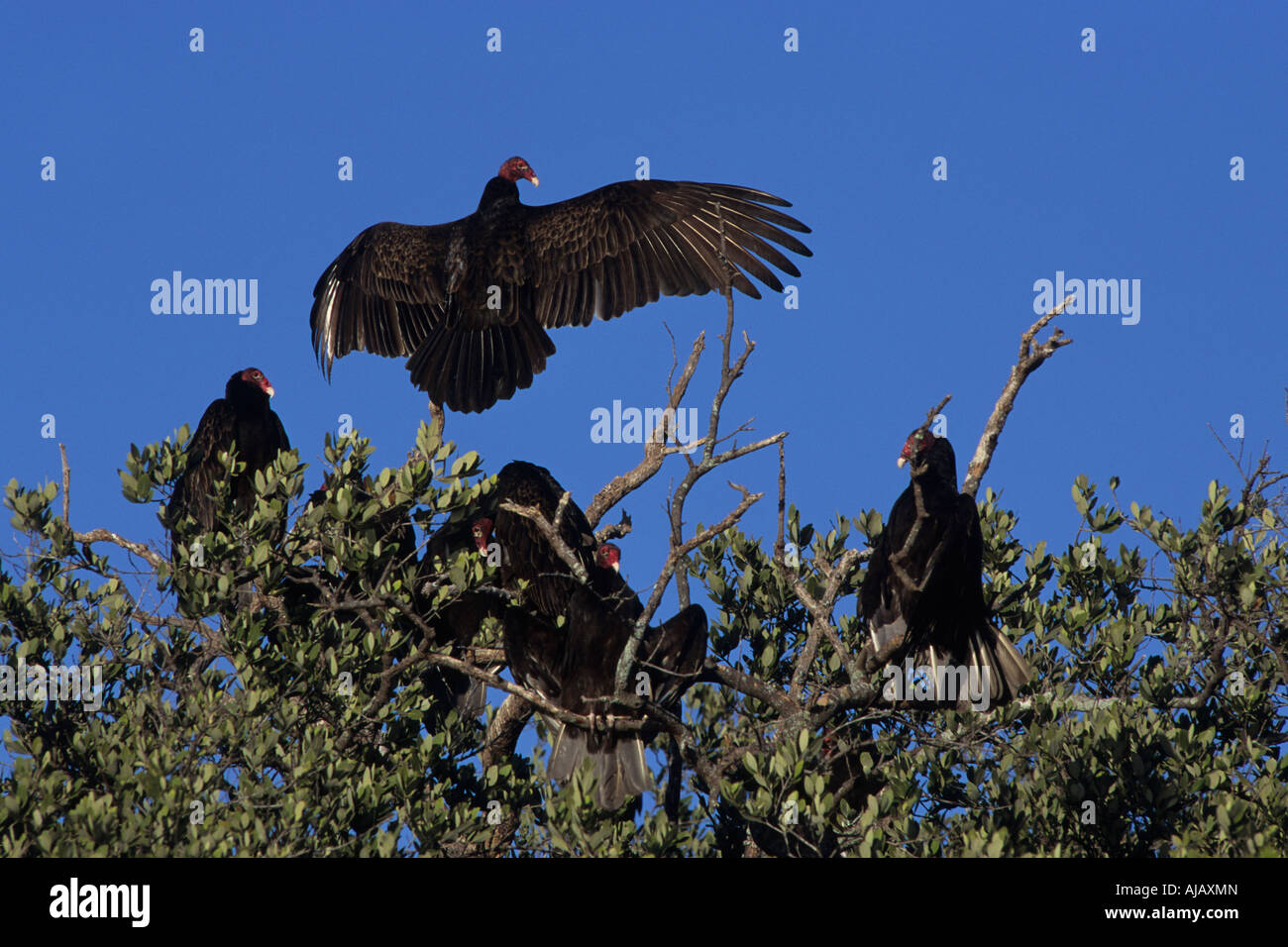
During migration, vultures gather at dusk to form temporary communal roosts in tall deciduous trees, pine groves, radio towers, or abandoned structures. These roosts protect birds from nocturnal predators, provide shelter from cold night winds, and allow individuals to share information about local thermal locations the following morning. Roosts can host anywhere from a dozen to several thousand individuals during peak autumn migration.
Frequently Asked Questions
Do turkey vultures migrate at night?
No. Turkey vultures do not migrate at night. Because they rely on thermal updrafts generated by solar radiation, they can only achieve efficient soaring flight during daylight hours. They drop into trees or man-made structures before sunset to roost until the sun reheats the ground the following morning.
How far do turkey vultures travel during migration?
Migratory distances vary by population. Vultures breeding in southern Canada may travel over 4,000 to 5,000 miles to reach wintering sites in Central or South America. On average, a migrating turkey vulture covers between 100 and 200 miles per day depending on thermal strength and tailwinds.
Why do some turkey vultures stay behind during the winter?
In regions with mild winter climates, such as the southern United States or low-elevation coastal zones, food remains accessible year-round, and cold weather is not severe enough to prevent basic thermal formation. Vultures in these regions remain resident to maintain established nesting territories and avoid the energy expenditure of long-distance flight.
What is the difference between turkey vulture and black vulture migration?
Black vultures (Coragyps atratus) are generally less migratory than turkey vultures. Black vultures have short wings relative to their body weight, making long-distance soaring more energy-intensive. While northern populations of black vultures shift southward during harsh winters, their overall migratory distances are far shorter, and most remain resident throughout the southeastern United States and Latin America year-round.
When should I put up nest boxes or clear roost trees for vultures?
If managing land for wildlife conservation, maintain tall roost trees year-round. Returning spring migrants begin searching for nest sites (such as rock crevices, hollow logs, abandoned farm buildings, or dense brush thickets) between late February and April. Avoid disrupting potential roosting or nesting sites during this key spring window.
Practical Recommendations for Wildlife Observers and Researchers
To track or observe turkey vulture migration effectively, consider the following actionable steps:
- Time Your Observation Windows: Focus observation efforts between 10:00 AM and 3:00 PM on sunny, clear days following the passage of a cold front in autumn (October) or warm front in spring (March to April).
- Utilize HawkWatch Sites: Visit established observation stations—such as those listed by the Hawk Migration Association of North America—to view high-volume migrations guided by professional counts.
- Track Real-Time Movements: Use online bird-tracking databases like eBird to monitor live arrival maps and migration waves entering your local county.
- Report Wing Tags: If you observe a turkey vulture with a large numbered plastic tag on its wing, report the tag number, date, and coordinates to official wildlife tracking databases like the USGS Bird Banding Laboratory to assist scientists studying vulture movement patterns.
Image Gallery