The Indispensable Role of Pope John XXIII in the Second Vatican Council
Pope John XXIII was the primary architect and visionary behind the Second Vatican Council (1962–1965), fundamentally shifting the Catholic Church from a "fortress mentality" to a posture of open dialogue with the modern world. He initi...
Pope John XXIII was the primary architect and visionary behind the Second Vatican Council (1962–1965), fundamentally shifting the Catholic Church from a "fortress mentality" to a posture of open dialogue with the modern world. He initiated the Council to promote aggiornamento—a spiritual and structural "updating"—while emphasizing a pastoral rather than a condemnatory approach to theology and global engagement.
Contents
The "Transitional Pope" Who Changed History
When Angelo Giuseppe Roncalli was elected as Pope John XXIII in 1958 at the age of 76, many Vatican observers and members of the College of Cardinals viewed him as a "transitional" figure. After the long, rigorous, and often centralized reign of Pope Pius XII, the expectation was that Roncalli would maintain the status quo and provide a quiet interregnum. However, less than three months into his papacy, on January 25, 1959, he shocked the world and his own Curia by announcing his intention to convene an ecumenical council.
This announcement was unprecedented. In the history of the Church, councils were typically called to address specific heresies or crises. There was a prevailing sense among conservative theologians that the First Vatican Council (1869–1870), which defined papal infallibility, had rendered future councils unnecessary. John XXIII disagreed, sensing a profound disconnect between the Church’s ancient traditions and the needs of a world rapidly changing in the post-WWII era, characterized by the Cold War, decolonization, and technological advancement.
Aggiornamento: The Core Philosophy of John XXIII
The central theme of John XXIII’s role in Vatican II was aggiornamento, an Italian term meaning "bringing up to date." This was not an attempt to change the core dogmas of the faith, but rather a movement to change the expression of those dogmas so they could be better understood by contemporary society.
John XXIII believed that the Church had become too insular. He wanted to "throw open the windows" of the Vatican to let in some fresh air. This involved two simultaneous movements:
- Ressourcement: A "return to the sources," focusing on the Bible and the writings of the early Church fathers, rather than relying solely on the Scholastic tradition of the Middle Ages.
- Pastoral Orientation: A shift in focus from "what is wrong with the world" to "how can the Church serve the world." He famously stated that the Church should use the "medicine of mercy" rather than the "arms of severity."
The Battle for the Council’s Direction
The role of Pope John XXIII was not merely that of a figurehead who called the meeting; he was actively involved in ensuring the Council remained free to follow the Holy Spirit. During the three-year preparatory period (1959–1962), the Roman Curia—the Church’s administrative bureaucracy—attempted to control the Council’s agenda by drafting "schemas" (preliminary documents) that largely reaffirmed traditional, pre-existing views.
John XXIII, recognizing that these rigid documents would stifle genuine dialogue, took several critical steps:
- Empowering the Bishops: He encouraged bishops from around the world to submit their own concerns and topics for discussion, ensuring the Council would be truly "ecumenical" or universal.
- Creating New Structures: He established the Secretariat for Promoting Christian Unity, led by Cardinal Augustin Bea. This was a revolutionary move that bypassed the traditional Holy Office (now the Dicastery for the Doctrine of the Faith) and signaled a new era of ecumenism.
- Intervention in 1962: During the first session, when a deadlock occurred over the document De Fontibus Revelationis (On the Sources of Revelation), John XXIII intervened to scrap the Curia’s draft and ordered a joint commission to rewrite it. This act effectively "saved" the Council from becoming a rubber-stamp for the bureaucracy.
Gaudet Mater Ecclesia: The Opening Vision
On October 11, 1962, Pope John XXIII delivered his opening speech, Gaudet Mater Ecclesia (Mother Church Rejoices). This address is considered one of the most important ecclesiastical documents of the 20th century. In it, he explicitly rejected the "prophets of gloom" who saw only ruin and calamity in the modern world.
He argued that the "substance of the ancient doctrine of the deposit of faith is one thing, and the way in which it is presented is another." This distinction allowed the Council fathers to explore new liturgical forms (such as the use of the vernacular instead of Latin), a greater role for the laity, and a more positive view of other religions and denominations. His role was to provide the "charism of the start"—the initial spark and the permission to think boldly.
| Feature | Pre-Vatican II Stance (John XXIII's Starting Point) | Post-Vatican II Trajectory (John XXIII's Vision) |
|---|---|---|
| Primary Language | Latin exclusively for liturgy and official business. | Promotion of the vernacular to increase lay participation. |
| Ecumenism | Non-Catholics viewed as "schismatics" or "heretics." | Dialogue with "separated brethren" and other faiths. |
| Church Structure | Highly centralized, hierarchical "Pyramid." | "People of God" model with increased bishop collegiality. |
| World View | Suspicious of modernity and secular democracy. | Constructive engagement with social and political issues. |
| Theological Tone | Defensive, legalistic, and condemnatory. | Pastoral, mercy-focused, and communicative. |
Diplomatic Reach and Pacem in Terris
John XXIII’s role extended beyond the internal workings of the Council into the realm of global diplomacy. His 1963 encyclical, Pacem in Terris (Peace on Earth), was the first addressed not only to Catholics but to "all men of good will." This document was a direct response to the Cuban Missile Crisis and established a framework for human rights and social justice that became a cornerstone of the Council’s later document, Gaudium et Spes.
By engaging with world leaders—including reaching out to Soviet Premier Nikita Khrushchev—John XXIII demonstrated that the Church could be a mediator in a bipolar world. This diplomatic openness was a practical application of the Council's spirit, showing that the Church was not a relic of the past but a living participant in the quest for global peace.
The Death of a Pope and the Continuation of a Legacy
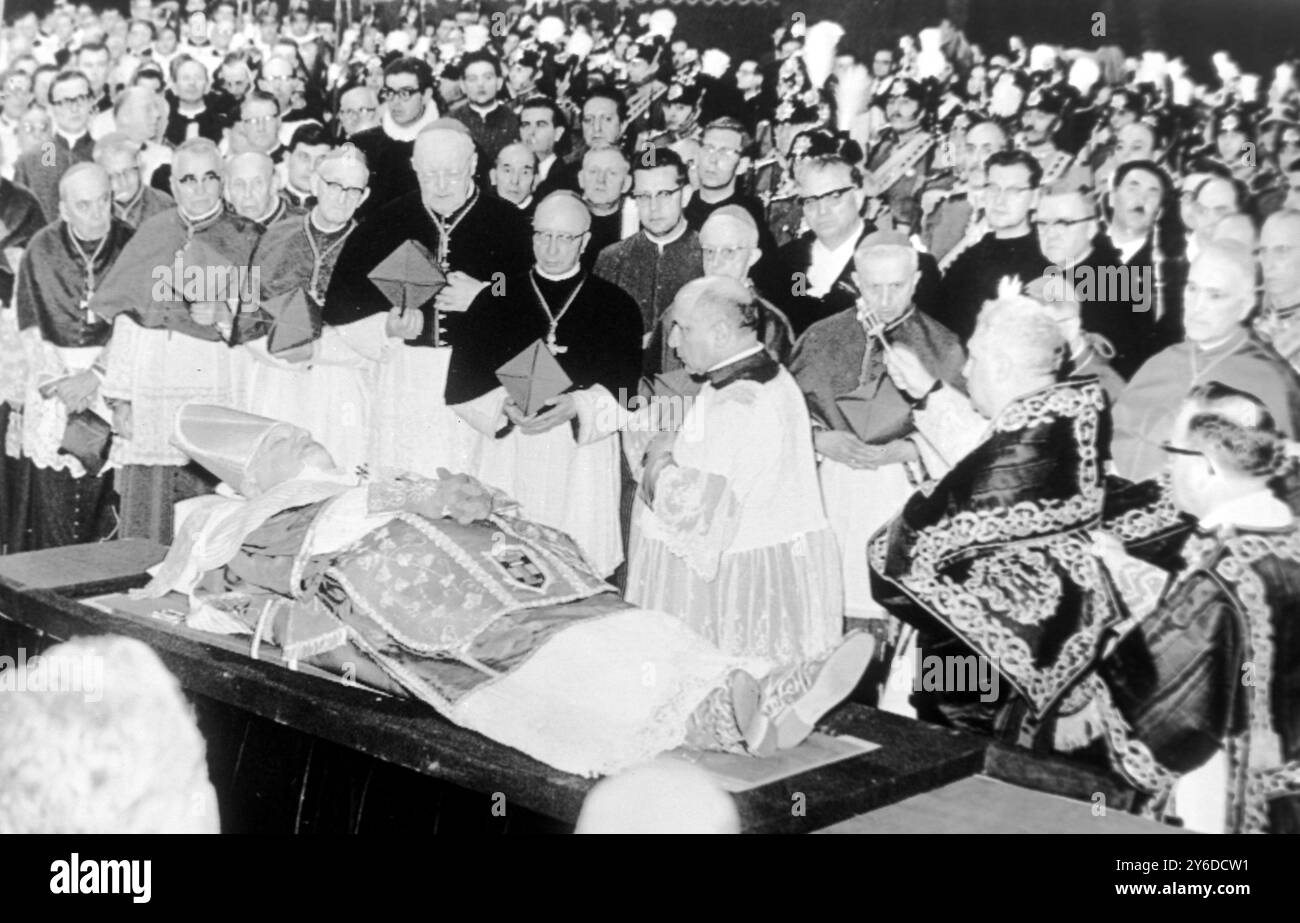
Pope John XXIII passed away on June 3, 1963, between the first and second sessions of the Council. There was significant anxiety that his successor might shutter the Council or revert to a more conservative path. However, his influence was so profound that his successor, Pope Paul VI, immediately committed to continuing the Council exactly as John had envisioned it.
While Paul VI was the one who presided over the final three sessions and the promulgation of the documents, the DNA of every decree—from religious freedom (Dignitatis Humanae) to the Church's relationship with non-Christian religions (Nostra Aetate)—can be traced back to the permissions and perspectives established by John XXIII.
Frequently Asked Questions
Why did Pope John XXIII call Vatican II if there was no crisis?
Unlike previous councils called to combat specific heresies, John XXIII felt the Church needed a "New Pentecost." He believed the Church was failing to communicate the Gospel effectively to a modern world that was increasingly secular and scientific. He called the Council as a proactive measure of renewal rather than a reactive measure of defense.
What does "Aggiornamento" mean in the context of the Council?
Translated as "updating" or "bringing up to date," it refers to the process of making the Church's teachings, discipline, and life more relevant to the contemporary world. It was not meant to change the truth of the faith, but to change the way the Church lived and shared that truth.
How did John XXIII change the role of the laity?
Before the Council, the laity were often seen as passive recipients of the sacraments and instructions. John XXIII’s vision, later codified in the Council documents, emphasized the "universal call to holiness," suggesting that every baptized person has an active role in the Church’s mission, not just the clergy.
Did John XXIII personally write the Vatican II documents?
No. The documents were the result of years of debate, drafting, and voting by the thousands of bishops (Council Fathers) present. However, John XXIII’s role was to set the agenda, provide the theological "mood" of openness, and intervene when the process became bogged down by bureaucracy.
What is the "Prophets of Gloom" reference?
In his opening speech, John XXIII critiqued those within the Church who saw the modern world as entirely evil and longed for a return to a perceived golden age of the past. He argued that God is present in history and that the Church should look to the future with hope rather than fear.
Practical Recommendation for Further Study
To fully understand the role of Pope John XXIII, readers should begin by reading the full text of his opening address, Gaudet Mater Ecclesia (1962). For a deeper dive into his personal motivations, his spiritual diary, Journal of a Soul, provides a rare look at the inner life of a man who remained a simple "country priest" at heart while leading a global revolution. As of 2026, many of the original Council archives have been digitized, offering unprecedented access to the day-to-day interventions John XXIII made to ensure the Council's success.
Image Gallery