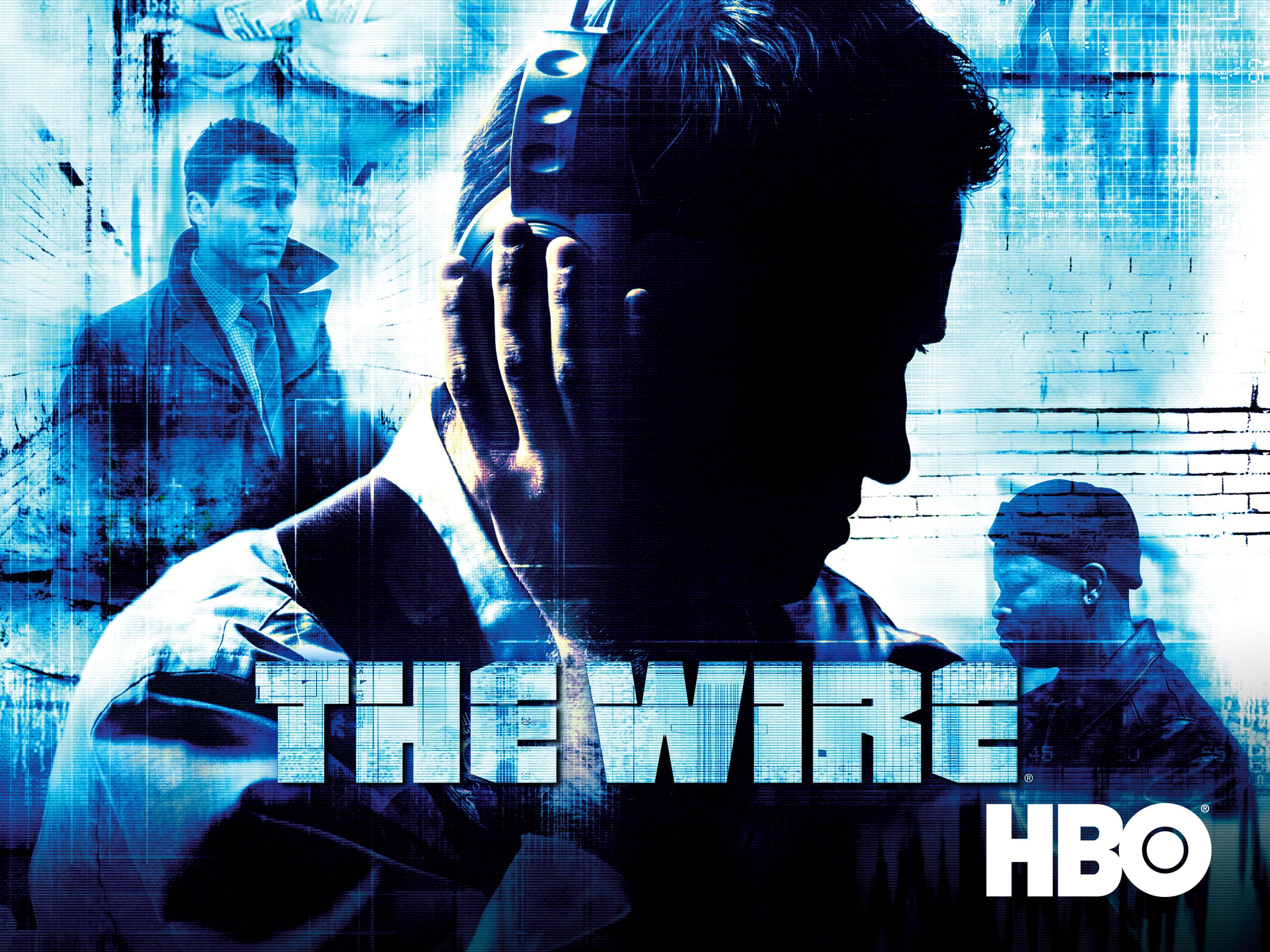
An In-Depth Overview of The Wire Pilot: "The Target"
The pilot episode of "The Wire," titled "The Target," serves as the foundational blueprint for David Simon’s sprawling exploration of Baltimore’s institutional decay. Directed by Clark Johnson and originally aired on June 2, 2002, the...
The pilot episode of "The Wire," titled "The Target," serves as the foundational blueprint for David Simon’s sprawling exploration of Baltimore’s institutional decay. Directed by Clark Johnson and originally aired on June 2, 2002, the episode introduces the central conflict between the Barksdale drug organization and a haphazardly assembled police detail, establishing the "slow-burn" narrative style that would eventually define the series as a peak of television achievement.
Contents
The Genesis and Production Context
To understand "The Target," one must first understand its architects. David Simon, a former police reporter for The Baltimore Sun, and Ed Burns, a former Baltimore homicide detective and schoolteacher, brought an unprecedented level of authenticity to the script. As of 2026, "The Wire" is frequently cited in university sociology and urban studies courses precisely because this pilot was built on real-world observations of how city institutions—from the police department to the judicial system—function and fail.
The production of "The Target" departed from the standard police procedurals of the early 2000s. While shows like "Law & Order" or "CSI" focused on the resolution of a single crime within an hour, "The Target" was designed to be the first chapter of a "visual novel." This approach meant the pilot did not provide immediate catharsis or a closed ending. Instead, it introduced a complex web of characters and systemic pressures that would take years to fully unravel.
Shot on location in Baltimore, the pilot utilizes a gritty, naturalistic aesthetic. The decision to frame the series in a 4:3 aspect ratio (which was later remastered to 16:9 for modern audiences) was a deliberate choice to evoke the feel of a documentary. The direction by Clark Johnson, who also plays a role in later seasons, emphasizes the cramped, bureaucratic spaces of the police department and the stark, open-air vulnerability of the drug corners known as "The Pit."
Narrative Overview: "The Target"
The pilot opens with one of the most famous scenes in television history: Detective Jimmy McNulty (Dominic West) sits on a stoop with a witness, discussing the recent murder of a young man nicknamed "Snot Boogie." The witness explains that Snot Boogie was killed for stealing from a dice game—a theft he committed every Friday night. When McNulty asks why they let him play if he always stole, the witness responds with the series' thesis statement: "Got to. This is America, man."
This opening sequence establishes that "The Game" (the drug trade) has rules, rituals, and an internal logic that exists regardless of its illegality. From here, the episode branches into two primary storylines that eventually collide.
The Trial of D'Angelo Barksdale
The catalyst for the series' action is the courtroom scene where D'Angelo Barksdale (Lawrence Gilliard Jr.) is on trial for murder. Despite a solid case, the primary witness, Nereese Campbell, changes her testimony on the stand after seeing a member of the Barksdale organization (Stringer Bell) sitting in the gallery. This blatant intimidation leads to D'Angelo’s acquittal, much to the frustration of the attending Detective McNulty.
The Bureaucratic Backlash
Frustrated by the Barksdale family’s ability to manipulate the system, McNulty bypasses his chain of command to speak directly with Judge Daniel Phelan. McNulty’s "back-channeling" alerts the judge to the Barksdale organization's dominance and the police department's lack of a coordinated response. While this action sets the investigation in motion, it also marks McNulty as a pariah within his own department. His commanding officer, Major William Rawls, views McNulty’s initiative as a betrayal of the departmental hierarchy and a threat to the department’s statistics-driven priorities.
Key Character Introductions
"The Target" is remarkable for how many essential characters it introduces without overwhelming the viewer. Each character is presented not as a hero or a villain, but as a person operating within the constraints of their environment.
The Police Detail
- Jimmy McNulty: A talented but arrogant homicide detective who values his own sense of justice over departmental politics. His inability to "play the game" within the police force is his defining trait.
- The Bunk (William Moreland): McNulty’s partner, played by Wendell Pierce. Bunk provides a grounded, cynical contrast to McNulty’s idealism. He is a "real" homicide man who understands the limitations of his job.
- Cedric Daniels: A lieutenant in the Narcotics division who is initially seen as a "ladder-climber." He is tasked with leading the new Barksdale detail, primarily to keep McNulty in check and satisfy the judge’s demands with minimal effort.
- Kima Greggs: A highly capable narcotics detective and one of the few police officers introduced in the pilot who appears focused on the work rather than the politics.
The Barksdale Organization
- Avon Barksdale: The elusive head of the organization. In the pilot, Avon is a ghost; he is a man without a photograph in the police files, highlighting the disconnect between the street and the station.
- Stringer Bell: Avon’s second-in-command. Unlike the more traditional gangsters of television, Stringer is introduced as a businessman, emphasizing efficiency and discipline within the ranks.
- D'Angelo Barksdale: The nephew of Avon. D'Angelo serves as the audience’s entry point into the world of the drug trade. He is conflicted, possessing a conscience that makes him a sympathetic yet tragic figure.
The Street Perspective
- Bubbles (Reginald Cousins): A heroin addict and "confidential informant." Bubbles represents the human cost of the drug trade. His struggle to survive on the fringes of Baltimore provides a layer of empathy and realism to the investigation.
Thematic Analysis: Institutional Failure and "The Game"
The primary theme introduced in "The Target" is the failure of institutions to address the problems they are ostensibly designed to solve. The Baltimore Police Department (BPD) is portrayed not as a bastion of justice, but as a bureaucracy obsessed with "clearance rates" and "stats." Major Rawls and Deputy Commissioner Burrell are more concerned with how the department looks to the Mayor's office than with actually dismantling the Barksdale organization.
On the other side of the law, the Barksdale organization is shown to be a mirror image of the police department. It has its own hierarchy, its own disciplinary procedures, and its own "corporate" culture. This comparison suggests that both the police and the drug dealers are trapped in "The Game"—a system that rewards survival and profit over morality or social stability.
The pilot also touches on the racial and socioeconomic divisions in Baltimore. The stark contrast between the wealthy corridors of the courthouse and the decaying projects of West Baltimore highlights the inequality that fuels the drug trade. By 2026, these themes have only become more relevant as discussions around urban policy and police reform continue to dominate the national conversation.
Technical Specifications and Production Data
The following table summarizes the key technical and production details of "The Target."
| Feature | Details |
|---|---|
| Episode Title | "The Target" (Season 1, Episode 1) |
| Original Air Date | June 2, 2002 |
| Director | Clark Johnson |
| Writers | David Simon (Story/Teleplay), Ed Burns (Story) |
| Runtime | 60 minutes |
| Primary Location | West Baltimore, Maryland |
| Filming Format | 35mm film (Originally 4:3 Aspect Ratio) |
| Major Entities | Barksdale Organization, BPD Homicide and Narcotics |
| Key Witnesses | William Gant (murdered shortly after trial) |
Visual Language and Directorial Choices
Clark Johnson’s direction in "The Target" avoids the "shaky cam" and fast-paced editing common in early 2000s action dramas. Instead, he opts for steady, mid-range shots that allow the environment to speak. There is a notable lack of a traditional musical score. Except for the theme song and music that exists within the world of the characters (diegetic music coming from car radios or clubs), the show is silent. This silence forces the viewer to focus on the dialogue and the ambient sounds of the city, heightening the sense of realism.
The episode also introduces the visual motif of "the towers" and "the pit." These geographic locations are treated with the same importance as the characters themselves. The "Pit," where D'Angelo is sent to manage the low-level drug trade after his trial, is portrayed as a desolate, high-stakes stage where young men are socialized into a life of crime.
The Legacy of "The Target" in 2026
Nearly a quarter-century after its debut, "The Target" remains a masterclass in pilot writing. It does not rely on a high-concept hook or a shocking twist. Instead, it relies on the strength of its world-building. In 2026, media critics often point to this episode as the moment "prestige television" truly began to challenge the complexity of literature.
The pilot’s refusal to simplify the war on drugs into "good guys vs. bad guys" set a new standard for narrative nuance. It challenged the audience to pay attention to details—the same way the detectives must pay attention to the wiretaps they will eventually install. "The Target" is not just an introduction to a story; it is an introduction to a way of seeing the world.
Frequently Asked Questions
Why is the pilot episode called "The Target"?
The title "The Target" refers to several things simultaneously. Most literally, it refers to Avon Barksdale, who becomes the target of the police investigation. It also refers to the physical "targets" on the street—the drug corners and the individuals like William Gant who become targets for elimination after testifying. On a deeper level, it suggests that the city itself and its residents are the targets of a broken system.
Who killed Snot Boogie?
Snot Boogie's murder is never a central mystery of the show; it is an anecdote used to establish the setting. According to the witness in the opening scene, he was killed by someone he stole from. The point of the story is not "who" did it, but that it was an inevitable consequence of the "Game" he chose to play.
What happens to William Gant in the pilot?
William Gant is the maintenance man who did his civic duty by testifying against D'Angelo Barksdale. At the end of the pilot, his body is found in the street, executed as a warning to anyone else who might consider cooperating with the police. His death is the "price" of the Barksdale acquittal and serves as the grim motivation for the investigation to continue.
How does the pilot set the tone for the series?
The pilot sets a tone of uncompromising realism. It avoids melodramatic tropes, lacks a non-diegetic score, and uses authentic Baltimore slang. By focusing on the mundane aspects of police work—like the struggle to get a functioning car or the annoyance of filing paperwork—it signals to the audience that this is not a typical action show.
Is D'Angelo Barksdale a protagonist or an antagonist?
D'Angelo is one of the most complex characters in the pilot. While he is part of a violent criminal organization, he is also shown to have a conscience and a desire for something better. He serves as a tragic protagonist who is trapped between his family loyalty and his internal moral compass.
Why does McNulty talk to Judge Phelan?
McNulty is frustrated by the "business as usual" attitude of the police department. He knows that the Barksdale organization is responsible for a string of murders that are being ignored because they are difficult to solve. By talking to Judge Phelan, he uses the judge’s political power to force the BPD to take action, knowing full well it will ruin his relationship with his superiors.
Practical Recommendation for New Viewers
For those watching "The Target" for the first time in 2026, the best approach is patience. "The Wire" does not provide the immediate gratification of modern streaming "binge-bait." To fully appreciate the pilot, one should pay close attention to the names and faces introduced in the first thirty minutes, as many of them remain crucial for the entire five-season run. It is also helpful to watch with subtitles to catch the specific vernacular and technical jargon used by both the police and the Barksdale organization. Treat the pilot as the beginning of a long-form investigation rather than a self-contained story.
Image Gallery