Understanding the 5 Step Revenue Recognition Model Under ASC 606
The 5-step revenue recognition model is the core framework established by the Financial Accounting Standards Board (FASB) under Accounting Standards Codification (ASC) 606 and the International Accounting Standards Board (IASB) under I...
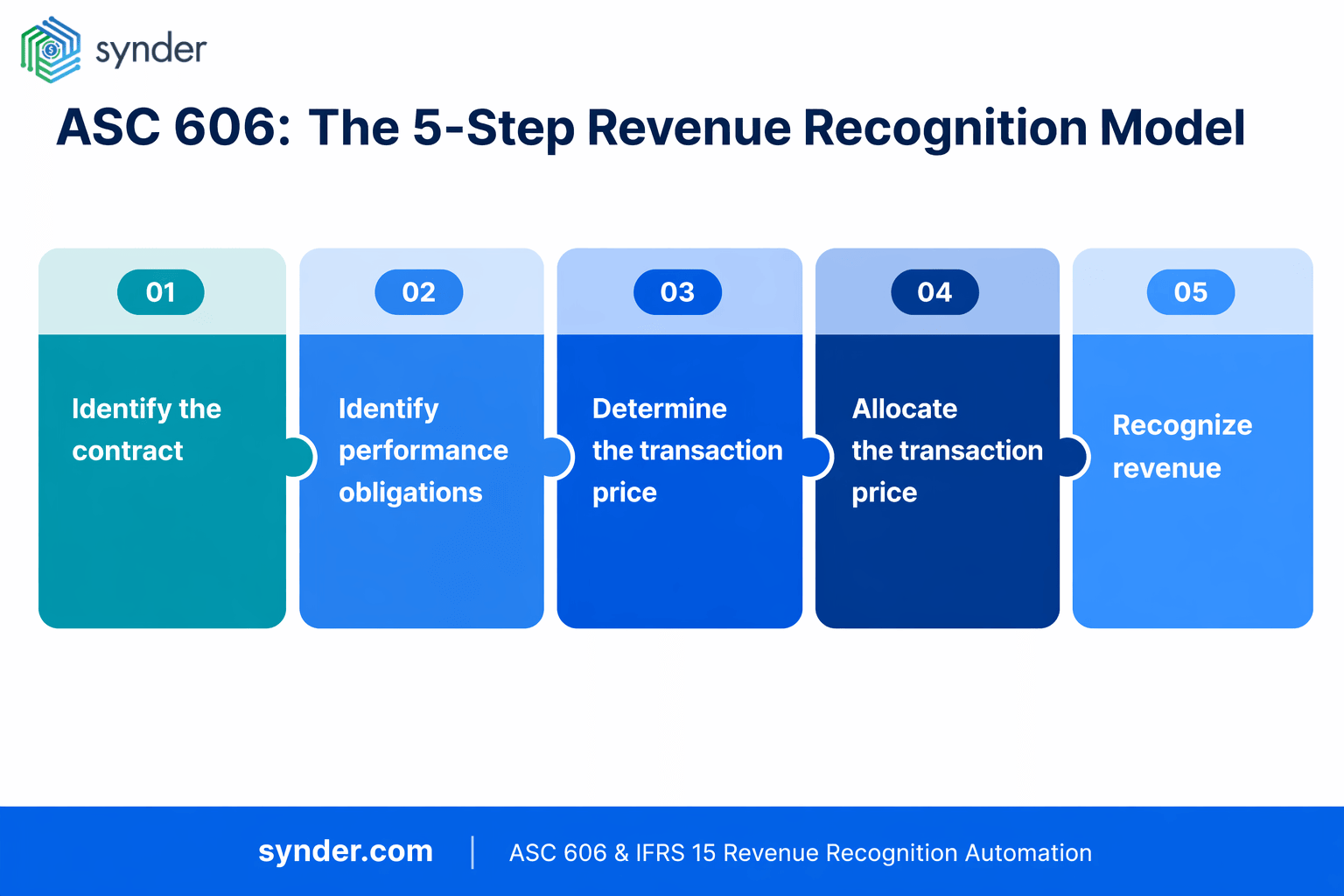
The 5-step revenue recognition model is the core framework established by the Financial Accounting Standards Board (FASB) under Accounting Standards Codification (ASC) 606 and the International Accounting Standards Board (IASB) under IFRS 15. It provides a standardized, industry-neutral approach to determining when and how much revenue a company should recognize from contracts with customers, ensuring that financial statements accurately reflect the transfer of promised goods or services.
Contents
The Objective of the 5-Step Framework
Before the introduction of this model, revenue recognition practices were often fragmented, industry-specific, and prone to inconsistent application. The primary goal of the 5-step model is to improve the comparability of financial statements across different companies and jurisdictions. By focusing on the transfer of control rather than just the transfer of risks and rewards, the model forces organizations to carefully examine their contractual obligations.
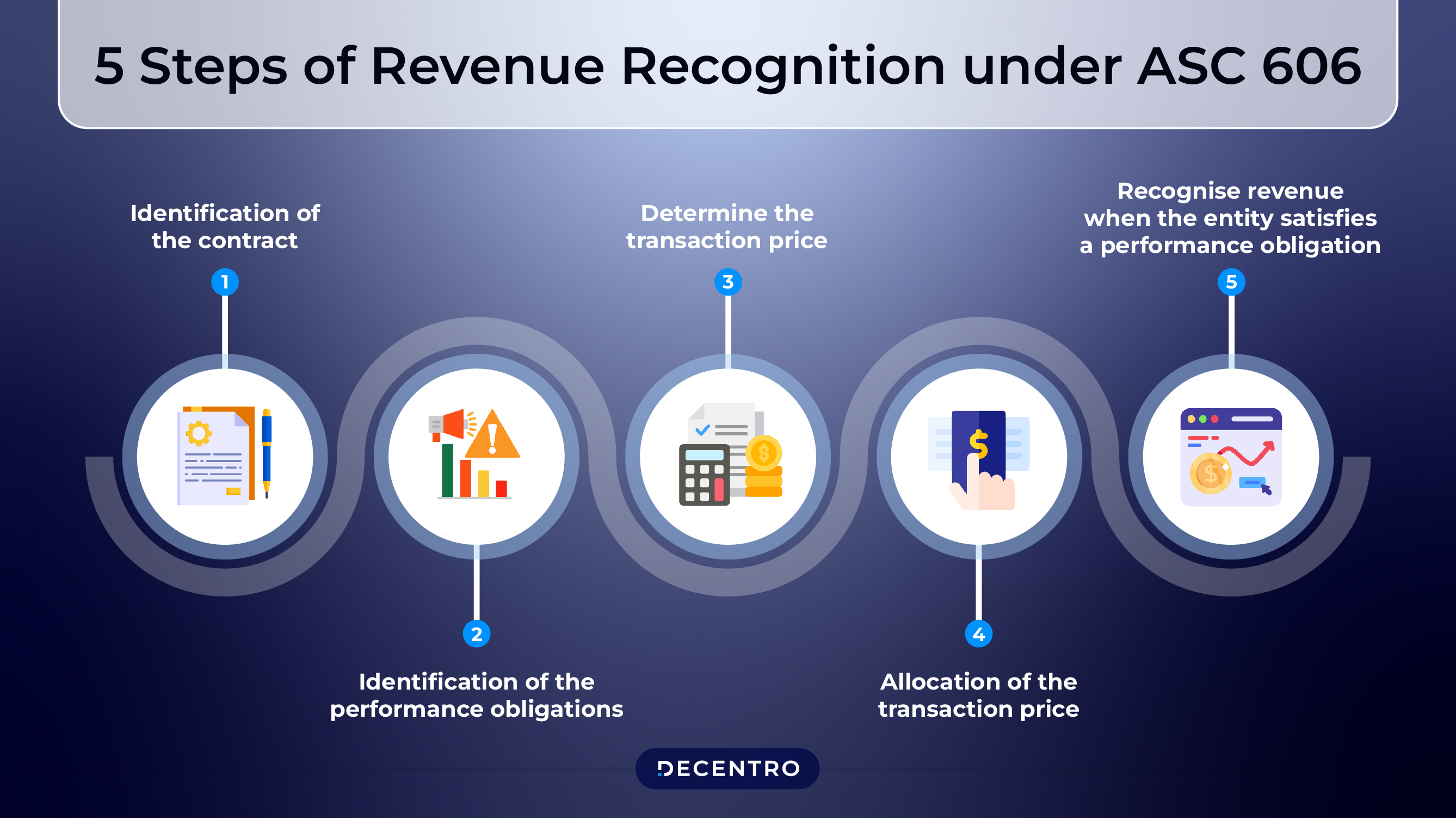
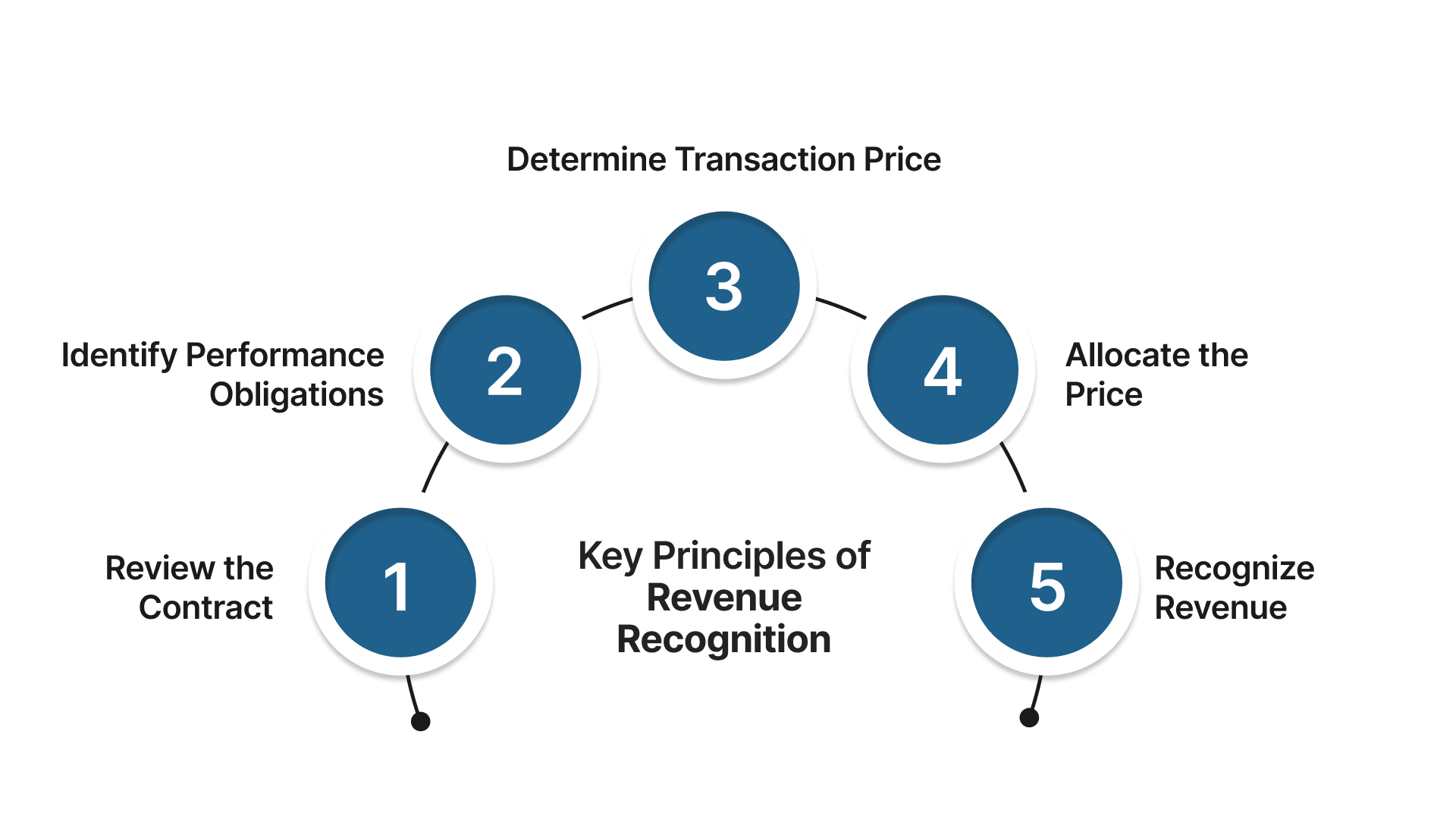
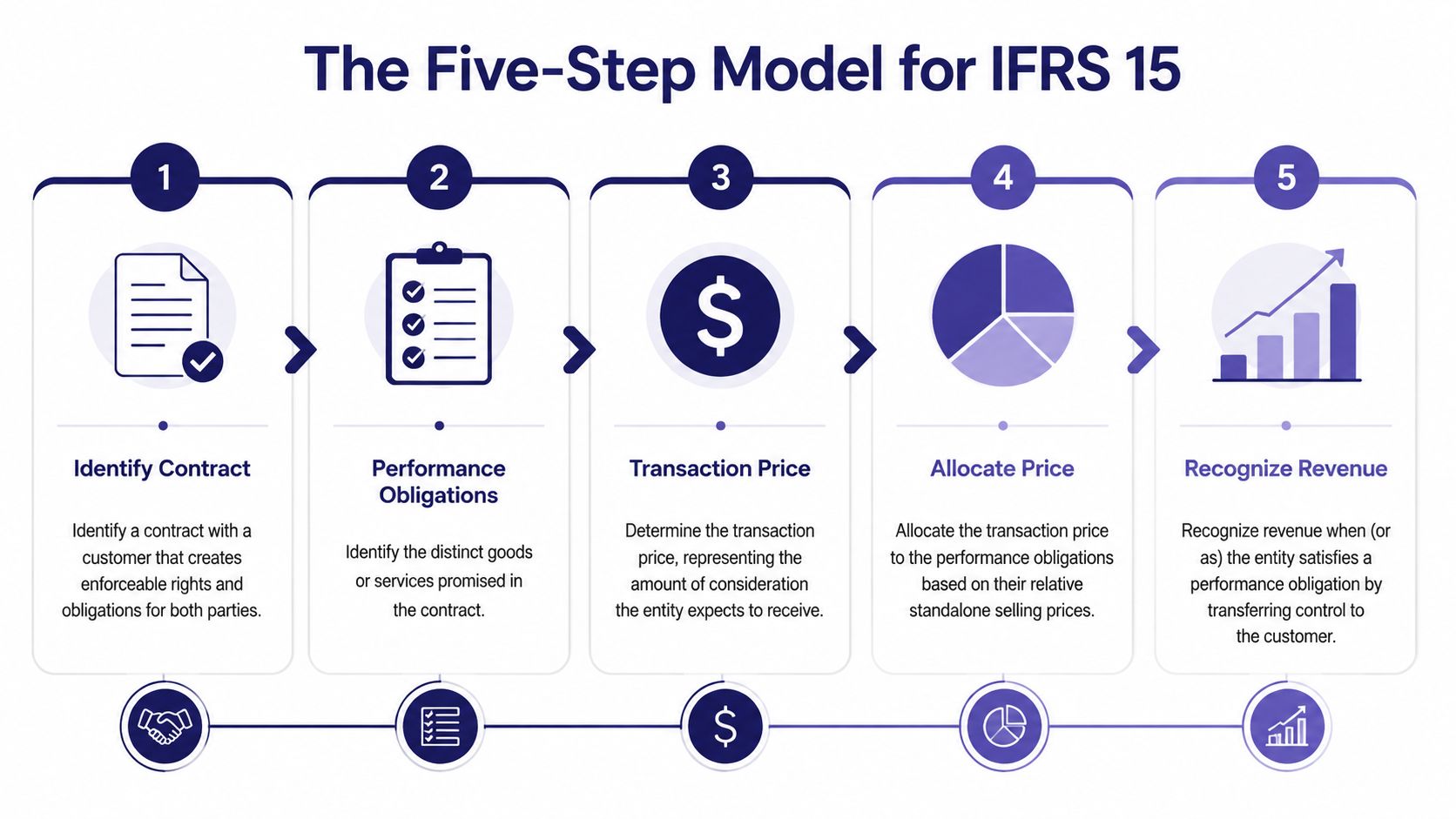
Step 1: Identify the Contract with the Customer
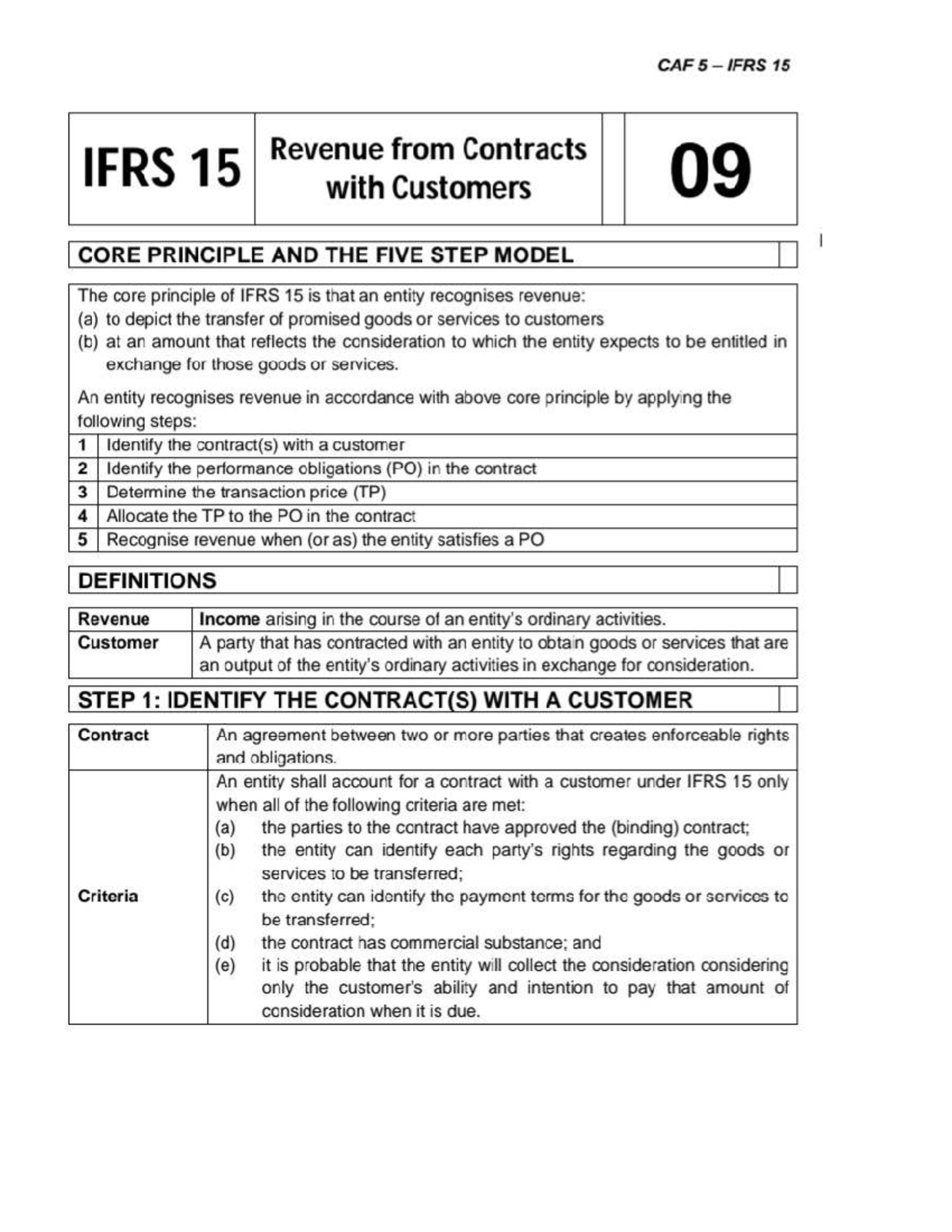
Revenue recognition begins only when a legally enforceable contract exists between an entity and a customer. According to ASC 606, a contract must meet five specific criteria to be recognized:
- The parties have approved the contract and are committed to performing their respective obligations.
- The rights of each party regarding the goods or services to be transferred are clearly identifiable.
- Payment terms can be explicitly identified.
- The contract has commercial substance—meaning the entity's future cash flows are expected to change as a result of the contract.
- It is probable that the entity will collect the consideration to which it is entitled.
If a contract does not meet these criteria, revenue cannot be recognized until the criteria are satisfied or the contract is terminated.
Step 2: Identify the Performance Obligations
Once a contract is established, you must identify all distinct "performance obligations." A performance obligation is a promise in a contract to transfer a good or service to the customer.
A good or service is considered "distinct" if:
- Capable of being distinct: The customer can benefit from the good or service on its own or together with other resources easily available to them.
- Distinct within the context of the contract: The promise to transfer the good or service is separately identifiable from other promises in the contract.
If a company sells a software license with a separate implementation service, it must determine if those are two separate performance obligations or if they are combined into one bundled service.
Step 3: Determine the Transaction Price
The transaction price is the amount of consideration an entity expects to receive in exchange for transferring goods or services. Determining this is not always straightforward, especially when contracts involve variable consideration.
Factors that may impact the transaction price include:
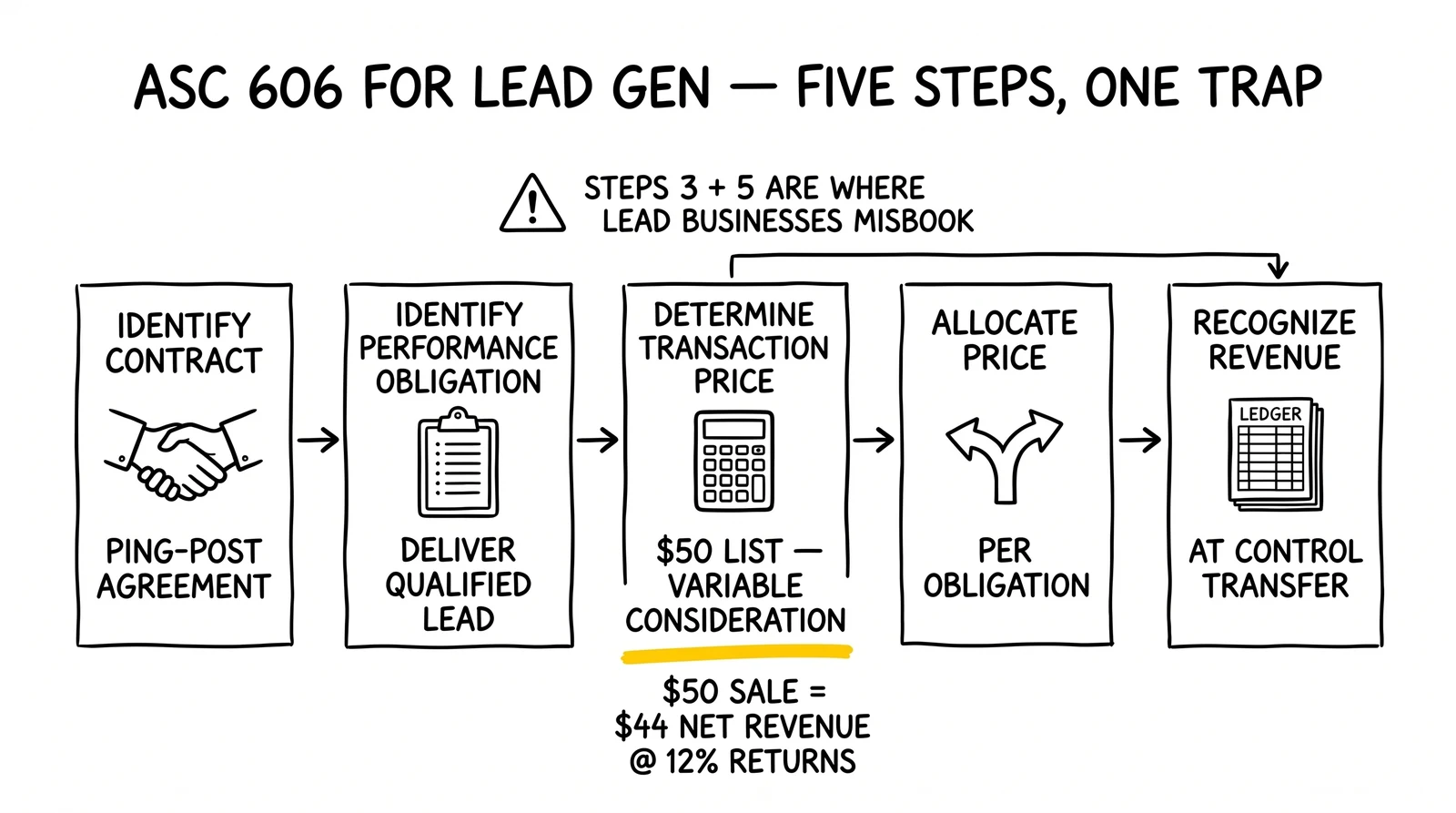
- Variable Consideration: Discounts, rebates, refunds, credits, price concessions, incentives, or performance bonuses. These must be estimated using either the "expected value" method or the "most likely amount" method.
- Significant Financing Components: If the timing of payments provides the customer or the entity with a significant benefit of financing, the price must be adjusted for the time value of money.
- Non-cash Consideration: If a customer pays with equity, equipment, or other goods, the revenue must be measured at the fair value of the non-cash consideration at the date the contract is signed.
Step 4: Allocate the Transaction Price
If a contract contains multiple performance obligations, the total transaction price must be allocated to each obligation based on its relative "standalone selling price."
The best evidence of a standalone selling price is the observable price of a good or service when sold separately in similar circumstances to similar customers. If a standalone price is not directly observable, companies must estimate it using approaches such as:
- Adjusted market assessment approach: Evaluating the market and estimating the price a customer would be willing to pay.
- Expected cost plus a margin approach: Forecasting the costs of satisfying the obligation and adding an appropriate profit margin.
- Residual approach: Used only in limited circumstances where the selling price is highly variable or uncertain.
Step 5: Recognize Revenue
The final step is recognizing revenue when (or as) the entity satisfies each performance obligation. This occurs when control of the promised good or service is transferred to the customer.
Control can be transferred in one of two ways:
- Over time: If the customer simultaneously receives and consumes the benefits, if the entity’s performance creates or enhances an asset the customer controls, or if the entity’s performance does not create an asset with an alternative use to the entity and the entity has an enforceable right to payment for performance completed to date.
- At a point in time: This occurs when the customer obtains control of the asset. Indicators include the transfer of physical possession, the transfer of legal title, the risks and rewards of ownership, and the customer’s acceptance of the asset.
Comparison of Recognition Milestones
| Basis of Recognition | Key Indicator | Typical Example |
|---|---|---|
| Point in Time | Transfer of physical possession/title | Sale of retail goods or hardware |
| Over Time | Satisfying performance obligations incrementally | SaaS subscriptions or long-term construction |
Common Implementation Challenges
Organizations often struggle with the technical interpretation of "control." Because the model is principle-based rather than rule-based, it requires significant professional judgment. For instance, determining whether a software license provides a "right to access" (recognized over time) or a "right to use" (recognized at a point in time) requires a deep dive into the nature of the entity’s intellectual property.
Another frequent pitfall involves contract modifications. If a contract is modified, companies must assess whether the modification creates a new contract or is a change to the existing one. Failure to document these changes can lead to material misstatements in financial reporting.
Professional Advisory Limitation
This article is for informational purposes and does not constitute professional accounting or legal advice. Revenue recognition under ASC 606 and IFRS 15 is highly complex and dependent on specific contractual language and industry practices. Companies should consult with their external auditors or qualified financial advisors to ensure compliance with current standards.
Frequently Asked Questions
1. What happens if I cannot estimate the variable consideration in Step 3? You may only include variable consideration in the transaction price to the extent that it is probable that a significant reversal in the amount of cumulative revenue recognized will not occur. If you cannot make a reliable estimate, you must constrain the variable amount.
2. Does the 5-step model apply to all industries? The model is designed to be industry-neutral. However, the application varies significantly. For example, the pharmaceutical industry faces complex variable consideration issues regarding rebates, while construction firms focus heavily on "over time" revenue recognition milestones.
3. What is the difference between an accrual and a contract liability? A contract liability (formerly known as deferred revenue) arises when an entity has received payment but has not yet satisfied its performance obligations. Once the performance obligation is met, the liability is reduced and revenue is recognized.
4. How do I handle contract modifications? A modification is accounted for as a separate contract if it adds distinct goods or services at their standalone selling prices. If not, it is usually treated as a termination of the old contract and the creation of a new one, or as part of the original contract depending on the nature of the remaining performance obligations.
5. Is the 5-step model mandated by law? While not a government statute, ASC 606 is a mandatory accounting standard for public companies in the United States regulated by the SEC. Private entities generally follow these standards as well for GAAP compliance.
Next Steps for Compliance
To ensure your organization is prepared for an audit or financial reporting cycle, begin by centralizing all customer contracts into a single repository. Document the identification of performance obligations for your primary revenue streams and establish a clear methodology for determining standalone selling prices. Regular training for your sales and legal teams is essential, as they often create the contract terms that dictate your accounting outcomes.
Image Gallery