How to Choose Beginning Sound Worksheets for Early Readers
To choose effective beginning sound worksheets for early readers, prioritize materials that use clear, unambiguous illustrations and align with a systematic synthetic phonics (SSP) progression. Look for worksheets that focus on phoneme...
To choose effective beginning sound worksheets for early readers, prioritize materials that use clear, unambiguous illustrations and align with a systematic synthetic phonics (SSP) progression. Look for worksheets that focus on phoneme isolation—the ability to identify the first sound in a word—while minimizing visual clutter to ensure the student remains focused on the specific linguistic task.
Contents
Selecting the right instructional materials is a critical step in a child's literacy journey. In 2026, the emphasis on evidence-based reading instruction, often referred to as the Science of Reading, has reached a peak in both classroom and home-learning environments. Beginning sound worksheets are not merely "busy work"; they are foundational tools that bridge the gap between auditory phonemic awareness and visual phonics. When a child can successfully isolate the first sound of a word and map it to a letter, they have unlocked one of the most vital components of decoding.
However, not all worksheets are created equal. Poorly designed materials can lead to confusion, frustration, and the reinforcement of incorrect phonetic habits. This guide provides a comprehensive framework for evaluating and selecting beginning sound worksheets that maximize learning outcomes for early readers.
Understanding the Role of Beginning Sounds in Literacy
Before selecting materials, it is essential to understand why beginning sounds are the traditional starting point for phonemic awareness. Spoken words are composed of individual units of sound called phonemes. For most children, the initial sound (the onset) is the easiest to hear and isolate, followed by the final sound (the rime), and finally the medial vowel sound.
Worksheets that target beginning sounds serve two primary purposes:
- Phoneme Isolation: Helping the child hear the specific sound /b/ at the start of "bat."
- Grapheme Mapping: Connecting that auditory sound to the visual letter "B."
In 2026, high-quality worksheets are expected to differentiate between these two tasks. Some are strictly "sound-based," using pictures only, while others introduce the letter-sound connection. Depending on the student's current stage—whether they are in Pre-K developing awareness or in Kindergarten starting to write—your choice of worksheet should reflect their specific developmental needs.
Critical Evaluation Criteria for Beginning Sound Worksheets
When browsing digital marketplaces or curriculum catalogs, use the following criteria to filter out low-quality resources.
1. Visual Clarity and Unambiguous Imagery
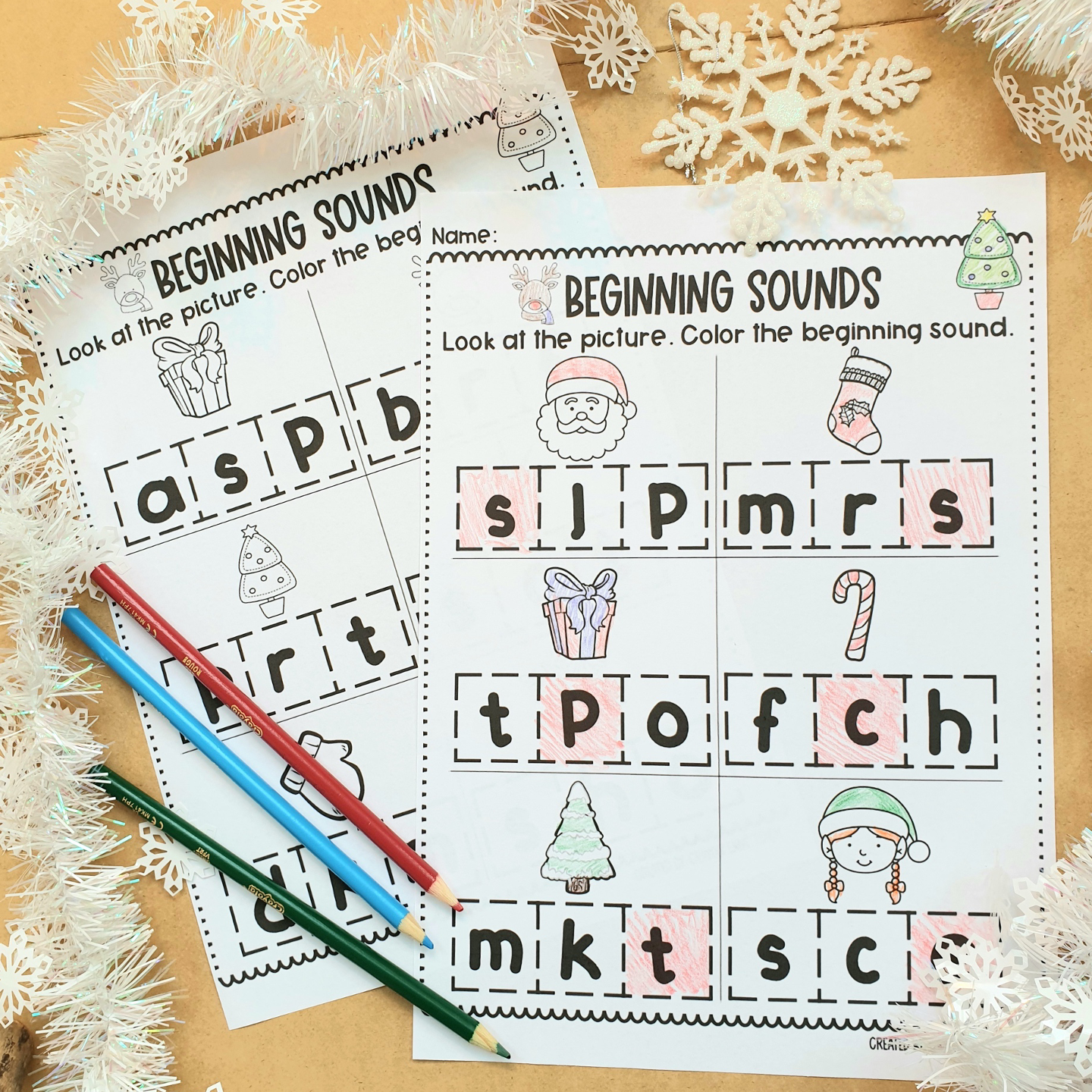
The most common failure in beginning sound worksheets is the use of confusing clip art. If a child looks at a picture of a "gift" but thinks the word is "present," they will look for the /p/ sound instead of the /g/ sound.
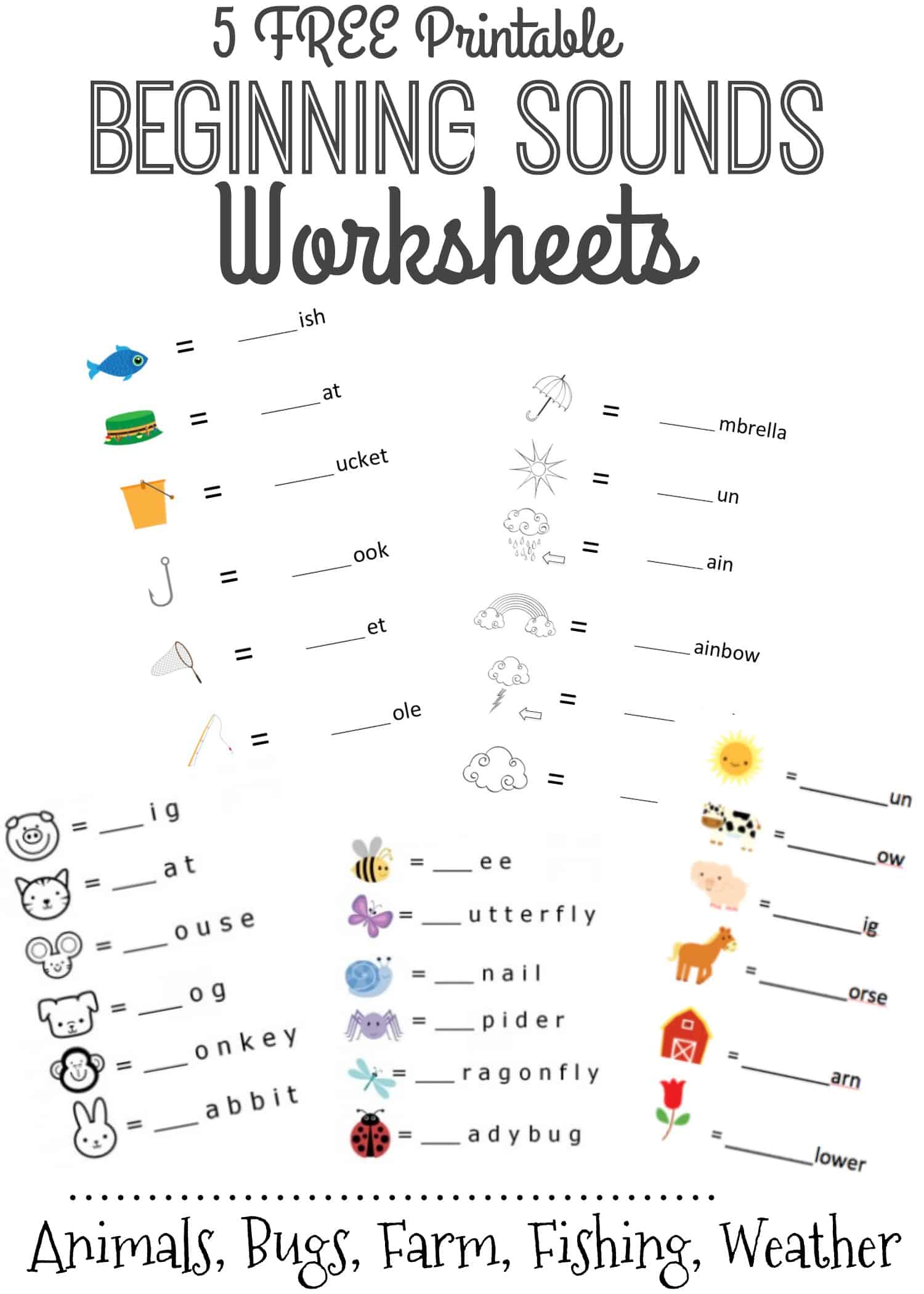
- Check for Clarity: Ensure every image represents a single, obvious noun.
- Avoid Cultural Ambiguity: A picture of a "bonnet" might be confusing to a child who only knows the word "hat."
- Minimalist Design: In 2026, instructional design trends favor "low-distraction" layouts. Avoid worksheets with heavy borders, excessive "cutesy" characters, or busy backgrounds that pull the child’s attention away from the phonics task.
2. Phonetic Accuracy and Consistency
A high-quality worksheet must be phonetically "pure." This means the images chosen must represent the standard sound of the letter being taught without interference from blends or digraphs.
- Avoid Blends Initially: If a worksheet is teaching the letter "S," it should use words like "sun" or "seal," not "star" or "snake." Blends (like /st/ or /sn/) are harder for early readers to segment than a single consonant followed by a vowel.
- Short Vowels Only: For vowel worksheets, stick to short vowel sounds (e.g., "apple" for A, "egg" for E). Long vowel sounds (like "ape" or "eagle") should be introduced much later in the curriculum.
- Hard vs. Soft Consonants: Ensure the worksheet doesn't mix hard and soft sounds. For example, a "C" worksheet should focus on the hard /k/ sound (cat, cup) rather than the soft /s/ sound (city, cereal) unless specifically designed for advanced learners.
3. Alignment with a Systematic Scope and Sequence
Randomly picking letters is less effective than following a proven order of instruction. Most modern literacy programs do not teach the alphabet from A to Z. Instead, they use sequences like SATPIN, which allow children to begin forming words almost immediately.
When choosing worksheets, look for sets that allow you to follow your specific curriculum's order. This ensures that the child is practicing sounds they have already been introduced to, building confidence through "success-oriented" learning.
Types of Beginning Sound Worksheets
Not all worksheets require a pencil and paper in the traditional sense. In 2026, the variety of formats available allows educators to target different motor skills and engagement levels.
| Worksheet Type | Primary Skill Focus | Best For | Cognitive Load |
|---|---|---|---|
| Sound Sorts | Categorization & Comparison | Distinguishing between two similar sounds (e.g., /b/ vs /d/). | High |
| Color by Code | Identification & Recognition | Building stamina and visual scanning. | Medium |
| Cut and Paste | Fine Motor & Classification | Kinesthetic learners who need a tactile component. | High |
| Circle/Stamp | Quick Assessment | Rapidly checking for understanding of a single sound. | Low |
| Tracing/Writing | Grapheme Production | Connecting the sound to the physical act of writing. | Very High |
The "Science of Reading" Filter: What to Avoid
As of 2026, educational standards have moved away from "Balanced Literacy" toward more explicit instruction. When choosing worksheets, be wary of those that encourage "guessing" based on context or those that use "clue" pictures that don't match the phonics rules being taught.
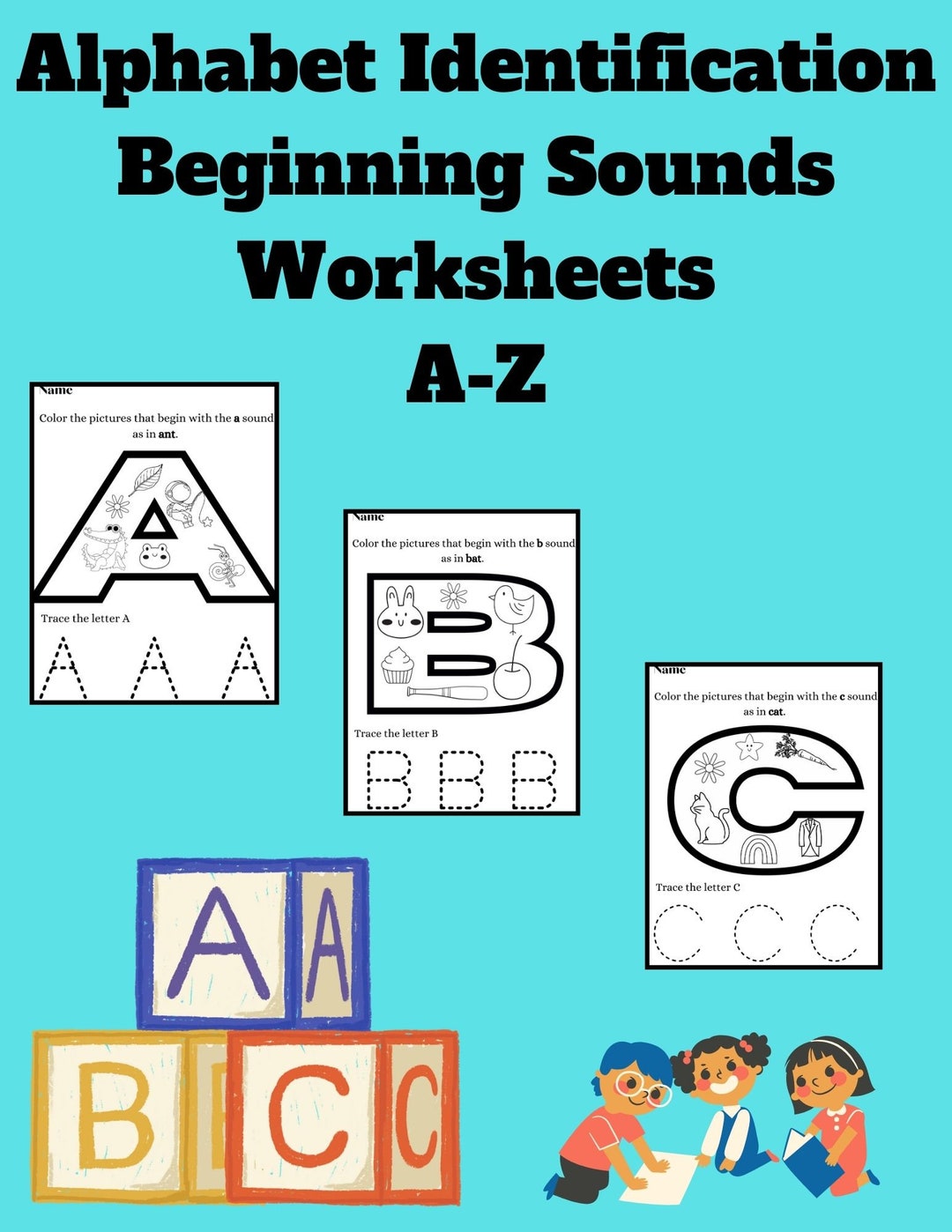
Avoid "Predictable" Worksheets: If a worksheet uses the same pattern for every page (e.g., "A is for Apple, B is for Ball"), the child may stop listening to the sounds and simply memorize the sequence or the pictures. Effective worksheets challenge the child to discriminate between different sounds.
Avoid Over-Reliance on "Letter of the Week": Research has shown that teaching one letter per week is often too slow for many children and doesn't provide enough practice with sound discrimination. Choose worksheet bundles that offer "mixed review" pages, where a child must distinguish between /m/, /s/, /t/, and /a/ on a single sheet.
Instructional Progression: From Simple to Complex
Your choice of worksheet should evolve as the reader grows. A logical progression looks like this:
- Continuous Sounds: Start with sounds that can be held or "stretched," such as /m/, /s/, /f/, and /n/. These are easier for children to hear at the beginning of words.
- Stop Sounds: Move to sounds that are quick and cannot be stretched, like /t/, /p/, /k/, and /b/.
- Vowel-Initial Words: Introduce short vowels (at, ed, it, on, up).
- Discrimination Tasks: Use worksheets that ask the child to choose between two similar-sounding initials (like /f/ and /v/ or /ch/ and /sh/).
Practical Implementation Tips
Once you have chosen the appropriate worksheets, the way you use them determines their effectiveness.
- Oral Preview: Always go over the names of the pictures with the child before they start. This eliminates the "what is this picture?" hurdle and allows them to focus purely on the sound.
- Say It Out Loud: Encourage the child to "stretch" the first sound (e.g., "ssss-sun") before they mark their answer. This physicalizes the phonemic awareness task.
- Laminate for Reusability: In 2026, sustainability is a key consideration in classrooms. Laminating high-quality worksheets allows children to use dry-erase markers or playdough to mark sounds, making the activity more engaging and reducing paper waste.
Frequently Asked Questions
What age is appropriate for beginning sound worksheets?
Most children are ready for basic beginning sound identification between the ages of 4 and 5 (Pre-K or early Kindergarten). However, readiness is determined by their ability to hear individual words in a sentence and syllables in a word. If a child cannot clap out the syllables in "apple," they may not be ready to isolate the /a/ sound yet.
Should I choose digital or printable worksheets?
While digital "drag and drop" activities are popular in 2026, research from organizations like Edutopia suggests that the tactile experience of paper and pencil (or cut-and-paste) provides better orthographic mapping for early readers. Digital tools are excellent for quick reviews, but paper worksheets remain the gold standard for foundational skill building.
How many pictures should be on one worksheet?
For a beginner, 4 to 6 pictures are sufficient. Overloading a page with 20 different images can lead to cognitive overload, where the child becomes more focused on finishing the page than on the sounds themselves. Quality over quantity is the rule for early literacy.
What if my child is struggling with a specific sound?
If a child consistently misses a sound (e.g., confusing /f/ and /th/), look for "minimal pair" worksheets. These specifically pit those two sounds against each other, forcing the child to notice the small articulatory differences in how their mouth moves for each sound.
Is it better to use worksheets with or without the written letter?
Initially, use worksheets that focus only on the sound (picture-only) to build pure phonemic awareness. Once the child can reliably identify the sound, transition to worksheets that include the grapheme (the letter) to begin building phonics skills.
Final Recommendation
When choosing beginning sound worksheets for early readers in 2026, prioritize clarity, phonetic purity, and systematic progression. Start with clear, high-contrast images that represent continuous sounds, and ensure the materials align with your existing phonics scope and sequence. By selecting worksheets that minimize distractions and focus on the essential link between sound and symbol, you provide early readers with the structured practice they need to become fluent, confident decoders.
Image Gallery