Factors Impacting Elon Musk’s Net Worth in 2026: An Analytical Review
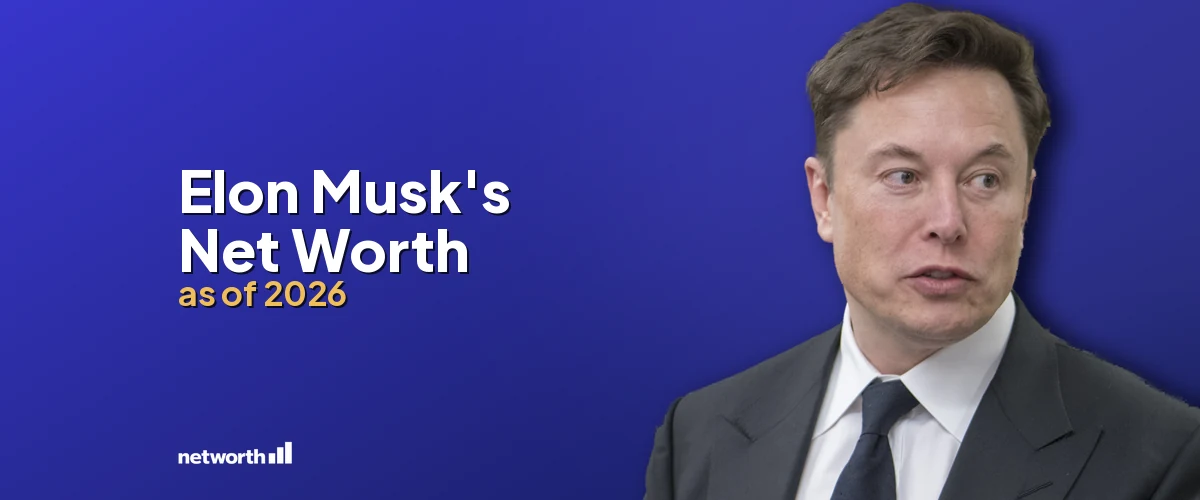
Elon Musk's net worth in 2026 has experienced a notable decline primarily due to a valuation correction in Tesla (TSLA) stock, intensified competition in the global electric vehicle market, and the persistent debt-to-equity challenges...
Elon Musk's net worth in 2026 has experienced a notable decline primarily due to a valuation correction in Tesla (TSLA) stock, intensified competition in the global electric vehicle market, and the persistent debt-to-equity challenges facing X (formerly Twitter). Additionally, the resolution of long-standing legal disputes regarding his compensation packages has significantly recalibrated his total paper wealth.
Contents
The landscape of billionaire wealth has shifted dramatically as we move through 2026. For years, Elon Musk was synonymous with the top spot on global wealth indices, often fueled by the astronomical growth of Tesla and the private valuation surges of SpaceX. However, the current fiscal year has presented a "valuation reset" for the centibillionaire. Understanding why this decrease occurred requires a multi-faceted look at equity markets, industrial competition, and the legal hurdles that finally came to a head over the past twenty-four months.
The Tesla Valuation Pivot: From Growth to Maturity
The primary driver of Elon Musk’s net worth has historically been his holding in Tesla, Inc. As of 2026, the market’s perception of Tesla has shifted from a high-growth technology "disruptor" to a maturing automotive powerhouse. While Tesla remains profitable, the "hyper-growth" multiples that once saw the company trading at a Price-to-Earnings (P/E) ratio exceeding 100 have normalized.
Market Saturation and Price Wars
By 2026, the electric vehicle (EV) market is no longer a blue ocean. Major legacy manufacturers like Volkswagen, Hyundai-Kia, and Ford have successfully scaled their modular EV platforms. Perhaps more significantly, Chinese manufacturers, led by BYD, have secured dominant positions in emerging markets and Europe. To maintain its market share, Tesla was forced into a series of aggressive price cuts throughout 2024 and 2025. While these moves helped volume, they compressed profit margins, leading institutional investors to re-evaluate the company’s market capitalization.
The Full Self-Driving (FSD) Reality Check
A significant portion of Tesla's valuation was predicated on the imminent arrival of Level 5 autonomous driving. While Tesla’s FSD (Supervised) has seen massive improvements by 2026, the regulatory and technical hurdles for fully driverless operation without human intervention have remained more stubborn than Musk’s early projections suggested. As the "Robotaxi" premium began to fade from the stock price, the valuation adjusted to reflect a hardware-first company rather than a software-margin company.
The Financial Weight of X (Formerly Twitter)
Elon Musk’s 2022 acquisition of Twitter for $44 billion continues to impact his net worth in 2026. Unlike SpaceX or Tesla, X has struggled with its debt-heavy capital structure. The acquisition involved approximately $13 billion in debt held by the company itself, but Musk’s personal wealth is tied to the equity value of the platform, which has seen several rounds of internal markdowns by major investors like Fidelity.
Advertising Revenue and the "Everything App" Pivot
The transition of X into an "everything app" including payments, video, and AI-driven search (Grok) has been capital-intensive. While user engagement remains high in specific niches, the platform has faced challenges in returning to its peak advertising revenue levels. In 2026, analysts estimate the fair market value of X at significantly less than the original $44 billion purchase price. Since Musk leveraged a portion of his Tesla shares to finance the deal and provide collateral, the stagnation of X’s valuation creates a double-sided pressure on his total net worth.
Debt Servicing Costs
The high-interest-rate environment that persisted through the mid-2020s increased the cost of servicing the debt associated with X. This required Musk to occasionally liquidate Tesla shares to provide liquidity—a move that often puts downward pressure on Tesla's stock price, further eroding his primary wealth source.
SpaceX: The Private Hedge and R&D Costs
SpaceX remains the most resilient part of Musk’s portfolio, yet its impact on his liquid net worth in 2026 is complex. As a private entity, SpaceX’s valuation is determined by secondary market sales and funding rounds. While SpaceX is valued at near-record highs due to the dominance of Starlink, the sheer cost of the Starship program has influenced the company’s cash flow.
- Starship Development: The push to make Starship fully operational for Mars missions and NASA’s Artemis program has required billions in annual R&D.
- Starlink Expansion: While Starlink is now cash-flow positive, the capital expenditure required to launch v3 satellites and expand ground infrastructure has limited the "valuation spikes" that characterized the 2020-2023 period.
Because SpaceX is not publicly traded, Musk cannot easily "spend" this wealth. When the public markets for Tesla and X decline, the private valuation of SpaceX—no matter how high—cannot fully offset the decrease in his public equity holdings.
Legal Settlements and Compensation Disputes
One of the most direct impacts on Elon Musk's net worth in 2026 stems from the legal fallout regarding his 2018 compensation package. In early 2024, a Delaware judge voided the $56 billion package, citing a flawed approval process.
The subsequent years involved intense negotiations and shareholder votes to reinstate a comparable package. However, the final resolution—reached in the 2025-2026 period—resulted in a restructured agreement that, while lucrative, did not match the astronomical paper gains of the original 2018 grant. This legal "haircut" effectively removed a significant chunk of potential shares from Musk’s future portfolio, directly lowering his estimated net worth on paper.
Comparative Net Worth Analysis (2021 vs. 2026)
The following table illustrates the shifting components of Musk’s estimated wealth based on major asset performance.
| Asset | Estimated Value (2021 Peak) | Estimated Status (2026) | Primary Influence |
|---|---|---|---|
| Tesla (TSLA) | ~$1.2 Trillion Cap | ~$650-750 Billion Cap | Margin compression & competition. |
| SpaceX | ~$100 Billion | ~$200-250 Billion | Starlink maturity vs. Starship costs. |
| X (Twitter) | N/A (Pre-purchase) | ~$12-15 Billion (Est.) | Debt load and revenue restructuring. |
| The Boring Co / Neuralink | ~$5-10 Billion | ~$10-15 Billion | Steady R&D progress; niche markets. |
| Total Net Worth | ~$300-340 Billion | ~$170-210 Billion | Market correction & legal rulings. |
The Role of Macroeconomic Trends
The broader economic environment of 2026 has played a role in the "wealth contraction" seen across the billionaire class, not just for Musk. The era of "easy money" and zero-percent interest rates, which fueled the massive tech valuations of the early 2020s, has concluded.
Investors in 2026 are prioritizing realized earnings over "visionary" promises. This shift in investor psychology means that companies like Tesla are no longer given the benefit of the doubt for 10-year growth projections. Instead, they are judged on quarterly delivery numbers and EBIDTA margins. For a leader whose net worth is almost entirely tied to the speculative future value of his companies, this shift in the "macro" climate has been a significant headwind.
Frequently Asked Questions
Is Elon Musk still the world's richest person in 2026?
As of 2026, the title of the world's richest person fluctuates frequently between Musk, Jeff Bezos, and Bernard Arnault. While Musk remains in the top three, his lead has evaporated due to the decline in Tesla’s P/E ratio and the rise of AI-focused titans like Jensen Huang of NVIDIA, whose wealth has surged alongside the semiconductor boom.
How much of Musk's wealth is currently liquid?
Very little. The vast majority of Elon Musk’s wealth remains tied to his equity in Tesla and SpaceX. In 2026, his liquidity is primarily managed through credit lines secured against his shares, though the volatility of those shares has led to more conservative lending terms from major investment banks.
Did the X (Twitter) acquisition cause his net worth to drop?
Indirectly, yes. The acquisition required Musk to sell billions of dollars worth of Tesla stock at various price points, often during market downturns. Furthermore, the decline in the valuation of X from its $44 billion purchase price represents a realized loss in the total value of his personal portfolio.
Can his net worth recover to 2021 levels?
A recovery to the $300 billion+ level would likely require a "breakthrough" event. This could include SpaceX going public at a valuation exceeding $500 billion or Tesla successfully launching a fully autonomous, regulatory-approved Robotaxi fleet that generates high-margin software revenue.
What is the impact of the Delaware Court ruling on his current wealth?
The ruling essentially cancelled billions of dollars in stock options. While a new package was eventually negotiated, the gap between the 2018 grant and the 2026 reality accounts for a significant portion of the "missing" billions in his current net worth profile.
Final Recommendation for Observers
For those tracking billionaire wealth, it is essential to distinguish between paper wealth and purchasing power. While Elon Musk’s net worth has decreased in 2026 compared to his 2021 peak, he remains one of the most influential economic actors globally. Investors should focus less on the "rank" of his wealth and more on the operational health of Tesla and SpaceX. The 2026 "dip" is a classic example of market maturation; as visionary companies become industrial staples, their valuations inevitably move from speculative heights to fundamental realities.
Image Gallery