The Creepy Annabelle Doll Phenomenon Explained: History, Truth, and Modern Legend
The Annabelle doll phenomenon refers to an allegedly possessed Raggedy Ann doll investigated by paranormal researchers Ed and Lorraine Warren in 1970. While cinematic portrayals depict a terrifying porcelain figure, the real doll remai...
The Annabelle doll phenomenon refers to an allegedly possessed Raggedy Ann doll investigated by paranormal researchers Ed and Lorraine Warren in 1970. While cinematic portrayals depict a terrifying porcelain figure, the real doll remains locked in a protective glass case, accused of causing multiple accidents and spiritual infestations for over five decades.
Contents
The Origins of the Annabelle Legend: The 1970 Case
The story of Annabelle began in 1970 when a 28-year-old nursing student named Donna received a vintage Raggedy Ann doll as a birthday gift from her mother. Donna lived in a small apartment with her roommate, Angie. Initially, the doll was a simple piece of decor, usually placed on Donna’s bed. However, within weeks, the two women noticed the doll appeared to move on its own.
The movements were subtle at first. Donna would leave the doll on the bed in the morning, only to find it sitting on the couch in the living room when she returned from work. Soon, the behavior escalated. The roommates reported finding handwritten notes on parchment paper—a material they did not own—with messages like "Help Us" or "Help Lou" (Lou was a friend of the pair).
The escalation reached a breaking point when the roommates found what appeared to be blood on the doll’s hands and chest. Fearing a break-in or a prank, but finding no evidence of an intruder, they contacted a medium. During a séance, the medium claimed the doll was inhabited by the spirit of Annabelle Higgins, a seven-year-old girl who had died on the property years prior. According to the medium, the spirit felt "safe" with the nurses and wanted to stay. Moved by compassion, Donna and Angie gave the spirit "permission" to inhabit the doll—a move that paranormal experts later claimed was a catastrophic mistake.
The Warrens and the Demonological Interpretation
When the activity turned violent—specifically involving an incident where their friend Lou claimed to have been physically attacked and scratched by an invisible force in the doll's presence—the roommates contacted a priest, who in turn reached out to Ed and Lorraine Warren.
Ed Warren, a self-taught demonologist, and Lorraine, a professed clairvoyant, disagreed with the medium’s assessment. They argued that human spirits do not inhabit inanimate objects like dolls. Instead, they proposed that an inhuman presence (a demon) was using the doll as a "conduit" or a "shell" to get close to the people in the apartment. The goal, according to the Warrens, was not to live in the doll, but to eventually possess a human host.
The Warrens identified three distinct stages of what they called a "demonic infestation":
- Infestation: The entity introduces itself through subtle movements and phenomena to gain attention.
- Oppression: The entity begins to drain the victims emotionally and physically, often through isolation or minor physical harm.
- Possession: The final stage where the entity attempts to take control of a human host.
The Warrens performed a "blessing and exorcism" of the apartment and took the doll with them to prevent further harm. According to their reports, the drive home was plagued by car malfunctions, including brake failures and steering issues, which only ceased once Ed threw holy water on the doll in the backseat.
Physical Reality vs. Cinematic Representation
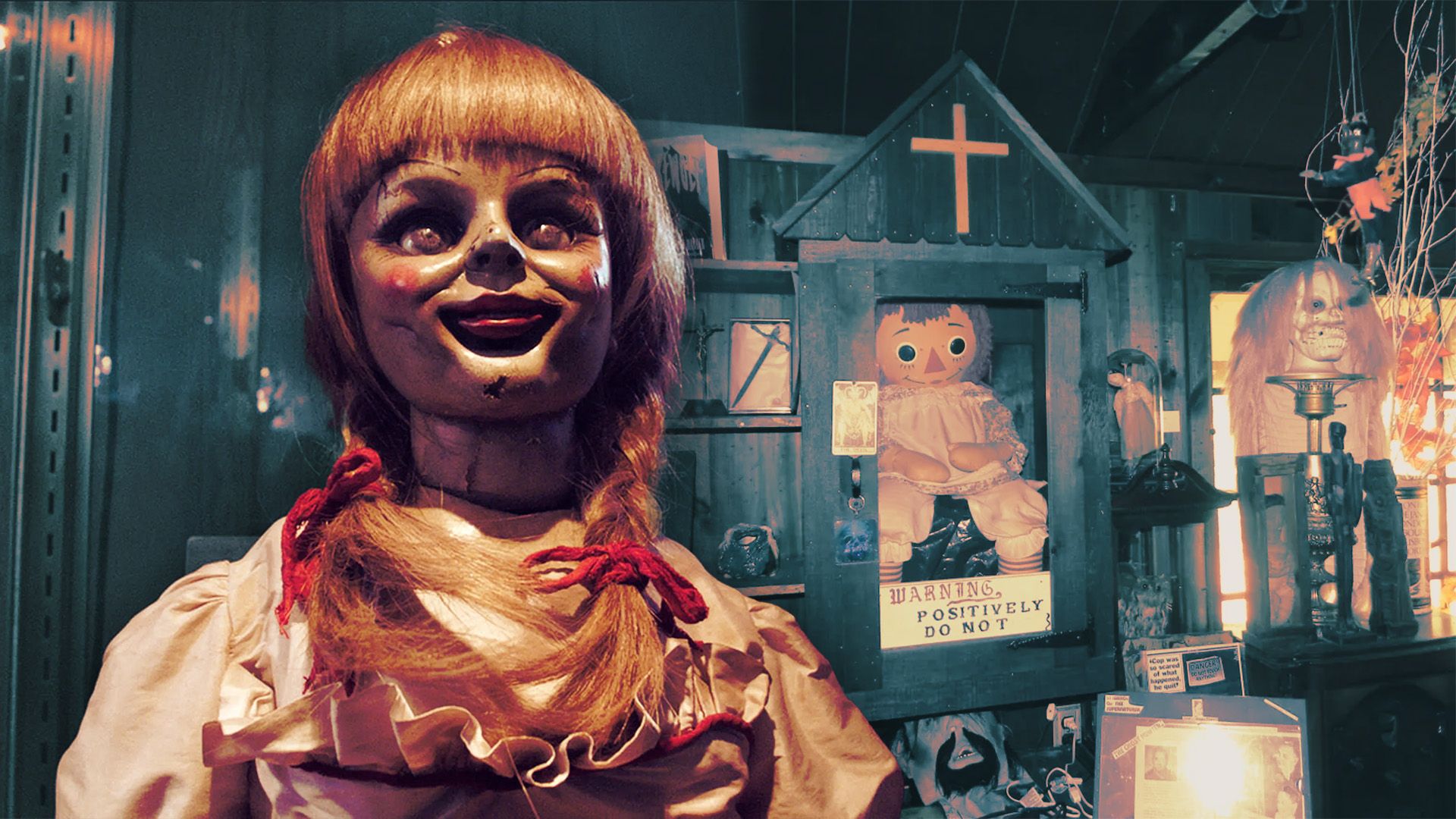
One of the most significant aspects of the Annabelle phenomenon is the disconnect between the real object and its Hollywood counterpart. In the The Conjuring universe (spanning from 2013 through the mid-2020s), Annabelle is depicted as a large, weathered, porcelain doll with a distorted, sinister face.
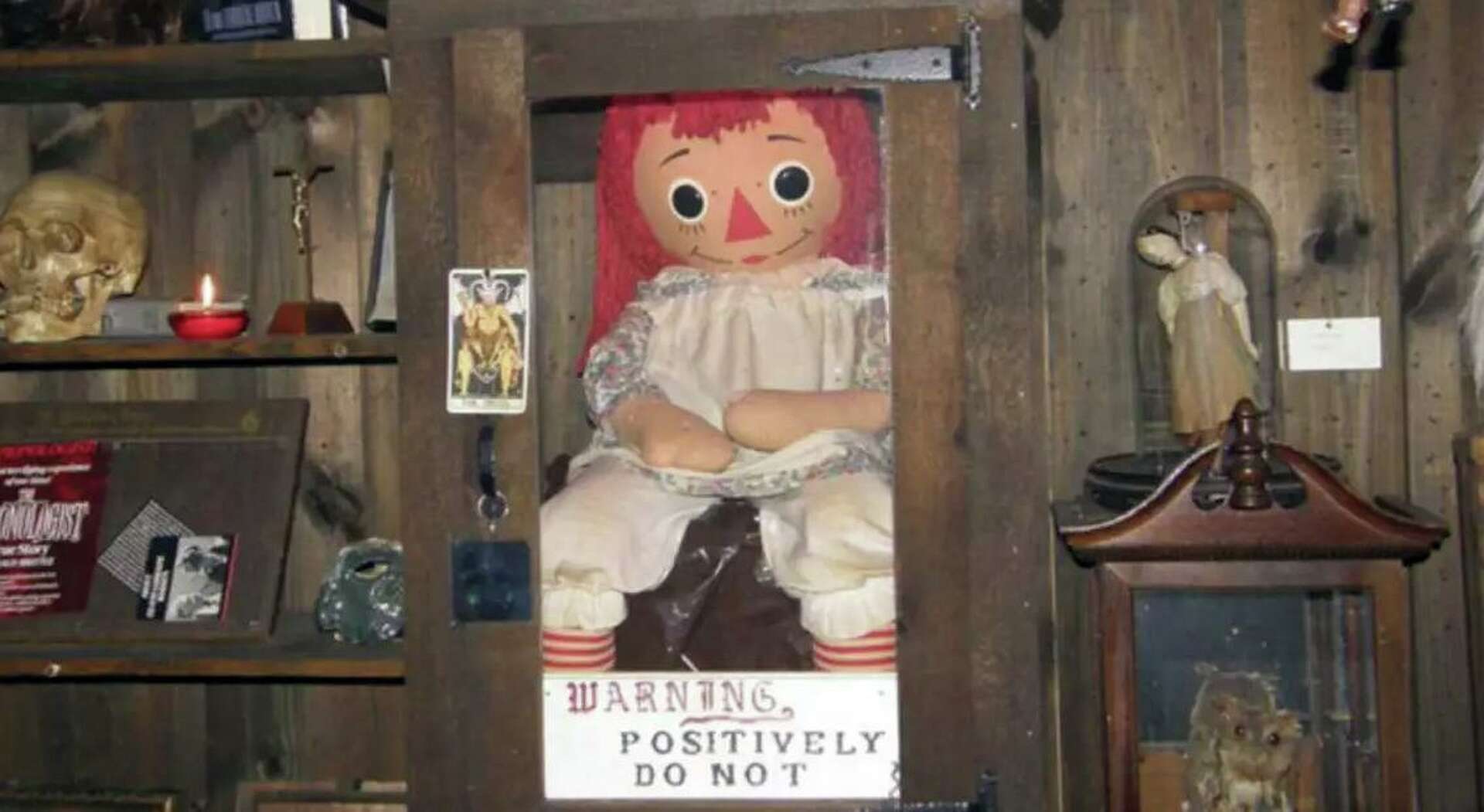
In reality, the doll is a standard, mass-produced Raggedy Ann doll manufactured by the Knickerbocker Toy Co. It has red yarn hair, a triangular nose, and the classic "I Love You" heart on its chest. This contrast is often cited by skeptics as proof of the phenomenon's psychological roots; the "creepiness" of the real doll comes from the stories attached to it rather than its physical appearance. James Wan, the director of The Conjuring, famously stated that he changed the design because a Raggedy Ann doll was "too cuddly" for a horror movie, whereas a porcelain doll already carries an inherent "uncanny valley" effect.
The Occult Museum and the Warning Signs
For decades, the doll was housed in the Warrens' Occult Museum in Monroe, Connecticut. It was kept inside a specially constructed wooden case with a glass front, adorned with a "Warning: Positively Do Not Touch" sign and a Tarot card (The Devil) pinned to the door.
The doll became the museum's centerpiece, surrounded by other allegedly cursed items. The Warrens claimed that the case acted as a sort of "spiritual containment." Despite this, several stories emerged regarding visitors who mocked the doll. The most famous involves a young man who, after being told the history of Annabelle, began tapping on the glass and telling the doll to "scratch him" if it was real. According to the Warrens, the man died in a motorcycle accident shortly after leaving the museum.
As of 2026, the museum remains a point of high interest, though it has faced various logistical and zoning challenges over the years. Following the passing of Lorraine Warren in 2019, the collection has been managed by her son-in-law, Tony Spera. While the physical museum is not always open to the public, the doll is frequently featured in controlled paranormal events and digital exhibits.
Comparing the Narrative: Fact, Folklore, and Film
The following table outlines the differences between the historical account provided by the Warrens and the dramatized version found in popular media.
| Feature | The Warren Account (Real Doll) | The Movie Version (The Conjuring Universe) |
|---|---|---|
| Physical Form | Raggedy Ann (Plush/Yarn) | Antique Porcelain (Wood/Composition) |
| Entity Type | Inhuman/Demonic using doll as a conduit | Demon bound directly to the object |
| Origin Story | Gift to a nursing student in 1970 | Created by a dollmaker after his daughter's death |
| Containment | Wooden case with glass and a "Devil" card | Blessed glass case inside a basement room |
| Activity | Moving rooms, writing notes, minor scratches | Levitation, shadow figures, soul-stealing |
| Current Status | Held by the Warren estate (Spera family) | Fictional prop used in various films |
The Skeptic’s Lens: Psychological and Sociological Factors
Critics and skeptics, most notably Joe Nickell, have investigated the Annabelle case and found various inconsistencies. From a skeptical perspective, the phenomenon can be explained through several psychological mechanisms:
- Ideomotor Effect: This explains why people might think an object is moving or why a medium might "receive" messages. It involves subconscious, involuntary physical movements.
- Pareidolia: The tendency to see meaningful patterns (like faces or bloodstains) in random stimuli.
- The Power of Suggestion: Once the nursing students were told the doll was haunted, every creak in the floor or misplaced item was attributed to the doll, creating a feedback loop of fear.
- Fabrication for Profit: Some critics argue that the Warrens were master storytellers who embellished or outright invented details to bolster their careers as paranormal investigators and public speakers.
Furthermore, skeptics point out that the parchment paper notes "Help Us" appeared to be written in a style that could easily be faked, and the "blood" on the doll was never scientifically tested to confirm it was human or even biological in nature.
The Cultural Impact in 2026
The Annabelle phenomenon has transcended its origins as a small-town haunting case to become a global pop-culture icon. By 2026, the doll has appeared in multiple blockbuster films, inspired countless "copycat" haunted doll listings on auction sites, and remains a staple of paranormal documentaries.
The phenomenon speaks to a fundamental human fascination with the uncanny—the idea that a familiar, comforting object (a child's toy) can hide something malevolent. It also highlights the enduring legacy of the Warrens, whose case files continue to serve as the primary source material for modern supernatural horror. Whether one believes in the demonic possession of a toy or views it as a masterfully crafted modern myth, Annabelle remains the gold standard for "haunted object" lore.
Frequently Asked Questions
Is the real Annabelle doll still dangerous?
According to Tony Spera and the Warren estate, the doll is still considered "active" and dangerous. It is kept behind blessed glass and is subject to regular spiritual "cleansing" rituals. Paranormal believers suggest that the entity's power does not diminish with age, but rather stays dormant until someone breaks the containment protocols.
Can I visit the Annabelle doll in 2026?
Public access to the physical Warrens' Occult Museum is highly restricted due to zoning laws and the private nature of the estate. However, the doll is occasionally moved for "Paracon" events or special exhibits handled by the Warren family. Many people now "visit" the doll through authorized virtual tours and live-streamed events.
Did the real Annabelle ever actually kill anyone?
There are no official police or medical records that directly link the doll to a death. The most cited "evidence" is the anecdotal story of the motorcycle rider who died after mocking the doll. While the accident occurred, skeptics argue that linking it to the doll is a case of post hoc ergo propter hoc (after this, therefore because of this) reasoning.
Why is she called "Annabelle"?
In the original 1970 case, a medium claimed the spirit of a young girl named Annabelle Higgins was attached to the doll. Although the Warrens later claimed the name was a ruse used by a demon to gain sympathy, the name stuck and became the official identifier for the entity.
How does the doll move if it’s just plush?
In the original accounts, the doll did not move "like a person" (walking or talking). Instead, it was found in different rooms or in different poses (e.g., legs crossed instead of straight). Skeptics suggest these were either instances of memory errors or someone in the house moving the doll as a prank or due to psychological distress.
Practical Recommendation for Enthusiasts
If you are interested in the Annabelle phenomenon, the best course of action is to approach the subject with balanced curiosity. For those visiting "haunted" locations or viewing such artifacts, respect the owners' guidelines and protocols—not necessarily because of supernatural threats, but out of respect for the historical and cultural significance of the collection. Avoid purchasing "haunted dolls" from unverified online sources, as these are frequently marketed using fabricated histories to inflate prices.
Image Gallery