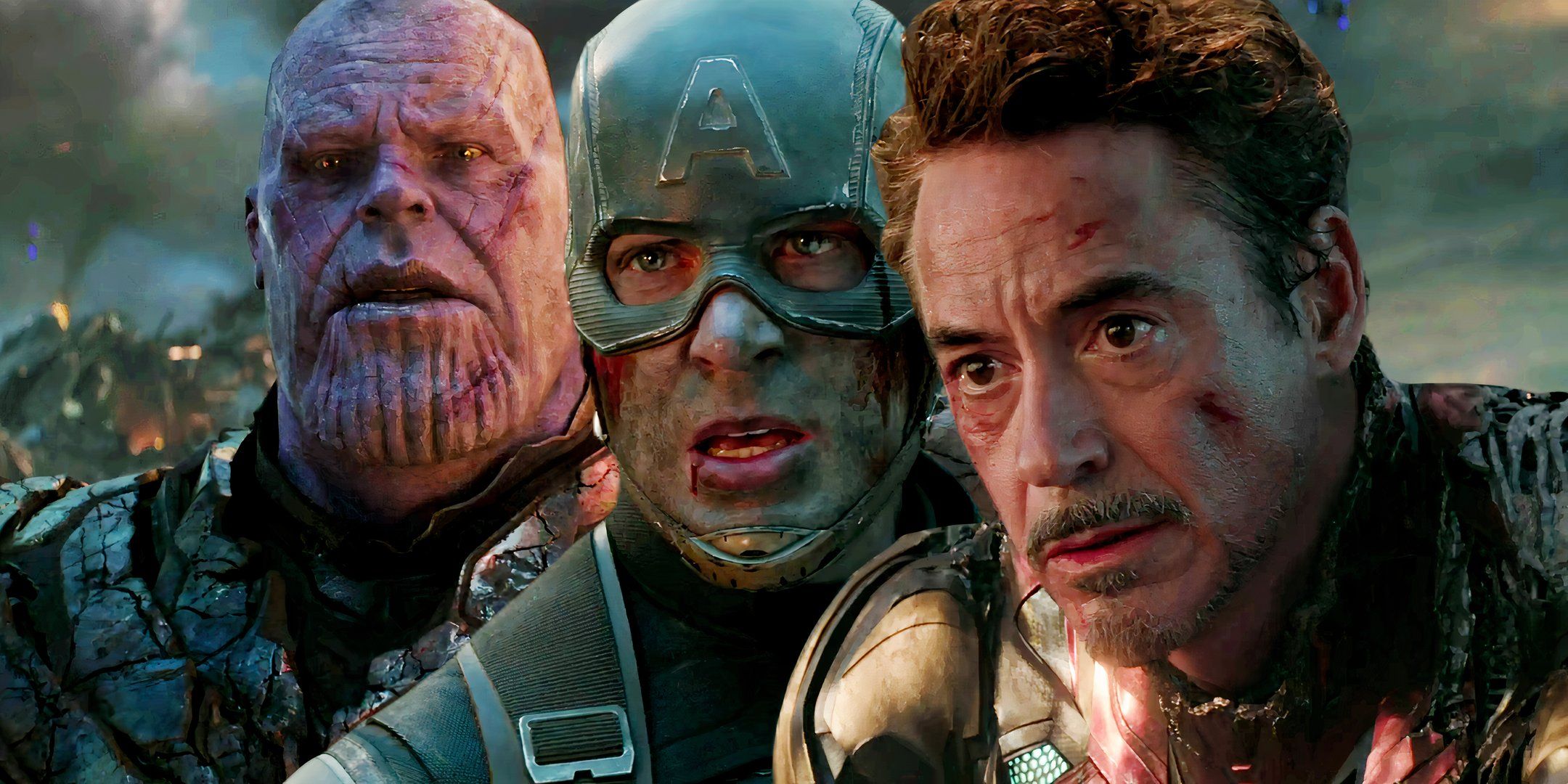
Why Thanos Never Appears in the Main Narrative of The Avengers (2012)
While Thanos technically appears in the mid-credits scene of the 2012 film The Avengers, he never appears in the main narrative or the Battle of New York. This was a deliberate narrative strategy by Marvel Studios to establish him as t...
While Thanos technically appears in the mid-credits scene of the 2012 film The Avengers, he never appears in the main narrative or the Battle of New York. This was a deliberate narrative strategy by Marvel Studios to establish him as the "ultimate shadow threat" while allowing the newly formed superhero team to face a more manageable, personal antagonist in Loki.
Contents
The absence of the Mad Titan from the primary action of the first crossover event remains one of the most significant creative decisions in the Marvel Cinematic Universe (MCU). By keeping Thanos on his floating throne in Sanctuary, Marvel successfully built a decade of anticipation that eventually culminated in Avengers: Infinity War and Avengers: Endgame. Understanding why he remained off-screen requires a look at narrative pacing, power scaling, and the behind-the-scenes evolution of the Infinity Saga.
The Narrative Strategy of the "Puppet Master"
In the context of the 2012 film, Thanos acts as the benefactor rather than the combatant. He provides Loki with the Scepter (containing the Mind Stone) and the Chitauri army to invade Earth. From a storytelling perspective, introducing Thanos as the primary villain in the first Avengers movie would have been a catastrophic mistake for the franchise’s longevity.
Establishing the Avengers as a Team
The primary goal of The Avengers was to prove that these disparate characters—Iron Man, Captain America, Thor, Hulk, Black Widow, and Hawkeye—could work together. If Thanos had descended upon Earth in 2012, the power gap would have been insurmountable. The narrative needed a villain who was powerful enough to require a team, but flawed enough to be defeated by a group of heroes who were still learning to trust one another. Loki, with his personal connection to Thor and his penchant for psychological manipulation, was the perfect foil.
Creating a Sense of Scope
By having "The Other" (Thanos's servant) speak on his behalf, the film suggested a hierarchy of evil. This expanded the MCU from a series of Earth-based adventures into a cosmic epic. When the audience finally sees Thanos turn toward the camera and smile at the mention of "courting death," it serves as a promise of future conflict rather than a resolution of the current one.
Power Scaling: Why the 2012 Avengers Weren't Ready
In 2026, looking back at the completed Infinity Saga, the power levels of the original six Avengers in 2012 were significantly lower than their later iterations. In The Avengers, Tony Stark was still using the Mark VII armor, and Thor had not yet unlocked his full potential as the God of Thunder.
If Thanos had appeared personally in New York, the fight would have ended within minutes. At that stage, the Avengers had no knowledge of the Infinity Stones, no cosmic allies like the Guardians of the Galaxy or Captain Marvel, and no advanced nanotechnology. Thanos, even without the full Gauntlet, was a physical powerhouse capable of besting the Hulk in hand-to-hand combat. Keeping him on the sidelines preserved the stakes; the heroes needed time to grow, upgrade their technology, and expand their ranks before facing a multiversal threat.
Behind the Scenes: Joss Whedon and the "Mystery" of Thanos
When director Joss Whedon included Thanos in the mid-credits scene, he didn't actually have a concrete plan for how the character would eventually be defeated. Whedon has stated in various interviews that he included Thanos because he is the most powerful and fascinating villain in the Marvel mythos, but he viewed him as a "boss" character to be saved for the distant future.
The Evolution of the Character Design
It is also worth noting that the Thanos we see in 2012 is fundamentally different from the one who snaps his fingers in 2018. In The Avengers, Thanos was portrayed by actor Damion Poitier using practical makeup and prosthetics. The character had a more "comic-book accurate" purple hue and a sinister, almost skeletal grin.
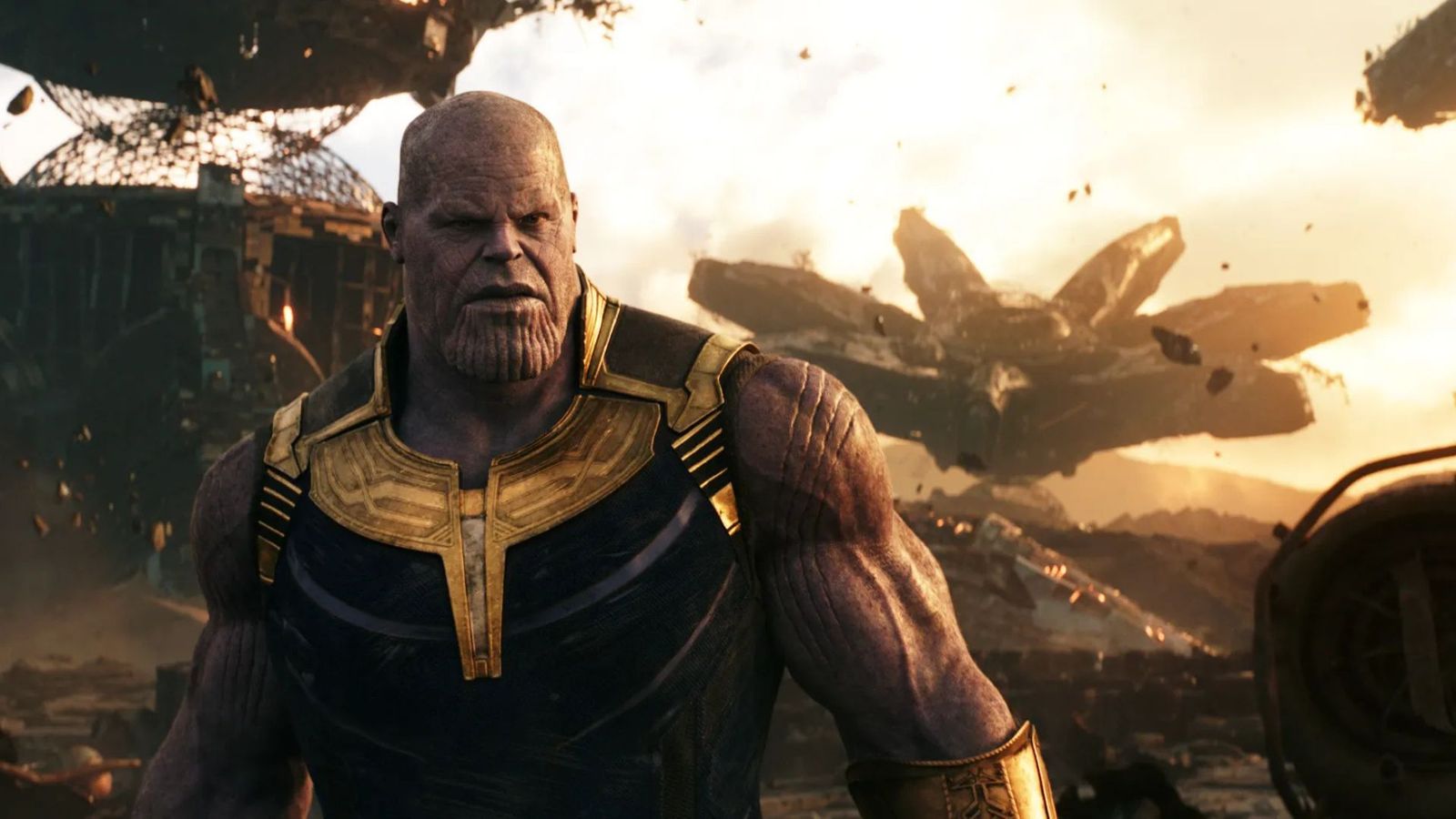
It wasn't until Guardians of the Galaxy (2014) that Josh Brolin took over the role via motion capture, giving the character the gravitas and philosophical depth that defined his later appearances. If Thanos had appeared in the main body of the 2012 film, Marvel would have been locked into a design and a performance that might not have aged well as the tone of the MCU shifted toward a more grounded, emotional realism.
Comparison of Thanos’s Presence in the Infinity Saga
The following table tracks how Thanos’s role evolved from a silent cameo to a central protagonist, explaining why his "absence" in the first film was part of a broader trajectory.
| Film Year | Movie Title | Thanos's Role | Primary Antagonist | Purpose of Presence |
|---|---|---|---|---|
| 2012 | The Avengers | Mid-credits cameo | Loki | To reveal the "True Enemy" behind the Chitauri. |
| 2014 | Guardians of the Galaxy | Supporting character | Ronan the Accuser | To establish his quest for the Infinity Stones. |
| 2015 | Avengers: Age of Ultron | Mid-credits cameo | Ultron | To signal his move to "do it myself." |
| 2018 | Avengers: Infinity War | Lead Protagonist/Villain | Thanos | To execute the Decimation (The Snap). |
| 2019 | Avengers: Endgame | Primary Antagonist | Thanos (2014 version) | To serve as the final obstacle for the Avengers. |
The Role of "The Other" and the Chitauri
One reason viewers often wonder why Thanos never appears in the main narrative is the presence of his direct subordinates. "The Other," a hooded, six-fingered alien, acts as the intermediary between Thanos and Loki. He warns Loki that "if you fail, if the Tesseract is kept from us, there will be no realm, no barren moon, no crevice where he can not find you."
This dialogue establishes Thanos's power through fear rather than physical presence. In high-level storytelling, a villain who doesn't need to show up to be terrifying is often more effective than one who is constantly on screen. By remaining in the shadows, Thanos became a "bogeyman" for the audience. His absence created a vacuum of information that fueled fan theories for years, keeping the brand relevant between major releases.
Narrative Risks of an Early Appearance
Had Marvel opted to put Thanos in the main narrative of The Avengers, several narrative risks would have surfaced:
- Diminishing the Infinity Stones: In 2012, the Tesseract was only known as a powerful energy source. The concept of it being "The Space Stone" wasn't fully articulated to the audience. Introducing the stone's collector too early would have over-complicated the plot.
- Loki’s Redemptive Arc: Loki is the emotional heart of the first Avengers. His sibling rivalry with Thor provides the stakes. If Thanos were present, Loki would have been relegated to a mere henchman, stripping away the character depth that made him a fan favorite for the next decade.
- The "Sauron" Effect: Much like Sauron in The Lord of the Rings, Thanos is often more effective as a looming presence. Once a villain is on screen and fighting, they become "beatable." By keeping him away, Marvel maintained his aura of invincibility.
The Long-Term Impact of the 2012 Tease
The decision to keep Thanos out of the 2012 narrative allowed for "Phase 2" and "Phase 3" to breathe. It gave Marvel the space to introduce the different Infinity Stones across various franchises (Thor: The Dark World, Guardians of the Galaxy, Doctor Strange). By the time Thanos finally stood up from his chair in the Age of Ultron post-credits scene and said, "Fine, I'll do it myself," the audience felt a genuine sense of dread because they had spent six years watching his plan slowly unfold.
In the current landscape of 2026 cinema, this "slow-burn" approach is often cited by film historians as the key to the MCU's peak success. It transformed a simple superhero movie into a serialized epic.
Frequently Asked Questions
Did Thanos actually give Loki the Scepter?
Yes, Thanos provided Loki with the Scepter, which contained the Mind Stone. This was a massive gamble on Thanos's part—giving away one Infinity Stone in the hope of gaining another (the Tesseract/Space Stone). His absence from the battle ensured that even though Loki lost the Mind Stone to S.H.I.E.L.D., Thanos himself remained safe and undetected by the cosmic entities that might have opposed him early on.
Who played Thanos in the 2012 Avengers movie?
Thanos was played by Damion Poitier in the 2012 film. He did not have any lines and was only seen from the side and then in a brief close-up during the mid-credits scene. Josh Brolin was not cast in the role until 2014's Guardians of the Galaxy.
Why didn't Thanos come to Earth himself after Loki failed?
Thanos is a strategist who prefers to let others do the "tilling." At that point in the timeline, Earth was under the protection of the Ancient One (the Sorcerer Supreme) and Odin (the King of Asgard). Thanos likely stayed away to avoid a direct confrontation with these high-level powers until he had a better understanding of where all the Infinity Stones were located.
Was Thanos originally supposed to be the main villain of the first movie?
No. From the earliest drafts of the script, Loki was always intended to be the primary antagonist. Joss Whedon wanted the film to be a personal story about the team coming together, and he felt that a cosmic threat like Thanos required its own dedicated saga rather than being squeezed into an origin story.
Is the Thanos in the 2012 credits the same one as in Infinity War?
Yes, within the MCU's internal logic, it is the same character. However, the visual design and the character's motivations were refined significantly by the Russo Brothers and screenwriters Christopher Markus and Stephen McFeely in the years leading up to 2018.
Practical Takeaway for Viewers
If you are re-watching the MCU in 2026, pay close attention to the dialogue between Loki and "The Other" in the first act of The Avengers. While Thanos never appears in the main narrative, his influence is felt in every scene where Loki expresses fear or urgency. To see his "official" first active role, you should move from The Avengers directly to Guardians of the Galaxy, where he finally speaks and begins his direct quest for the stones.
Image Gallery