SBA 504 Loan Requirements: A Comprehensive Guide for 2026 Business Financing
To qualify for an SBA 504 loan in 2026, a business must operate as a for-profit company with a tangible net worth under $15 million and an average net income below $5 million. The project must focus on owner-occupied real estate or lon...
To qualify for an SBA 504 loan in 2026, a business must operate as a for-profit company with a tangible net worth under $15 million and an average net income below $5 million. The project must focus on owner-occupied real estate or long-term equipment, meeting specific job creation or public policy goals.
Contents
The SBA 504 loan program continues to be one of the most effective tools for small and medium-sized enterprises (SMEs) to acquire fixed assets while preserving working capital. Unlike the more common SBA 7(a) loan, the 504 program is specifically designed for economic development and "brick-and-mortar" expansion. It utilizes a unique three-party structure involving a traditional lender, a Certified Development Company (CDC), and the borrower.
Understanding the rigorous eligibility and project requirements is essential for business owners looking to lock in long-term, fixed interest rates in the 2026 financial landscape.
The SBA 504 Loan Structure Explained
The hallmark of the 504 program is its financing structure, often referred to as the 50-40-10 split. This arrangement minimizes the risk for private lenders while lowering the barrier to entry for the business owner.
- The Third-Party Lender (50%): A private sector bank or credit union provides a senior lien loan covering 50% of the total project costs. This loan usually has a floating or fixed rate negotiated between the borrower and the bank.
- The Certified Development Company (40%): A CDC, which is a non-profit corporation certified by the SBA to support local economic development, provides a junior lien loan covering up to 40% of the project costs. This portion is 100% SBA-guaranteed and features a fixed interest rate for 10, 20, or 25 years.
- The Borrower (10%): The business owner typically provides a 10% equity injection as a down payment. This is significantly lower than the 20% to 35% often required for conventional commercial real estate loans.
In 2026, certain scenarios—such as startup status or "special purpose" property acquisitions—may require a higher borrower contribution of 15% or 20%.
General Business Eligibility Requirements
Before evaluating a specific project, the SBA assesses the business itself. To be eligible for 504 financing, the entity must meet the following criteria:
For-Profit Status and Legal Structure
The business must operate as a for-profit entity. Non-profit organizations are generally ineligible for 504 financing. The business can be organized as a sole proprietorship, partnership, corporation, or Limited Liability Company (LLC).
Size Standards
The SBA 504 program is intended for businesses that fall within certain size limits. As of 2026, the business (including its affiliates) must have:
- A tangible net worth of less than $15 million.
- An average net income of less than $5 million after federal income taxes for the two preceding fiscal years.
Nature of Operations
The business must be physically located and operating within the United States or its territories. Furthermore, the SBA prohibits lending to businesses engaged in speculative activities (like wildcatting or land flipping), gambling, or those that derive a significant portion of income from lending (like banks or finance companies).
Eligible Use of Proceeds
The SBA 504 program is restrictive regarding how the funds are spent. The loan must be used for fixed assets that promote business growth and job creation.
Real Estate Acquisition and Improvement
Financing is available for the purchase of land and existing buildings. It also covers:
- New Construction: Building a new facility on owned or acquired land.
- Renovations: Improving, modernizing, or converting existing facilities.
- Land Improvements: Grading, landscaping, and installing utilities or parking lots.
Long-Term Machinery and Equipment
The 504 program is ideal for high-cost, long-term machinery. To qualify, the equipment must have a remaining useful life of at least 10 years. Common examples include commercial printing presses, medical imaging equipment, and heavy manufacturing lines.
Debt Refinancing
Under specific conditions, the 504 program allows for the refinancing of existing commercial mortgage debt. To qualify for "debt refi without expansion," the debt must be at least two years old and must have been used for an SBA 504-eligible purpose. If the project involves an expansion of the business, different rules apply regarding the age of the debt being refinanced.
Occupancy Requirements for Real Estate
A critical hurdle for 504 applicants is the owner-occupancy mandate. The SBA 504 program is not intended for investment properties or passive real estate holding.
- Existing Buildings: The borrowing business must occupy at least 51% of the square footage. The remaining 49% can be leased out to third parties to generate rental income.
- New Construction: The business must occupy at least 60% of the building immediately. There are additional requirements to eventually occupy up to 80% over 10 years, though the initial 60% is the primary compliance threshold for approval.
Job Creation and Public Policy Goals
Because the SBA 504 program is funded through the sale of debentures guaranteed by the federal government, there is a mandate for the project to provide a public benefit. This is usually measured through job creation or retention.
The Job Creation Ratio
Standard projects must generally create or retain one job for every $95,000 of the SBA's portion of the loan. For small manufacturers, this requirement is more lenient, often allowing for one job per $185,000 of the SBA portion.
Public Policy Goals as an Alternative
If a project cannot meet the job creation requirements, it may still qualify if it fulfills one of the SBA's public policy goals. These include:
- Energy Consumption Reduction: Improving energy efficiency by at least 10%.
- Renewable Energy Production: Generating more than 15% of the energy used by the applicant through solar, wind, or geothermal sources.
- Rural Development: Locating the business in a federally designated rural area.
- Veteran-Owned Business Expansion: Supporting businesses owned by veterans.
- Minority or Women-Owned Business Growth: Specifically aimed at underserved demographics.
Financial and Credit Requirements
While the SBA 504 program is designed to be more accessible than conventional lending, the credit standards remain rigorous. Lenders and CDCs evaluate the "Five Cs of Credit": Character, Capacity, Capital, Collateral, and Conditions.
- Personal Guarantees: Any individual owning 20% or more of the business must provide a full unconditional personal guarantee.
- Debt Service Coverage Ratio (DSCR): The business must demonstrate the ability to repay the loan through its cash flow. A DSCR of 1.20x or higher is typically required, meaning the business has $1.20 in net operating income for every $1.00 of total debt obligations.
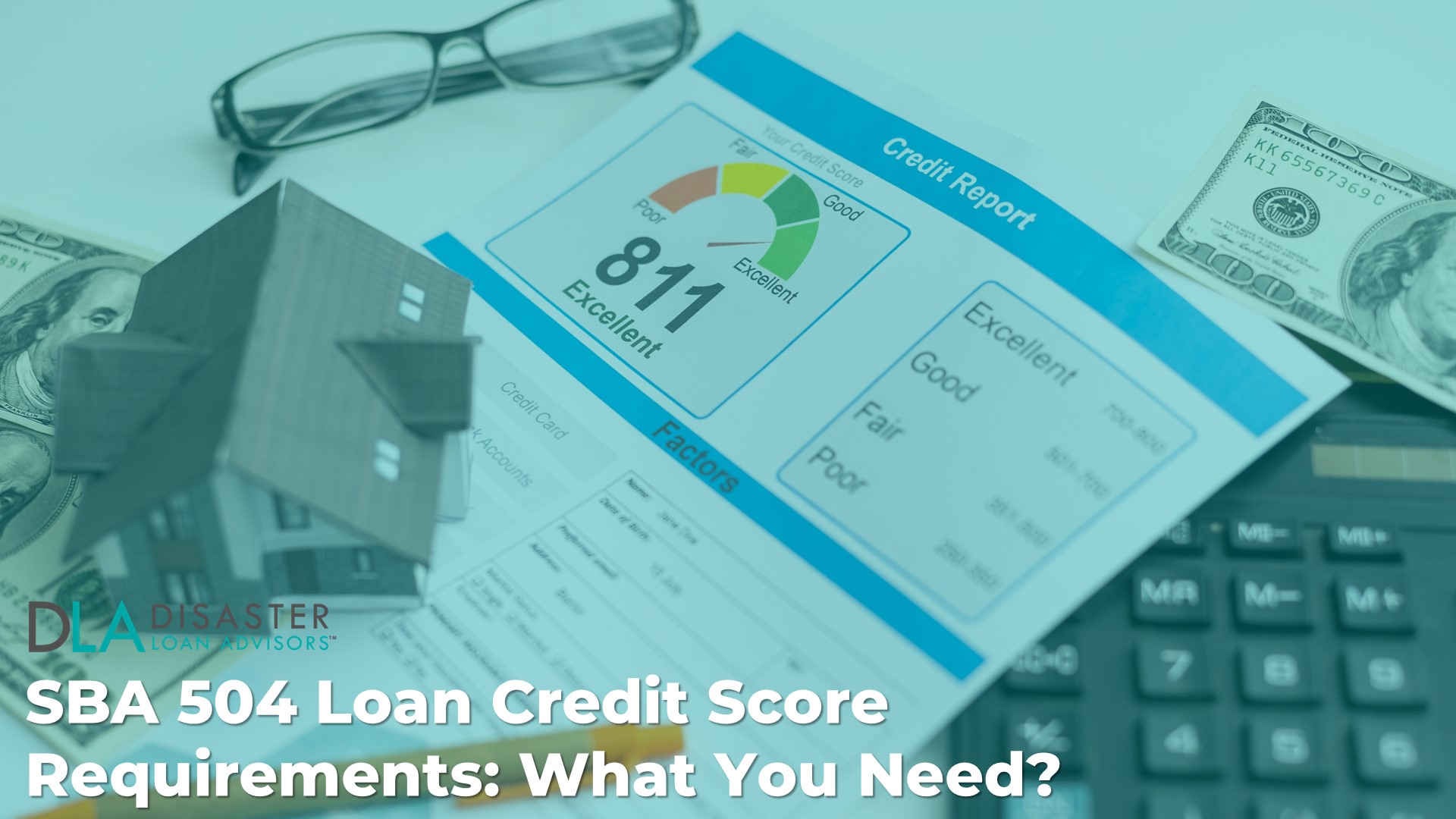
- Credit History: While there is no "hard" minimum FICO score set by the SBA, most participating third-party lenders in 2026 look for scores above 680. Any prior bankruptcies or federal defaults must be fully explained and resolved.
- Equity Injection: As mentioned, the borrower must have the cash (or equity in land) to cover the 10-20% down payment. This capital cannot be borrowed unless the repayment of that debt comes from sources other than the business's salary or dividends.
SBA 504 vs. SBA 7(a): A 2026 Comparison
Choosing the right loan program depends on the specific needs of the business. The following table highlights the primary differences for 2026 applicants.
| Feature | SBA 504 Loan | SBA 7(a) Loan |
|---|---|---|
| Maximum Loan Amount | Up to $5.5M for SBA portion (Total project can be much larger) | Up to $5M total |
| Interest Rates | Fixed for the life of the loan | Usually variable (based on Prime) |
| Down Payment | Typically 10% | Typically 10% to 15% |
| Use of Proceeds | Fixed assets only (Real estate, equipment) | Working capital, inventory, debt refi, and fixed assets |
| Fees | Approx. 3% of the SBA portion (can be financed) | Variable based on loan size (approx. 2% to 3.75%) |
| Terms | 10, 20, or 25 years | Up to 10 years (equipment), 25 years (real estate) |
| Job Creation Requirement | Required (or Public Policy Goal) | Generally not required |
The Application Process and Documentation
The 504 application is a dual process. You must apply to both a bank (Third-Party Lender) and a CDC simultaneously.
Required Documentation
Applicants should be prepared to provide a comprehensive financial package, including:
- Business Tax Returns: For the last three years.
- Personal Tax Returns: For all owners of 20% or more.
- Interim Financial Statements: Current year-to-date Balance Sheet and P&L.
- Debt Schedule: A detailed list of all current business debts.
- Business Plan: Specifically for startups or significant expansions.
- Projections: Two years of month-by-month cash flow projections with assumptions.
- Purchase Agreement: A signed copy of the real estate or equipment contract.
The approval timeline for a 504 loan in 2026 generally ranges from 60 to 90 days. This includes the bank's internal approval, the CDC's board approval, and the final SBA authorization.
Frequently Asked Questions
Can I use an SBA 504 loan to buy an existing business? No, the 504 program is strictly for the purchase of fixed assets like real estate and equipment. If you are looking to buy the goodwill, inventory, or intangible assets of an existing business, the SBA 7(a) loan is the appropriate vehicle. However, you can use a 504 loan in conjunction with a 7(a) loan if the business acquisition includes significant real estate.
What is a "special purpose" property, and why does it require a 15% down payment? The SBA defines special purpose properties as buildings that cannot be easily converted to another use without significant capital expenditure. Examples include hotels, gas stations, cold storage facilities, and bowling alleys. Because these properties are harder to liquidate in the event of a default, the SBA requires a higher equity injection (typically an additional 5%) to mitigate risk.
Are the interest rates on the SBA 504 portion really fixed? Yes. The 40% portion of the loan provided through the CDC is funded by the sale of a debenture (a bond) on the open market. Once the debenture is sold, the interest rate is locked for the entire duration of the term—10, 20, or 25 years. This provides business owners with significant protection against rising interest rates, which is a major advantage over the variable-rate 7(a) program.
What are the prepayment penalties for an SBA 504 loan? SBA 504 loans have a declining prepayment penalty for the first half of the loan term. For a 20-year loan, the penalty exists for the first 10 years. For a 10-year loan, it exists for the first five years. The penalty is based on a formula related to the debenture's interest rate and decreases annually until it reaches zero at the midpoint of the loan term.
Can I use the 504 loan for a project located outside the United States? No. The SBA is a U.S. government agency focused on domestic economic development. All projects must be located within the United States or its territories. Additionally, the business must demonstrate that it helps the U.S. economy, usually through local job creation or providing services to the American public.
Next Actions for Business Owners
To begin the process of securing an SBA 504 loan, the first step is to identify a Certified Development Company (CDC) that operates in your specific region. You can find a list of local CDCs through the official SBA website.
Simultaneously, speak with your commercial banker to see if they are an active SBA 504 participant. Since the bank provides 50% of the financing, having a lender who is comfortable with the 504 structure and the CDC partnership is vital for a smooth closing. Prepare your financial statements early, as the depth of documentation required for the SBA 504 remains the most significant hurdle for most applicants in 2026.
Image Gallery