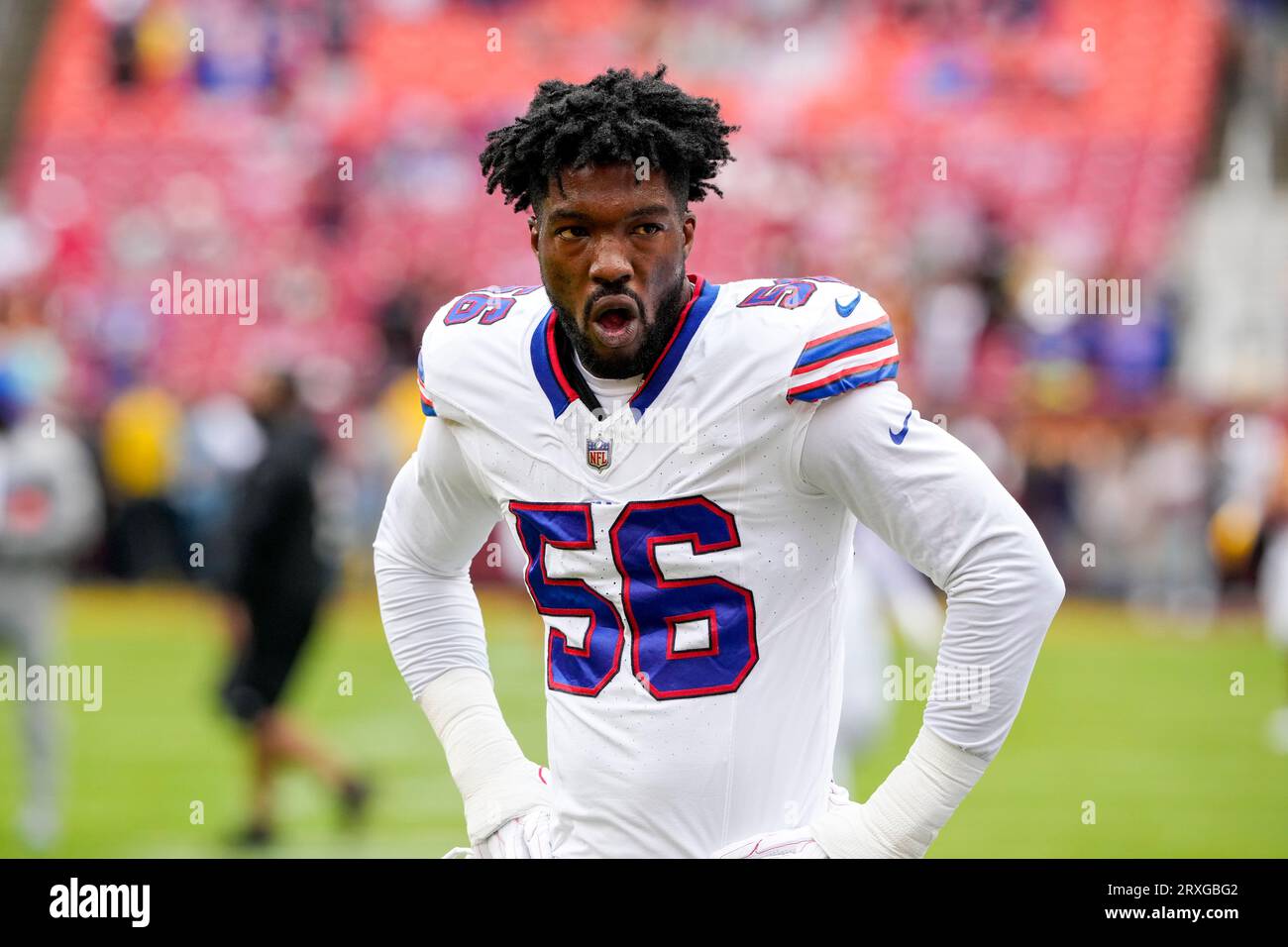
Understanding Leonard Floyd’s Net Worth and Career Financial Trajectory
As of 2026, Leonard Floyd’s estimated net worth is approximately $35 million to $45 million. This figure is primarily derived from his decade-long career as a premier edge rusher in the National Football League (NFL), including signifi...
As of 2026, Leonard Floyd’s estimated net worth is approximately $35 million to $45 million. This figure is primarily derived from his decade-long career as a premier edge rusher in the National Football League (NFL), including significant signing bonuses, guaranteed salary contracts with teams like the Chicago Bears, Los Angeles Rams, Buffalo Bills, and San Francisco 49ers, and various endorsement deals.
Contents
The Foundation of Professional Athlete Wealth
The financial profile of an elite NFL athlete like Leonard Floyd is built upon a foundation of structured contracts. Unlike traditional corporate income, professional athlete compensation is governed by the NFL’s Collective Bargaining Agreement (CBA), which dictates the parameters of rookie contracts, franchise tags, and veteran free-agent signings. For Floyd, who was selected as the 9th overall pick in the 2016 NFL Draft by the Chicago Bears, his career trajectory began with the high-value compensation typical of a first-round draft pick.
Understanding the net worth of a professional athlete requires looking beyond gross earnings. Gross salary figures reported in media outlets do not account for the substantial "hidden" costs of being a professional athlete. These include mandatory agent fees, which typically range from 1% to 3% of contract value, federal and state income taxes (which can consume nearly 50% of an athlete's gross income depending on their state of residence), and the high cost of specialized training, personal staff, and financial management teams. Consequently, while an athlete’s career earnings might reach $70 million or more, the net worth is reflective of these deductions combined with investment performance.
Career Earnings and Contract Evolution
Leonard Floyd’s professional journey provides a clear look at how an NFL player’s value fluctuates based on performance metrics such as sacks, quarterback pressures, and defensive efficiency.
The Rookie Phase (2016–2019)
Upon entering the league, Floyd signed a four-year, fully guaranteed contract worth approximately $15.7 million. This rookie deal provided the initial capital necessary to build a long-term financial base. During this period, his financial growth was relatively predictable, as the contract structure offered little room for negotiation but ensured a steady stream of income.
The Veteran Free Agency Peak (2020–2025)
Floyd’s net worth experienced its most significant growth after he joined the Los Angeles Rams in 2020. His transition to a high-profile market and his role in a Super Bowl-winning defense increased his leverage in the free-agent market. Subsequent multi-year contracts, which often included massive signing bonuses paid upfront, allowed him to shift from a "salary-based" earner to an "asset-based" individual. When players sign contracts worth tens of millions, the signing bonus is often the most critical component for their net worth, as it is paid regardless of future injury or roster performance.
Comparative Analysis of Defensive End Compensation
To provide context for Floyd’s earnings, it is helpful to compare his career path with industry standards for top-tier edge rushers. The following table illustrates the typical progression of earnings for a first-round defensive talent.
| Career Stage | Primary Income Source | Financial Focus |
|---|---|---|
| Rookie (Years 1-4) | Standard Rookie Contract | Capital preservation and tax planning |
| Transition (Year 5) | Fifth-year option/Initial Free Agency | Maximizing guaranteed money |
| Peak Veteran (Years 6-10) | Multi-year extension | Diversification and passive income generation |
| Late Career (Year 10+) | Incentives and veteran minimums | Transitioning to post-career wealth management |
Factors Influencing Net Worth Beyond the Field
While the NFL provides the primary engine for Leonard Floyd’s wealth, his long-term net worth is heavily influenced by how these funds are deployed. Professional athletes at this level typically employ a suite of financial professionals, including:
- Wealth Managers: Specialists who focus on capital preservation, ensuring that the short window of an NFL career is bridged by long-term, low-risk investment vehicles.
- Tax Advisors: Crucial for athletes who play in multiple jurisdictions. NFL players must pay "jock taxes" based on the state where each game is played, requiring complex accounting to ensure compliance and minimize liability.
- Endorsement Management: While Floyd is not known for massive commercial endorsements compared to a franchise quarterback, performance-based incentives and regional marketing deals provide a secondary, albeit smaller, revenue stream.
Common Misconceptions Regarding Athlete Wealth
A frequent error in public perception is equating "total contract value" with "net worth." When media outlets report that a player has signed a "four-year, $60 million deal," it is rarely guaranteed money. Only the "guaranteed" portion—which usually includes the signing bonus and injury guarantees—is locked in. The remaining value is often contingent on the player remaining on the roster and meeting performance targets. By 2026, a prudent analysis of Floyd’s net worth accounts for these realities, stripping away the non-guaranteed "fluff" often found in public salary databases.
Furthermore, life after the NFL is a significant factor in wealth calculation. The transition from a high-earning athlete to a civilian is often the most volatile period for net worth. Those who successfully diversify into real estate, private equity, or business ventures generally see their net worth stabilize or grow after their final season.
Frequently Asked Questions
How is Leonard Floyd’s net worth estimated? Estimates are based on public contract data provided by organizations like the NFL Players Association and reporting from reputable sports media outlets. This is combined with estimations for tax obligations, agent commissions, and typical lifestyle expenditures.
Does Leonard Floyd’s current team affect his net worth? To an extent, yes. Different states have different income tax rates. Playing for a team in a state with no state income tax (such as Florida, Texas, or Nevada) can effectively increase an athlete's take-home pay compared to playing in high-tax states like California or New York.
Are endorsement deals a major part of his wealth? For most defensive players, salary and signing bonuses represent the vast majority of their income. While endorsements are beneficial, they generally represent a smaller percentage of an edge rusher's total wealth compared to that of a starting quarterback or a wide receiver.
Why does net worth change from year to year? Net worth is a balance sheet calculation. It accounts for assets (investments, cash, property) minus liabilities (debt, taxes, expenses). Market fluctuations in investment portfolios and recurring tax payments can cause the figure to fluctuate even when the athlete is not actively signing new, large-scale contracts.
Is athlete net worth information publicly verified? No. Net worth is an estimate based on disclosed earnings and general wealth trends. Athletes do not release private financial statements; therefore, any published net worth figure should be viewed as an informed approximation rather than a certified financial record.
Recommendations for Further Financial Literacy
For those interested in the financial structures of professional sports, it is recommended to review the NFL Collective Bargaining Agreement. This document is the source of truth for all compensation rules, salary caps, and benefit structures. Additionally, looking at data provided by entities like Spotrac or Over The Cap provides the most accurate view of player contract status, which is the most reliable proxy for understanding an athlete's earning potential. Readers should be cautious of "net worth" websites that lack transparent sourcing, as they often rely on guesswork rather than verified contract disclosures.
Image Gallery