Understanding the True Capacity of the JMA Wireless Dome
The JMA Wireless Dome, located in Syracuse, New York, has a primary seating capacity of approximately 35,000 for football games. While this figure is the standard benchmark for athletic events, the facility's total capacity fluctuates...
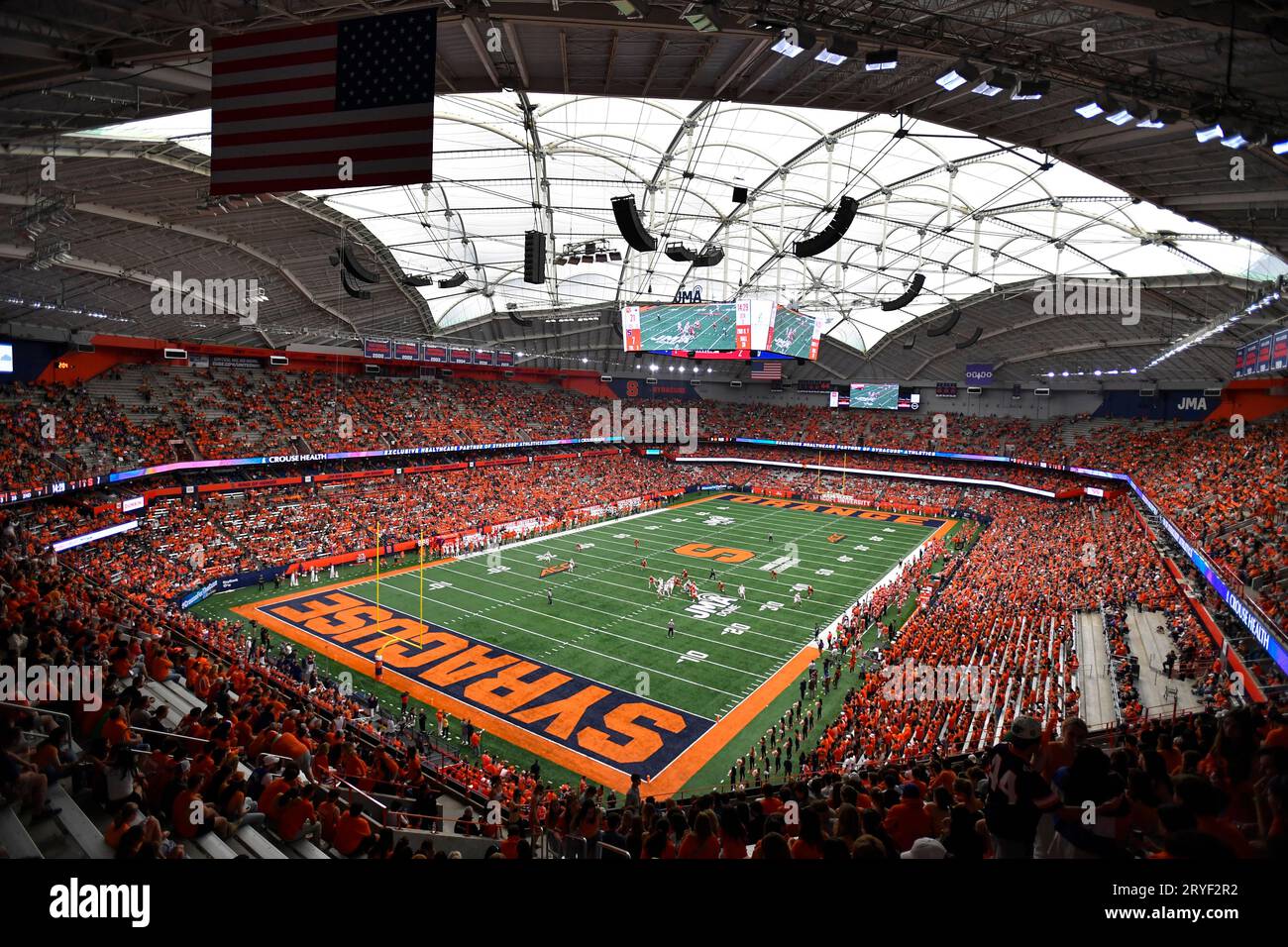
The JMA Wireless Dome, located in Syracuse, New York, has a primary seating capacity of approximately 35,000 for football games. While this figure is the standard benchmark for athletic events, the facility's total capacity fluctuates based on the specific configuration required for different types of events, such as concerts, basketball games, and large-scale commencement ceremonies.
Contents
The JMA Wireless Dome—formerly known as the Carrier Dome—serves as the home for Syracuse University athletics. Understanding its capacity requires looking beyond a single static number, as the facility is a multipurpose venue designed to accommodate diverse crowd sizes through modular seating arrangements, floor-level expansion, and varying stage placements.
Distinguishing Between Fixed and Flexible Capacity
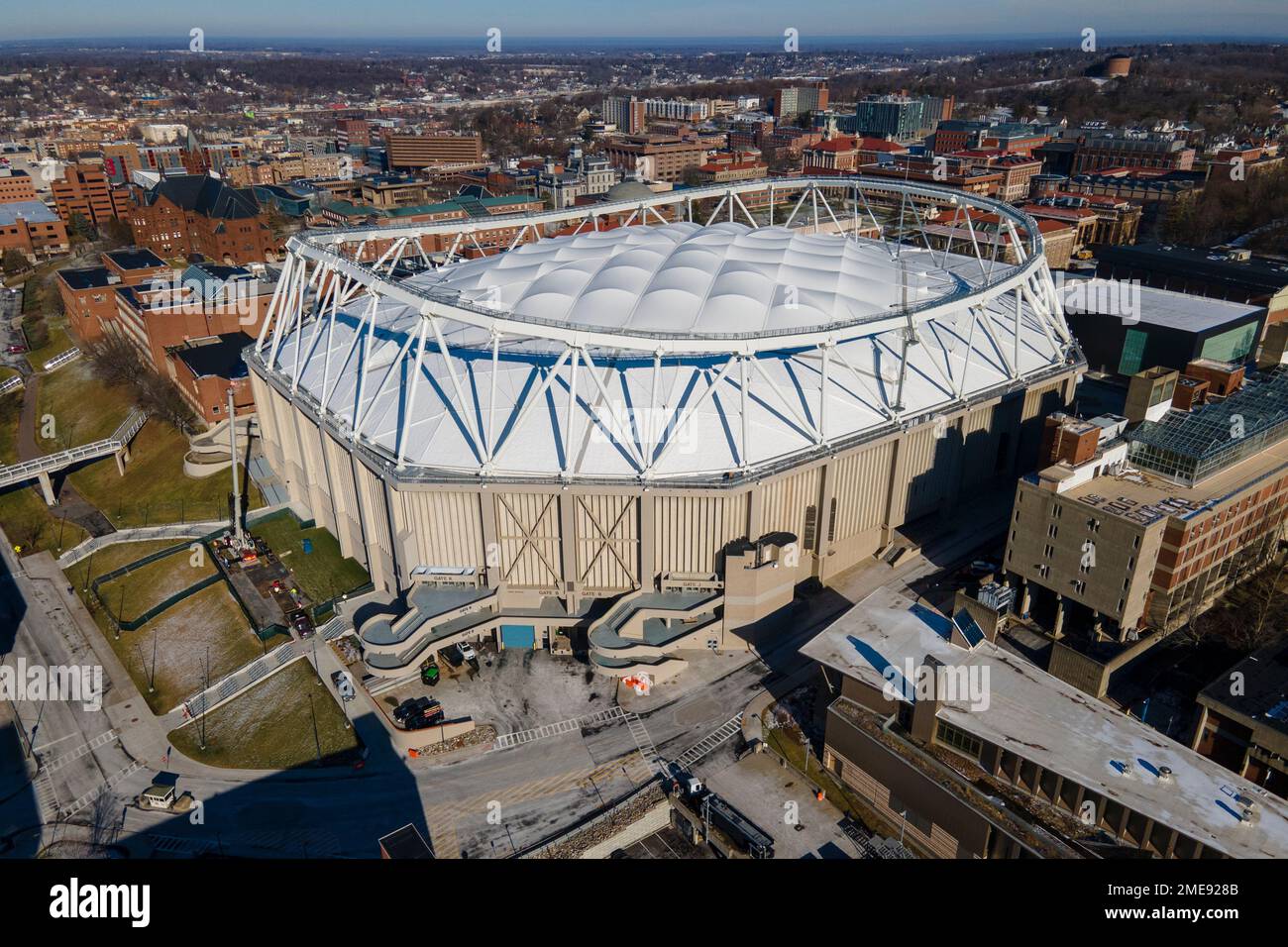
The confusion surrounding the JMA Wireless Dome capacity often stems from the difference between its permanent structural design and its operational configuration. The stadium was built as a pressurized, air-supported structure in 1980 and underwent significant renovations in 2020 to replace the original roof with a fixed steel-truss system. These renovations were primarily focused on structural integrity and modern amenities rather than expanding the total footprint.
When officials cite the 35,000 to 36,000 range, they are generally referring to the seating layout used for Syracuse Orange football games. In this setup, the lower bowl and the upper mezzanine are utilized, but the expansive floor space—which would otherwise accommodate thousands of additional standing or floor-seated guests—remains largely unoccupied by spectators to allow for the field of play.
Event-Specific Configuration Metrics
Capacity is rarely a fixed constant in large-scale arenas. It is an operational parameter dictated by fire codes, safety egress requirements, and the physical footprint of the event equipment.
- Football: As the venue’s primary purpose, the capacity is capped to maintain optimal sightlines and safety protocols, typically settling at the 35,000 mark.
- Basketball: When hosting the Syracuse Orange men’s and women’s basketball teams, the capacity is intentionally reduced. By using a center-court configuration and covering large sections of the upper bowl with curtains, the venue creates a more intimate atmosphere, often bringing the functional capacity down to roughly 30,000 to 32,000.
- Concerts and Special Events: For non-athletic events, the floor can be utilized for general admission or floor-level seating. Depending on the size of the stage and the placement of mixing boards, the JMA Wireless Dome can accommodate upwards of 40,000 attendees, though this varies significantly based on production requirements.
Factors Influencing Capacity Limits
Several technical and regulatory factors prevent the Dome from simply increasing capacity at will. These constraints are enforced by the university in conjunction with local fire marshals and safety inspectors.
1. Egress and Life Safety
The speed at which a crowd can safely exit the building is the most critical constraint. Any modification to seating charts must be vetted against the total number of exits and the width of the concourses. If a concert promoter requests additional floor seating, the facility manager must verify that the influx of people on the ground level does not create a bottleneck at the primary concourse tunnels.
2. Sightlines and Production Footprint
Modern production for concerts is physically massive. Staging, lighting trusses, and sound delay towers occupy significant square footage on the floor. For a major touring act, the "production kill"—the number of seats that cannot be sold because they face the back of a stage or are obscured by equipment—can reduce the capacity by several thousand seats compared to the venue’s maximum theoretical capacity.
3. Structural Integrity and Building Codes
While the 2020 renovation improved the roof significantly, it did not change the physical width of the seating bowls. The concrete structure of the mezzanine and the lower bowl remains fixed. Capacity increases are only possible through the addition of temporary bleachers or floor-level chairs, both of which are strictly regulated by New York State building codes.
Comparative Seating Capacity Analysis
| Event Type | Typical Capacity Range | Primary Constraint |
|---|---|---|
| College Football | 35,000 – 36,000 | Permanent bowl seating |
| Basketball | 30,000 – 32,000 | Court footprint & curtaining |
| Large Concerts | 35,000 – 40,000+ | Production footprint & floor access |
| Commencement | 30,000 – 35,000 | Stage and graduate seating |
How to Verify Capacity for Upcoming Events
If you are attempting to determine the exact capacity for a specific future event at the JMA Wireless Dome, there are several reliable ways to gather accurate information:
- Consult the Official Ticketing Map: The primary ticket vendor for the facility provides a seating map for every event. If a section is grayed out or marked as unavailable, it is factored into the "event-specific capacity."
- Review Press Releases: For major events like concerts or tournaments, the university’s communications department often publishes the intended attendance target or the number of tickets released for sale.
- Check Venue Specifications: Syracuse University maintains a facilities page that outlines the baseline metrics for the Dome. This provides the most accurate "ceiling" for attendance before individual event production is taken into account.
Common Misconceptions About the Dome
A common point of confusion for visitors is the distinction between "theoretical capacity" and "sold capacity." It is common for the media to report that a game was a "sellout" at 33,000, which leads some to believe the maximum capacity of the building is 33,000. However, a sellout simply means that all tickets released for that specific event have been purchased. It does not mean the building cannot physically hold more people; it only means the configuration chosen for that day is full.
Furthermore, the transition from the "Carrier Dome" to the "JMA Wireless Dome" in 2022 was purely a naming rights agreement. It did not involve a physical expansion of the seating structure. Any claims suggesting that the name change came with a drastic increase in capacity are factually incorrect.
Frequently Asked Questions
Is the JMA Wireless Dome the largest indoor stadium in college athletics? While it is one of the most prominent, its capacity is frequently surpassed by massive university stadiums like those in the SEC and Big Ten. However, it remains one of the largest multipurpose indoor facilities owned by a university.
Why does the seating capacity change for basketball? Basketball is played on a court that is significantly smaller than a football field. To make the atmosphere more energetic and improve viewing angles, the university blocks off large segments of the upper bowl. This reduces the total seat count to focus the crowd toward the center of the arena.
Does the 2020 roof renovation increase the total number of people allowed inside? No. The renovation was focused on the longevity of the structure and replacing the old air-supported roof with a steel truss roof. It did not add extra tiers of seating or expand the footprint of the mezzanine, so the fire-code maximums remained largely unchanged.
Where can I see the seat numbers and layout for a specific section? You can view the official interactive seating chart on the Syracuse Orange athletics ticketing website. This will show you exactly which rows and sections are active for a given event configuration.
Are standing-room-only tickets counted in the capacity? Standing-room-only (SRO) tickets are strictly regulated. They are only authorized for specific events where the venue has determined that the concourse capacity is sufficient to handle the additional foot traffic without violating fire safety codes.
Final Next Actions
To determine the capacity for your specific needs, identify the date and the nature of the event you plan to attend. If you are a ticket buyer, trust the specific seating map provided on the official athletics website for that date. If you are conducting research or planning a production, contact the Syracuse University venue management team directly, as they maintain the master egress plans that dictate exactly how many people are permitted in the facility under various fire-marshal-approved configurations.
Image Gallery