How to Register an LLC in Oregon: The Step-by-Step 2026 Guide
To register an LLC in Oregon in 2026, you must select a unique business name, appoint a registered agent with a physical Oregon address, and file Articles of Organization with the Secretary of State. The state filing fee is $100. After...
To register an LLC in Oregon in 2026, you must select a unique business name, appoint a registered agent with a physical Oregon address, and file Articles of Organization with the Secretary of State. The state filing fee is $100. After formation, you should obtain an Employer Identification Number (EIN) from the IRS and create an operating agreement to govern your business.
Contents
The Oregon Limited Liability Company (LLC) remains one of the most popular business structures in the Pacific Northwest due to its flexibility, ease of maintenance, and the robust liability protection it offers business owners. Whether you are launching a boutique in Portland or a tech consultancy in Bend, understanding the specific regulatory requirements of the Oregon Secretary of State (SOS) is essential for a smooth registration process.
1. Choose a Distinguishable Name for Your Oregon LLC
The first step in forming an LLC is selecting a name that complies with Oregon law. Under Oregon Revised Statutes Chapter 63, your business name must be "distinguishable" from all other business entities already on file with the Secretary of State. This means the name cannot be identical or confusingly similar to an existing corporation, LLC, or limited partnership.
Oregon Naming Requirements
- Entity Designator: Your name must include the words "Limited Liability Company" or the abbreviations "L.L.C." or "LLC."
- Restricted Words: Certain words, such as "Bank," "Trust," "Insurance," or "University," may require additional documentation or professional licensing verification from the Oregon Division of Financial Regulation or the Higher Education Coordinating Commission.
- Distinguishability: Minor changes like adding "The," "and," or pluralizing a word generally do not make a name distinguishable. For example, if "Green River LLC" exists, you cannot register "The Green River LLC."
Searching the Business Database
Before filing, use the Oregon Secretary of State Business Name Search to check availability. If you have found the perfect name but are not ready to file your Articles of Organization immediately, you can reserve the name for 120 days by filing a Name Reservation form and paying a $100 fee. However, most founders skip this step and go straight to registration.
2. Appoint a Registered Agent in Oregon
Oregon law requires every LLC to maintain a registered agent within the state. A registered agent is an individual or a business entity authorized to receive service of process, legal notices, and official government communications on behalf of your LLC.
Qualifications for a Registered Agent
- Physical Presence: The agent must have a physical street address in Oregon (often called a registered office). A P.O. Box alone is not sufficient.
- Availability: The agent must be available at that physical address during standard business hours (9:00 AM to 5:00 PM) to accept hand-delivered legal documents.
- Consent: You must have the agent's consent to list them. While you do not need to file a written consent form with the state, the person or entity must have agreed to the role.
Choosing Between an Individual or a Service
You can act as your own registered agent if you reside in Oregon and are consistently available at your office. However, many business owners hire a professional registered agent service for two primary reasons: privacy and reliability. Because the registered agent's address becomes a matter of public record, using a service prevents your home address from being easily accessible in the Secretary of State's database. Furthermore, it ensures you never miss a critical legal notice while you are traveling or out on a job site.
3. File the Oregon Articles of Organization
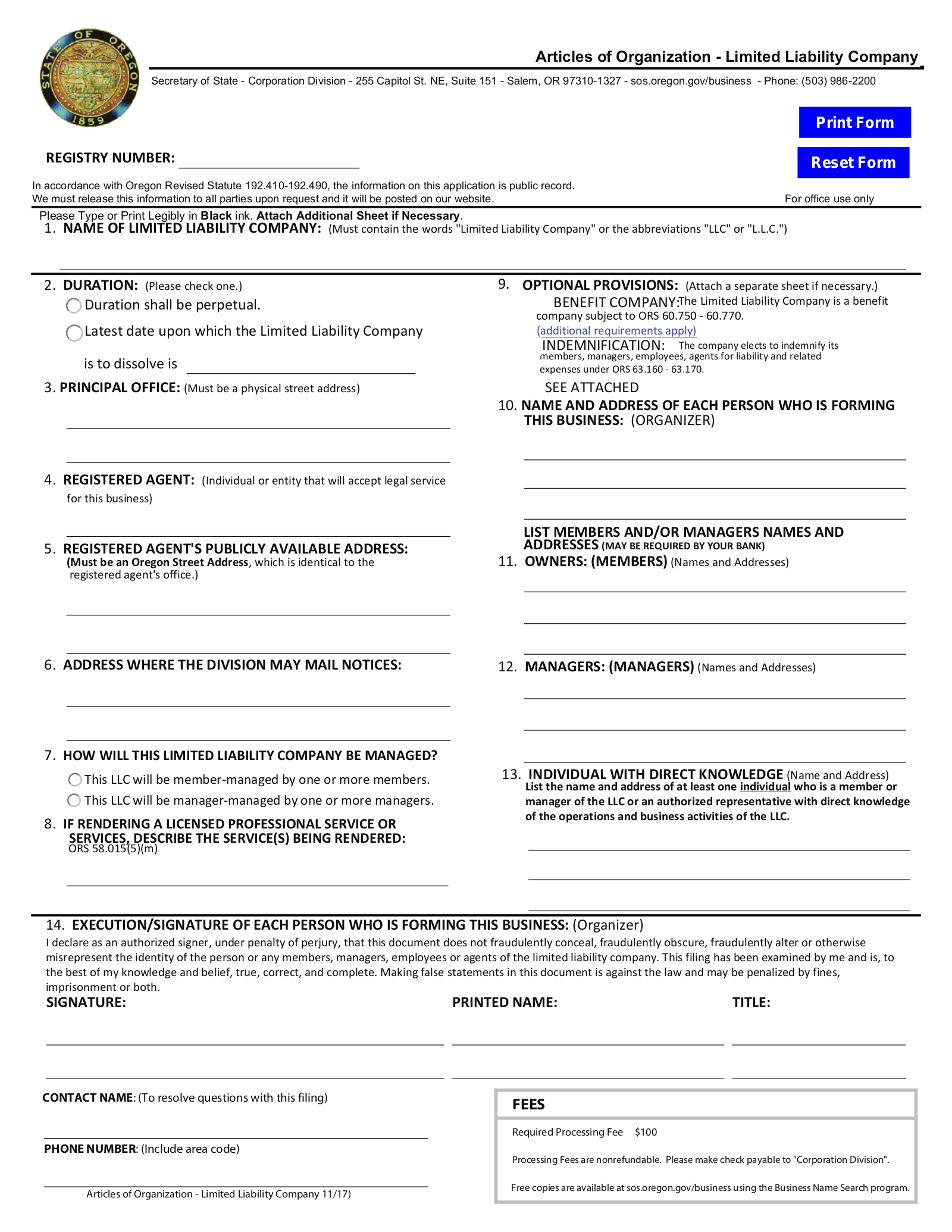
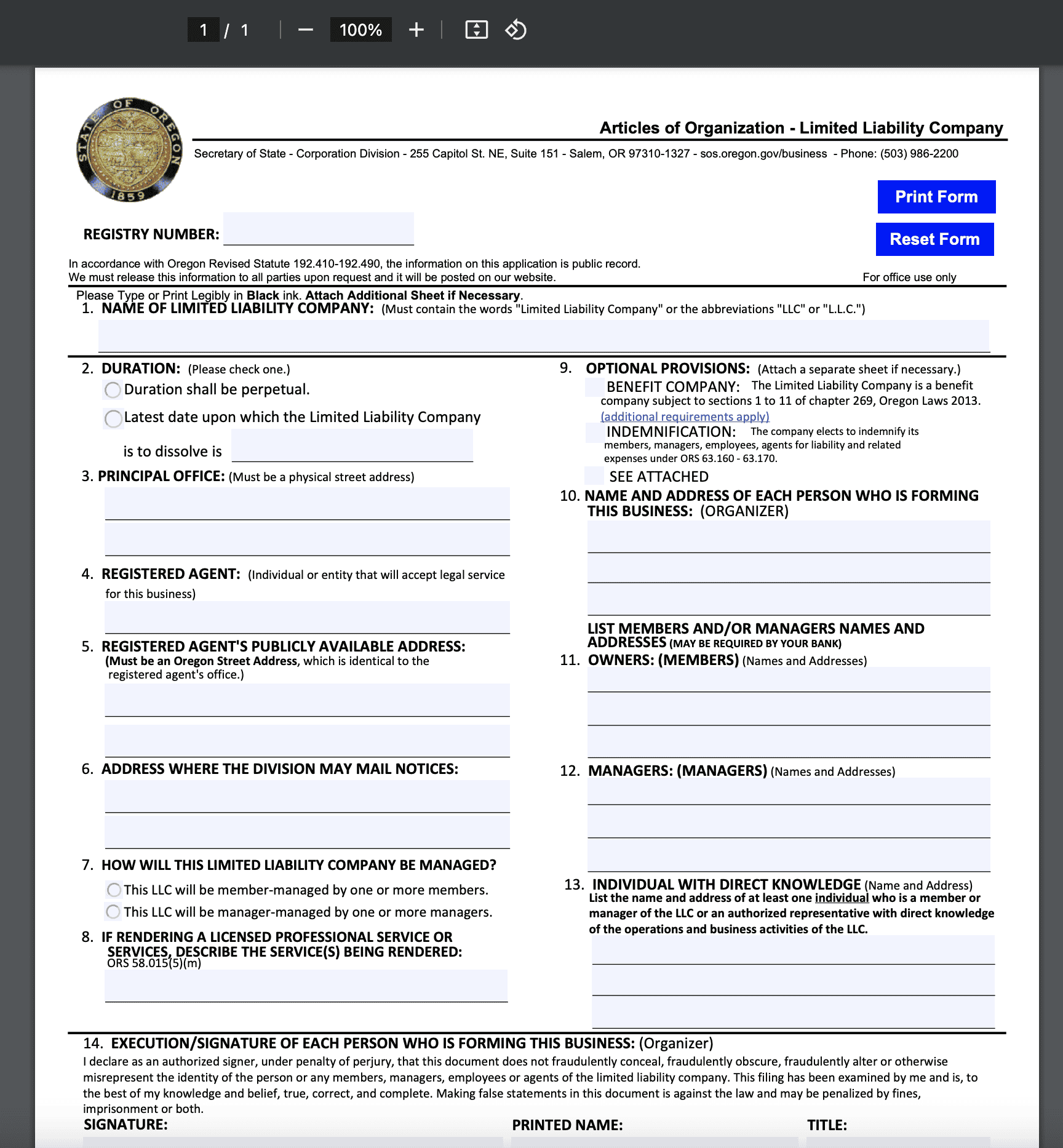
The formal creation of your LLC occurs when you file the Articles of Organization with the Oregon Secretary of State, Corporation Division. As of 2026, the most efficient way to do this is through the Oregon Business Registry online portal.
Information Required for the Filing
- LLC Name: The name you verified in Step 1.
- Duration: Most LLCs are "perpetual," meaning they exist until dissolved. You may also specify a dissolution date if the LLC is for a temporary project.
- Registered Agent Details: Name and physical Oregon address.
- Address for Notices: Where the state should send your annual report reminders.
- Management Structure: You must indicate if the LLC will be Member-managed (all owners run the daily operations) or Manager-managed (owners appoint a specific manager or group to run the business).
- Professional Services: If you are forming a Professional LLC (PLLC) for services like law, medicine, or accounting, you must state the specific professional service being provided.
- Organizers: The individuals or entities responsible for filing the document.
Filing Fees and Processing Time
The filing fee for a domestic LLC in Oregon is $100. Online filings are typically processed within one to three business days. If you choose to file by mail, the processing time can extend to several weeks depending on the state's current workload.
| Feature | Requirement / Detail |
|---|---|
| State Filing Fee | $100 (Domestic) |
| Annual Report Fee | $100 |
| Name Reservation Fee | $100 (Optional) |
| Management Styles | Member-managed or Manager-managed |
| Publication Requirement | None in Oregon |
| State Income Tax | No state sales tax; Progressive personal income tax |
4. Draft an Operating Agreement
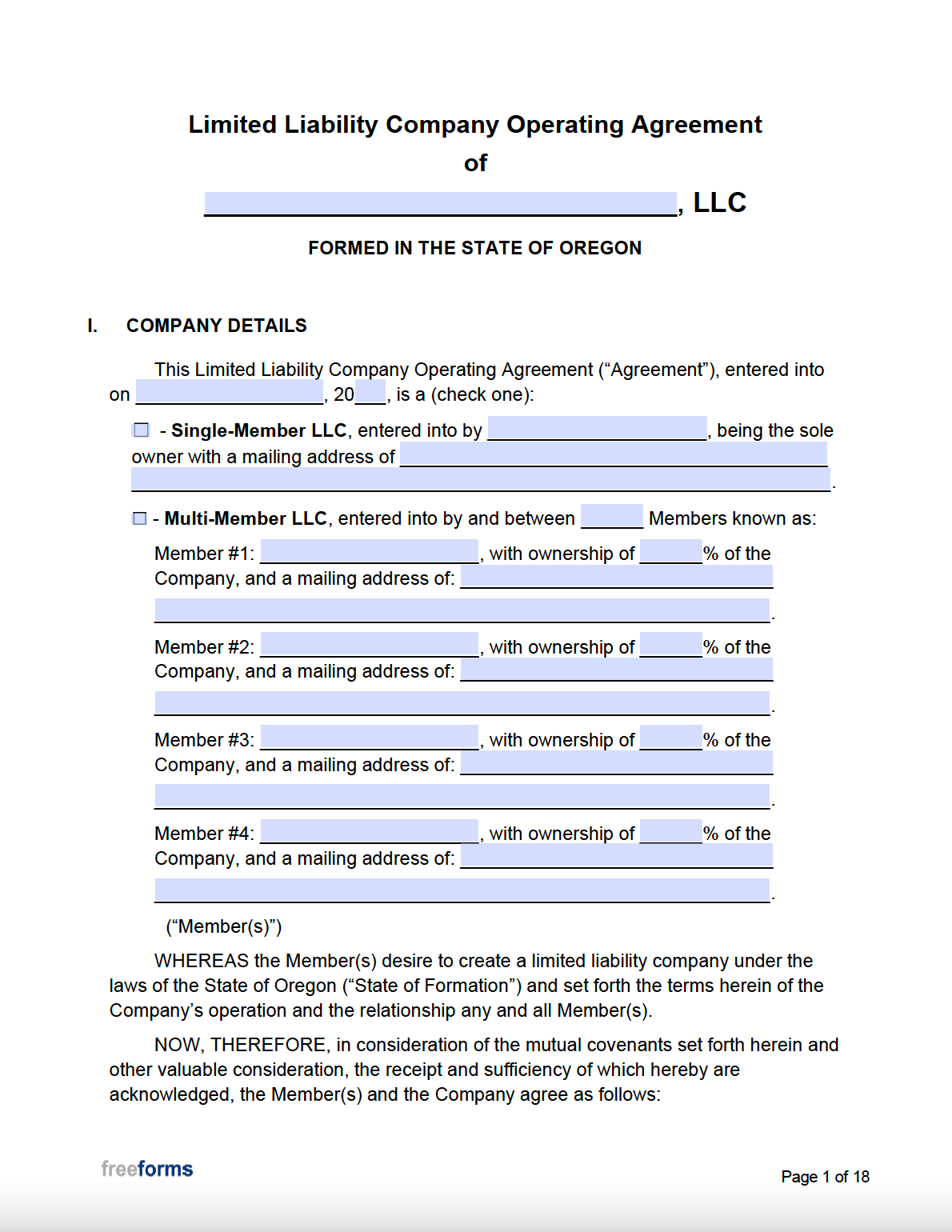
While Oregon state law does not legally require an LLC to have an operating agreement, it is the most critical internal document for your business. An operating agreement is a private legal contract that outlines the ownership structure and operating procedures of the LLC.
Why You Need an Operating Agreement
- Conflict Resolution: It defines how disputes between members are settled and the process for buying out a member’s interest.
- Protecting Limited Liability Status: Having a formal agreement helps prove that the LLC is a separate legal entity from the individual owners, which is vital if the business is ever sued.
- Overriding Default State Laws: Without an agreement, your LLC is governed by Oregon’s default statutes, which might not align with your specific business goals (e.g., how profits are distributed).
- Lending Requirements: Banks often require a signed operating agreement before they will open a business checking account or issue a commercial loan.
5. Obtain an EIN and Handle Tax Requirements
Once the Secretary of State approves your Articles of Organization, you need to address federal and state tax requirements.
Employer Identification Number (EIN)
An EIN is essentially a Social Security number for your business. You obtain this for free from the Internal Revenue Service (IRS). You will need an EIN to hire employees, open business bank accounts, and file federal tax returns. Even single-member LLCs without employees often obtain an EIN to avoid using the owner’s Social Security number on W-9 forms.
Oregon Tax Obligations
Oregon has a unique tax landscape compared to many other states.
- No Sales Tax: Oregon is one of the few states that does not impose a general sales tax.
- Corporate Activity Tax (CAT): Since 2020, Oregon has implemented the Corporate Activity Tax. This tax applies to all business entity types, including LLCs, with Oregon-sourced taxable commercial activity exceeding $1 million.
- Transit Taxes: Some areas, like the Portland (TriMet) and Eugene-Springfield (LTD) districts, require businesses to pay a self-employment or payroll tax to fund local transit.
- Personal Income Tax: LLCs are typically "pass-through" entities, meaning the profits "pass through" to the owners' personal tax returns. Oregon’s personal income tax rates are progressive.
6. Maintaining Compliance: Annual Reports
Registering your LLC is not a one-time event; you must maintain it to keep your "Active" status and liability protection. The primary requirement in Oregon is the Annual Report.
The annual report is due every year by the anniversary date of your LLC's formation. The Secretary of State usually sends a reminder notice 45 days before the deadline. The filing fee is $100. Failing to file this report can lead to the "administrative dissolution" of your company, which strips away your limited liability protection and may result in the loss of your business name to another registrant.
Frequently Asked Questions
How long does it take to get an LLC in Oregon? If you file online through the Oregon Secretary of State's "Oregon Business Registry" portal, the approval usually takes 24 to 72 business hours. Mail-in applications can take two to four weeks for processing and return.
Can I be my own registered agent in Oregon? Yes. You can serve as your own registered agent provided you are an Oregon resident, have a physical street address in the state, and are available at that address during normal business hours. You cannot use a P.O. Box for this role.
Does Oregon require a business license? There is no general "state-wide" business license in Oregon. However, many cities and counties (like Portland or Multnomah County) have their own licensing or business tax registration requirements. Additionally, specific industries—such as construction, childcare, or landscaping—require professional licenses from their respective state boards.
What is the difference between a Member-managed and Manager-managed LLC? In a member-managed LLC, all owners (members) participate in the day-to-day operations and have the authority to sign contracts. In a manager-managed LLC, the members appoint one or more "managers" to run the business. The managers can be members or third-party hires. This is common when some members are "silent investors."
Is an Operating Agreement filed with the state? No. The operating agreement is an internal document. You should keep it with your business records, but you do not submit it to the Oregon Secretary of State or any other government agency.
What happens if I miss the annual report deadline? If the report is not filed by the anniversary date, the LLC will enter "delinquent" status. If the filing is not corrected within approximately 45-60 days of the due date, the Secretary of State will administratively dissolve the LLC. Reinstating a dissolved LLC involves paying back-fees and a reinstatement fee.
Final Recommendation
The most critical step for new Oregon LLC owners in 2026 is to verify local licensing requirements immediately after state-level registration. While the Secretary of State handles the formation, local compliance in municipalities like Portland or Salem often involves separate tax registrations and zoning permits that are frequently overlooked by new entrepreneurs.
Image Gallery