Machu Picchu Helicopter Tours: Flight Regulations and Luxury Travel Alternatives in 2026
Commercial helicopter landings at the Machu Picchu citadel and overflights within the protected sanctuary airspace are strictly prohibited by the Peruvian government. To protect the structural integrity of the ruins and the local ecosy...
Commercial helicopter landings at the Machu Picchu citadel and overflights within the protected sanctuary airspace are strictly prohibited by the Peruvian government. To protect the structural integrity of the ruins and the local ecosystem, travelers in 2026 must use private helicopter transfers to nearby towns like Aguas Calientes or Santa Teresa, followed by ground transport to the site.
Contents
The Regulatory Framework of the Machu Picchu No-Fly Zone
For travelers seeking a bird's-eye view of the world’s most famous Incan citadel, the reality of Peruvian aviation law often comes as a surprise. As of 2026, the Historic Sanctuary of Machu Picchu remains a strictly enforced no-fly zone for commercial sightseeing. This regulation is not a recent development but the result of a long-standing legal battle to preserve the site's UNESCO World Heritage status.
The ban was primarily solidified following a 2010 ruling by the Peruvian Ministry of Culture and the Ministry of Environment. The core concerns were twofold: the acoustic impact on the local fauna and the structural risk to the dry-stone masonry of the ruins. The Andean Cock-of-the-rock, Peru's national bird, and the endangered Spectacled Bear inhabit the cloud forests surrounding the ruins. High-frequency noise from rotor blades was found to disrupt their breeding and nesting patterns significantly.
Furthermore, geologists and archaeologists expressed concerns that the vibrations generated by low-flying aircraft could accelerate the shifting of the stones. Unlike modern structures, Machu Picchu’s "ashlar" masonry relies on precision-cut stones that fit together without mortar. Consistent seismic or acoustic vibrations pose a long-term threat to this delicate balance. Consequently, while you can charter a helicopter in the Cusco region, your pilot must maintain a mandatory distance from the sanctuary's boundaries, ensuring that the "Lost City" remains visible only from a distance or from the ground.
Available Private Helicopter Routes in the Sacred Valley
While you cannot land at the Sun Gate, helicopter services in 2026 serve a vital role in luxury logistics and emergency medical evacuations (MEDEVAC). For high-net-worth travelers or those with extreme time constraints, private charters operate out of Cusco’s Alejandro Velasco Astete International Airport (CUZ) or private helipads located at luxury resorts in the Sacred Valley, such as those near Urubamba.
Cusco to Aguas Calientes (Machu Picchu Pueblo) Transfers
The most popular "Machu Picchu helicopter" route is the transfer from Cusco to the town of Aguas Calientes, located at the base of the mountain where the ruins sit. This flight typically takes about 25 to 30 minutes, compared to the 3.5 to 4-hour journey by train.
- Logistics: Passengers land at a designated helipad near the Vilcanota River.
- Next Steps: From the landing zone, travelers must still take the official Consettur shuttle bus, which winds up the Hiram Bingham Highway to the citadel entrance.
Cusco to Santa Teresa
Another operational route involves flying to Santa Teresa, located on the opposite side of the mountain. This route is often used by trekkers who wish to bypass the initial days of the Salkantay Trek or by those visiting the Cocalmayo hot springs. The flight provides spectacular views of the Salkantay and Willkapampa mountain ranges, offering a panoramic perspective of the Andean topography that train travelers never see.
Technical Requirements for Andean Flight Operations
Operating helicopters in the Peruvian Andes is a feat of specialized engineering and piloting. Cusco sits at an elevation of approximately 11,152 feet (3,400 meters). At this altitude, the air is significantly "thinner," meaning it is less dense. This reduction in air density impacts lift generation and engine performance.
In 2026, the primary aircraft utilized for these high-altitude missions are models like the Airbus H125 (formerly the Eurocopter AS350 B3). This "Squirrel" series helicopter is world-renowned for its "hot and high" performance, famously holding the record for landing on the summit of Mount Everest.
Key Technical Considerations for Passengers:
- Payload Limits: Due to the thin air, helicopters cannot operate at their maximum sea-level weight. A helicopter that seats six at sea level may only be cleared for four passengers in Cusco to maintain a safe power margin.
- Weight and Balance: Operators are extremely strict about passenger weights and luggage. Excess baggage is usually transported separately by ground to ensure the aircraft remains within its center-of-gravity limits.
- Weather Windows: The Andean climate is notoriously volatile. Flights are almost exclusively scheduled for the morning hours (between 6:00 AM and 11:00 AM) to avoid the afternoon winds and convective cloud buildup that characterize the rainy season (November through March).
Comparing Luxury Access: Helicopter vs. Premium Rail
For many travelers, the goal of a helicopter tour is not just speed, but a premium, exclusive experience. Because direct flights are prohibited, it is essential to compare the helicopter transfer against the high-end rail options that offer a more direct (and often more culturally immersive) route to the citadel.
| Feature | Private Helicopter Charter | Belmond Hiram Bingham Train | First Class (Inca Rail) |
|---|---|---|---|
| Duration (from Cusco) | 25–30 Minutes | ~3.5 Hours | ~3.5 Hours |
| Direct Access | No (Lands in Aguas Calientes) | No (Arrives at Station) | No (Arrives at Station) |
| Approx. Cost (2026) | $3,500 – $6,000 (Full Charter) | $500 – $650 per person | $250 – $400 per person |
| Scenery Type | Aerial peaks and glaciers | Riverside canyons and flora | Riverside canyons and flora |
| Availability | Very limited; weather dependent | Daily (except some Sundays) | Multiple daily departures |
| Best For | Extreme time saving/Privacy | Luxury dining and socialization | Comfort and observation decks |
Environmental and Ethical Considerations
The debate over aerial access to Machu Picchu is centered on the concept of sustainable tourism. With over 1.5 million annual visitors (regulated by daily caps), the environmental pressure on the site is immense. UNESCO and the International Council on Monuments and Sites (ICOMOS) have frequently monitored Machu Picchu’s status, suggesting it could be placed on the "World Heritage in Danger" list if management standards slip.
Choosing a helicopter transfer in 2026 involves acknowledging that while you are saving time, the flight paths are strictly managed to avoid the "Acoustic Footprint" over the ruins. Travelers should ensure their charter operator is fully licensed by the DGAC (Dirección General de Aeronáutica Civil) and adheres to the established flight corridors that bypass the core sanctuary area.
Practical Steps for Booking a Charter in 2026
If you decide that a helicopter transfer is the right choice for your itinerary, the booking process requires more lead time than a standard train ticket.
- Verify Operator Credentials: Ensure the company has a valid AOC (Air Operator Certificate) for passenger transport. "Helicusco" has historically been a primary provider, though several boutique luxury concierge services now manage these bookings.
- Submit Manifest Early: Due to security and weight/balance requirements, you must provide the passport details and exact weights of all passengers at least 48 to 72 hours in advance.
- Arrange Ground Coordination: Remember that the helicopter only gets you to the region. You must have a pre-arranged private vehicle or guide waiting at the helipad in Aguas Calientes to escort you to the bus station or your hotel.
- Have a Plan B: If the cloud ceiling is too low at the "Abra Málaga" pass, flights will be grounded. Always have a backup train reservation or be prepared for a 6-hour private drive via the hydroelectric route.
Frequently Asked Questions
Can I see the Machu Picchu ruins from the helicopter?
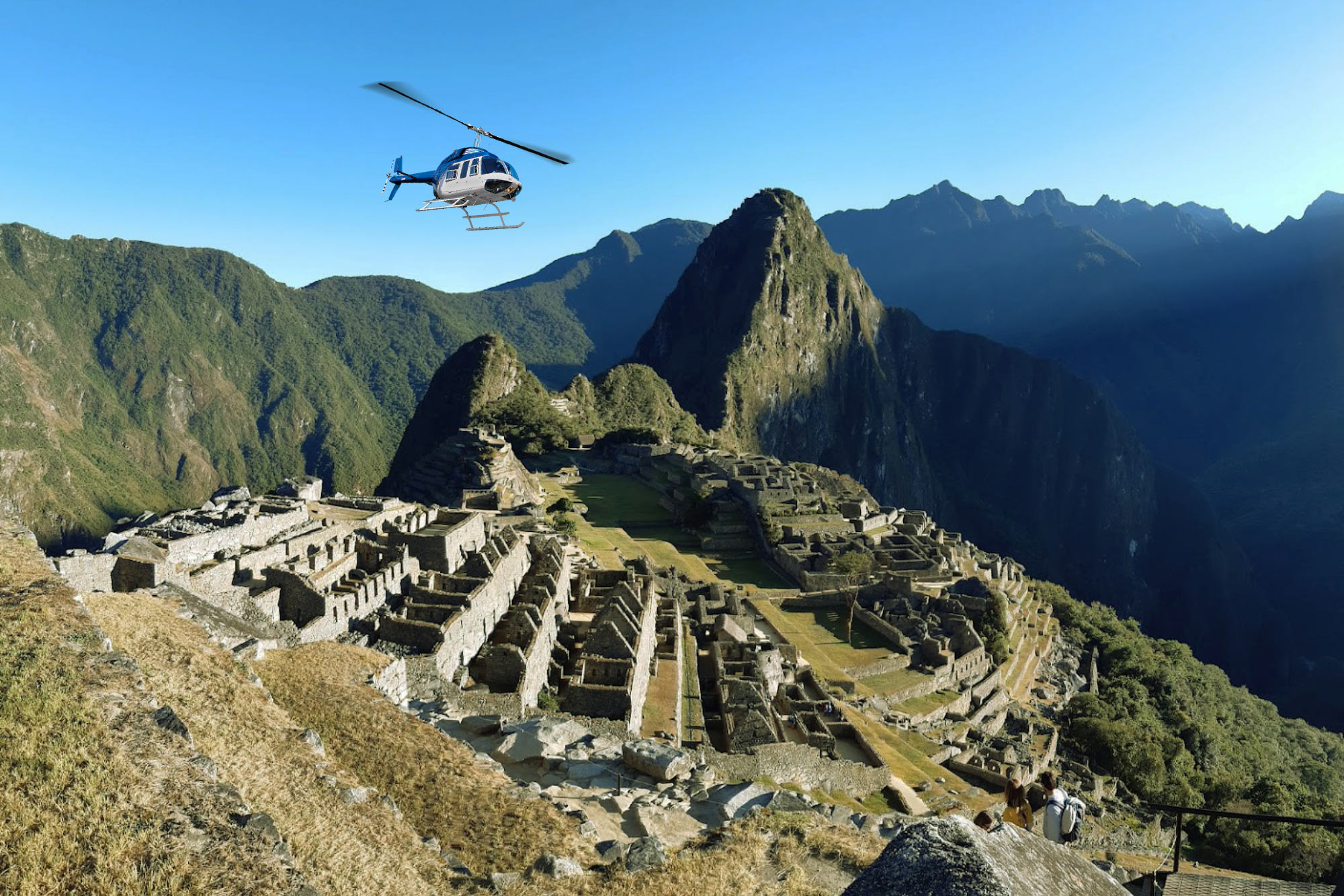
No, you generally cannot see the classic "postcard view" of the citadel from a commercial helicopter. Flight paths are designed to stay several miles away from the ruins to comply with noise regulations. You will see the surrounding peaks like Salkantay and Veronica, and the winding Vilcanota River, but the ruins themselves remain hidden by the mountain ridges from the approved flight corridors.
Is there a weight limit for passengers on these flights?
Yes. Most high-altitude charters in the Andes enforce a strict per-passenger weight limit (typically around 100kg or 220lbs) and a total payload limit for the aircraft. If your group exceeds these limits, you may be required to book an additional aircraft or send your luggage by land.
What happens in the event of a medical emergency?
Helicopters are the primary method for emergency evacuations from the Inca Trail and Machu Picchu. MEDEVAC flights are the only aircraft occasionally granted special dispensation to land closer to the site under extreme life-safety conditions, coordinated through the SERNANP (National Service of Natural Areas Protected by the State) and local medical authorities.
Why are there no "tours" listed on major booking sites?
Because of the strict regulations and high operating costs, most helicopter services are sold as private charters rather than per-seat tours. You are typically renting the entire aircraft for a specific leg of a journey rather than joining a scheduled sightseeing flight.
Can drones be flown at Machu Picchu as an alternative?
No. The use of Remotely Piloted Aircraft Systems (RPAS), or drones, is strictly prohibited within the Historic Sanctuary of Machu Picchu. Bringing a drone into the site can result in heavy fines and confiscation of the equipment by the Ministry of Culture.
Final Recommendation for 2026 Travelers
If your primary goal is to experience the height of luxury while visiting Machu Picchu, the most reliable and culturally enriched option remains the Belmond Hiram Bingham train. It provides a level of service and directness that helicopters cannot legally match within the sanctuary boundaries. However, if you are moving between Cusco and remote lodges in the Sacred Valley, or if you need to reach Aguas Calientes in record time, a private helicopter charter offers an unparalleled logistical advantage and a stunning perspective of the high Andes.
Image Gallery