Spotify Platform Growth and Impact: Analyzing Ecosystem Expansion, Royalty Economics, and the Global Audio Market
Spotify transformed from a localized European music streaming experiment into the dominant global audio platform, fundamentally altering how music is consumed, monetized, and distributed. By combining a freemium acquisition engine with...
Spotify transformed from a localized European music streaming experiment into the dominant global audio platform, fundamentally altering how music is consumed, monetized, and distributed. By combining a freemium acquisition engine with machine-learning recommendations and aggressive format diversification—spanning music, podcasts, and audiobooks—Spotify expanded its active user base while profoundly reshaping the broader creator economy.
Contents
Understanding Spotify’s growth trajectory requires examining its dual impact: providing unprecedented access to global audiences for creators while fundamentally restructuring the economic frameworks of the recording industry. From algorithmic curation to complex royalty mechanics, Spotify's evolution offers a masterclass in platform network effects, technological scaling, and enterprise digital transformation.
The Growth Engine: How Spotify Scaled the Global Audio Market
Spotify’s expansion strategy relied on solving two systemic problems in the late 2000s: digital music piracy and friction-heavy digital purchases. By offering a legitimate, instant-access alternative anchored by a robust freemium business model, Spotify created an efficient customer acquisition funnel that converted free, ad-supported listeners into paying Premium subscribers.
Freemium Funnel
- Free Ad-Supported Users
- Engagement & Personalization
- Conversion & Retention
- Premium Subscribers
Key Drivers of Platform Scale
- The Freemium Acquisition Funnel: The ad-supported tier serves as a permanent, low-friction entry point for users globally. Rather than restricting access behind strict paywalls, Spotify leverages ad revenue to offset free user licensing costs while using personalized features to convert high-intent listeners into recurring subscription revenue.
- Algorithmic Personalization & Discovery: Machine learning models—specifically collaborative filtering, natural language processing (NLP) of music blogs, and raw audio analysis using deep neural networks—power signature features like Discover Weekly, Release Radar, and AI DJ. This algorithmic hyper-personalization builds daily habituation, reducing churn and increasing lifetime value (LTV).
- Cross-Platform Ubiquity: Spotify prioritized broad hardware integration through its Spotify Connect protocol. By embedding native connectivity into smart speakers, automotive dashboards, gaming consoles, and wearable devices, Spotify decoupled its experience from specific hardware ecosystems, unlike competitors bound to specific device operating systems.
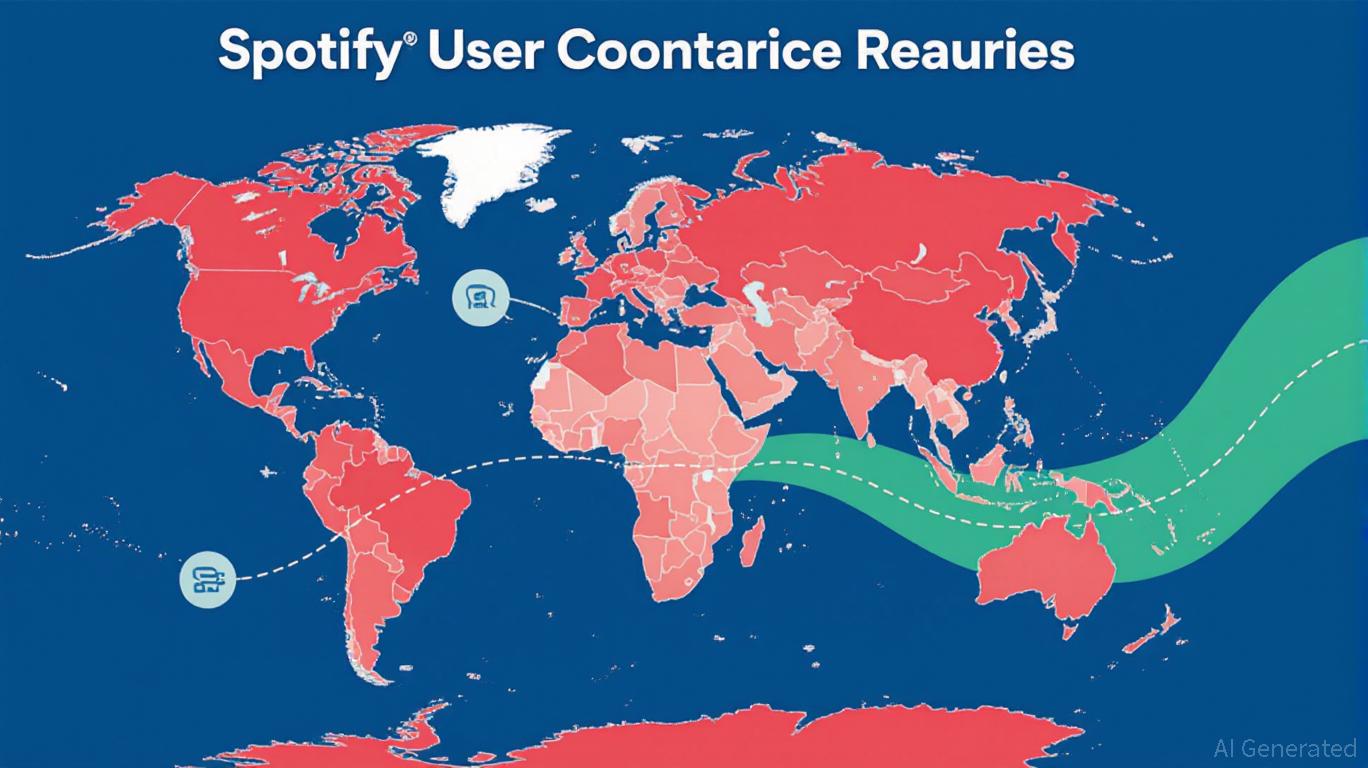
- International Expansion & Localization: Scaling into over 180 markets required tailoring payment infrastructure to local norms (e.g., prepaid cards, carrier billing) alongside localized content curation. In emerging markets across Latin America, Southeast Asia, and Sub-Saharan Africa, Spotify adapted its pricing tiers and light-data mobile applications to capture initial market share.
Economic Impact: Reshaping the Music Industry Revenue Architecture
Prior to the widespread adoption of streaming, global recorded music revenues plummeted due to file-sharing and unbundling of physical albums. Spotify’s growth reversed this decline, acting as the primary catalyst for the music industry's multi-year financial recovery. However, this growth also transformed how financial value flows through the music value chain.
Royalty Flow Model
- Gross Revenue (Subscriptions + Ads)
- Platform Pool Retention (~30%)
- Distributable Royalty Pool (~70%)
- Master Rights Pool (Record Labels / Distributors)
- Publishing Rights Pool (Publishers / Performing Org)
The Pro-Rata Royalty System Explained
Spotify does not pay artists a fixed rate per stream, contrary to widespread assumptions. Instead, it operates on a pro-rata revenue share model (often referred to as the streamshare architecture):
$$\text{Artist Royalty Share} = \left( \frac{\text{Total Streams for Artist's Tracks}}{\text{Total Platform Streams in Country}} \right) \times \text{Distributable Revenue Pool}$$
- Gross Revenue Pool: All subscription and advertising revenues collected within a specific market tier are aggregated into a common pool.
- Platform Fee: Spotify retains approximately 30% of gross revenues to cover infrastructure, platform operations, engineering, overhead, and gross margin.
- Rights Holder Distribution: Approximately 70% of gross revenues are paid out to rights holders, split between Master Rights (record labels and distributors) and Publishing Rights (songwriters and publishers).
Royalty Model Adjustments and Modernization
To combat system manipulation, artificial streaming networks, and the monetization of functional non-music noise, Spotify modernized its royalty allocation mechanics:
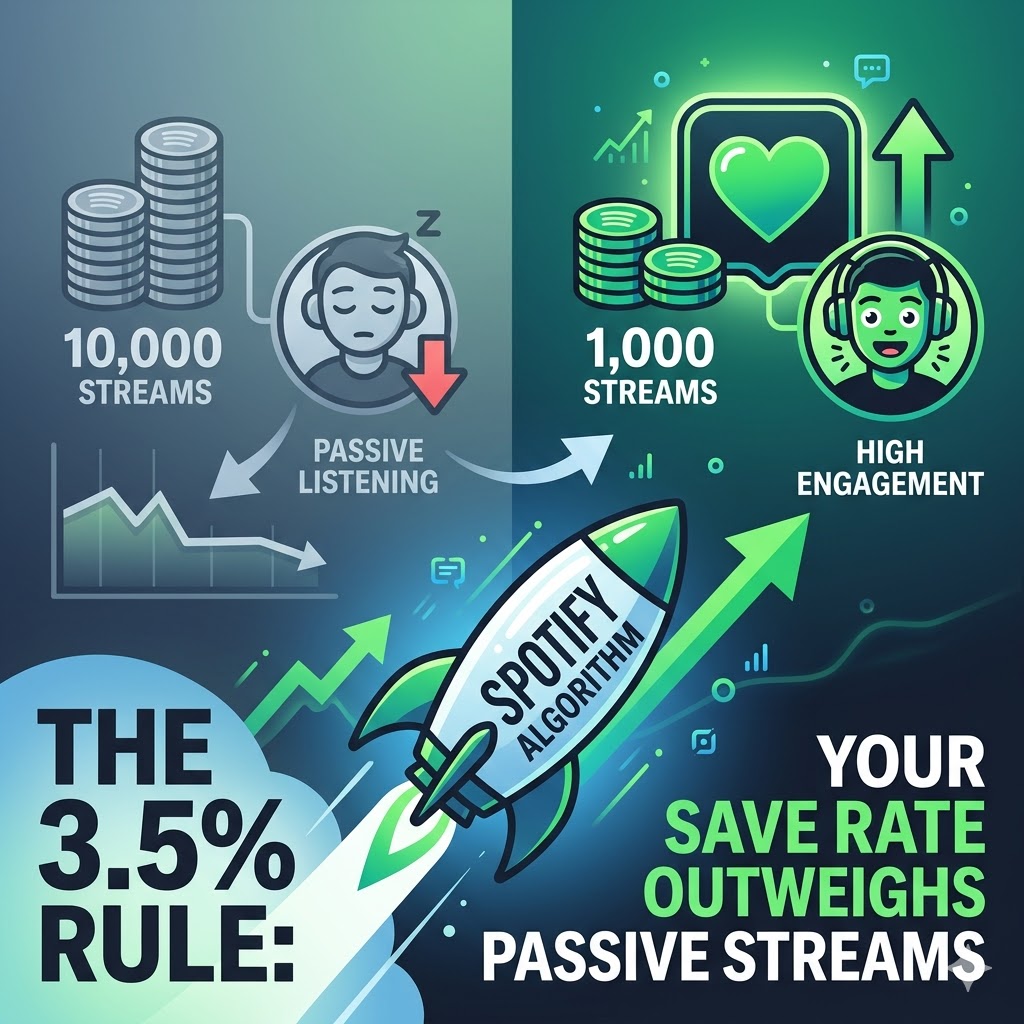
- 1,000-Stream Annual Threshold: Tracks must reach a minimum threshold of 1,000 streams within a rolling 12-month period to generate royalties from the master pool. Reallocated funds from below-threshold tracks are redistributed to active, professional creators.
- Financial Penalties for Artificial Streaming: Spotify charges distributors and record labels direct penalties when systematic, artificial bot activity is detected on their catalog uploads.
- Functional Noise Requirements: Minimum track length requirements for functional audio (white noise, rain sounds, ambient audio) were raised, and the streamshare valuation for non-music audio was adjusted to protect payouts for traditional musical works.
Ecosystem Diversification: From Music Player to Global Audio Ecosystem
To expand gross margins and increase user engagement, Spotify transformed its product architecture from a pure music streaming service into an all-in-one audio destination, entering podcasting, audiobooks, and live audio features.
Spotify Audio Ecosystem
- Content Offerings:
- Music Streaming
- Podcasts
- Audiobooks
- Spotify for Creators Ecosystem (Marquee, Discovery Mode, Analytics, Ads)
1. Podcast Integration and Original Content
Beginning in 2019, Spotify invested heavily in original intellectual property, studio acquisitions (Anchor, Gimlet, Parcast, Megaphone), and exclusive licensing agreements. This strategic expansion accomplished three primary business objectives:
- Margin Expansion: Unlike music, where royalties scale directly with stream counts, podcasting advertising revenue offers non-linear scaling potential without recurring pro-rata music licensing fees.
- User Engagement and Retention: Audio spoken-word content captures distinct time slots in a user's daily routine, such as commutes and focused work sessions, driving total platform time spent and lowering monthly subscriber churn.
- Programmatic Ad Tech: Through the Spotify Audience Network (SPAN), the platform introduced targeted dynamic ad insertion (DAI) into podcasts, enabling advertisers to target specific audience demographics across first- and third-party shows.
2. Audiobooks Expansion
Spotify introduced integrated audiobook streaming for Premium subscribers in major markets, offering a fixed monthly quota of listening hours (typically 15 hours per month) alongside traditional transactional purchase options. By integrating books directly alongside music albums and podcast feeds, Spotify expanded the total addressable market for publishers while introducing friction-free discovery to millions of listeners.
3. The Two-Sided Marketplace Architecture
Spotify developed a portfolio of enterprise tools designed for artists, record labels, and podcast creators, turning the platform into a B2B service vendor:
- Spotify for Artists: Provides detailed demographic, geographic, and real-time streaming analytics to support tour planning and marketing strategies.
- Promotional Tools (Marquee & Showcase): Sponsored recommendations that target active or lapsed listeners on the platform's home screen when new releases drop.
- Discovery Mode: A marketing mechanism allowing rights holders to accept a promotional royalty rate on algorithmic context channels (like Radio and Autoplay) in exchange for prioritized algorithmic distribution.
Comparative Matrix: Platform Metrics & Structural Impact
The table below outlines key dimensions of Spotify's operational footprint, comparing its core business lines and their structural impact on the broader audio ecosystem:
| Dimension | Music Streaming | Podcasting | Audiobooks |
|---|---|---|---|
| Primary Business Model | Subscription (Premium) & Ad-Supported (Free) | Dynamic Advertising (SPAN) & Direct Subscriptions | Included Hours Tier (Premium) + A la Carte Sales |
| Licensing Structure | Pro-Rata Streamshare (~70% payout to rights holders) | Direct IP Licensing / Dynamic Ad Revenue Share | Publisher Revenue Share per Hour / Purchase |
| Algorithmic Drivers | Collaborative Filtering, Audio Analysis, AI DJ | Conversational Topic Indexing, Host Graph | Genre Classification, Completion Velocity |
| Key Ecosystem Benefit | Global Distribution, Legacy Catalogue Monetization | Direct Monetization, Audience Ownership Tools | Instant Access to Established Premium Audiences |
| Structural Challenge | Fixed Gross Margins (~25-30%), Royalty Disputes | High Upfront Content Costs, Ad Market Volatility | High Publisher Catalog Licensing Costs |
Key Technical & Strategic Pillars Driving Spotify's Dominance
Spotify’s sustained market leadership relies on enterprise software engineering, distributed data pipelines, and deliberate strategic positioning:
Spotify Core Architecture
- Audio Ingestion & Caching
- Recommendation Engine
- Global Edge Infrastructure
- Client Application
Data Infrastructure & Vector Recommendation Engines
Spotify processes petabytes of user data daily to build real-time preference profiles. Through vector embeddings, tracks, artists, and context nodes are mapped into high-dimensional mathematical spaces. When a user streams a track, the system identifies neighboring vectors based on user listener history, ambient contextual signals (time of day, device type, user movement), and raw audio analysis (tempo, key, acousticness, valence), delivering near-instantaneous, hyper-relevant recommendations.
Scale Infrastructure and Edge Delivery
To deliver lossless, gapless audio globally with minimal latency, Spotify operates custom CDN caching strategies combined with distributed edge servers. Audio files are encoded into multiple bitrate streams (AAC, Ogg Vorbis) to optimize playback dynamically across fluctuating cellular environments without buffering interruptions.
Market Challenges and Future Trajectory
Despite its operational dominance, Spotify faces critical structural challenges across global markets:
- Margin Compression in Music: Fixed licensing arrangements with major label groups (Universal Music Group, Sony Music Entertainment, Warner Music Group) constrain Spotify's overall gross margins relative to traditional enterprise software platforms.
- Emerging Market Monetization: While user growth remains strong in regions like Latin America, India, and Southeast Asia, the Average Revenue Per User (ARPU) in these markets is significantly lower than in North America and Western Europe.
- AI-Generated Content & Fraud Management: The proliferation of synthetic, AI-generated audio uploads poses operational strains on catalog ingestion pipelines, requiring sophisticated content validation, copyright management, and stream verification technologies.
- Regulatory and Anti-Trust Scrutiny: Platform fees, app store distribution dynamics, and promotional mechanisms like Discovery Mode continue to face scrutiny from creator advocacy groups, regulatory bodies, and competing ecosystem providers.
Actionable Framework: Optimizing Ecosystem Presence
For artists, labels, podcasters, and digital media operators, navigating Spotify’s ecosystem effectively requires structured operational strategies:
Creator Execution Roadmap
- Optimization (Metadata)
- Promotional (Marquee/Pitch)
- Analytics Review (Demographics)
Strategic Checklist for Creators and Rights Holders
Optimize Release Metadata and Pitching Pipelines:
- Submit upcoming releases through Spotify for Artists at least 7 to 14 days prior to release to ensure manual review by editorial playlist teams and automatic placement on followers' Release Radar feeds.
- Add interactive elements like Canvas (8-second visual loops) and timestamped Lyrics to increase track completion rates and visual social sharing.
Leverage Audience Segmentation & Direct Retargeting:
- Monitor audience activity data via the backend dashboard to identify core geographic listening hubs before planning live touring schedules or targeted social ad campaigns.
- Combine promotional tools like Marquee and Showcase to target specific listener groups—such as super-listeners, moderate listeners, or lapsed audiences—around major release windows.
Diversify Audio Formats & Monetization Channels:
- Podcasters should activate dynamic ad insertion through SPAN while establishing direct monetization tiers via Spotify Podcast Subscriptions.
- Authors and publishers must structure audio formats to align with time-based consumption patterns, ensuring high engagement within subscriber listening allocations.
Frequently Asked Questions
How does Spotify calculate its pay-per-stream rate?
Spotify does not have a set "pay-per-stream" rate. Royalties are calculated on a pro-rata basis: all subscription and ad revenue within a specific country pool is aggregated, and Spotify pays approximately 70% of that total revenue back to rights holders based on their overall share of total platform streams in that market.
What is the difference between Master Rights and Publishing Rights on Spotify?
Master Rights apply to the specific sound recording (typically owned by record labels or independent artists), while Publishing Rights apply to the underlying musical composition and lyrics (owned by songwriters and publishers). Spotify pays out both, though the majority of rights holder distributions go toward Master Rights.
How does Spotify's Discovery Mode work for artists?
Discovery Mode allows rights holders to opt specific tracks into algorithmic channels (such as Radio and Autoplay) with prioritized exposure. In exchange for this algorithmic distribution push, the rights holder agrees to accept a lower, promotional royalty rate on the streams generated within those specific algorithmic contexts.
Why did Spotify introduce a 1,000-stream annual threshold for royalties?
Spotify introduced the 1,000-stream rolling 12-month threshold to prevent micro-payouts (which often fail to clear distributor payout minimums) from sitting unused. The combined funds from tracks generating fewer than 1,000 annual streams are aggregated and redistributed to active, professional independent and catalog creators within the royalty pool.
How does Spotify convert ad-supported free users into paid Premium subscribers?
Spotify uses personalization algorithms to create daily engagement habits among free users. As users build personalized libraries and tailored playlists, the platform leverages feature limits on the free tier (such as shuffle-only playback or limited track skips on mobile) alongside targeted in-app promotions to convert engaged free listeners into paid Premium subscribers.
Strategic Summary and Next Steps
Spotify's transformation from a local streaming service into an international audio ecosystem demonstrates the power of freemium user acquisition, programmatic recommendation engines, and dynamic platform diversification. By continuously integrating new formats—from music to podcasts and audiobooks—Spotify maintains its position as the premier gateway for digital audio consumption globally.
To maximize reach and commercial potential within the platform:
- For Independent Artists & Labels: Focus on consistent pitch timing, rich metadata integration, and strategic use of native promotional tools to build sustainable listener habituation.
- For Podcasters & Publishers: Utilize dynamic ad distribution mechanisms, optimize cross-catalog recommendation hooks, and segment content to capture both subscription and ad-supported revenue streams.
- For Industry Executives & Analysts: Track localized ARPU shifts, ongoing royalty model policy updates, and emerging catalog verification standards as Spotify scales its audio platform architecture worldwide.
Image Gallery