Effective Life Insurance Roleplay Strategies for Agent Training in 2026
Using life insurance roleplay for training is a structured simulation method where agents practice sales interactions, objection handling, and needs analysis within a controlled environment. It allows agents to refine their communicati...
Using life insurance roleplay for training is a structured simulation method where agents practice sales interactions, objection handling, and needs analysis within a controlled environment. It allows agents to refine their communication skills, master product complexities, and ensure regulatory compliance without the risk of losing a real-world prospect or violating industry standards.
Contents
The Critical Role of Roleplay in 2026 Life Insurance Sales
As of 2026, the life insurance landscape has shifted toward high-touch, consultative sales models that demand more than just basic product knowledge. While digital tools provide quotes instantly, the role of the agent has evolved into that of a financial educator and emotional guide. Life insurance is inherently a "grudge purchase"—something people know they need but often dread discussing. Roleplay serves as the bridge between theoretical knowledge found in licensing manuals and the high-stakes reality of a kitchen-table or Zoom-based closing.
The complexity of modern products, such as Indexed Universal Life (IUL) with sophisticated participation rates or hybrid Long-Term Care (LTC) riders, requires agents to explain intricate financial mechanics simply. Without consistent roleplay, agents often fall into the trap of over-explaining technical details, which can confuse and alienate clients. Roleplay forces the agent to translate "internal language" into "client-facing value," ensuring that the benefits of the death benefit and living benefits are communicated clearly and ethically.
Furthermore, roleplay in 2026 is no longer just about the "script." It is about developing emotional intelligence (EQ). Agents must learn how to navigate sensitive topics like mortality, legacy, and terminal illness. Practicing these conversations in a safe environment allows agents to find their voice and build the confidence necessary to lead clients through difficult decision-making processes.
Prerequisites for Productive Training Sessions
Before beginning a roleplay program, agency managers and trainers must establish a foundation that prevents the exercise from becoming a "check-the-box" activity. Successful roleplay requires clear objectives, realistic personas, and a culture of psychological safety.
Establishing the Training Environment
Training should occur in a space that mimics the actual sales environment. If your agents primarily sell over the phone, roleplay should be conducted via headsets without visual contact. If they use video conferencing, the roleplay should include screen-sharing of illustrations and digital brochures. This environmental fidelity helps reduce the "simulation gap," making the transition to real calls more seamless.
Developing Realistic Client Personas
Generic roleplay often fails because the "client" is either too easy or unrealistically difficult. To provide value, trainers should develop detailed personas based on current 2026 market demographics. These include:
- The Debt-Conscious Millennial Parent: Focused on term insurance to cover a mortgage and student loans, but skeptical of permanent insurance.
- The Pre-Retiree (Aged 55-65): Concerned about market volatility and looking for the "living benefits" of life insurance to supplement retirement or cover LTC.
- The Small Business Owner: Needing "Buy-Sell" agreement funding or "Key Person" insurance, often distracted and time-poor.
Defining Success Metrics
Roleplay should be evaluated against specific criteria rather than a general "good job." Managers should use a rubric that scores agents on:
- Rapport Building: Did the agent establish trust within the first three minutes?
- Discovery/Needs Analysis: Did they ask at least five open-ended questions to uncover the "why" behind the need?
- Objection Handling: Did they use a validated framework (e.g., Feel-Felt-Found) to address concerns?
- Compliance: Did they mention necessary disclosures and avoid making "guaranteed" claims about non-guaranteed elements?
Core Roleplay Scenarios for Life Insurance Agents
To build a comprehensive training program, focus on the four "critical moments" of the life insurance sales cycle. Each of these requires a different set of skills and emotional approaches.
1. The Initial Discovery and Needs Analysis
This is the most important part of the sales process. In this scenario, the agent must move beyond a "quote-and-hope" mentality. The goal of the roleplay is to practice uncovering the "emotional gap"—the difference between a family's current financial state and their state if a breadwinner were to pass away.
Agents should practice asking: "If you didn't come home yesterday, what would your spouse's morning look like financially three months from today?" Roleplaying this specific question helps agents get comfortable with the silence that often follows, allowing the prospect to process the reality of their situation.
2. Overcoming the "Market Performance" Objection
With the financial markets of 2026 remaining volatile, many prospects argue that they would be better off "buying term and investing the difference." Roleplay should focus on validating the prospect's desire for growth while highlighting the unique tax advantages and "self-completing" nature of a life insurance policy. Trainers should act as the "savvy investor" who views insurance only as a cost, forcing the agent to articulate insurance as an uncorrelated asset class within a broader portfolio.
3. Delivering a "Rated" or "Declined" Decision
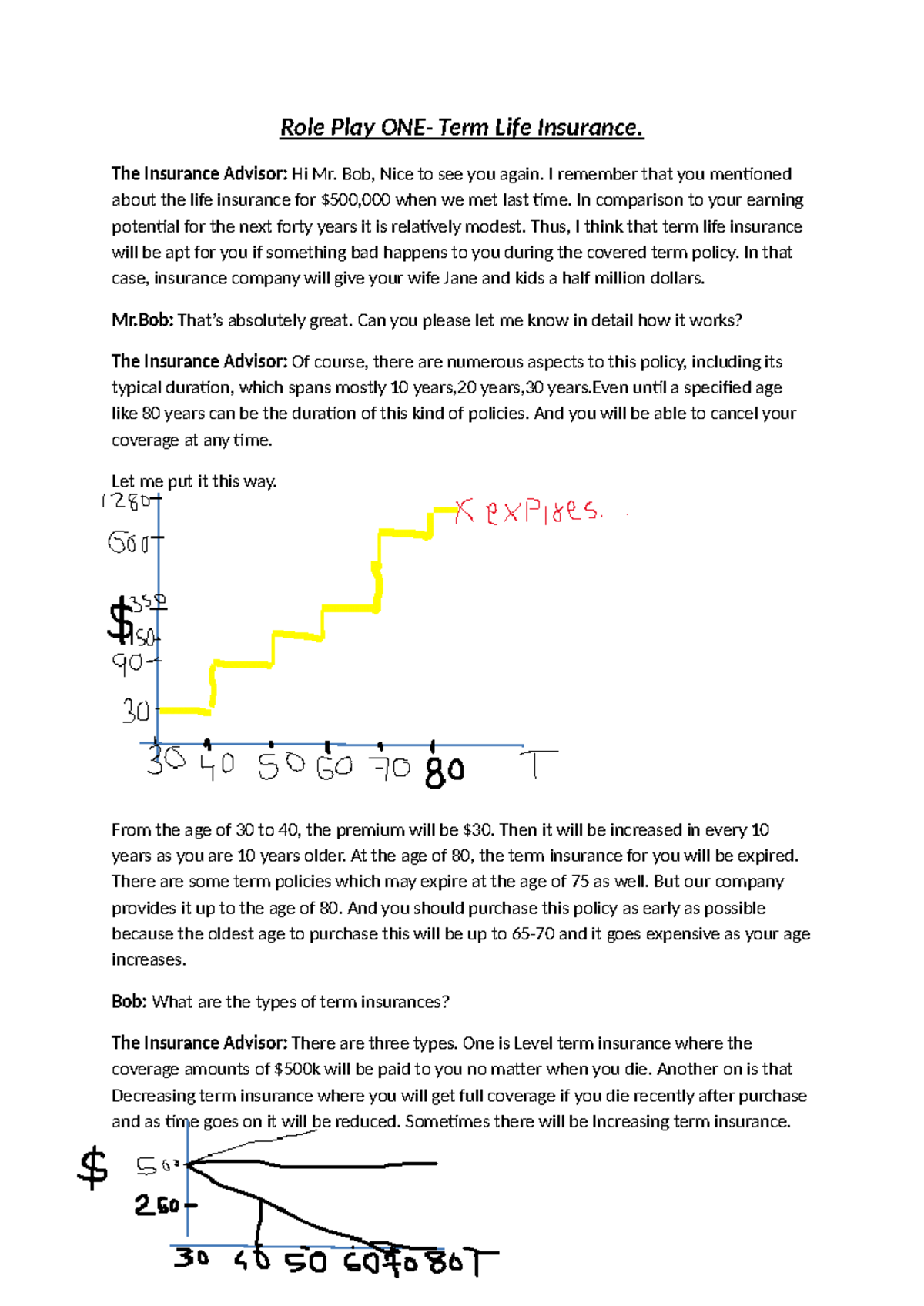
Not every policy is issued "Preferred Best." Agents often struggle to deliver a "table rating" (a higher premium due to health issues). This roleplay scenario involves the agent calling a client to explain that the premium is 30% higher than quoted. The agent must practice reframing the news: "The good news is that the insurance company is willing to take on this risk, which confirms why this coverage is so vital for you right now."
4. The Spouse "No-Show" or "Needs to Think About It"
Closing a life insurance sale often requires the buy-in of both partners. Roleplay should cover how to handle the "I need to talk to my spouse" objection. The agent should practice inviting the spouse into the conversation earlier or providing the primary contact with the tools to "sell" the concept at home without misrepresenting the costs.
Traditional vs. AI-Enhanced Roleplay in 2026
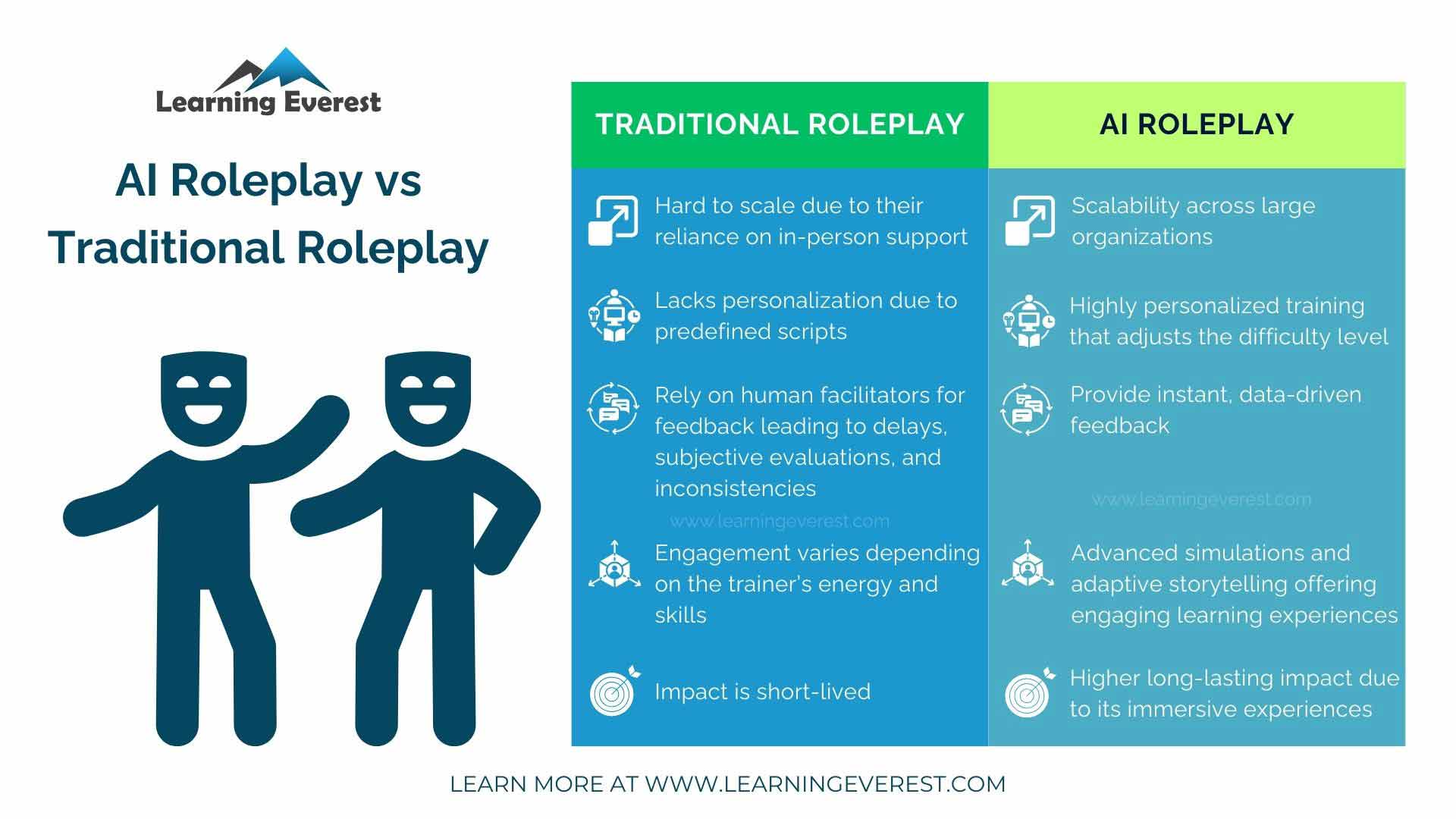
The technology used for training has advanced significantly. While peer-to-peer roleplay remains a staple, many high-performing agencies in 2026 have integrated AI-driven simulation platforms.
| Feature | Peer-to-Peer Roleplay | AI-Driven Roleplay Platforms |
|---|---|---|
| Scalability | Limited by staff availability | Unlimited; agents can practice 24/7 |
| Objectivity | Subject to personal bias of the peer | Data-driven feedback based on keywords |
| Realism | High, due to human nuance | Improving, but can feel "robotic" |
| Cost | Low (Internal time) | Moderate (Subscription-based) |
| Feedback Loop | Immediate, but often "soft" | Instant, with specific sentiment analysis |
| Compliance Check | Manual review required | Automated flagging of prohibited phrases |
Implementing the "Active Observation" Feedback Loop
The most common mistake in using life insurance roleplay for training is the lack of a structured feedback loop. Without it, agents simply reinforce bad habits.
The "Stop-Action" Technique
During the roleplay, the trainer should have the authority to yell "Freeze!" when an agent makes a critical error. This allows for an immediate correction in the moment, rather than waiting until the end of a 20-minute session when the context is lost. Once the correction is made, the agent "rewinds" 30 seconds and tries again. This builds muscle memory for the correct response.
The Sandwich Feedback Method
When providing a post-session critique, trainers should start with a specific strength (e.g., "Your tone was incredibly empathetic during the health questionnaire"), then address one or two areas for improvement ("You missed the opportunity to pivot when they mentioned their mortgage"), and end with an encouraging action item ("Next time, try using the 'Double-Close' technique we discussed").
Video and Audio Recording
In 2026, most agencies use platforms that record and transcribe roleplay sessions. Reviewing these recordings allows agents to hear their own "ums," "ahs," and "filler words." It also helps them see their body language—such as looking down when discussing premiums—which can subconsciously signal a lack of confidence to the client.
Regulatory Compliance and Ethical Considerations
In the 2026 regulatory environment, governed by bodies such as FINRA and various state insurance departments (like the NY DFS), roleplay is a vital tool for risk management. Agencies must ensure that roleplay scripts are pre-approved by compliance officers to prevent the dissemination of misleading information.
Training should explicitly include scenarios where the "correct" answer is to decline a sale if the product is not suitable for the client's needs. Roleplaying these "unsuitability" scenarios reinforces the agent's fiduciary responsibility and protects the agency from future litigation or regulatory fines. Agents should practice the phrase: "Based on what you've told me about your liquidity needs, this specific permanent policy may not be the right fit for you today; let’s look at a more flexible option."
Frequently Asked Questions
How long should a typical life insurance roleplay session last?
A focused session should last between 15 and 30 minutes. This includes 5 minutes for the briefing and persona setup, 15 minutes for the actual roleplay, and 10 minutes for a detailed debrief. Keeping sessions short prevents "training fatigue" and allows for higher frequency.
How do we handle agents who are resistant or embarrassed by roleplay?
Resistance often stems from a fear of looking incompetent in front of peers. To mitigate this, start with "manager-to-agent" roleplay in a private setting before moving to group sessions. Emphasize that the goal is "professional practice," similar to how athletes or pilots train, and maintain a "no-judgment" zone where mistakes are celebrated as learning opportunities.
Should agents memorize scripts for roleplay?
Agents should memorize the framework and key transition phrases, but not word-for-word scripts. Memorization often leads to a "robotic" delivery that lacks the empathy required for life insurance sales. The goal is to internalize the logic of the conversation so they can remain present and reactive to the client's specific needs.
How often should an agency conduct roleplay?
High-growth agencies typically mandate roleplay daily for new agents (first 90 days) and weekly for seasoned veterans. For established agents, the focus should shift to "edge cases," such as high-net-worth estate planning or complex business succession scenarios.
Can roleplay help with time-to-first-sale for new recruits?
Yes. Data from organizations like LIMRA suggests that agents who engage in intensive roleplay during their first two weeks of onboarding reach their first "closed-won" status up to 40% faster than those who only receive classroom-style instruction.
Recommendation for Next Actions
To successfully integrate roleplay into your 2026 training curriculum, start by identifying the top three objections your team currently struggles with. Create three specific personas centered around those objections and schedule 20-minute "Flash Roleplay" sessions every Tuesday and Thursday morning for the next month. Focus exclusively on the Needs Analysis phase for the first two weeks, as a strong discovery process often eliminates objections before they even arise. Document the improvement in your team's closing ratios to validate the ROI of the time invested.
Image Gallery