Workplace Net Worth: Strategies for Building and Tracking Career-Linked Wealth
Workplace net worth is the total value of financial assets accumulated through your employment—such as 401(k) balances, vested stock options, and pension values—minus any employer-linked liabilities like 401(k) loans. Tracking this met...
Workplace net worth is the total value of financial assets accumulated through your employment—such as 401(k) balances, vested stock options, and pension values—minus any employer-linked liabilities like 401(k) loans. Tracking this metric helps professionals evaluate the true long-term value of their compensation package beyond their base salary and annual bonuses.
Contents
Understanding the Scope of Workplace Net Worth
While "net worth" generally refers to the sum of all personal assets minus all debts, workplace net worth focuses specifically on the wealth generated and held within the ecosystem of your employer. In 2026, as total compensation packages become increasingly complex with tiered vesting schedules and diversified equity grants, understanding this specific subset of wealth is essential for career planning and retirement readiness.
It is important to distinguish this concept from the market valuation of a specific company or the corporate net worth of an entity. Instead, we are looking at the "career equity" an individual builds. This includes liquid assets, like cash in a 401(k), and illiquid or "paper" assets, such as unexercised stock options or restricted stock units (RSUs) that have not yet met their vesting requirements.
Primary Components of Workplace Wealth
To accurately calculate your workplace net worth, you must look beyond your monthly paycheck. Most modern compensation structures include several pillars of wealth accumulation that serve different tax and liquidity purposes.
1. Defined Contribution Plans (401(k), 403(b), and 457)
These are the most common vehicles for workplace wealth. For the 2026 tax year, the IRS has set the individual contribution limit at $24,000, with a catch-up contribution of $7,500 for those aged 50 and older. When calculating your net worth, you should account for:
- Employee Contributions: The portion of your salary you have deferred.
- Employer Matching: The "free money" provided by the company, which often requires a specific period of service to fully own (vesting).
- Profit Sharing: Non-elective contributions made by the employer regardless of your own contribution level.
2. Equity Compensation and Stock Ownership
For many in the technology and executive sectors, equity represents the largest portion of their workplace net worth. This includes:
- Restricted Stock Units (RSUs): Shares given to you that become yours once vesting conditions are met. In 2026, these are typically taxed as ordinary income upon vesting.
- Incentive Stock Options (ISOs) and Non-Qualified Stock Options (NSOs): The right to buy company stock at a set price. Their value in your net worth is the "spread"—the difference between the current market price and your strike price.
- Employee Stock Purchase Plans (ESPP): Programs allowing you to buy stock at a discount, usually up to 15%.
3. Health Savings Accounts (HSAs)
Often overlooked, an HSA is a powerful wealth-building tool if your employer offers a High Deductible Health Plan (HDHP). Because HSAs offer a triple tax advantage—tax-deductible contributions, tax-free growth, and tax-free withdrawals for medical expenses—they function as a secondary retirement account once you reach age 65.
The Critical Role of Vesting Schedules
A common mistake in calculating workplace net worth is including the full value of unvested assets. Vesting is the process by which you earn full ownership of employer-provided assets over time. If you leave your job before you are "fully vested," you forfeit the unvested portion.
There are two primary types of vesting to track:
- Cliff Vesting: You become 100% vested after a specific period (e.g., three years of service). If you leave at year two, you receive zero.
- Graded Vesting: You gain ownership in increments (e.g., 20% each year over five years).
When reporting your workplace net worth for financial planning, you should maintain two figures: your Vested Net Worth (what you could take with you today) and your Total Expected Net Worth (the projected value if you stay until all current grants vest).
How to Calculate Your Workplace Net Worth
To arrive at an accurate figure in 2026, follow this formulaic approach to separate your "portable" wealth from your "contingent" wealth.
Step 1: List Your Workplace Assets
Gather your most recent statements for:
- Vested 401(k)/403(b) balance (including employer match that has cleared the vesting period).
- Vested RSUs at current market value.
- "In-the-money" vested stock options (Market Price - Strike Price).
- Current HSA balance.
- Cash Balance Pension value (the "lump sum" value currently owed to you).
- Deferred compensation balances.
Step 2: Subtract Workplace Liabilities
While less common than assets, workplace-specific debts must be subtracted:
- 401(k) Loans: The remaining balance of any money borrowed from your retirement plan.
- Exercise Costs: The cash required to exercise vested stock options (if you intend to hold the shares).
- Tax Withholding Obligations: Estimated taxes due upon the sale or vesting of equity.
Step 3: Apply the Formula
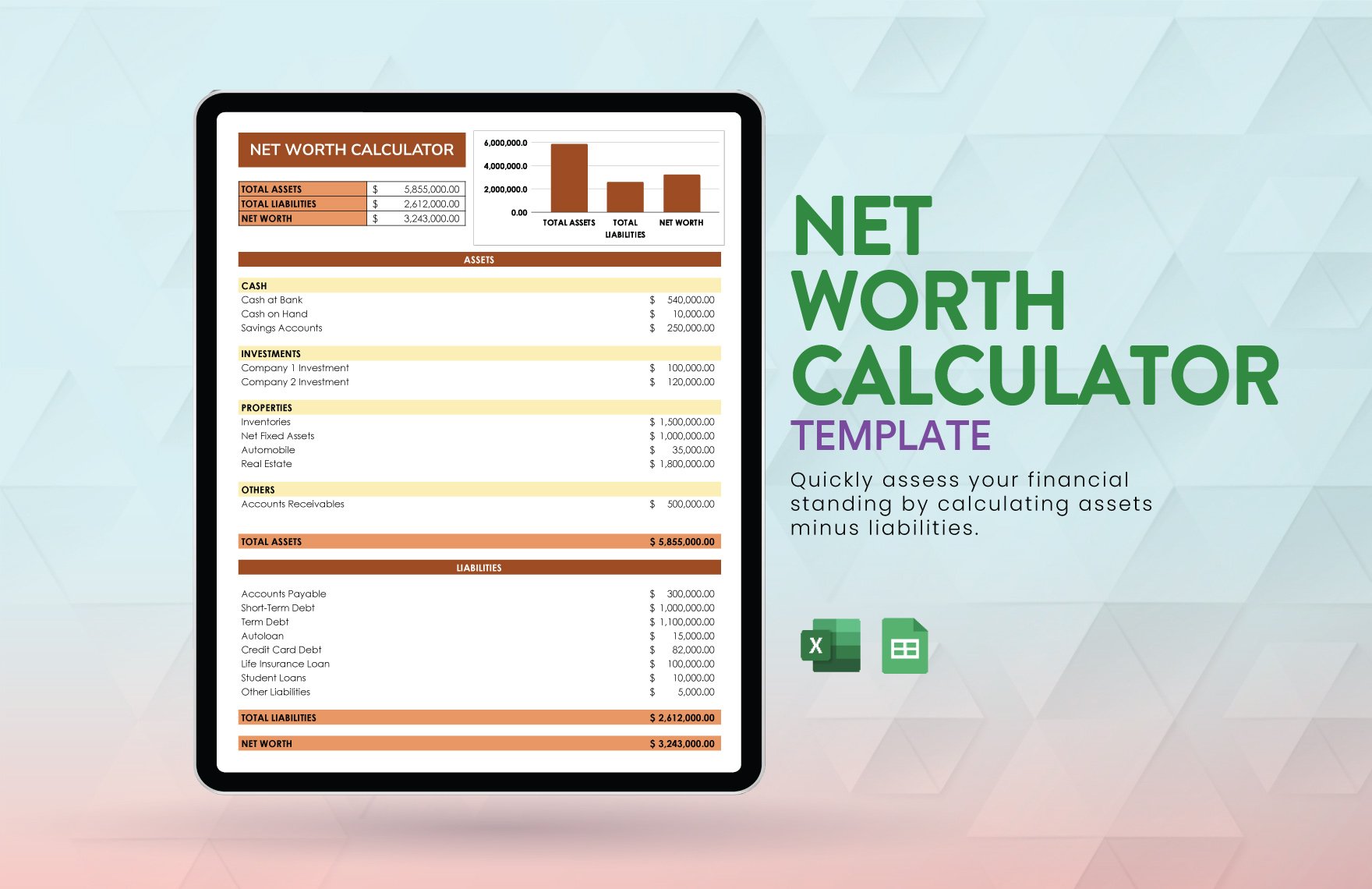
(Vested Retirement + Vested Equity + HSA Balance) - (Workplace Loans + Tax Liabilities) = Current Workplace Net Worth
Comparison of Workplace Wealth Vehicles (2026 Data)
| Vehicle | 2026 Contribution Limit | Ownership (Vesting) | Tax Treatment |
|---|---|---|---|
| 401(k) / 403(b) | $24,000 (+$7,500 catch-up) | Often 3-5 year graded | Tax-deferred or Roth |
| HSA (Individual) | $4,300 (Projected) | Immediate | Triple Tax Advantaged |
| RSUs | N/A (Company Grant) | Usually 4-year cliff/graded | Ordinary income at vest |
| ESPP | $25,000 (Fair Market Value) | Immediate (usually) | Capital gains if held |
| Deferred Comp | Varies by plan | Varies (often 5-10 years) | Taxed at withdrawal |
Optimization Strategies for 2026
To maximize your workplace net worth, you must move beyond passive participation. Advanced earners use specific strategies to shield their wealth from unnecessary taxation and market volatility.
Utilizing the "Mega Backdoor Roth"
If your employer-sponsored 401(k) plan allows for after-tax contributions and in-plan conversions, you can significantly exceed the $24,000 limit. In 2026, the total limit for all contributions (employee + employer) is approximately $70,000. By contributing after-tax dollars and immediately converting them to a Roth 401(k), you can build a massive tax-free bucket within your workplace net worth.
Managing Concentration Risk
A common pitfall is having too much of your net worth tied to a single company's stock. If your 401(k) is heavy in company shares and you also have unvested RSUs, a downturn in your employer's sector could jeopardize both your income and your savings. Financial advisors generally recommend that no more than 10% to 15% of your total net worth be tied to a single stock, including your employer.
The NUA Strategy for Company Stock
For those with significant company stock in a 401(k), the Net Unrealized Appreciation (NUA) strategy is a vital technical consideration. If you leave the company, you may be able to transfer the stock to a brokerage account rather than a traditional IRA. You pay ordinary income tax only on the original cost basis, while the growth is taxed at the lower long-term capital gains rate when sold. This can result in significant tax savings but requires strict adherence to IRS distribution rules.
Troubleshooting Job Transitions
Your workplace net worth is most vulnerable during a job change. To protect your assets:
- Verify Vesting Dates: Leaving even one week before a vesting anniversary can cost thousands in forfeited equity or employer 401(k) matches.
- Understand Option Exercise Windows: Most companies require you to exercise NSOs within 90 days of departure. Failure to do so results in the total loss of the asset.
- HSA Portability: Unlike 401(k) matches, HSA contributions (both yours and your employer's) are 100% yours from day one. You can leave the funds in the existing account or roll them over to a new provider.
Frequently Asked Questions
Does my workplace net worth include my life insurance policy?
Generally, no. Most employer-provided life insurance is "term" insurance that has no cash value. It provides a death benefit but does not contribute to your net worth unless it is a "whole life" or "universal life" policy with a reachable cash surrender value.
How do I value a traditional pension in my net worth?
Traditional pensions (Defined Benefit plans) are harder to value. You should use the Present Value or the Lump Sum Equivalent provided on your annual pension statement. This represents what the future stream of payments is worth in today's dollars. The Department of Labor provides resources for understanding how these valuations are calculated.
Should I include unvested RSUs in my financial plan?
You should track them, but do not rely on them for immediate needs. Label them as "Contingent Assets." Because their value fluctuates with the stock market and depends on your continued employment, they are not a "sure thing" until the vest date passes.
What happens to my 401(k) loan if I leave my job?
In 2026, most plans require you to repay the full balance of a 401(k) loan by the tax filing deadline (including extensions) of the year you leave. If you cannot repay it, the IRS treats the outstanding balance as a taxable distribution, which may also incur a 10% early withdrawal penalty if you are under 59½.
Is my workplace net worth taxable?
Yes, a significant portion of workplace wealth is often "pre-tax." When calculating your "True Net Worth," you should mentally discount your traditional 401(k) and RSU balances by your expected tax rate (e.g., 20-30%) to understand how much spendable cash you actually possess.
Practical Next Action
To take control of your workplace net worth, perform a Vesting Audit this week. Log into your benefits portal and map out your vesting dates for the next 24 months. Compare these dates against your career goals to ensure you aren't leaving significant money on the table by timing a career move poorly. If your workplace net worth is heavily concentrated in company stock, consult with a financial advisor about a diversification strategy that utilizes Rule 10b5-1 trading plans to sell shares systematically and safely.
Image Gallery