Jeff Sessions Biography and Career Overview: A Comprehensive Political History
Jeff Sessions is a prominent American politician and lawyer who served as the 84th U.S. Attorney General (2017–2018) and a U.S. Senator from Alabama for twenty years. Known for his staunchly conservative views on immigration, trade, an...
Jeff Sessions is a prominent American politician and lawyer who served as the 84th U.S. Attorney General (2017–2018) and a U.S. Senator from Alabama for twenty years. Known for his staunchly conservative views on immigration, trade, and law enforcement, his career spanned four decades of significant federal and state service.
Contents
Early Life, Education, and Legal Roots
Jefferson Beauregard Sessions III was born on December 24, 1946, in Selma, Alabama, and raised in the small town of Hybart. His father, Jefferson Beauregard Sessions Jr., owned a general store and a farm equipment dealership. Growing up in the rural South during the mid-20th century deeply influenced Sessions’ traditionalist worldviews and his eventual entry into the legal profession.
Sessions attended Huntingdon College in Montgomery, where he was active in the Young Republicans and served as student body president. After graduating in 1969, he pursued a Juris Doctor at the University of Alabama School of Law, completing his degree in 1973. His early legal career was marked by a brief period in private practice and service in the U.S. Army Reserve, where he reached the rank of captain.
In 1981, President Ronald Reagan appointed Sessions as the U.S. Attorney for the Southern District of Alabama. This role established his reputation as a "law and order" prosecutor, a label that would define his political identity for the next forty years. During this tenure, he focused on drug crimes, public corruption, and white-collar crime, gaining the attention of national Republican leaders.
The 1986 Judicial Nomination Controversy
A pivotal moment in Sessions’ biography occurred in 1986 when President Reagan nominated him for a seat on the U.S. District Court for the Southern District of Alabama. What seemed like a standard promotion turned into a national controversy during his confirmation hearings before the Senate Judiciary Committee.
During the hearings, former colleagues testified that Sessions had made racially insensitive remarks. These included allegations that he had called a Black subordinate "boy," labeled the NAACP and the ACLU "un-American," and joked that he thought the Ku Klux Klan was "okay until I found out they smoked pot." Sessions denied the most serious allegations, characterizing his comments as misinterpreted or made in jest, but the damage was done.
The Senate Judiciary Committee, then controlled by Republicans but featuring influential Democrats like Joe Biden and Ted Kennedy, voted 10–8 against recommending his nomination. Sessions became only the second person in 50 years to be rejected for a federal judgeship by the committee. While this was a major professional setback, it served as a catalyst for his move into elective politics, fueling a narrative of being a victim of "liberal character assassination" among his supporters in Alabama.
Alabama Attorney General and Ascent to the U.S. Senate
Following the judicial nomination failure, Sessions returned to private practice before successfully running for Attorney General of Alabama in 1994. His time as the state’s top prosecutor was characterized by a focus on the death penalty and defending the state's education funding formula.
In 1996, Sessions ran for the U.S. Senate seat vacated by retiring Democrat Howell Heflin. He won the election handily, marking the beginning of a twenty-year tenure in Washington, D.C. As a Senator, Sessions became one of the chamber’s most reliably conservative members. He served on several high-profile committees, including:
- The Judiciary Committee: Where he eventually became the Ranking Member.
- The Armed Services Committee: Focusing on military readiness and Alabama’s defense industry.
- The Budget Committee: Where he advocated for significant spending cuts and fiscal restraint.
Sessions was widely regarded as the "intellectual godfather" of the modern immigration restrictionist movement. He consistently opposed paths to citizenship for undocumented immigrants and was instrumental in defeating the bipartisan "Gang of Eight" immigration reform bill in 2013. His emphasis on "national interest" immigration policy and skepticism toward multilateral trade deals like the Trans-Pacific Partnership (TPP) prefigured the "America First" platform that would later dominate the Republican Party.
U.S. Attorney General and the Trump Administration
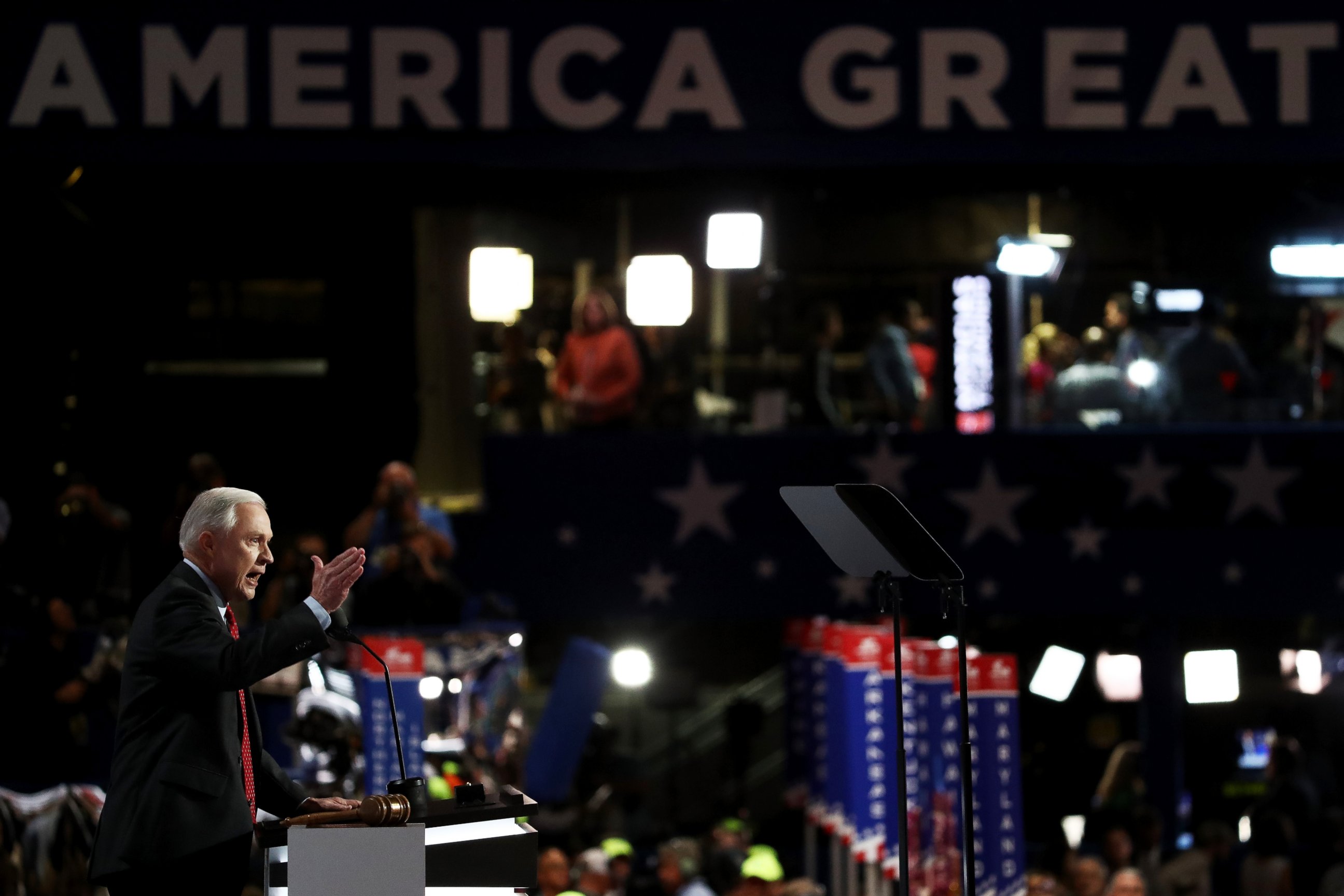
In early 2016, Jeff Sessions became the first sitting U.S. Senator to endorse Donald Trump for president. This endorsement provided crucial institutional legitimacy to Trump's outsider campaign. Following Trump’s victory, Sessions was nominated to serve as the 84th U.S. Attorney General.
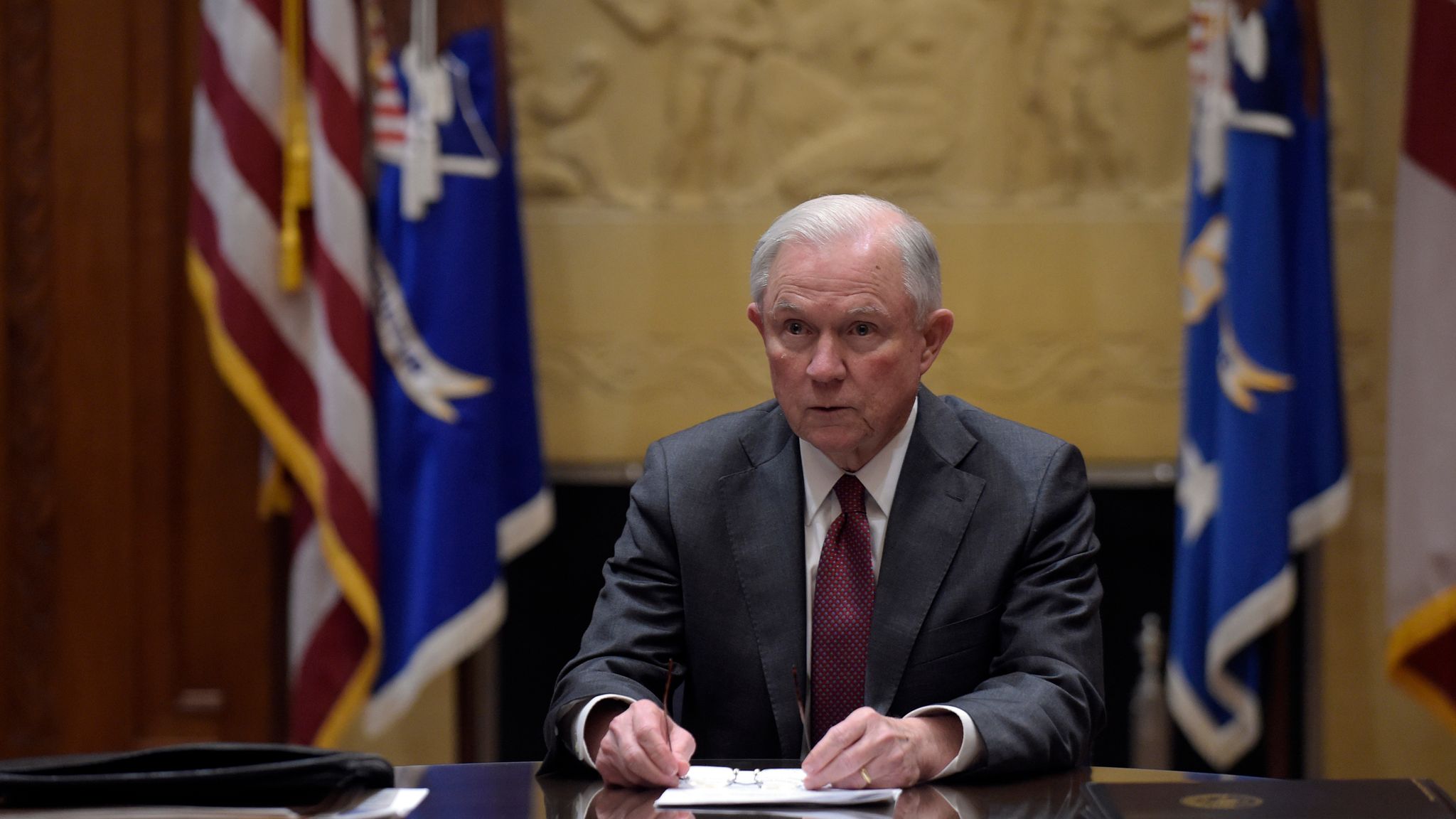
His confirmation in early 2017 was contentious, echoing the debates of 1986, but he was ultimately confirmed by a 52–47 vote. As Attorney General, Sessions moved quickly to implement a "tough on crime" agenda. Key initiatives included:
- Immigration Enforcement: He implemented the "Zero Tolerance" policy, which led to the prosecution of all adults crossing the border illegally and resulted in the controversial separation of families.
- Drug Policy: He rescinded the Cole Memo, an Obama-era guideline that had discouraged federal prosecutors from pursuing marijuana cases in states where the drug was legal.
- Civil Asset Forfeiture: He expanded the use of federal asset forfeiture, allowing law enforcement to seize property suspected of being linked to crimes.
- Criminal Sentencing: He directed federal prosecutors to pursue the most serious, readily provable charges in criminal cases, reversing policies intended to reduce mandatory minimum sentences.
The Recusal and Tension with President Trump
The defining conflict of Sessions’ tenure as Attorney General was his decision in March 2017 to recuse himself from any investigations into the 2016 presidential campaign, including the Russia investigation. This decision was based on Department of Justice (DOJ) regulations regarding conflicts of interest, as Sessions had been a surrogate for the Trump campaign.
This recusal infuriated President Trump, who believed the Attorney General’s primary role was to protect the president. The recusal paved the way for the appointment of Special Counsel Robert Mueller. For the remainder of his term, Sessions was frequently the target of public criticism from the President via social media. Despite the friction, Sessions remained in his post for nearly two years, focusing on his policy priorities until he was asked to resign the day after the 2018 midterm elections.
Career Milestones and Summary
The following table outlines the key phases of Jeff Sessions' public service:
| Period | Position | Primary Focus/Impact |
|---|---|---|
| 1981–1993 | U.S. Attorney (S. District of AL) | Prosecuted drug crimes and public corruption. |
| 1986 | Federal Judicial Nominee | Nomination rejected by Senate Judiciary Committee. |
| 1995–1997 | Alabama Attorney General | Defended state laws and death penalty cases. |
| 1997–2017 | U.S. Senator (Alabama) | Leader on immigration restriction and fiscal conservatism. |
| 2017–2018 | U.S. Attorney General | Implemented "Zero Tolerance" and prioritized federal law enforcement. |
| 2020 | Senate Candidate | Attempted a political comeback; lost in the primary runoff. |
Post-DOJ Career and the 2020 Election
After leaving the Department of Justice, Sessions returned to Alabama. In late 2019, he announced his intention to run for his old Senate seat, which was then held by Democrat Doug Jones. However, the political landscape had shifted. Despite his long history of service, Sessions faced a primary challenge from former Auburn University football coach Tommy Tuberville.
President Trump actively campaigned against Sessions, endorsing Tuberville and frequently reminding voters of Sessions' recusal from the Russia probe. In the July 2020 Republican primary runoff, Sessions lost to Tuberville, receiving roughly 40% of the vote. This defeat effectively marked the end of his career in elective office.
As of 2026, Jeff Sessions remains a retired figure in Alabama, occasionally appearing as a commentator on legal and political issues. His legacy is viewed through two distinct lenses: supporters see him as a principled constitutionalist who remained loyal to the rule of law despite immense political pressure, while critics point to his hardline immigration policies and the 1986 allegations as defining his career.
Frequently Asked Questions
Why did Jeff Sessions recuse himself from the Russia investigation?
Sessions recused himself in March 2017 after it was revealed that he had two previously undisclosed meetings with the Russian ambassador during the 2016 campaign. Under DOJ regulations, an official must recuse themselves from an investigation if they participated in the campaign under scrutiny. This decision was intended to maintain the impartial integrity of the Department of Justice.
What was the "Sessions Doctrine" regarding immigration?
The "Sessions Doctrine" refers to his long-standing belief that immigration policy should serve the interests of American citizens and workers first. This involved reducing legal immigration levels, increasing border security, and ending policies he viewed as "amnesty." He argued that high levels of low-skilled immigration depressed wages for native-born Americans.
Did Jeff Sessions serve in the military?
Yes, Jeff Sessions served in the United States Army Reserve from 1973 to 1986. He attained the rank of Captain. His military background often informed his legislative work on the Senate Armed Services Committee and his support for high levels of defense spending.
What happened to Jeff Sessions after 2020?
After losing the 2020 Republican primary for the U.S. Senate in Alabama, Sessions largely stepped back from the national political spotlight. He has spent time in his home state of Alabama, focusing on family and private life, though he occasionally provides analysis on Department of Justice matters and conservative judicial appointments.
How did Jeff Sessions influence the 2016 Trump campaign?
Sessions was the first U.S. Senator to endorse Donald Trump, which was a watershed moment for the campaign. He served as a senior advisor on policy, particularly in shaping Trump's positions on trade and immigration. His "America First" philosophy provided the intellectual framework for many of the campaign's most successful populist themes.
Practical Recommendation for Researchers
For those conducting in-depth research into Jeff Sessions’ legal philosophy or legislative record, the most reliable sources are the U.S. Department of Justice Archives and the Congressional Record. These repositories contain his official legal memos as Attorney General and his floor speeches and voting record from his twenty years in the Senate. When analyzing his career, it is essential to distinguish between his administrative actions at the DOJ and his legislative advocacy in the Senate to understand his full impact on American law and policy.
Image Gallery