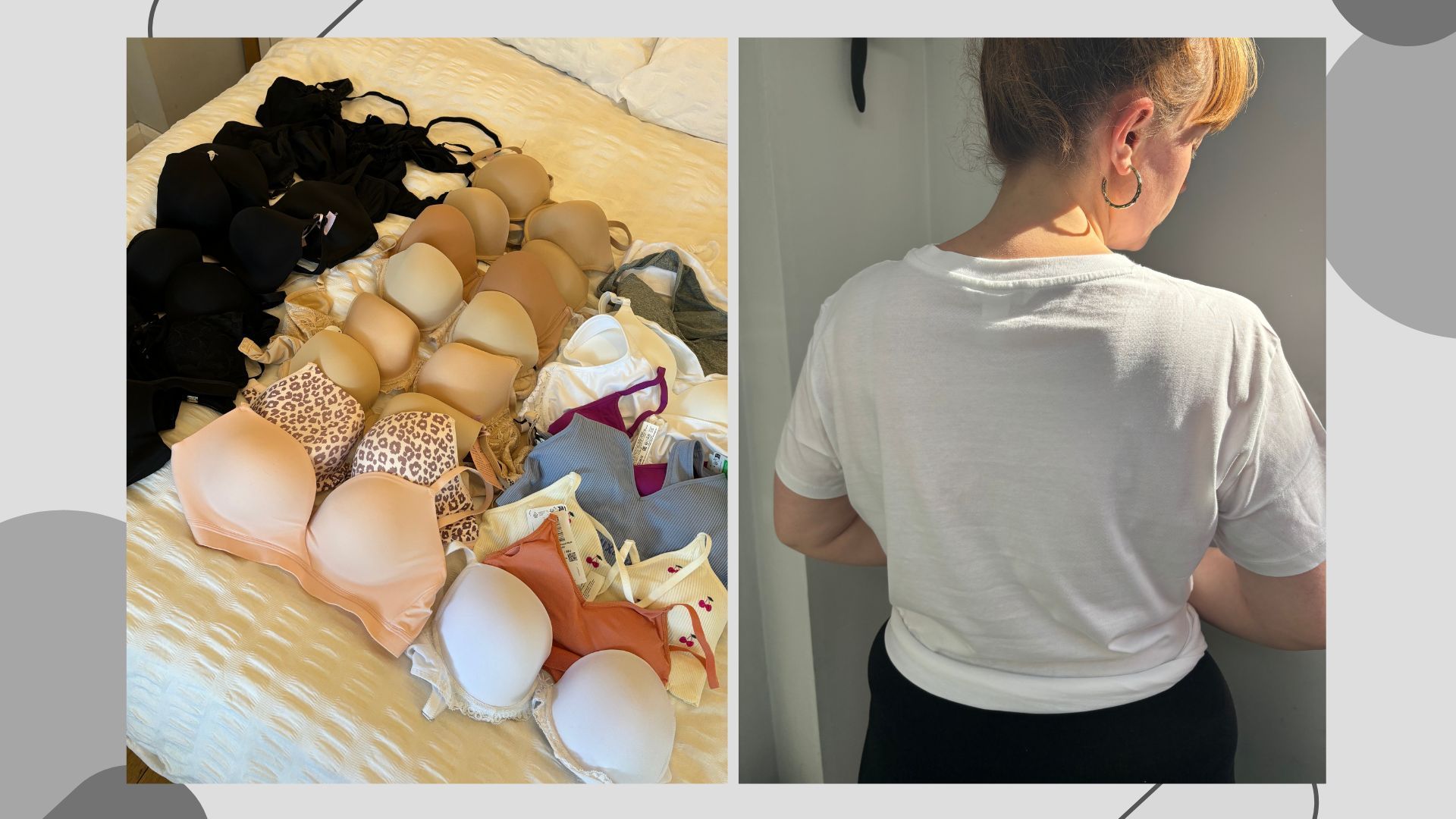
The Best Bra for Underarm Fat That Actually Works: Fit, Features, and Top Styles
The best bra for underarm fat combines extra-tall side wings, a broad smoothing band, flexible side boning or slings, and full-coverage cups. Rather than squeezing tissue, an effective side-smoothing bra gently encapsulates and redistr...
The best bra for underarm fat combines extra-tall side wings, a broad smoothing band, flexible side boning or slings, and full-coverage cups. Rather than squeezing tissue, an effective side-smoothing bra gently encapsulates and redistributes both axillary breast tissue and natural subcutaneous fat into the cup, eliminating bulges and band roll-up.
Contents
Understanding What Causes Underarm Fat and Bra Bulge
Underarm bulge—often referred to casually as "armpit fat"—is one of the most frequent fit complaints among bra wearers of all body shapes and sizes. Addressing it successfully requires understanding that this tissue is rarely just isolated weight gain. In the vast majority of cases, bra bulge stems from a combination of human anatomy and poor garment engineering.
- Anatomy & Tissue
- Subcutaneous Adipose
- Tail of Spence (Axillary Breast Tissue)
- Garment Factors
- Narrow Side Wings
- Cups Too Small (Tissue Displacement)
Axillary Breast Tissue vs. Adipose Tissue
The breast does not stop at the front of the ribcage. A normal anatomical structure called the Tail of Spence (or the axillary process) extends breast glandular tissue upward and outward into the underarm hollow. When you wear a bra with shallow cups or narrow side bands, this glandular tissue has nowhere to go. It gets pushed sideways and spills over the top of the band.
Alongside glandular tissue sits standard subcutaneous adipose tissue (fat). Because the skin and fascia beneath the armpit are naturally pliable to allow full range of motion for your shoulders and arms, any concentrated elastic pressure will easily indent the skin and displace tissue upward or backward.
Why Standard Bras Make the Problem Worse
Most everyday bras feature low-cut side wings designed to hide beneath low-slung armholes of clothing. However, a narrow side band acts like a rubber band stretched across soft tissue: it exerts high localized pressure, cutting into the skin and forcing the tissue immediately above and below it to pouch outward.
Furthermore, if the bra cup is even one size too small or too shallow, the underwire or cup edge sits directly on top of breast tissue instead of fully encircling it. This displacement forces breast volume out toward the armpit, exaggerating the appearance of side fat.
Core Engineering Features That Actually Smooth Underarm Spillage
Finding a bra that resolves underarm spillage does not mean buying an uncomfortable, constricting compression garment. True smoothing performance relies on structural garment design that distributes tension evenly across a wider surface area.
1. High-Cut Side Wings and Extended Armscyes
The side wing is the section of the bra band connecting the outer cup edge to the back closure. To smooth underarm spillage, this wing must be cut significantly taller, extending higher up under the armscye (the armhole). By covering more vertical surface area, the band creates a continuous, flat plane that holds tissue secure against the ribcage without digging into the crease of the armpit.
2. Side Slings and Flexible Boning
High-performance smoothing bras often incorporate internal structural reinforcements:
- Side Support Slings: Crescent-shaped panels made of non-stretch fabric or powernet integrated into the outer edge of each cup. These slings lift the breasts upward and inward toward the sternum, actively pulling migrated side tissue forward.
- Flexible Side Stays (Boning): Lightweight, vertical plastic or silicone stays sewn into the side seams. These prevent the tall fabric band from folding, creasing, or rolling down throughout the day when you twist or sit.
3. Broad, Leotard-Style Backs (U-Backs)
A traditional straight-back band concentrates tension at the clasp, which causes the band to pull downward and the sides to bow outward. A leotard back (or U-back) sweeps up smoothly from the underarm into wide-set straps, forming a curved "U" shape across the shoulder blades. This architecture stabilizes the entire chassis, preventing the band from riding up and creating back rolls or underarm pouches.
4. High-Gauge Powernet and Free-Cut Edges
Fabric selection is critical. Traditional bras finish band edges with folded-over elastic strips secured by zigzag stitching. This concentrated elastic edge is the primary culprit behind visible indentations under clothes. The most effective smoothing bras utilize:
- High-gauge powernet: A dense, breathable mesh that provides firm, multidirectional recovery without bulk.
- Bonded or laser-cut (free-cut) edges: Heat-sealed edges without sewn-in elastic bands, allowing the fabric to lay entirely flat against the skin under tight knitwear.
The Top Bra Styles and Structural Silhouettes That Deliver
Different body types, bust sizes, and wardrobe needs require different silhouette solutions. Below are the proven garment archetypes that successfully manage side tissue.
1. High-Wing Full-Coverage T-Shirt Bras
These are the everyday workhorses of side smoothing. Built with molded foam cups and tall, double-layered microfiber sides, they provide modesty while smoothing the transition from breast to armpit.
- How They Work: Molded contour cups provide an uninterrupted, round silhouette, while seamless side wings extend high under the arm to prevent tissue overhang.
- Best For: Daily wear under fitted cotton T-shirts, knits, and light blouses.
- Key Example Models: Warner's No Side Effects series, Bali Passion for Comfort Underwire, and Soma Vanishing Back Full Coverage.
2. Side-Support Underwire Balconies
For fuller busts (D-cup and above), molded foam often adds unnecessary bulk and fails to pull side tissue forward. Unlined or lightly lined multi-part cut-and-sewn bras with side slings offer far superior projection and containment.
- How They Work: Three- or four-piece stitched cups allow designers to place a firm, non-elastic panel along the outer cup margin. This pulls lateral tissue out from under the arms and projects it forward toward the center of the chest.
- Best For: Large cup sizes (DD through K), soft breast tissue, and individuals experiencing true lateral tissue migration.
- Key Example Models: Elomi Morgan Side Support Bra, Fantasie Fusion Side Support, and Wacoal Back Appeal Underwire.
3. Engineered Wireless Smoothing Bralettes
Historically, wireless bras lacked the tensile integrity to smooth side tissue without compressing the chest into a single mass. Modern high-tech wireless bras use targeted heat-bonding and zoning to lift without rigid underwires.
- How They Work: Broad underband cradles and high-cut microfiber arm openings cradle the torso, using compression zoning to anchor the garment against the ribs.
- Best For: Working from home, travel, sensory sensitivity, and post-surgical comfort.
- Key Example Models: Knix WingWoman Contour Bra, Spanx Bra-llelujah! Wireless Bra, and True & Co. True Body Lift V-Neck.
4. High-Armscye Minimizers
Minimizer bras are engineered to redistribute breast volume evenly across the chest wall rather than projecting it outward. However, standard minimizers can inadvertently push tissue into the armpits if the cups are too wide.
- How They Work: Premium minimizers feature rigid side barriers and high armscye construction, reducing overall breast projection by up to an inch while keeping tissue firmly centered on the chest wall.
- Best For: Preventing button-down shirts from gaping and reducing the overall bust profile under tailored clothing.
- Key Example Models: Chantelle C Magnifique Seamless Minimizer, Lilyette by Bali Keyhole Minimizer.
Feature Comparison: Best Bra Types for Underarm Smoothing
| Bra Silhouette / Style | Side Wing Height | Primary Mechanism | Wire Type | Best Bust Profile | Top Consideration |
|---|---|---|---|---|---|
| High-Wing T-Shirt Bra | Extra Tall (3.5"–5") | Seamless microfiber wing with bonded elastic | Flexible Underwire or Wire-Free | Shallow to Average (A–DD) | Completely invisible under tight jersey and T-shirts |
| Side-Support Balcony | Moderate to Tall | Cut-and-sewn rigid outer crescent sling | Firm Underwire | Average to Heavy (D–K) | Maximum forward projection; separates tissue |
| All-Over Smoothing Contour | Extra Tall | Wide leotard back; powernet inner lining | Encased Underwire | Full Bust (C–DDD/G) | Eliminates back rolls and underarm spillage simultaneously |
| Bonded Wireless Bra | Tall | Continuous molded band without seams or hardware | Completely Wire-Free | Shallow to Moderate (A–D) | Exceptional comfort; lower separation between breasts |
| Structured Minimizer | Tall | Compresses and flattens breast profile across chest | Wide Underwire | Heavy / Dense Busts (DD–H) | Requires tall wings to avoid pushing tissue into the armpit |
How to Measure and Size to Eliminate Bra Bulge
A common misconception is that underarm fat means you should size up your band. In reality, wearing a band that is too loose is the primary cause of bra bulge.
When a band is too large, it lacks the tension necessary to stay anchored horizontally around your torso. As you move, the band rides up your back. When the back band rides up, the front underwires tilt down and forward, causing the side wings to buckle, collapse, and push armpit tissue upward.
LOOSE BAND DYNAMICS:
- Band too loose
- Band rides UP back
- Underwire tilts DOWN front
- Side wings collapse & tissue bulges
CORRECT BAND DYNAMICS:
- Snug band
- Band stays LEVEL
- Underwire anchors flush to ribs
- Side wings stay flat & contain tissue
The Two-Measurement Sizing Standard
To find your true structural starting size, use a soft measuring tape pulled snug:
- The Underbust (Band Size): Measure around your ribcage directly beneath your breasts. Pull the tape level and snug (exhaling completely). If the measurement is an even number, that is your baseline. If it is an odd number, round down to the nearest even number if you prefer a supportive fit, or up if you have very little natural rib padding.
- The Bust (Cup Size): Measure around the fullest part of your bust while leaning slightly forward at a 45-degree angle. Ensure the tape remains parallel to the floor across your shoulder blades.
- Calculate the Difference:
- 1 inch = A cup
- 2 inches = B cup
- 3 inches = C cup
- 4 inches = D cup
- 5 inches = DD/E cup
- 6 inches = DDD/F cup
- 7 inches = G cup (US sizing)
If your cup is too small, breast volume spills laterally into the underarm space. If you currently experience underarm bulge, try dropping one band size and increasing one to two cup sizes (for instance, shifting from a 36C to a 34DD). This stabilizes the band anchor and provides the volume required to hold all tissue inside the cup.
The "Scoop and Swoop": Essential Technique for Placing Tissue
Even the best engineered smoothing bra will fail if it is put on incorrectly. Most people fasten their bra and let their breasts settle naturally, leaving axillary tissue pinched behind the side wires.
To correctly seat all tissue inside the garment, perform the Scoop and Swoop:
Step 1: Fasten Bra on loosest hook.
Step 2: Lean forward slightly at hips.
Step 3: Reach opposite hand deep into underarm (behind the wire).
Step 4: Sweep lateral tissue and Tail of Spence forward into the cup.
Step 5: Stand upright and verify wire sits flat against ribcage bone.
Lean forward at the waist so gravity pulls breast tissue forward into the cups.
Fasten the bra band on the loosest hook (a new bra should fit snugly on the loosest hook to allow tightening as the elastic relaxes over time).
Reach your right hand deep into your left underarm, behind the side underwire or seam.
Gently scoop all tissue—starting from your back lats and the hollow of your armpit—forward and upward into the left cup.
Repeat on the right side using your left hand.
Stand upright and verify the underwire sits flush against your ribcage bone, resting entirely behind your breast tissue rather than sitting on top of it.
If your breast tissue spills over the top of the cup after performing this maneuver, your cup volume is too small.
Common Bra Mistakes That Exaggerate Underarm Bulge
- Choosing Low-Slung Demi or Balconette Bras: While flattering for cleavage, low-cut demi cups have low underarm drops that sever the armpit crease, creating visible overhang.
- Over-Tightening Shoulder Straps: Shoulder straps should provide only 10% to 15% of the bra's total upward support; the band should provide the remaining 85% to 90%. Over-tightening straps pulls the entire bra upward, wedging the underarm wing tightly into the axilla and creating sharp indentations.
- Ignoring Cup Width (Wire Root Width): Breast roots can be narrow or wide. If you have wide breast roots and wear a bra designed with narrow underwires, the wire will dig directly into the side of your breast tissue, forcing the remainder out into the underarm. Look for brands known for wider wire tracking (such as Chantelle, Elomi, or Wacoal).
- Washing Bras in Hot Water: Heat destroys elastane and powernet fibers. Once the elastic degrades, side wings stretch out prematurely and lose their tension, causing side roll-up and bulging. Always hand-wash or machine-wash in cold water on a delicate cycle in a wash bag, then air-dry flat.
Frequently Asked Questions
What causes underarm fat to spill over a bra band?
Underarm spillage is primarily caused by bands that are too loose, cups that are too shallow, or side wings that are cut too low. When a band is loose, it rides up the back, causing the side fabric to bunch and squeeze soft tissue upward. When cups are too small, breast tissue cannot fit inside the cup and gets pushed outward into the underarm area.
Is underarm fat always excess body fat, or can it be breast tissue?
In many cases, underarm bulge consists of glandular breast tissue known anatomically as the Tail of Spence. This natural extension of the breast reaches upward into the armpit. Wearing a bra with taller side wings and wider underwires encapsulates this tissue safely, whereas narrow cups pinch it and create a pronounced bulge.
Can a wireless bra smooth underarm fat as effectively as an underwire bra?
Yes, modern wireless bras with high side wings, heat-bonded seams, and wide, multi-hook back bands can smooth underarm fat effectively. However, while wireless designs smooth lateral tissue against the torso, they typically offer less separation and forward projection than structured underwire bras with dedicated side-support slings.
How high should the side wings of a bra sit to prevent side bulge?
The side wings should extend high enough to cover the natural indentation between your ribcage and the fold of your armpit, typically resting about 1 to 1.5 inches below the hollow of your axilla. If the wing touches the armpit fold itself, it is too high and will cause chafing during arm movement.
What is the difference between a side-smoothing bra and a minimizer bra?
A side-smoothing bra focuses on eliminating bulges along the side band, back, and underarm using broad panels and flat, bonded edges without altering your natural cup projection. A minimizer bra is specifically designed to compress and redistribute breast volume across the chest wall to reduce the outward profile of the bust by up to an inch.
Final Recommendation: Selecting Your Best Fit
To permanently resolve underarm bra bulge, abandon the habit of sizing up your band to avoid tight lines. Take exact underbust and bust measurements to establish your baseline volume.
When shopping, prioritize high-cut side wings (at least 3.5 to 4.5 inches tall) made with seamless, bonded edges or lined with high-density powernet. Look for leotard (U-shaped) backs and integrated side-support slings that draw tissue forward rather than flattening it sideways. Finally, implement the Scoop and Swoop method every time you put on your bra. When the band is anchored firmly below the shoulder blades and the cups fully encircle your breast tissue, underarm bulge disappears naturally under any outfit.
Image Gallery