Why the Kevin Smith Movies List Matters for Fans: Continuity, Viewing Orders, and Legacy
Understanding the complete Kevin Smith movies list matters for fans because his filmography pioneered interconnected cinematic universes long before superhero franchises dominated Hollywood. Tracking Smith’s work allows viewers to expe...
Understanding the complete Kevin Smith movies list matters for fans because his filmography pioneered interconnected cinematic universes long before superhero franchises dominated Hollywood. Tracking Smith’s work allows viewers to experience the evolving View Askewniverse continuity, navigate distinct creative eras, locate titles affected by distribution rights, and appreciate an influential legacy of independent self-distribution.
Contents
Understanding the Architecture: View Askewniverse vs. Standalone Projects
To fully appreciate Kevin Smith’s filmography, viewers must first understand how his body of work is structured. Rather than producing isolated films, Smith built one of indie cinema’s earliest self-contained shared universes, known as the View Askewniverse. Named after his production company, View Askew Productions, this shared fictional setting established a web of recurring characters, overlapping locations, and persistent continuity across decades of releases.
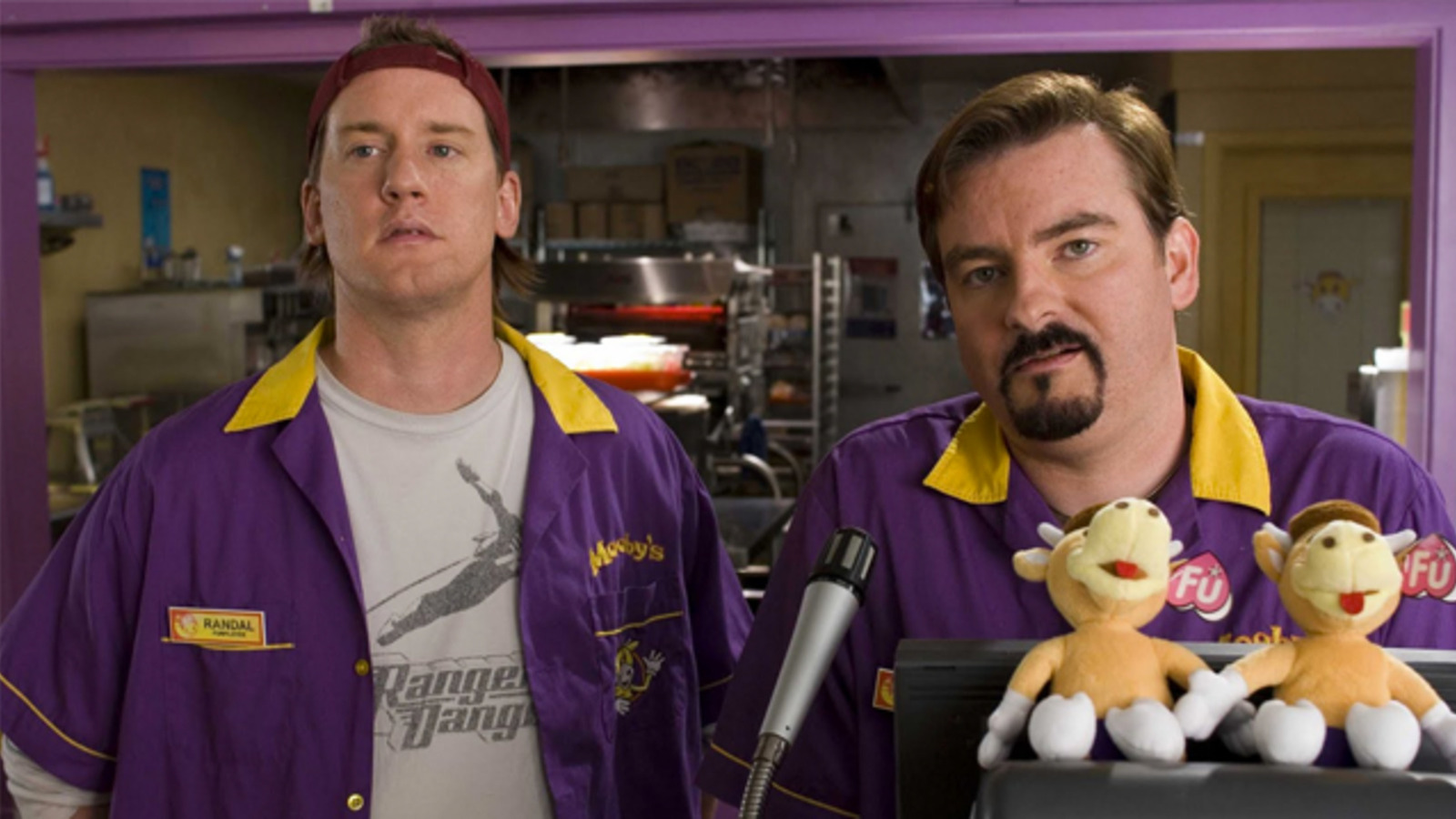
The foundation of this universe rests on recurring figures such as Jay (Jason Mewes) and Silent Bob (played by Kevin Smith himself), along with Dante Hicks (Brian O'Halloran), Randal Graves (Jeff Anderson), Brody Bruce (Jason Lee), and Holden McNeil (Ben Affleck). Events that transpire in one film frequently ripple into others, creating a cohesive community rooted primarily in Monmouth County, New Jersey.
However, treating the Kevin Smith movies list solely as the View Askewniverse overlooks a substantial portion of his career. Smith’s catalog naturally splits into two distinct categories:
- View Askewniverse Titles: Interconnected comedies and satires bound by shared characters, locations (such as the Quick Stop Groceries in Leonardo, New Jersey), and continuous narrative lore.
- Standalone and Genre Experiments: Works that break away from the New Jersey continuity entirely, ranging from mainstream studio romantic comedies to body horror and political thrillers.
Recognizing these distinctions prevents confusion for new viewers and provides seasoned fans with a clear roadmap for exploring Smith's stylistic shifts over his thirty-plus-year career.
Viewing Order Strategies: Release Date vs. In-Universe Chronology
For fans navigating the View Askewniverse, the order in which the films are watched significantly impacts the viewing experience. Unlike traditional franchise sagas that move in a straight line, Smith's list contains non-linear timelines, prequels, and retrospective meta-narratives.
VIEW ASKEWNIVERSE RELEASE TIMELINE
- [1994] Clerks
- [1995] Mallrats (Prequel: Takes place 1 day before Clerks)
- [1997] Chasing Amy
- [1999] Dogma
- [2001] Jay and Silent Bob Strike Back
- [2006] Clerks II
- [2019] Jay and Silent Bob Reboot
- [2022] Clerks III
The Release Date Order (Recommended for First-Time Viewers)
Watching the films in the order they were produced allows fans to experience Smith’s evolution as a filmmaker alongside the gradual expansion of his shared universe.
- Clerks (1994): The monochromatic indie classic establishing the core dynamic of Dante, Randal, Jay, and Silent Bob.
- Mallrats (1995): A studio-backed comedy introducing Brody Bruce, T.S. Quint, and early comic-book mythology.
- Chasing Amy (1997): A character study dealing with relationships, identity, and the creative process of comic book artists Holden McNeil and Banky Edwards.
- Dogma (1999): A satirical fantasy examining religious dogma, angels, and faith.
- Jay and Silent Bob Strike Back (2001): A meta-comedy sending the titular duo to Hollywood to stop a film adaptation of their comic book alter egos, Bluntman and Chronic.
- Clerks II (2006): A mid-life comedy catching up with Dante and Randal as they transition from convenience retail to fast food.
- Jay and Silent Bob Reboot (2019): A self-referential satire revisiting the events of Strike Back while addressing legacy sequels and parenthood.
- Clerks III (2022): An introspective finale where Randal survives a massive heart attack and decides to make a movie about his life at the Quick Stop.
The In-Universe Chronological Order
Dedicated fans often prefer analyzing the timeline based on internal fictional dates. The most notable narrative shift occurs between Mallrats and Clerks. Although Mallrats was released in theaters a year after Clerks, its story takes place the day before the events of Clerks.
In Mallrats, characters discuss Julie Dwyer dying in a YMCA swimming pool—an event whose funeral becomes a central plot point in Clerks the following day. Viewing Mallrats first presents a seamless chronological sequence, showing how Jay and Silent Bob move from the Eden Hall Mall to their post outside the Quick Stop Groceries within a 24-hour window.
Comprehensive Breakdown of Kevin Smith’s Filmography
The following reference table outlines Smith's main feature filmography, identifying narrative categories, core thematic elements, and historical context across his releases.
| Film Title | Release Year | Narrative Category | Core Themes & Setting | Key Characters Involved |
|---|---|---|---|---|
| Clerks | 1994 | View Askewniverse | Workplace boredom, Gen-X existentialism; Leonardo, NJ | Dante Hicks, Randal Graves, Jay, Silent Bob |
| Mallrats | 1995 | View Askewniverse | Suburban romance, comic culture; Eden Hall Mall | Brody Bruce, T.S. Quint, Rene Mosier, Jay, Silent Bob |
| Chasing Amy | 1997 | View Askewniverse | Romantic anxiety, comic creation, sexuality | Holden McNeil, Banky Edwards, Alyssa Jones |
| Dogma | 1999 | View Askewniverse | Theological satire, existential faith | Bethany Sloane, Bartleby, Loki, Metatron, Rufus |
| Jay and Silent Bob Strike Back | 2001 | View Askewniverse | Hollywood satire, meta commentary, road comedy | Jay, Silent Bob, Willenholly, Justice |
| Jersey Girl | 2004 | Standalone | Single parenthood, grief, career vs. family | Ollie Trinke, Gertrude Steiney, Maya |
| Clerks II | 2006 | View Askewniverse | Mid-life transition, friendship, maturity | Dante, Randal, Becky Scott, Elias Grover |
| Zack and Miri Make a Porno | 2008 | Standalone | Financial hardship, DIY adult filmmaking, romance | Zack Brown, Miri Linky, Delaney, Deacon |
| Cop Out | 2010 | Studio Commission | Action-comedy homage, buddy-cop dynamics | Jimmy Monroe, Paul Hodges |
| Red State | 2011 | Standalone / Thriller | Religious extremism, political violence, horror | Pastor Abinas Cooper, Joseph Keenan |
| Tusk | 2014 | True North Trilogy | Surreal body horror, podcast narrative origin | Wallace Bryton, Howard Howe, Guy Lapointe |
| Yoga Hosers | 2016 | True North Trilogy | Teen comedy horror, Canadian folklore satire | Colleen Collette, Colleen McKenzie, Guy Lapointe |
| Jay and Silent Bob Reboot | 2019 | View Askewniverse | Fatherhood, legacy sequels, Hollywood remakes | Jay, Silent Bob, Millennium "Milly" Faulken |
| Clerks III | 2022 | View Askewniverse | Mortality, meta-filmmaking, reflection on legacy | Dante, Randal, Jay, Silent Bob, Elias |
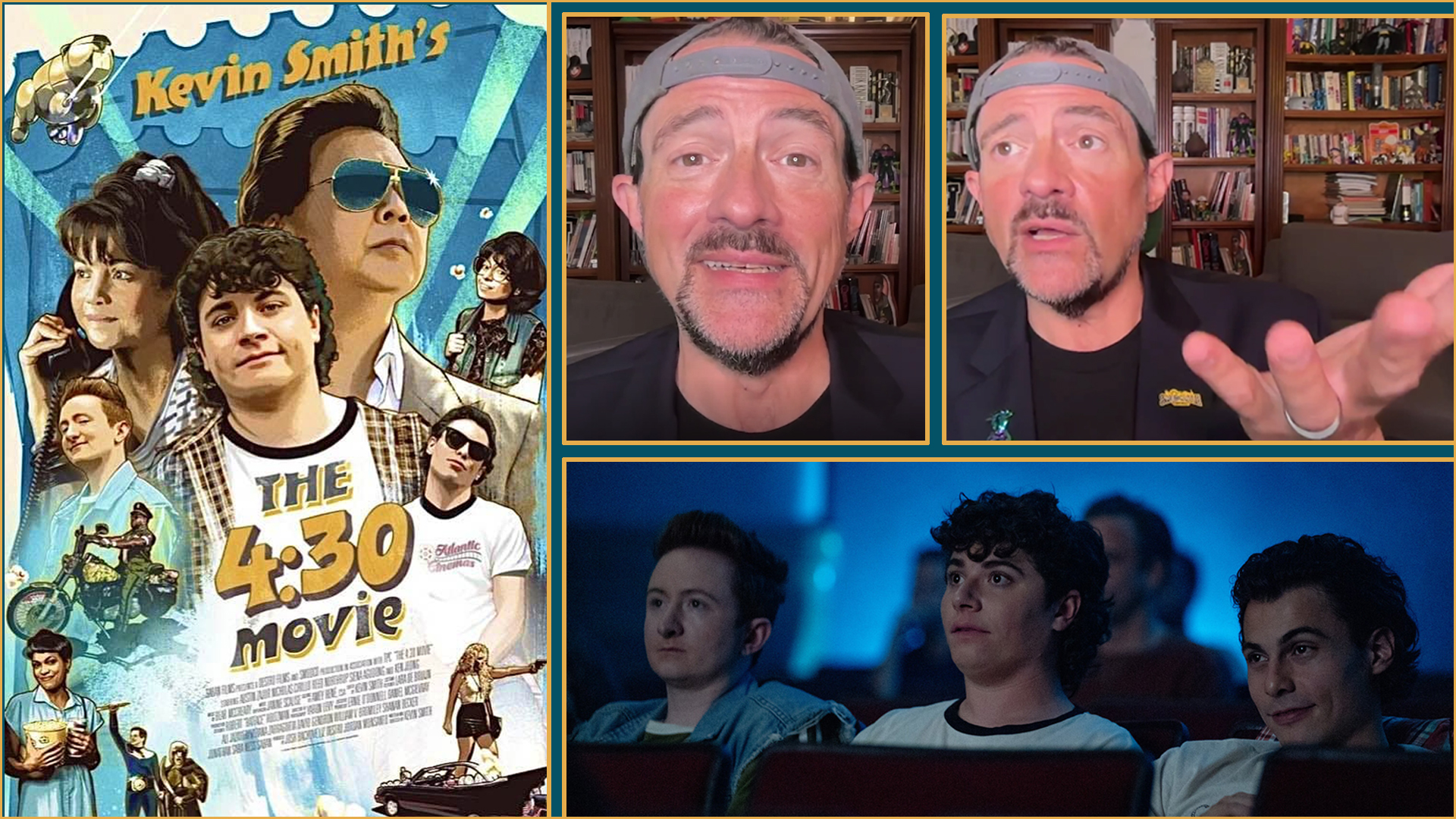
| The 4:30 Movie | 2024 | Standalone / Nostalgia | 1980s coming-of-age, cinema culture, youth romance | Brian David, Alison, Burny, Belly |
Evolution of Style: From Slacker Satire to Autobiographical Cinema
Analyzing the Kevin Smith movies list chronologically reveals a filmmaker whose narrative focus closely mirrors his personal life milestones. Rather than maintaining a static brand of humor, Smith's work naturally subdivides into three distinct creative eras.
CREATIVE ERAS IN KEVIN SMITH'S FILMOGRAPHY
- EARLY ASKWEUNIVERSE ERA (1994–2001)
- Micro-budget indie origins
- Dialogue-heavy Gen-X slacker humor
- World-building & character crossovers
- EXPERIMENTAL & HORROR ERA (2010–2016)
- Departure from New Jersey lore
- Genre shifts (Thriller, Body Horror)
- Direct podcast-to-script development
- AUTOBIOGRAPHICAL / LEGACY ERA (2018–PRESENT)
- Post-cardiac event introspection
- Meta-filmmaking & reflective sequels
- Independent roadshow touring models
1. The Early View Askewniverse Era (1994–2001)
The initial phase of Smith’s career defined 1990s American independent cinema. Characterized by low budgets, monochrome cinematography (in the case of Clerks), and dense, theatrical dialogue, these films resonated with audiences seeking alternatives to glossy studio releases. The stories centered on young adults struggling with employment, romantic relationships, and social alienation, using pop culture references as a primary linguistic tool.
2. The Experimental and Genre Phase (2010–2016)
Following Clerks II, Smith deliberately stepped outside his comfort zone. Disillusioned with traditional Hollywood distribution mechanisms, he pivoted toward genre experimentation:
- Red State (2011) abandoned comedy for an intense tactical thriller exploring religious extremism and federal overreach.
- Tusk (2014) and Yoga Hosers (2016) formed the foundation of his "True North Trilogy," showcasing body horror and absurd fantasy derived directly from conversational bits on his SModcast podcast network.
This era highlighted Smith's willingness to prioritize niche creative freedom over broad commercial appeal.
3. The Post-Health Event Autobiographical Era (2018–Present)
In February 2018, Kevin Smith survived a near-fatal severe heart attack caused by a total blockage of the left anterior descending artery. This health crisis radically reshaped his creative output.
Subsequent projects became deeply introspective meditations on life, mortality, and artistic legacy. Jay and Silent Bob Reboot addressed the passage of time and fatherhood, while Clerks III explicitly mirrored Smith's health scare by giving Randal Graves a heart attack that spurs him to make an independent movie inside the Quick Stop. This meta-narrative loop brought the filmography full circle, transforming the movie list into a personal retrospective.
Navigating Distribution Rights and Availability Issues
One critical reason fans actively maintain and consult a curated Kevin Smith movies list is that several key titles have faced complex rights management issues, making them difficult to stream legally.
The Dogma Distribution Dilemma
The most prominent example of availability disruption within Smith's filmography involves Dogma (1999). Prior to its release, the film sparked religious controversy due to its satirical take on Catholic theology. The original theatrical distributor, Miramax (then owned by The Walt Disney Company), faced pressure from parent executive leadership to drop the film.
To resolve the impasse, Miramax co-founders Harvey and Bob Weinstein personally purchased the rights to Dogma individually rather than through their corporate umbrella. Consequently, when the Weinsteins' assets were later tied up in legal and bankruptcy proceedings following Harvey Weinstein's 2017 criminal charges, the licensing rights for Dogma became trapped in complex personal ownership structures.
For over two decades, this ownership situation created major availability hurdles:
- Dogma was pulled from major digital storefronts (such as Apple TV, Prime Video, and Vudu).
- The film remained completely absent from modern subscription streaming platforms.
- Out-of-print physical copies (DVDs and Blu-rays) became expensive secondary-market collector items.
For fans trying to experience the complete View Askewniverse in chronological order, missing Dogma presents a major narrative gap. Keeping track of rights acquisitions, physical media runs, and rare theatrical retrospective screenings remains an active requirement for completionist viewers.
DIY Distribution and Cinematic Roadshows
The Kevin Smith movies list is equally important for its role in shaping alternative film distribution models. Smith was an early pioneer of bypassing standard theatrical distribution methods in favor of self-funded tour models.
TRADITIONAL VS. ROADSHOW DISTRIBUTION
- Traditional Studio Model:
- Filmmaker
- Studio / Distributor
- Multiplex Chains
- Static Viewing
- Smith's DIY Roadshow Model:
- Filmmaker
- Self-Financed Tour
- Local Venues/Theaters
- Film + Live Q&A
The Red State Premiere Shift
At the 2011 Sundance Film Festival, following the premiere of Red State, Smith held an auction for the distribution rights to his movie. Instead of selling to an established studio, he famously purchased his own film's rights for $20 and announced he would self-distribute the project.
Smith embarked on a nationwide theatrical tour, bringing the film directly to fans in rented venues, accompanied by live, interactive Q&A sessions. By charging premium ticket prices for an event-style experience, Smith demonstrated that independent directors could monetize mid-budget films directly through their core fanbase without relying on massive studio marketing budgets.
The Tour Model as an Event
Smith refined this distribution strategy for his later releases:
- The Reboot Roadshow (2019): Smith and co-star Jason Mewes toured Jay and Silent Bob Reboot across dozens of North American cities, hosting live presentations and selling out venue dates.
- The Conveniences Tour (2022): Smith personally accompanied screenings of Clerks III, combining film projections with long-form storytelling and audience interaction.
- The 4:30 Movie Tour (2024): Continuing the roadshow format, Smith brought his 1980s coming-of-age comedy to select theaters with live Q&A sessions.
For fans, following the film list isn't merely about watching a movie at home; it often involves attending live theatrical tours where the line between filmmaker and audience is minimized.
Frequently Asked Questions
What is the correct viewing order for the View Askewniverse movies?
The recommended approach for first-time viewers is release order: Clerks (1994), Mallrats (1995), Chasing Amy (1997), Dogma (1999), Jay and Silent Bob Strike Back (2001), Clerks II (2006), Jay and Silent Bob Reboot (2019), and Clerks III (2022). To follow strict internal chronology, watch Mallrats before Clerks, as its story takes place the day before the Quick Stop events.
Why is Dogma difficult to find on popular streaming platforms?
Dogma was personally bought by Harvey and Bob Weinstein in 1999 after Disney declined to release it under Miramax. Because the rights were tied to personal ownership rather than held by a standard studio catalog, licensing for streaming platforms stalled for decades amid legal and corporate restructurings, keeping it off digital storefronts.
Are Kevin Smith's non-View Askewniverse movies connected to each other?
Most standalone films—such as Jersey Girl, Zack and Miri Make a Porno, Cop Out, and The 4:30 Movie—exist independently without direct character crossovers. However, Tusk (2014) and Yoga Hosers (2016) belong to the connected "True North Trilogy," sharing settings and characters like private investigator Guy Lapointe (Johnny Depp) and convenience clerks Colleen M. and Colleen C.
How does Mallrats connect to the narrative of Clerks?
Mallrats functions as a direct narrative prequel to Clerks. It depicts the events occurring the day before Clerks, detailing how Jay and Silent Bob end up in Leonardo, NJ, and referencing characters like Julie Dwyer before her fatal accident at the YMCA pool.
What is the "True North Trilogy"?
The True North Trilogy is a trio of horror-comedy films set in Canada, inspired by topics discussed on Kevin Smith's SModcast podcast. The series includes Tusk (2014), Yoga Hosers (2016), and the planned project Moose Jaws. The films feature overlapping characters and focus on absurd, creature-feature scenarios.
Recommended Next Steps for Viewers
To systematically navigate and explore Kevin Smith’s complete body of work:
- Establish Your Viewing Intent: Start with the View Askewniverse Phase 1 (Clerks, Mallrats, Chasing Amy) to understand the core foundation before diving into larger-scale satires like Dogma or Jay and Silent Bob Strike Back.
- Secure Physical Editions for Licensing Gaps: Because rights for films like Dogma fluctuate across digital ecosystems, acquiring physical DVD or Blu-ray copies guarantees permanent access to the complete catalog.
- Follow Official Tour Announcements: If you want to experience upcoming releases via Smith's roadshow model, check official channels at View Askew Productions or Smith's social platforms for regional screening tour dates and live Q&A stops.
Image Gallery