What Kind of Store is Five Below: A 2026 Strategic Retail Breakdown
Five Below operates as a specialized extreme-value retailer, primarily targeting the adolescent and young adult demographic through a curated shopping experience known as "edutainment" retail. By 2026, the company has solidified its po...
Five Below operates as a specialized extreme-value retailer, primarily targeting the adolescent and young adult demographic through a curated shopping experience known as "edutainment" retail. By 2026, the company has solidified its position as a high-growth player in the discount sector, distinguishing itself from traditional dollar stores by focusing on trend-driven merchandise rather than household staples or perishable goods.
Contents
The Core Business Model: The Trend-Based Value Proposition
Five Below is architected around a unique "Five Below" store concept that centers on providing a vast array of high-margin impulse items priced generally between $1 and $5, with the "Five Beyond" section expanding into higher-tier price points to accommodate electronics and lifestyle goods. Unlike traditional big-box discounters that prioritize utility, Five Below utilizes a high-frequency inventory turnover model.
The strategy relies on identifying social media trends—specifically those emerging from platforms like TikTok and Instagram—and stocking physical replicas or compatible accessories almost immediately. This agility allows the retailer to capture market share from impulse-driven shoppers who visit not for necessities, but for recreational shopping experiences.
Key Operational Categories and Product Segments
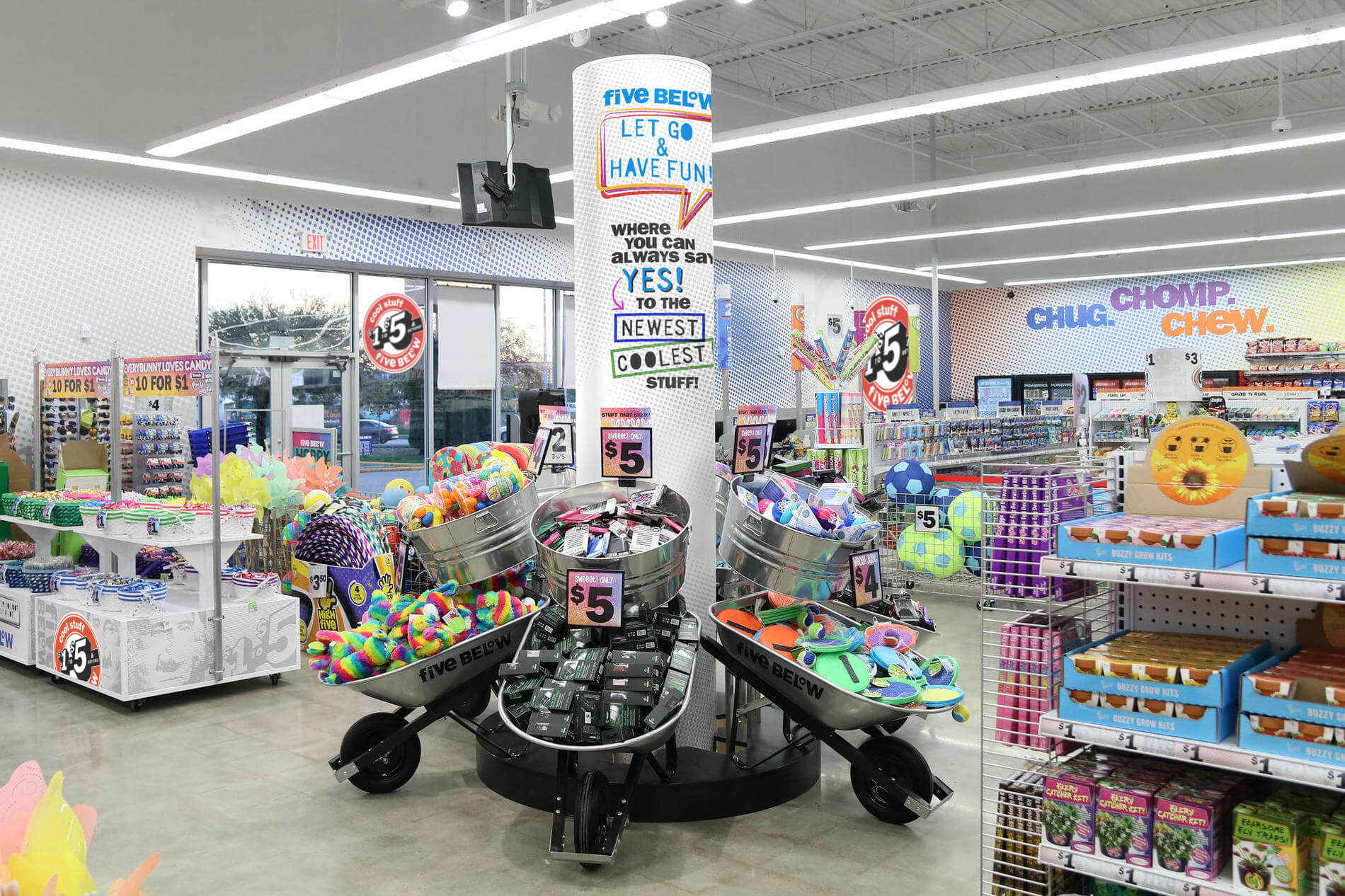
The store layout is divided into eight primary "worlds," each designed to facilitate discovery and maximize the duration of a customer's visit. As of 2026, the inventory composition remains consistent with the following core categories:
- Style: Trendy apparel, jewelry, and beauty products that mirror current teenage aesthetics.
- Room: Decor items, lighting solutions, and organization tools optimized for dorm rooms and bedrooms.
- Sports: Seasonal athletic gear, balls, and active-lifestyle accessories.
- Tech: Mobile accessories, charging cables, Bluetooth audio devices, and gaming peripherals.
- Create: Arts and crafts supplies, DIY kits, and creative hobby materials.
- Party: Seasonal holiday decorations, balloons, greeting cards, and gift-wrapping supplies.
- Candy: High-volume confectionery, international snacks, and classic novelty sweets.
- Games: Tabletop games, puzzles, and interactive toys.
Market Positioning: Five Below vs. Traditional Discount Retail
Understanding where Five Below fits in the 2026 retail landscape requires a clear comparison with other discount models. The primary difference lies in the "treasure hunt" atmosphere. While a dollar store focuses on the utility of low-cost cleaning supplies and canned goods, Five Below functions as a lifestyle boutique that happens to be affordable.
| Retail Segment | Primary Focus | Price Strategy | Key Demographic |
|---|---|---|---|
| Five Below | Trend-driven novelty | $1 - $5 (plus "Beyond") | Gen Z / Gen Alpha |
| Dollar General | Household essentials | Fixed low-price point | Value-conscious families |
| Target/Walmart | General merchandise | Competitive / Seasonal | Broad / Mass market |
| Specialty Boutiques | Niche goods | Mid-to-High | Specific hobbyists |
The "Five Beyond" Strategy Shift
By 2026, the expansion into "Five Beyond" has become a permanent, critical pillar of the company’s revenue growth. This initiative allows the store to carry higher-ticket items—such as premium gaming controllers, high-quality audio equipment, and larger seasonal goods—that would be impossible to source at a strict $5 price point. This allows the company to remain competitive against larger retailers while maintaining the high-margin, high-turnover nature of their primary store footprint.
Understanding the Target Demographic and Consumer Psychology
Five Below effectively leverages the concept of "discretionary spending power" among younger demographics. By keeping the majority of their inventory within an accessible price range, they remove the friction of decision-making. For a younger shopper, a $5 purchase represents low risk, which encourages higher unit volume per transaction.
Strategic store placement is another hallmark of their 2026 operational success. These stores are rarely located in isolated strip malls; instead, they are positioned as "anchor-lite" tenants in high-traffic shopping centers adjacent to cinemas, large grocery chains, and popular fast-casual restaurants. This location strategy capitalizes on the "shopping as recreation" behavior, where customers visit the store while waiting for a movie or grabbing a meal with friends.
Operational Benchmarks for 2026
To understand the scale and legitimacy of the chain, one must look at their operational performance metrics:
- Inventory Velocity: The speed at which stock rotates is significantly higher than industry averages for general merchandise.
- Digital Integration: The 2026 iteration of their omnichannel approach includes refined "Buy Online, Pick Up In-Store" (BOPIS) services, which have successfully bridged the gap between social media discovery and physical store fulfillment.
- Supply Chain Agility: Five Below utilizes a sophisticated logistical network that allows them to respond to viral product trends within a 60-to-90-day window from identification to shelf placement.
Frequently Asked Questions (FAQ)
Is Five Below considered a dollar store? While Five Below is often compared to dollar stores due to its pricing, it is officially classified as an "extreme-value" retailer that focuses on trend-driven discretionary items rather than household consumables. Its merchandise selection is designed for entertainment and personal style, differentiating it from the essential-goods model of traditional dollar stores.
Does Five Below carry electronics? Yes, Five Below maintains a robust selection of electronics, primarily focusing on mobile accessories, audio hardware, and gaming peripherals. Under their "Five Beyond" branding, the store also stocks higher-tier tech items that exceed their traditional $5 price cap.
Who is the primary customer for Five Below? The primary target audience consists of pre-teens, teenagers, and young adults (Gen Z and Gen Alpha). The store layout, product curation, and marketing efforts are specifically tailored to the interests and social media consumption habits of this demographic.
Are Five Below prices always $5 or less? No, while the store is named Five Below, the introduction of the "Five Beyond" section allows for a range of products priced higher than $5. These items are clearly marked and typically occupy a specific section of the store to differentiate them from the core, lower-priced inventory.
Can you find groceries or perishable food at Five Below? Five Below does not carry fresh produce, dairy, or frozen meals; however, it does sell a wide variety of non-perishable novelty candy, snacks, and international food items. It is not a substitute for a grocery store or a supermarket.
Strategic Conclusion for Consumers and Investors
Whether you are a casual shopper looking for affordable entertainment or a market analyst examining the retail sector in 2026, Five Below represents a highly efficient model of modern commerce. By maintaining a laser focus on the "edutainment" niche, they have insulated themselves against the volatility of the essential goods market. Their success is a direct result of understanding that in the 2026 retail environment, physical stores must provide an experience, not just a place to exchange currency for goods. If you are looking for specific seasonal trends or unique impulse items, visiting a location near you will provide the most accurate representation of their current inventory cycle.
Image Gallery