Understanding Workers' Compensation and Other Self-Insured Liability: A Risk Manager's Guide
When an organization elects to self-insure its workers' compensation program, it assumes direct financial responsibility for employee injury benefits rather than transferring that risk to a commercial insurance carrier. Managing self-i...
When an organization elects to self-insure its workers' compensation program, it assumes direct financial responsibility for employee injury benefits rather than transferring that risk to a commercial insurance carrier. Managing self-insured workers' compensation alongside other self-insured liabilities—such as general liability, commercial auto liability, and employers' liability—requires a sophisticated risk financing structure, rigorous regulatory compliance, and tailored excess insurance policies to safeguard corporate liquidity.
Contents
Disclaimer: This guide is for informational purposes only and does not constitute legal, tax, or professional insurance advice. Consult a qualified risk management consultant, licensed insurance broker, or legal counsel for specific jurisdictional requirements.
Defining Self-Insured Workers' Compensation and Liability Retentions
Self-insurance is a formalized risk financing mechanism where a enterprise funds its own losses out of cash flow or dedicated reserve funds. While traditional insurance transfers financial exposure to an insurer in exchange for a premium, self-insurance retains loss exposure up to predetermined limits.
In corporate risk management, self-insurance generally applies to two distinct operational categories:
- Self-Insured Workers' Compensation (Statutory Liability): State statutes mandate that employers provide medical care, indemnity payments, and rehabilitation benefits to employees injured in the course and scope of employment. Unlike tort-based liabilities, statutory workers' compensation operates on a strict no-fault basis with unlimited statutory medical benefit caps in most jurisdictions.
- Other Self-Insured Liabilities (Tort & Contractual Exposure): This category encompasses non-statutory commercial exposures, including General Liability (GL), Commercial Auto Liability (AL), Products/Completed Operations, and Employers' Liability (Part Two). These liabilities depend on legal fault, negligence, or contractual indemnification, making settlement values and litigation costs significantly less predictable than statutory workers' compensation payments.
Self-Insured Retention (SIR) vs. High-Deductible Programs
A common point of confusion is the technical distinction between a Self-Insured Retention (SIR) and a High-Deductible Policy.
- Self-Insured Retention (SIR): The employer operates as its own insurance company up to the SIR attachment point (e.g., $500,000 per occurrence). The excess insurer has no obligation to defend or pay claims until the retained limit is fully exhausted by paid losses or defense expenses (depending on policy language). The insured handles claims directly or through an approved Third-Party Administrator (TPA).
- High-Deductible Policy: The commercial insurance carrier issues a standard statutory policy, handles all claims administration, pays claims directly from the first dollar, and subsequently bills the employer for reimbursement up to the deductible threshold. The insurer holds primary regulatory responsibility for claim filings and statutory compliance.
Regulatory Compliance and Collateral Obligations
Because workers' compensation benefits are legally mandated protection for workers, state regulatory authorities strictly regulate self-insured employers to ensure solvency and continuous benefit delivery. An organization cannot simply stop purchasing statutory policies; it must apply for formal self-insurance approval from state workers' compensation boards or insurance departments.
Qualifying for Self-Insured Status
To qualify, an employer must demonstrate long-term financial stability. State regulatory evaluations typically examine:
- Balance Sheet Strength: Audited financial statements showing substantial net worth, operational cash flow, and strong liquidity ratios.
- Minimum Thresholds: Many states require a minimum net worth (e.g., $5 million to $10 million) or a minimum employee count within the state.
- Loss Control Infrastructure: Proof of active safety management systems, written return-to-work (RTW) programs, and qualified claims administration capabilities.
Security Deposits and Collateral Instruments
To protect injured workers against potential corporate bankruptcy, regulatory bodies mandate that self-insurers post collateral representing unbilled liabilities and outstanding case reserves. Standard collateral instruments include:
- Surety Bonds: A three-party agreement where a surety company guarantees benefit payments up to a specified bond penal sum if the employer defaults.
- Irrevocable Letters of Credit (LOC): Issued by a qualified financial institution, allowing the state regulatory authority to draw funds directly if the employer fails to satisfy benefit obligations.
- Trust Agreements and Escrow Accounts: Dedicated cash or treasury securities held in trust under state supervision.
In addition to individual collateral, self-insured employers in many jurisdictions must participate in state Self-Insurers' Guaranty Funds. These funds collect annual assessments to cover benefit claims for workers of bankrupt self-insured peers.
Structuring Excess Coverage Across Retained Liabilities
Self-insurance rarely means retaining 100% of catastrophic loss risk. Organizations protect their balance sheets by pairing self-insured retention layers with Excess Insurance or Reinsurance contracts.
- Excess / Reinsurance Policy (Transfers Catastrophic / Excess Loss)
- Attachment Point ($500k / $1M)
- Self-Insured Retention (SIR) (Retained Risk Funded by Cash / Reserve)
Specific Excess vs. Aggregate Excess Insurance
- Specific Excess Insurance: Protects the organization against a single catastrophic claim exceeding the retention limit. For instance, if an employer maintains a $500,000 Specific SIR for workers' compensation, and a severe spinal cord injury claim reaches $3.5 million, the employer pays the first $500,000, and the specific excess carrier pays the remaining $3.0 million.
- Aggregate Excess (Stop-Loss) Insurance: Limits the cumulative total of all retained losses within a policy period. If an employer maintains an aggregate stop-loss threshold of $4.0 million across all workers' compensation claims in a fiscal year, the excess carrier indemnifies loss payments exceeding $4.0 million in the aggregate, preventing financial erosion caused by high frequency of moderate-severity claims.
Coordination of Employers' Liability and Other Liability Lines
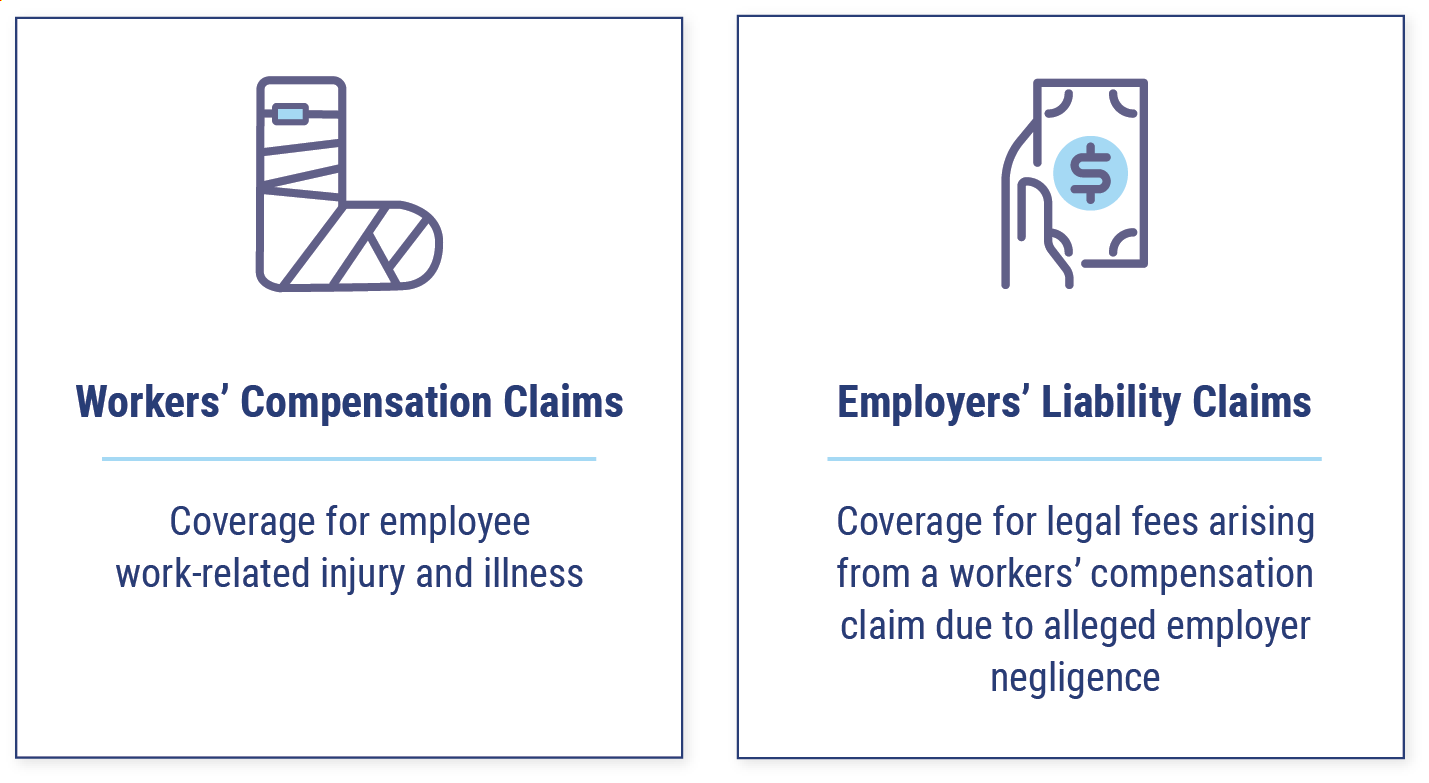
Standard Workers' Compensation policies contain two parts: Part One (Statutory Workers' Compensation) and Part Two (Employers' Liability). When self-insuring Part One, employers must explicitly structure Part Two coverages and coordinate them with their general liability and umbrella policies.
- Employers' Liability (Part Two): Covers lawsuits brought by employees claiming work-related bodily injury caused by employer negligence outside statutory workers' comp remedies (e.g., dual-capacity suits, loss of consortium claims by spouses, or third-party indemnification demands).
- Monopolistic States: In states where workers' compensation must be secured through state-administered funds (e.g., Washington, Ohio, Wyoming, North Dakota), employers must purchase a specialized endorsement known as Stop-Gap Coverage under their general liability insurance to fund employers' liability claims.
Comparing Risk Financing Structures
Choosing between fully insured programs, high-deductible options, self-insurance, and captive arrangements requires balancing capital capacity, loss predictability, and administrative overhead.
| Strategy | Primary Loss Funding | Collateral Requirements | Regulatory Oversight | Claims & Reserving Control |
|---|---|---|---|---|
| Fully Insured | Insurance carrier via fixed premium | None | Low (handled by insurer) | Low (insurer controls defense and settlement) |
| High Deductible | Insured reimburses carrier per claim | High (LOC or cash securing deductible layer) | Moderate (standard policy filings) | Moderate (carrier retains master claim control) |
| Self-Insured Retention (SIR) | Insured pays claims directly from reserves | High (State-mandated surety bond/LOC) | High (Direct state board approval required) | High (Insured or appointed TPA manages claims) |
| Single-Parent / Group Captive | Captive reinsurance pool funded by premiums | High (Capitalization & LOC requirements) | High (Domicile insurance regulator) | High (Captive board sets policy and claims rules) |
Interplay Between Workers' Comp and Third-Party Liabilities
A critical challenge in self-insured programs is the legal and operational overlap between workers' compensation claims and third-party liability claims. Failure to isolate and coordinate these exposures can lead to double recovery issues, subrogation loss, or unexpected tort liabilities.
Subrogation and Lien Enforcement
When an employee is injured on the job due to the negligence of a third party (e.g., a commercial vehicle crash caused by a reckless delivery driver), the self-insured employer pays statutory workers' compensation benefits to the injured worker. Under state statutory subrogation rights, the self-insured employer maintains a legal lien against any tort settlement or judgment recovered by the employee from that third party.
- Lien Recovery: Active lien enforcement allows the self-insured entity to recover paid medical expenses and indemnity benefits directly from the third-party driver’s insurance settlement.
- Credit Against Future Benefits: Recovered funds or remaining settlement proceeds can offset future workers' compensation benefit obligations for that specific injury, reducing total SIR erosion.
Action-Over Claims and Contractual Indemnity
An Action-Over Claim occurs when an injured employee receives statutory workers' compensation benefits from their employer, then sues a third party (such as a general contractor or facility owner) alleging negligence. The third party subsequently files an indemnification lawsuit against the employer, citing an indemnification clause in their commercial contract.
Because workers' compensation statutory exclusivity shields employers from direct tort suits by employees, these third-party contractual claims bypass statutory immunity and fall under Employers' Liability or contractual general liability. Self-insured risk managers must audit commercial contracts to ensure contractual liability provisions align with their excess policy definitions.
Operational Best Practices for Managing Retained Liabilities
Operating a self-insured workers' compensation and liability program requires clear operational controls to preserve capital and maintain liquidity.
1. TPA Selection and Claims Administration
Unless an enterprise maintains an internal, licensed claims department, selecting a Third-Party Administrator (TPA) is vital. Key criteria when evaluating a TPA include:
- State-Specific Compliance Expertise: Understanding local statutory filing deadlines, benefit schedules, and medical fee guidelines.
- Reserve Philosophy: Establishing clear reserving protocols to prevent "stair-stepping" reserves (gradually increasing reserves over time rather than setting accurate initial forecasts).
- Litigation Management: Active oversight of panel counsel to manage defense legal spend and restrict unnecessary depositions or motion practice.
2. Actuarial Reserving and Financial Reporting
Self-insured entities must record unpaid loss obligations on their balance sheets under accounting standards like GAAP or IFRS. Risk managers should engage independent credentialed actuaries (FCAS/MAAA) annually to perform loss reserve reviews.
- Incurred But Not Reported (IBNR): Actuaries calculate estimates for claims that have occurred but have not yet been reported, as well as future development on open claims.
- Discounting Reserves: Evaluating whether state regulations and accounting frameworks permit discounting long-term workers' compensation indemnity pensions to present value.
3. Safety Protocols and Claims Triage
Reducing the ultimate cost of self-insured claims relies on early intervention and risk mitigation:
- Early Return-to-Work (RTW): Implementing modified-duty programs to limit temporary total disability (TTD) indemnity payments.
- Nurse Triage Lines: Directing injured workers to appropriate care settings immediately post-incident, reducing emergency department overutilization.
- Subrogation Audits: Identifying third-party fault during initial claim intake to preserve recovery rights.
Frequently Asked Questions
What is the main difference between a high-deductible policy and a self-insured retention (SIR)?
Under a high-deductible policy, the insurance carrier pays claims directly from the first dollar and seeks reimbursement from the insured, managing claims defense and statutory filings. Under an SIR, the insured acts as its own insurer up to the retention attachment point, directly paying claims and handling litigation without carrier involvement until the SIR limit is breached.
How does employers' liability function when an organization self-insures its workers' compensation?
Part One self-insurance covers statutory benefits mandated by state law. Employers' liability (Part Two) covers negligence lawsuits brought by employees or third parties arising from work injuries. Self-insurers typically secure employers' liability through an endorsement on their specific excess policy or as part of a commercial excess liability policy structure.
What happens if a self-insured employer becomes insolvent?
If a self-insured employer defaults due to bankruptcy, state workers' compensation regulatory authorities draw upon the employer's collateral (surety bonds, letters of credit, or trust funds). If collateral is insufficient, state Self-Insurers' Guaranty Funds step in to pay ongoing statutory benefit obligations to injured workers.
Can an organization self-insure workers' compensation while fully insuring general liability?
Yes. Employers can unbundle their risk management strategy by line of coverage. An organization may self-insure workers' compensation due to predictable claim volume and robust internal return-to-work programs, while purchasing fully insured policies for general liability or commercial auto exposures where catastrophic loss potential is higher.
How do aggregate excess policies protect self-insured employers?
Aggregate excess (or stop-loss) insurance establishes a maximum ceiling on total accumulated losses across all claims during a policy year. Once paid claims within the self-insured retention layer cross the aggregate attachment point, the aggregate excess policy pays remaining claim costs, protecting corporate cash flow from high frequency of loss.
Strategic Recommendations for Enterprise Risk Management
- Audit Collateral Efficiency Annually: Review existing collateral arrangements with state regulatory boards. Transitioning from bank Letters of Credit (which restrict borrowing capacity) to Surety Bonds can free up balance sheet credit facilities for operational growth.
- Align SIR Attachment Points with Actuarial Volatility: Perform annual loss-truing studies to verify that specific excess attachment points (e.g., $250k vs. $500k vs. $1M) reflect your organization's current financial risk tolerance and claim frequency trends.
- Harmonize TPA and Excess Policy Reporting Terms: Ensure TPA claim-reporting triggers match excess carrier notification rules precisely. Late reporting of catastrophic claims to excess carriers can jeopardize policy coverage for severe claim payouts.
Image Gallery