Free PCI Compliance Scan Explained: What It Covers, Limitations, and ASV Requirements
A free PCI compliance scan is an external security assessment designed to identify vulnerabilities across internet-facing networks, firewalls, and payment systems handling credit card data. While many vendors offer free initial trials,...
A free PCI compliance scan is an external security assessment designed to identify vulnerabilities across internet-facing networks, firewalls, and payment systems handling credit card data. While many vendors offer free initial trials, an official PCI Payment Card Industry Data Security Standard (PCI DSS) compliance report must be conducted by a PCI Security Standards Council (PCI SSC)-certified Approved Scanning Vendor (ASV) to satisfy payment processor mandates.
Contents
Understanding PCI Compliance Scans Under PCI DSS v4.0
Vulnerability scanning is a core technical requirement established by the Payment Card Industry Security Standards Council (PCI Security Standards Council). Under the global PCI DSS v4.0 standard, any organization that stores, processes, or transmits cardholder data (CHD) or sensitive authentication data (SAD) must maintain continuous security controls.
Specifically, Requirement 11.3.2 of PCI DSS v4.0 mandates that organizations perform external vulnerability scans at least once every three months (quarterly) and after any significant change to their network architecture. These external scans probe public IP addresses, domain names, web application firewalls, email servers, and payment gateways exposed to the internet.
The primary objective of an external PCI scan is to uncover security weaknesses that external attackers could exploit to breach your network. These weaknesses include:
- Unpatched operating system and application software
- Insecure or legacy cryptographic protocols (such as TLS 1.0 or TLS 1.1)
- Misconfigured firewalls and open administrative ports (such as SSH or RDP exposed to the public internet)
- Web application vulnerabilities like SQL injection, cross-site scripting (XSS), and cross-site request forgery (CSRF)
- Expired, self-signed, or untrusted Secure Sockets Layer (SSL)/Transport Layer Security (TLS) certificates
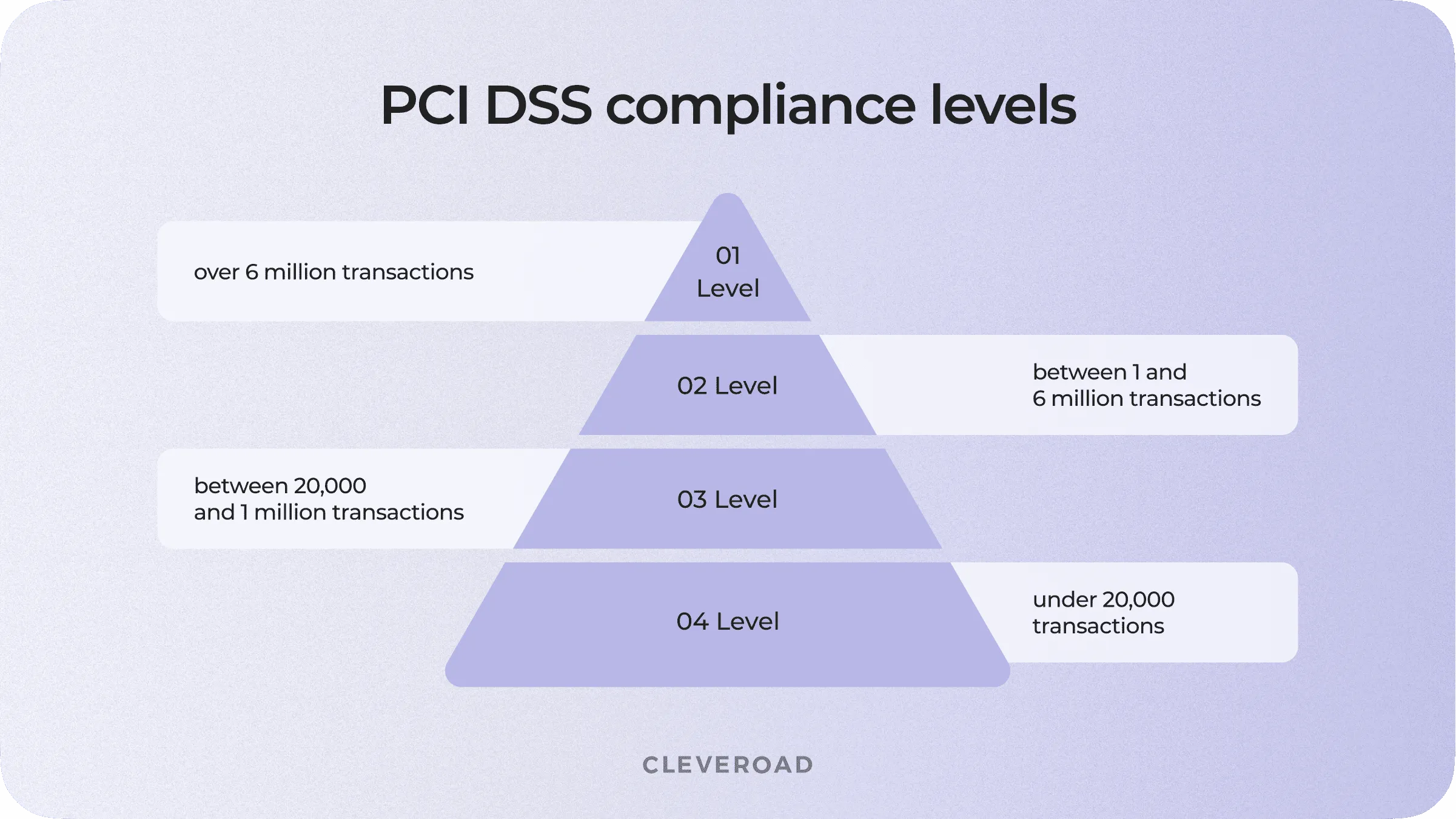
Not all merchants require external scanning. Your scanning requirements depend heavily on your merchant level (determined by annual transaction volume) and your Self-Assessment Questionnaire (SAQ) type. For instance, e-commerce businesses using direct API integrations (SAQ A-EP) or full-hosted web servers (SAQ D) must submit quarterly ASV scan reports, whereas fully outsourced payment pages using iframe redirects (SAQ A) typically do not require quarterly external vulnerability scans.
Free PCI Scans vs. Official ASV Scans: What’s the Catch?
When searching for a "free PCI compliance scan," merchants and system administrators often encounter three distinct offerings. Understanding the differences between these options is critical to avoid regulatory fines, non-compliance fees from merchant acquirers, or false security expectations.
- Search: "Free PCI Compliance Scan"
- Free ASV Trial (1-Time Scan)
- Requires paid subscription for quarterly AoSC
- Open-Source Vulnerability Tool
- Internal use only; invalid for official reporting
- Merchant Bundle (Included in Processor Fees)
- Cost is bundled into standard gateway processing fees
- Free ASV Trial (1-Time Scan)
1. Promotional ASV Scans (Free Trials)
Many certified Approved Scanning Vendors (ASVs) offer a free single-use external scan or a 14-day trial. These free scans utilize official ASV scanning engines and produce accurate technical reports detailing existing vulnerabilities on one or two public IP addresses. However, free trials usually have key limitations:
- They rarely include the official Attestation of Scan Compliance (AoSC) document required by payment acquirers.
- They cover only a single domain or IP address rather than your entire external infrastructure.
- They do not grant ongoing access to dispute false positives or perform required re-scans after patching vulnerabilities.
2. Open-Source and Generic Vulnerability Scanners
Tools such as OpenVAS, Nmap, or basic network scanners can be downloaded and run completely free of charge. While these tools provide valuable insights for internal IT auditing and initial patch management, they cannot be used for official PCI DSS compliance reporting. Payment processors and card brands will immediately reject scan reports produced by non-certified scanners.
3. Bundled Merchant Gateway Scans
Many payment processors, merchant acquirers, and point-of-sale (POS) providers advertise "free PCI scanning" as part of their service packages. In reality, the cost of these scans is bundled into your monthly PCI compliance fees or merchant account maintenance charges. These scans are conducted through an integrated ASV partner platform and provide legitimate compliance reports.
Official ASV Requirements: Why Generic Scans Are Rejected
To satisfy PCI DSS v4.0 Requirement 11.3.2, external vulnerability scans must be executed by an organization officially recognized as an Approved Scanning Vendor (ASV) by the PCI SSC.
The PCI Security Standards Council maintains strict qualification criteria for vendors seeking ASV designation. ASV candidates must pass rigorous annual testing to demonstrate that their scanning tools produce consistent, accurate, and non-disruptive results.
Generic vulnerability tools fail to meet PCI compliance standards due to several regulatory safeguards:
- Validated Scanning Rules: ASVs must utilize specialized scanning test suites that check for specific PCI DSS failure criteria, including Common Vulnerability Scoring System (CVSS) v3.1/v4.0 base scores of 4.0 or higher.
- Standardized Reporting Structure: ASV scan reports must follow exact formatting guidelines dictated by the PCI SSC, including an Executive Summary, a Detailed Report, and an Attestation of Scan Compliance (AoSC) signed by authorized personnel.
- Formal False Positive Dispute Process: When a scan flags a potential vulnerability that is actually a false positive or is compensated for by alternative security controls, the issue must be formally submitted, documented, and approved within the ASV's official dispute management workflow.
- Non-Disruptive Scanning Protocols: Certified ASV engines are specifically engineered to probe internet-facing systems without causing denial-of-service (DoS) conditions or interrupting live payment processing activities.
Comparing Free, Bundled, and Paid PCI Scanning Solutions
Selecting the appropriate scanning approach depends on your compliance architecture, technical expertise, and organizational budget. The table below compares the primary methods available for performing PCI vulnerability scans:
| Feature / Metric | Free ASV Promotional Trial | Open-Source / Free Tools (e.g., OpenVAS) | Bundled Merchant Gateway Service | Paid ASV Subscription |
|---|---|---|---|---|
| Average Cost | $0 (One-time or trial) | $0 (Self-hosted) | $5 – $30 / month (Via processing fees) | $150 – $1,500+ / year (Per target IP/Domain) |
| ASV Certified? | Yes (Vendor dependent) | No | Yes (Via vendor partnership) | Yes |
| Generates Official AoSC Report? | Rarely (Requires upgrade) | No | Yes | Yes |
| False Positive Management | Excluded or limited | Manual (Internal only) | Integrated into portal | Full workflow included |
| Scope Capability | 1 IP or 1 Subdomain | Unlimited (Self-configured) | Standard web/POS targets | Unlimited scalable scope |
| Best Used For | Initial baseline testing | Internal routine audits | Small merchants (Level 4) | Mid-market & Enterprise entities |
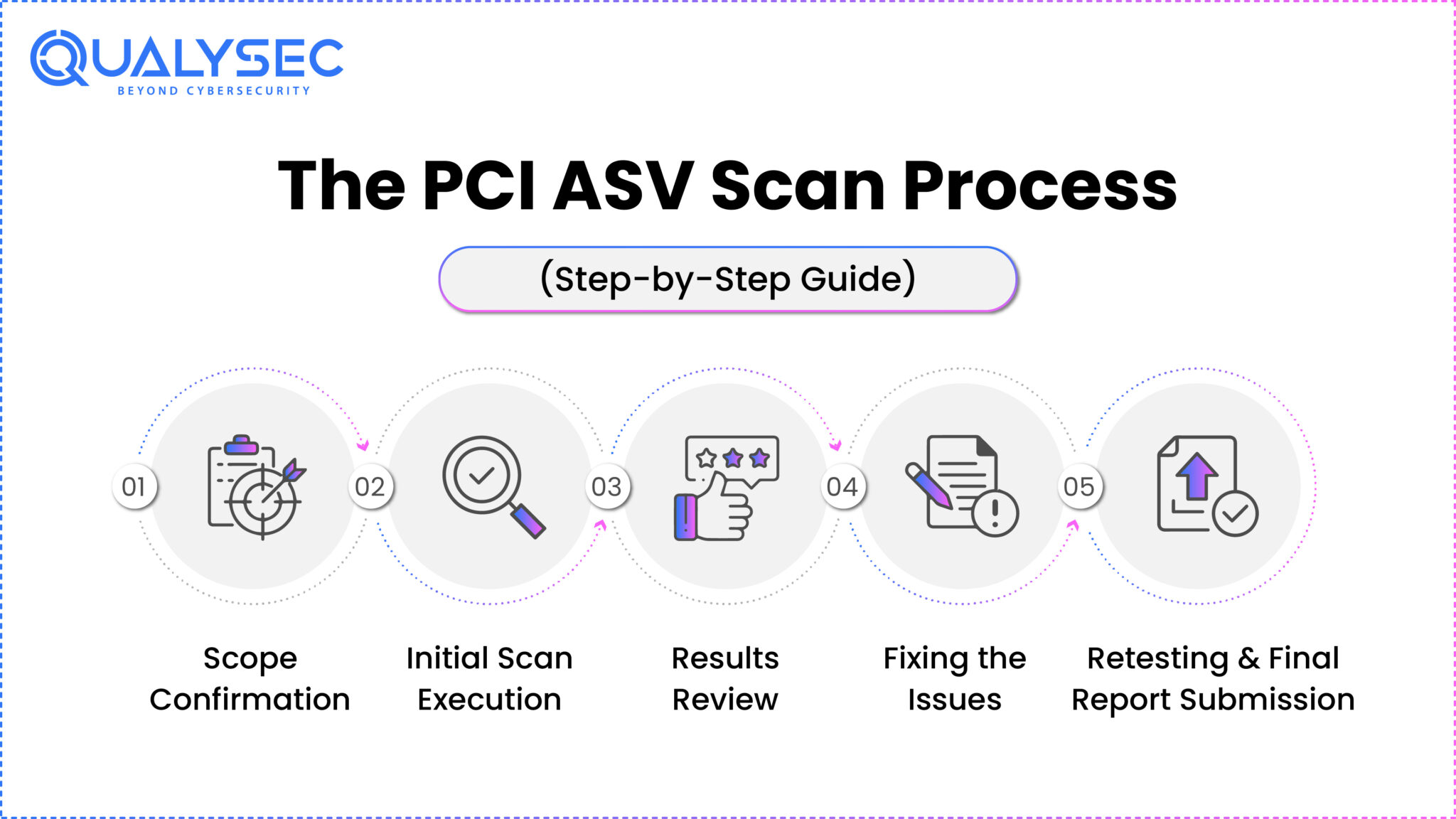
The Step-by-Step PCI Vulnerability Scanning Process
Performing a successful PCI external vulnerability scan involves a structured process. Merely initiating a scan is insufficient; the environment must pass all checks, and any vulnerabilities above the compliance threshold must be resolved.
- Define Scope & IPs
- Run ASV External Scan
- Review Scan Results
- Fails (CVSS ≥ 4.0)
- Remediation & Patching
- Dispute False Positives
- Re-scan Infrastructure
- Passes
- Fails (CVSS ≥ 4.0)
- Generate Official AoSC
Step 1: Scope Identification & IP Asset Mapping
Before launching an external scan, define the full scope of your cardholder data environment (CDE). This includes all external-facing IP addresses, domains, subdomains, firewalls, routers, web servers, database gateways, and virtual private network (VPN) endpoints connected to payment-processing systems. Omitting an active public IP address connected to your payment infrastructure will invalidate your compliance submission.
Step 2: Executing the Scan
Configure your ASV scanning platform with your targeted IP addresses or domain names. The ASV scanner will send targeted network requests, port probes, and service queries to your public perimeter. Scans typically run for 15 minutes to several hours, depending on system complexity and network speed.
Step 3: Reviewing Scan Results and Severity Scoring
Scan findings are categorized using the Common Vulnerability Scoring System (CVSS):
- Passing Status: No vulnerabilities identified with a CVSS base score of 4.0 or higher (Medium, High, or Critical), and no predefined automatic failure checks present.
- Failing Status: Any single vulnerability with a CVSS base score of 4.0 or above results in an overall scan failure. Additionally, specific vulnerabilities—such as open remote-access services (RDP/VNC) or support for legacy protocols like TLS 1.0—trigger automatic scan failure regardless of their numeric score.
Step 4: Remediation and Patch Management
If the scan fails, your IT or security team must remediate the flagged vulnerabilities. This involves applying system updates, reconfiguring security policies, updating firewall rules, or disabling outdated services.
Step 5: False Positive and Exception Management
If the scan flags a finding that is incorrect (a false positive) or identifies a risk mitigated by compensating controls, submit formal documentation to your ASV vendor. The ASV's technical reviewers will evaluate your evidence and, if accepted, mark the finding as resolved for that reporting period.
Step 6: Re-scanning Infrastructure
Once remediation and false-positive disputes are completed, run a re-scan. The re-scan must demonstrate that all high-risk vulnerabilities have been resolved and that no new security issues were introduced.
Step 7: Generating the Attestation of Scan Compliance (AoSC)
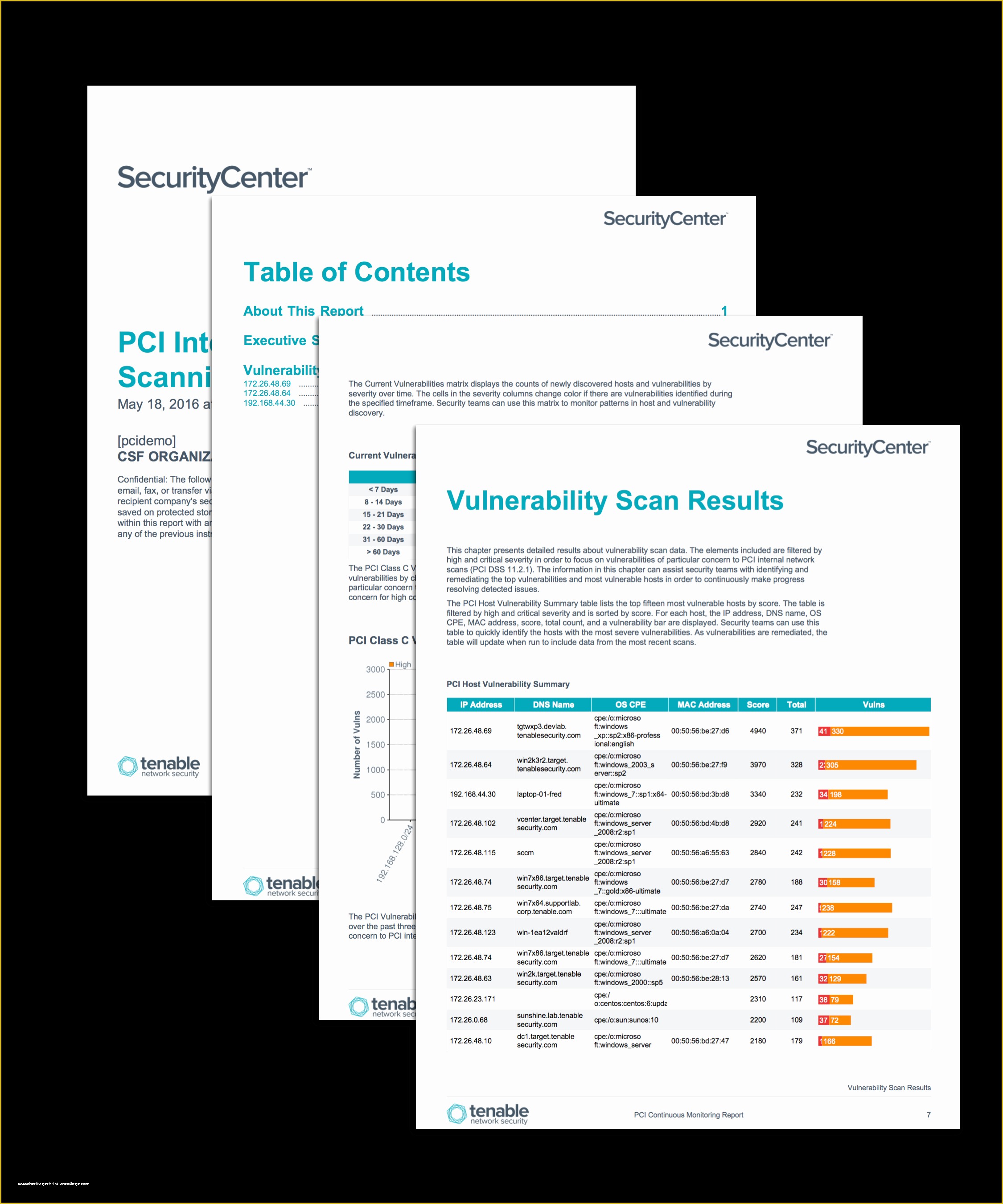
After achieving a passing re-scan, the ASV generates an official Attestation of Scan Compliance (AoSC) report. Submit this passing report to your merchant acquirer, payment processor, or compliance portal to demonstrate fulfillment of PCI DSS Requirement 11.3.2.
Common Vulnerabilities Flagged During External PCI Scans
Understanding why PCI scans fail helps teams prevent vulnerabilities before running official quarterly assessments. Common technical findings include:
Outdated Transport Layer Security (TLS) Protocols
PCI DSS standards strictly prohibit legacy cryptographic protocols. Web servers running TLS 1.0 or TLS 1.1 will fail an ASV scan automatically. Systems must support TLS 1.2 or TLS 1.3 and use secure cipher suites.
Unpatched Web Application Frameworks and Operating Systems
Unpatched software—such as outdated versions of Apache, Nginx, OpenSSL, WordPress, Magento, or Windows Server—remains a leading cause of scan failures. ASV engines check software version headers against public vulnerability databases (such as CVE lists).
Expose of Sensitive Administrative Interfaces
Exposing administrative portals—such as phpMyAdmin, cPanel, SSH (Port 22), Remote Desktop Protocol (RDP Port 3389), or database interfaces (MySQL Port 3306)—directly to the open internet will trigger high-severity flags. Access to management interfaces should be restricted using network-level firewalls, IP allowlisting, or encrypted VPN tunnels.
Weak or Expired SSL/TLS Certificates
Certificates that are expired, self-signed, or issued for an incorrect domain name compromise channel encryption integrity. ASV tools verify the complete certificate trust chain, requiring valid certificates issued by recognized Certificate Authorities (CAs).
Frequently Asked Questions
Who is required to perform quarterly PCI vulnerability scans?
Any business or merchant handling payment card data that falls under merchant Self-Assessment Questionnaires (SAQ) requiring external validation—such as SAQ A-EP, SAQ B-IP, SAQ C, or SAQ D—must perform quarterly external scans. Additionally, all Level 1, Level 2, and Level 3 merchants must fulfill scanning requirements as determined by their payment processing gateways and merchant banks.
Can I use a free open-source tool like OpenVAS to satisfy PCI DSS requirements?
No. While open-source tools like OpenVAS or Nmap are valuable for internal security monitoring, they cannot be used to submit official PCI DSS compliance reports. Payment acquirers require scan reports generated by an accredited Approved Scanning Vendor (ASV) listed on the official PCI SSC portal.
What happens if my business fails a PCI compliance scan?
Failing a PCI scan means your external network contains unmitigated vulnerabilities that could expose credit card data to unauthorized access. If you fail a scan, you must review the detailed findings, patch the flagged vulnerabilities, dispute any false positives, and run a re-scan. If you do not submit a passing quarterly ASV scan to your merchant processor, you may face monthly non-compliance penalties or risk losing payment processing privileges.
How much does a legitimate PCI scanning subscription cost?
For small businesses with a single domain or IP address, standard ASV scanning services typically cost between $150 and $300 per year. Larger enterprises managing extensive IP ranges or complex cloud environments may pay several thousand dollars annually depending on target volume, re-scan allowances, and support levels.
Does SAQ A require external ASV vulnerability scanning?
Under PCI DSS v4.0, merchants qualifying for standard SAQ A—those who fully outsource all payment processing to an eligible third-party gateway using e-commerce redirects or inline frames (iframes)—are generally exempt from quarterly external ASV scanning requirements. However, you must verify your exact compliance requirements directly with your merchant acquirer.
Actionable Guidance and Next Steps
Relying on a free online scan tool for quick vulnerability visibility can be a helpful starting point, but it does not fulfill formal PCI DSS v4.0 compliance obligations. To ensure your business stays secure and avoids non-compliance penalties, follow these actionable steps:
- Determine Your Merchant SAQ Type: Consult with your merchant acquirer or qualified security assessor (QSA) to confirm whether your business structure mandates quarterly external ASV scans under PCI DSS v4.0.
- Verify Vendor Accreditation: If purchasing or enrolling in an ASV scanning service, verify that the vendor is actively listed on the official PCI SSC Approved Scanning Vendor List.
- Perform Internal Baseline Audits: Run open-source vulnerability scans or internal security checks prior to initiating your official ASV scan to identify and resolve common issues like outdated TLS configurations or unpatched web applications in advance.
- Establish a Quarterly Scanning Routine: Schedule automated scans at least 30 days before the end of each calendar quarter. This buffer ensures adequate time to patch identified vulnerabilities, handle false-positive disputes, and complete a passing re-scan before compliance deadlines.
Image Gallery