What a Doctorate of Chiropractic Degree Means
A Doctor of Chiropractic (D.C.) degree is a professional post-graduate healthcare qualification that trains practitioners in neuromusculoskeletal diagnosis, non-surgical spine and joint care, and physical rehabilitation. It signifies c...
A Doctor of Chiropractic (D.C.) degree is a professional post-graduate healthcare qualification that trains practitioners in neuromusculoskeletal diagnosis, non-surgical spine and joint care, and physical rehabilitation. It signifies completion of a rigorous doctoral program encompassing extensive clinical training, basic sciences, and licensure examinations.
Contents
Navigating the landscape of modern healthcare requires a clear understanding of the credentials held by various medical and clinical professionals. Among these, the Doctor of Chiropractic degree occupies a distinct position. This comprehensive exploration examines what this degree entails, the educational journey required to earn it, the clinical scope it authorizes, and its role within the broader healthcare ecosystem.
Defining the Doctor of Chiropractic (D.C.) Degree
A Doctor of Chiropractic, commonly abbreviated as D.C., is a professional terminal degree designed to prepare practitioners for primary care roles focusing on the musculoskeletal and nervous systems. Unlike a Doctor of Medicine (M.D.) or a Doctor of Osteopathic Medicine (D.O.), chiropractic education does not include the prescription of pharmaceuticals or the performance of major surgical procedures. Instead, it emphasizes conservative, non-invasive approaches to health and wellness, with a primary concentration on the spine, joints, supporting musculature, and their relationship to the nervous system.
The curriculum leading to a D.C. degree is modeled after traditional medical and professional health programs, requiring thousands of hours of classroom, laboratory, and clinical instruction. Graduates are trained to diagnose conditions, perform clinical examinations, interpret diagnostic imaging such as X-rays and MRIs, and deliver targeted manual therapies, including spinal adjustments.
Core Philosophy and Clinical Approach
The foundational philosophy of chiropractic care centers on the body's intrinsic capacity to heal itself, provided there is optimal structural alignment and nervous system function. While early chiropractic history emphasized subluxations as the root cause of nearly all human ailments, contemporary evidence-based chiropractic education integrates modern medical science.
Today's D.C. programs teach students to view musculoskeletal complaints through a bio-psycho-social lens. Practitioners evaluate how biomechanical dysfunctions, occupational strains, lifestyle factors, and psychological stress contribute to pain and disability. Treatment plans often combine spinal manipulation therapy (SMT), joint mobilization, soft tissue therapy, therapeutic exercise, and nutritional counseling.
Academic Prerequisites and Admission Standards
Earning a Doctor of Chiropractic degree requires a substantial foundational education before entering a professional college or university. Accrediting bodies and chiropractic institutions enforce strict academic prerequisites to ensure incoming students possess the scientific literacy necessary to master a demanding doctoral curriculum.
Undergraduate Coursework Requirements
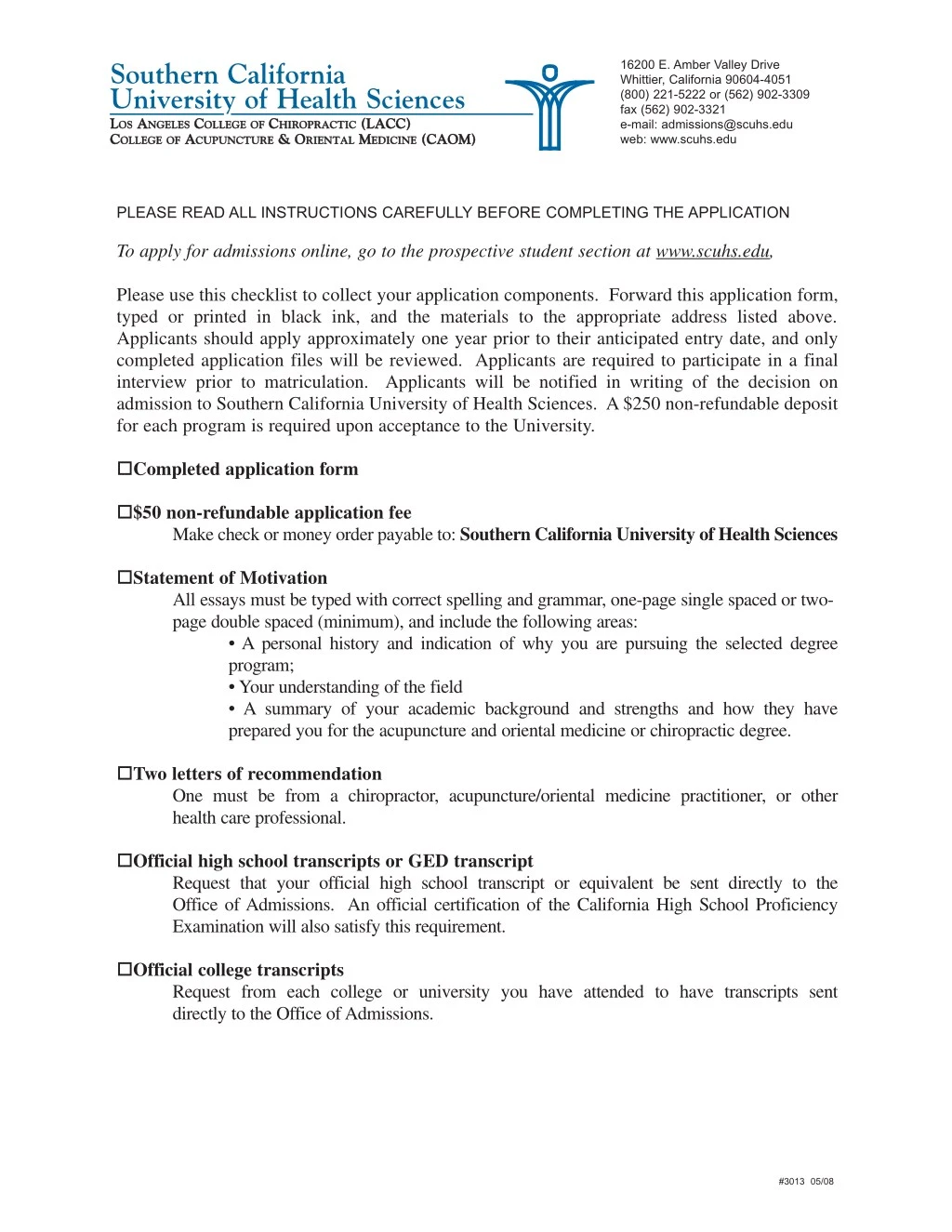
Most accredited chiropractic programs require candidates to have completed at least 90 semester hours of undergraduate education, though a growing number of institutions mandate a bachelor's degree for admission. Within these undergraduate credits, students must complete specific foundational science sequences, which typically include:
- General Biology: Minimum of two semesters with accompanying laboratories, covering cellular and molecular biology, anatomy, and physiology.
- General Chemistry: Minimum of two semesters with laboratories, focusing on foundational chemical principles.
- Organic Chemistry: At least one or two semesters with laboratories, providing insight into carbon-based chemical structures relevant to biochemistry.
- Physics: At least one or two semesters with laboratories, emphasizing mechanics, motion, and energy transfer.
- Humanities and Social Sciences: Additional coursework in psychology, communication, and ethics to prepare for patient-facing clinical interactions.
GPA and Holistic Review Processes
In addition to specific course requirements, admissions committees evaluate applicants based on their cumulative grade point average (GPA). Most programs maintain a minimum GPA requirement of 3.0 on a 4.0 scale, though competitive applicants often exceed this threshold. Beyond metrics, admissions processes frequently review letters of recommendation, shadowing hours spent with licensed chiropractors, personal essays, and interview performance to gauge a candidate's interpersonal skills, motivation, and ethical alignment with professional healthcare standards.
The Structure of Chiropractic Curriculum
The Doctor of Chiropractic program is typically structured as a four-year (or accelerated 3.3-year) professional course of study, spanning approximately 10 trimesters or semesters. The curriculum is divided into two distinct phases: the basic sciences and the clinical sciences.
- Phase 1: Basic Sciences (Years 1-2)
- Gross Anatomy (with Cadaver Dissection)
- Human Physiology & Biochemistry
- Neuroanatomy & Pathology
- Microbiology & Immunology
- Phase 2: Clinical Sciences & Practice (Years 3-4)
- Clinical Diagnosis & Orthopedic Testing
- Diagnostic Imaging (X-Ray, MRI Interpretation)
- Chiropractic Techniques & Spinal Adjustment
- Supervised Clinical Internship / Externship
Phase 1: Basic Sciences and Diagnostics
The initial phase of chiropractic education mirrors the foundational years of medical school. Students spend hundreds of hours in gross anatomy laboratories performing human cadaver dissection, gaining an intimate, three-dimensional understanding of musculoskeletal architecture, neurovascular pathways, and visceral organs.
Concurrent coursework covers physiology, biochemistry, pathology, and microbiology. Students learn the mechanisms of disease, tissue inflammation, and cellular degeneration. As this phase progresses, the focus shifts toward diagnostics. Trainees learn how to take a comprehensive patient medical history, perform physical and neurological examinations, conduct orthopedic and chiropractic specific tests, and order or interpret diagnostic imaging studies.
Phase 2: Clinical Practice and Internship
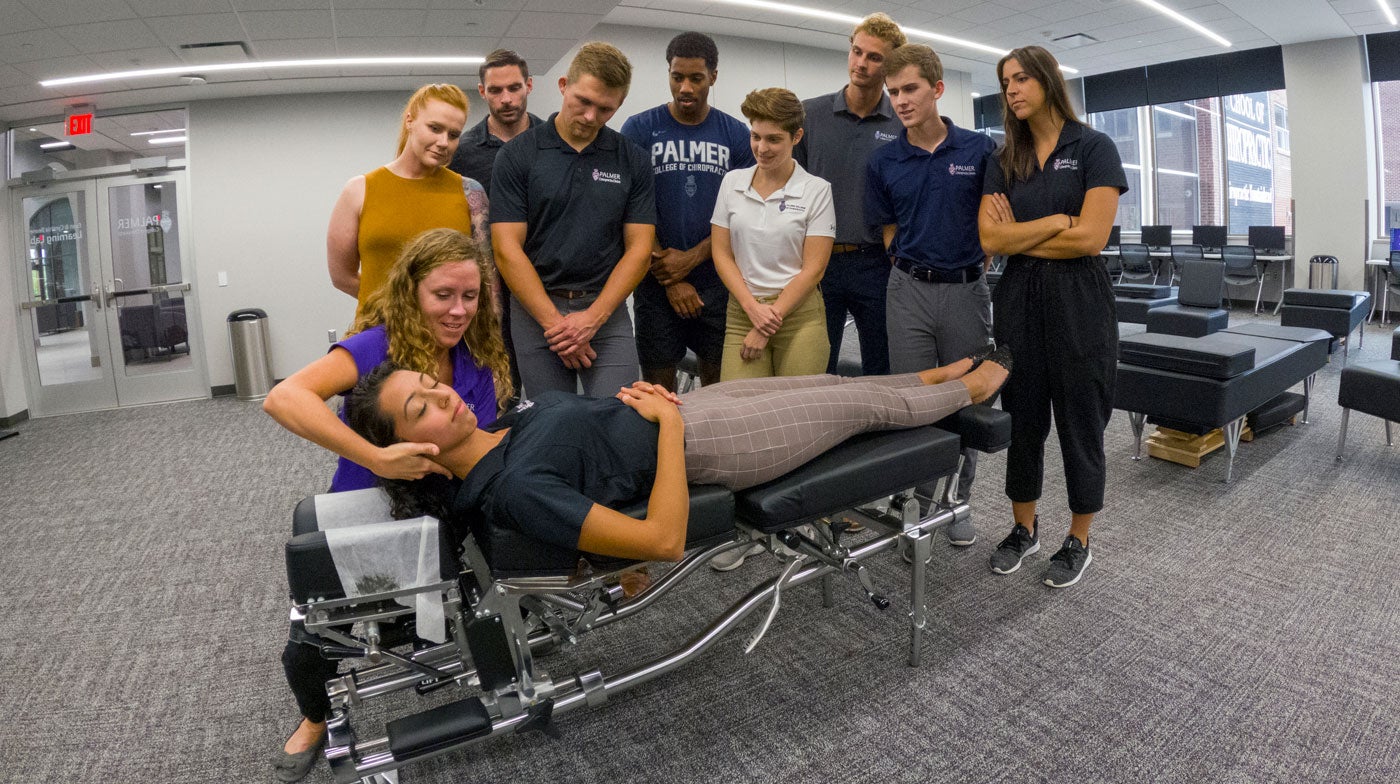
The latter half of the program transitions from classroom theory to hands-on clinical application. Students practice various adjusting techniques—such as Diversified, Gonstead, Activator, and Thompson drop-table methods—in supervised adjusting laboratories.
Before treating the public, student interns must demonstrate proficiency in clinical decision-making, patient safety, and manual precision. Once approved, they complete a clinical internship within the institution’s outpatient teaching clinic or through approved external community clinics and hospitals. During this period, student interns manage patient care under the direct supervision of licensed attending clinicians, handling everything from intake and diagnosis to treatment plan execution and documentation.
Licensing and Board Examination Requirements
Graduating with a Doctor of Chiropractic degree does not automatically grant the legal right to practice. To obtain professional licensure, graduates must successfully navigate a rigorous multi-tier examination process administered by national boards and state regulatory agencies.
National Board of Chiropractic Examiners (NBCE)
In the United States, candidates must pass four distinct parts of the examinations administered by the National Board of Chiropractic Examiners (NBCE):
- Part I: Covers general foundational sciences, including general anatomy, physiology, chemistry, pathology, and microbiology.
- Part II: Covers clinical sciences, including general diagnosis, neuromuscular-skeletal diagnosis, diagnostic imaging, principles of chiropractic, and associated clinical practices.
- Part III: Assesses clinical competency through case simulations, evaluating patient history-taking, physical examination interpretation, and management strategies.
- Part IV: Evaluates practical clinical skills via an objective structured clinical examination (OSCE), testing competency in chiropractic technique, X-ray interpretation, and physical examination procedures.
State-Level Licensure and Jurisprudence
Once NBCE board examinations are successfully completed, candidates must apply for licensure through the state board of chiropractic examiners in the jurisdiction where they intend to practice. Most states require an additional jurisprudence examination covering local laws, scope of practice boundaries, and ethical regulations. Furthermore, maintaining a license requires the completion of annual continuing education (CE) credits to ensure practitioners remain current with clinical research and safety protocols.
Scope of Practice and Professional Collaborations
The scope of practice for a Doctor of Chiropractic is defined by state or national legislation and varies by jurisdiction. In most regions, chiropractors are recognized as independent primary care professionals for neuromusculoskeletal conditions, meaning patients can consult them directly without a referral from a medical doctor.
What Chiropractors Can and Cannot Do
Understanding the operational boundaries of a D.C. degree clarifies where chiropractic care fits within the broader medical landscape:
- Authorized Actions: Performing spinal manipulations and joint mobilizations; prescribing therapeutic exercise and rehabilitation protocols; utilizing physical modalities (e.g., electrical stimulation, ultrasound, laser therapy); offering ergonomic and nutritional guidance; ordering and interpreting diagnostic imaging; and diagnosing neuromusculoskeletal conditions.
- Prohibited Actions: Prescribing pharmaceutical drugs; performing major invasive surgeries; practicing obstetrics or gynecology; and treating systemic infectious diseases outside the musculoskeletal framework (though referral for such conditions is standard protocol).
Interdisciplinary Integration in Modern Healthcare
The contemporary healthcare environment increasingly favors collaborative, interdisciplinary care models. Chiropractors frequently work alongside medical doctors, physical therapists, acupuncturists, and pain management specialists. Hospitals and integrated health systems—including the U.S. Department of Veterans Affairs (VA) and major academic medical centers—routinely employ doctors of chiropractic to provide non-pharmacological pain management solutions, helping reduce reliance on opioid medications for chronic back and neck pain.
Comparing Professional Healthcare Doctorates
To contextualize the D.C. degree, it is helpful to compare its educational focus, clinical training model, and therapeutic scope with other common doctoral healthcare qualifications.
| Professional Degree | Primary Focus & Philosophy | Typical Program Length | Treatment Modalities | Primary Care Status |
|---|---|---|---|---|
| Doctor of Chiropractic (D.C.) | Spine, joints, nervous system, and neuromusculoskeletal health | 4 Years (10 Trimesters) | Manual adjustments, rehabilitation, physical modalities, lifestyle counseling | Yes (for neuromusculoskeletal conditions) |
| Doctor of Medicine (M.D.) | Comprehensive human pathology, internal medicine, surgery, and pharmacology | 4 Years + Residency (3–7+ Years) | Pharmaceuticals, surgery, radiation, lifestyle intervention, physical therapy | Yes (Comprehensive) |
| Doctor of Osteopathic Medicine (D.O.) | Whole-body health with emphasis on musculoskeletal system and osteopathic manipulative treatment (OMT) | 4 Years + Residency (3–7+ Years) | Pharmaceuticals, surgery, OMT, lifestyle intervention | Yes (Comprehensive) |
| Doctor of Physical Therapy (D.P.T.) | Movement dysfunction, physical rehabilitation, and functional recovery | 3 Years | Therapeutic exercise, manual therapy, functional training, neuromuscular re-education | Generally requires referral (varies by state) |
Frequently Asked Questions
Is a Doctor of Chiropractic considered a real doctor?
Yes. A Doctor of Chiropractic holds a professional doctoral degree conferred by an accredited institution. While they are licensed healthcare providers, they are not medical doctors (M.D.s) or osteopathic physicians (D.O.s) and do not practice medicine or surgery. In clinical and academic settings, they are addressed as "Doctor," but their professional scope is legally restricted to neuromusculoskeletal and related health conditions.
Can chiropractors perform surgery or prescribe medication?
No. Across all jurisdictions, the scope of practice for a Doctor of Chiropractic explicitly excludes the prescription, administration, or dispensing of pharmaceutical drugs and the performance of major surgical procedures. Their clinical training focuses exclusively on conservative, non-invasive management techniques.
How long does it take to complete a chiropractic program?
Earning a Doctor of Chiropractic degree typically requires four academic years of intensive study, often structured across 10 trimesters or semesters. Some universities offer accelerated year-round scheduling that allows motivated students to finish the program in approximately 3.3 years.
Do chiropractors work in hospitals or medical centers?
Increasingly, yes. While the vast majority of chiropractors operate in private practices or multidisciplinary wellness clinics, a growing number are integrated into hospital systems, integrative health clinics, and Veterans Affairs (VA) medical facilities, where they collaborate directly with medical doctors and physical therapists.
Are chiropractic treatments backed by scientific evidence?
Yes. A robust body of clinical research supports the efficacy of spinal manipulation and conservative chiropractic care for specific conditions, such as acute and chronic lower back pain, neck pain, and certain types of headaches. Major clinical guidelines, including those from the American College of Physicians, recommend non-pharmacological options like spinal manipulation as first-line treatments for low back pain.
Conclusion and Next Steps
Earning a Doctor of Chiropractic degree represents a commitment to rigorous academic training, clinical competency, and patient-centered conservative healthcare. For prospective students, exploring accredited programs, reviewing science prerequisites, and shadowing practicing clinicians are essential preliminary steps. For patients and healthcare consumers, understanding the D.C. credential helps ensure informed decision-making when selecting qualified providers for neuromusculoskeletal care and pain management.
Image Gallery