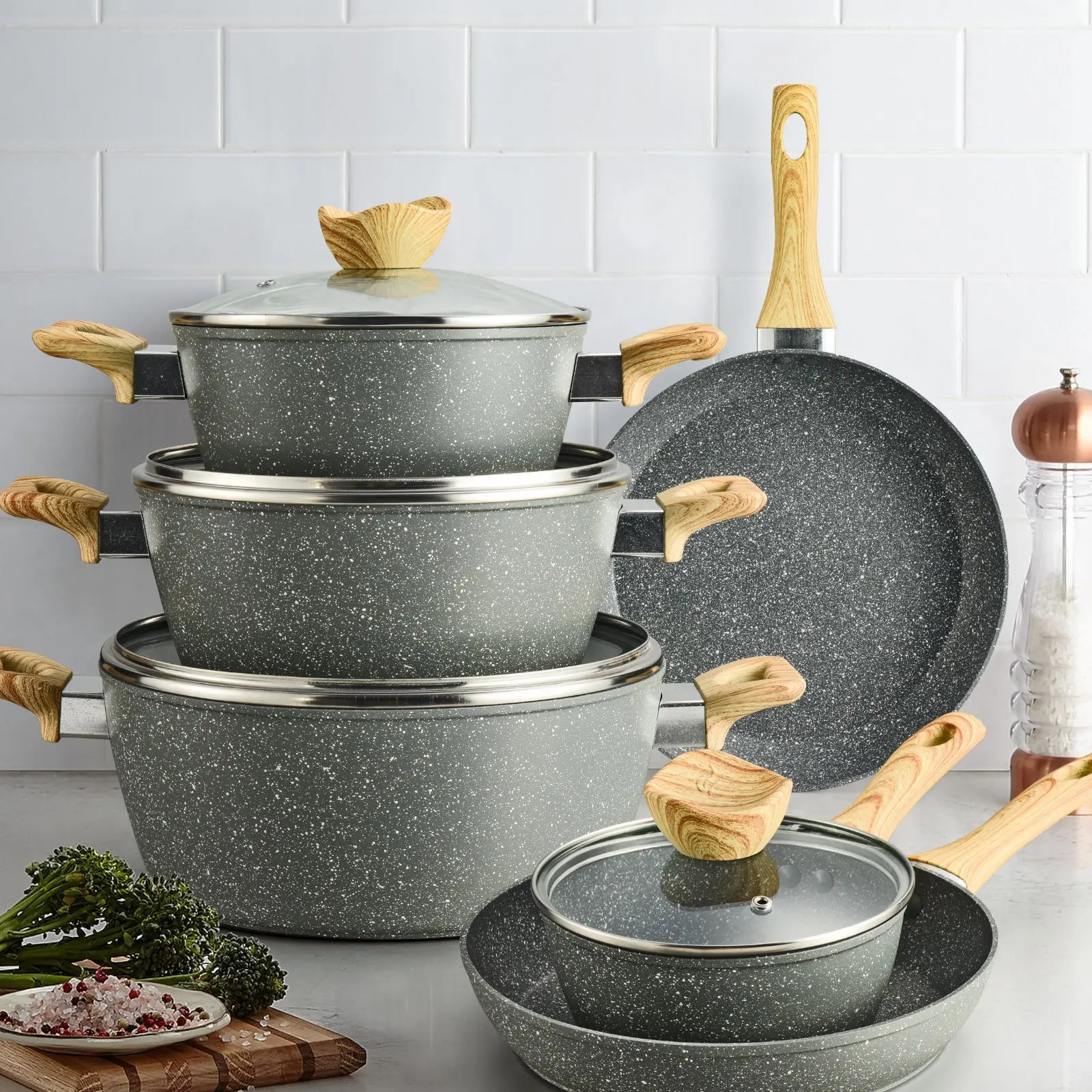
Which Are the Best Non-Stick Cookware Brands for 2026?
The best non-stick cookware brands in 2026 are Made In, All-Clad, Scanpan, and Ninja, each excelling in durability and heat distribution. For those prioritizing health-conscious materials, GreenPan and Caraway lead the ceramic market,...
The best non-stick cookware brands in 2026 are Made In, All-Clad, Scanpan, and Ninja, each excelling in durability and heat distribution. For those prioritizing health-conscious materials, GreenPan and Caraway lead the ceramic market, while T-fal remains the gold standard for budget-friendly, reliable performance.
Contents
Non-stick cookware has undergone a significant transformation leading into 2026. What was once a market dominated by short-lived, disposable pans has evolved into a landscape of high-performance tools utilizing advanced polymer science and reinforced ceramic matrices. Choosing the "best" brand no longer relies solely on how easily an egg slides across the surface; it now involves evaluating the substrate material, the bonding process of the non-stick coating, and the brand's commitment to evolving environmental standards.
The Technical Evolution of Non-Stick Coatings
To understand why certain brands lead the market in 2026, one must distinguish between the two primary types of non-stick surfaces: PTFE (Polytetrafluoroethylene) and Ceramic (Sol-gel).
PTFE-based coatings remain the industry standard for professional-grade release. Modern brands have moved far beyond the original "Teflon" iterations. Today’s high-end PTFE coatings are often reinforced with diamond dust, titanium, or sapphire crystals to increase scratch resistance. These coatings are chemically inert and provide the lowest coefficient of friction available.
Ceramic coatings, often marketed as "green" or "eco-friendly," are not actually ceramic in the traditional sense. They are "sol-gel" coatings—a silica-based liquid that is cured into a glass-like surface. While naturally free of PFAS (Per- and polyfluoroalkyl substances), they historically suffered from shorter lifespans. However, 2026 formulations from top brands have improved the elasticity of these silica layers, reducing the "micro-cracking" that leads to food sticking after six months of use.
Top Professional-Grade Brands
For home chefs who demand restaurant-quality performance, these brands offer non-stick surfaces built onto heavy-duty metal foundations.
Made In Cookware
Made In has solidified its position as a favorite among culinary professionals. Their non-stick line is unique because it utilizes the same 5-ply stainless steel base as their premium stainless line. This construction—consisting of alternating layers of stainless steel and aluminum—ensures that the pan heats evenly from the base all the way up the sidewalls. The coating is a professional-grade PTFE applied in multiple layers, which lasts significantly longer than consumer-grade alternatives. The primary benefit of Made In is the weight and balance, providing the "heft" needed for serious searing that most non-stick pans cannot achieve.
All-Clad Metalcrafters
A perennial leader in the industry, All-Clad’s HA1 Hard-Anodized series remains a benchmark for durability. Hard-anodization is an electrochemical process that hardens the aluminum substrate, making it twice as hard as stainless steel. This provides a warp-resistant foundation for their multi-layer non-stick coating. In 2026, All-Clad has refined its induction-compatible bases, ensuring that their heavy-gauge pans work efficiently on modern magnetic cooktops without the buzzing or heat-loss issues found in cheaper bonded discs.
Best Innovative and Heavy-Duty Brands
Innovation in 2026 focuses on the bonding process—how the non-stick layer actually "sticks" to the metal.
Scanpan
This Danish brand continues to lead with its Stratanium+ coating. Unlike traditional coatings that sit on top of the metal, Scanpan's surface is textured and reinforced, allowing for the use of metal utensils—a rarity in the non-stick world. The brand uses 100% recycled cast aluminum, which offers excellent heat retention. Scanpan is particularly noted for its ability to sear meat and deglaze for pan sauces, tasks usually reserved for stainless steel or cast iron.
Ninja (NeverStick Series)
Ninja disrupted the market by utilizing a "plasma bonding" process. According to technical specifications, the non-stick particles are fused to the pan at temperatures exceeding 30,000°F. This creates a textured, rugged surface that is remarkably resistant to chipping and peeling. For users who tend to be hard on their cookware—using high heat or placing pans in the dishwasher—Ninja’s NeverStick Premium line offers some of the highest resilience in the mid-range price bracket.
Best Ceramic and Health-Focused Brands
As consumers in 2026 increasingly prioritize PFAS-free kitchens, ceramic brands have stepped up their engineering.
GreenPan
As the original pioneer of ceramic non-stick, GreenPan's Thermolon coating is now in its latest generation. The brand has solved many early-generation issues regarding heat sensitivity. Their high-end lines, such as the GP5 or Venice Pro, feature "Magneto" induction technology—copper-reinforced bases that prevent warping and maximize thermal efficiency. GreenPan is the preferred choice for those who want a completely inorganic coating that will not release fumes even if accidentally overheated.
Caraway
Caraway has achieved dominance through a combination of sleek aesthetic design and a highly effective sol-gel coating. While their pans are aluminum-bodied, they are designed with a heavy mineral-based coating that provides a remarkably slick surface for low-oil cooking. Caraway is best suited for consumers who prioritize organized storage and modern kitchen aesthetics, as their sets include custom-fit magnetic pan racks and lid holders.
Comparative Performance Overview
The following table compares the top brands based on material construction, coating type, and their ideal use case for 2026.
| Brand | Substrate Material | Coating Type | Induction Ready | Best For |
|---|---|---|---|---|
| Made In | 5-Ply Stainless Steel | Pro-PTFE | Yes | Professional performance |
| All-Clad | Hard-Anodized Aluminum | Multi-layer PTFE | Yes (HA1 line) | Even heating & longevity |
| Scanpan | Cast Aluminum | Stratanium+ | Yes | Metal utensil durability |
| GreenPan | Aluminum (Magneto) | Ceramic (Thermolon) | Yes | PFAS-free cooking |
| Ninja | Hard-Anodized Aluminum | Plasma-fused PTFE | Yes | High-heat resilience |
| T-fal | Hard-Anodized Aluminum | Titanium-reinforced | Yes | Budget & daily eggs |
| Caraway | Aluminum | Ceramic (Sol-gel) | Yes | Aesthetics & organization |
Selection Criteria: How to Choose in 2026
When evaluating these brands, consider the following technical factors to ensure you receive the best value for your investment.
1. Base Construction
The "chassis" of the pan determines how well it cooks. Avoid thin-gauge aluminum, which develops "hot spots" that can scorch the non-stick coating, leading to premature failure. Look for hard-anodized aluminum or multi-ply stainless steel. These materials distribute heat evenly, protecting the chemical integrity of the non-stick surface.
2. Induction Compatibility
With the continued shift away from gas ranges in 2026, ensuring your cookware is induction-compatible is vital. Check for a full-plate stainless steel base. Cheaper pans often use a small "stamped" disc on the bottom that can vibrate or fail to activate the induction sensor on larger burners.
3. Handle and Rivet Design
High-quality brands like All-Clad and Made In use stainless steel rivets to attach handles. While some "stay-cool" silicone handles are comfortable, they may have lower oven-safe temperature ratings. If you plan to finish dishes in the oven, ensure the brand guarantees safety up to at least 500°F (260°C).
4. Environmental and Safety Standards
In 2026, the term "PFOA-free" is a baseline requirement. Superior brands now provide transparency regarding the entire "PFAS" family. If you are concerned about synthetic polymers, look for third-party certifications or stick to the reputable ceramic brands like GreenPan that use mineral-based surfaces.
Longevity and Maintenance
Even the best non-stick brand will fail if improperly maintained. The primary enemies of non-stick surfaces are carbonized oil and thermal shock.
- Avoid Aerosol Sprays: Many cooking sprays contain lecithin, which leaves a gummy residue that becomes "baked on" to the non-stick surface, eventually making food stick more. Use high-smoke-point liquid oils or butter.
- Gradual Cooling: Never plunge a hot pan into cold water. The rapid contraction of the metal (thermal shock) can cause the coating to delaminate or the base to warp.
- Hand Washing: Although brands like Ninja and T-fal claim to be dishwasher safe, the harsh detergents and high-pressure cycles can accelerate the degradation of the coating. Hand washing with a soft sponge is the single best way to extend the life of your cookware.
Frequently Asked Questions
Is PTFE safe to use in 2026?
Yes, modern PTFE is safe when used according to manufacturer instructions. The concern with older pans was PFOA, a processing agent that was phased out years ago. Today's PTFE is chemically inert. The main safety rule remains the same: do not heat an empty PTFE pan above 500°F (260°C), as the polymer can begin to degrade and release fumes.
Why does my ceramic pan lose its non-stick properties so quickly?
Ceramic (sol-gel) coatings are brittle at a microscopic level. Over time, high heat and abrasive cleaning cause "micro-fractures" in the silica layer. Once these fractures occur, carbonized fats fill the gaps, creating a sticky surface. To prevent this, use only low-to-medium heat and avoid the dishwasher entirely.
Can I use metal utensils on modern non-stick pans?
While brands like Scanpan and Ninja claim metal-utensil safety, it is always safer to use silicone or wood. Metal can still leave "track marks" or microscopic scratches that eventually compromise the release properties. If you must use metal, ensure the brand specifically utilizes a reinforced or textured coating like Stratanium+.
Which brand is best for induction cooktops?
Made In and All-Clad (HA1) are exceptional for induction. Because induction relies on magnetic friction, the mass and quality of the stainless steel base matter. These brands use high-quality ferromagnetic plates that ensure fast, silent, and even heating on induction surfaces.
How often should I replace my non-stick pans?
Even the best non-stick pans are not "heirloom" items like cast iron. Depending on usage, a high-quality PTFE pan should last 3 to 5 years, while a ceramic pan typically lasts 1 to 2 years before the release properties noticeably decline. If you see visible peeling, deep scratches, or if food sticks despite thorough cleaning, it is time to replace the pan.
Final Recommendation
For the majority of home cooks in 2026, the All-Clad HA1 or Made In Non-Stick pans represent the best balance of professional performance and long-term value. If your priority is a 100% toxin-free mineral surface and you are willing to replace your pans slightly more often, GreenPan’s GP5 series is the technical leader in ceramic technology. For those on a budget who still want a pan that will last a few years of daily egg-making, the T-fal Professional Total Nonstick remains an unbeatable value.
Image Gallery