Becoming a Certified Personal Trainer Online: A Comprehensive Guide for 2026
To become a certified personal trainer online, you must complete a study program from an accredited organization—such as NASM, ACE, or ISSA—and pass a proctored examination. Requirements include being at least 18 years old, holding a h...
To become a certified personal trainer online, you must complete a study program from an accredited organization—such as NASM, ACE, or ISSA—and pass a proctored examination. Requirements include being at least 18 years old, holding a high school diploma, and possessing a valid CPR/AED certification. Most candidates complete their studies within three to six months.
Contents
The fitness industry in 2026 has fully embraced digital-first education, making it possible to transition from a fitness enthusiast to a credentialed professional entirely from home. However, the abundance of online options necessitates a careful evaluation of accreditation, curriculum depth, and career support. Choosing the right path involves understanding the nuances of different certifying bodies and the technical requirements of the modern fitness landscape.
The Importance of NCCA Accreditation
The most critical factor in selecting an online personal trainer certification is accreditation by the National Commission for Certifying Agencies (NCCA). In 2026, the NCCA remains the gold standard for professional fitness credentials. Most commercial gym chains, boutique studios, and professional liability insurance providers require a certification from an NCCA-accredited body.
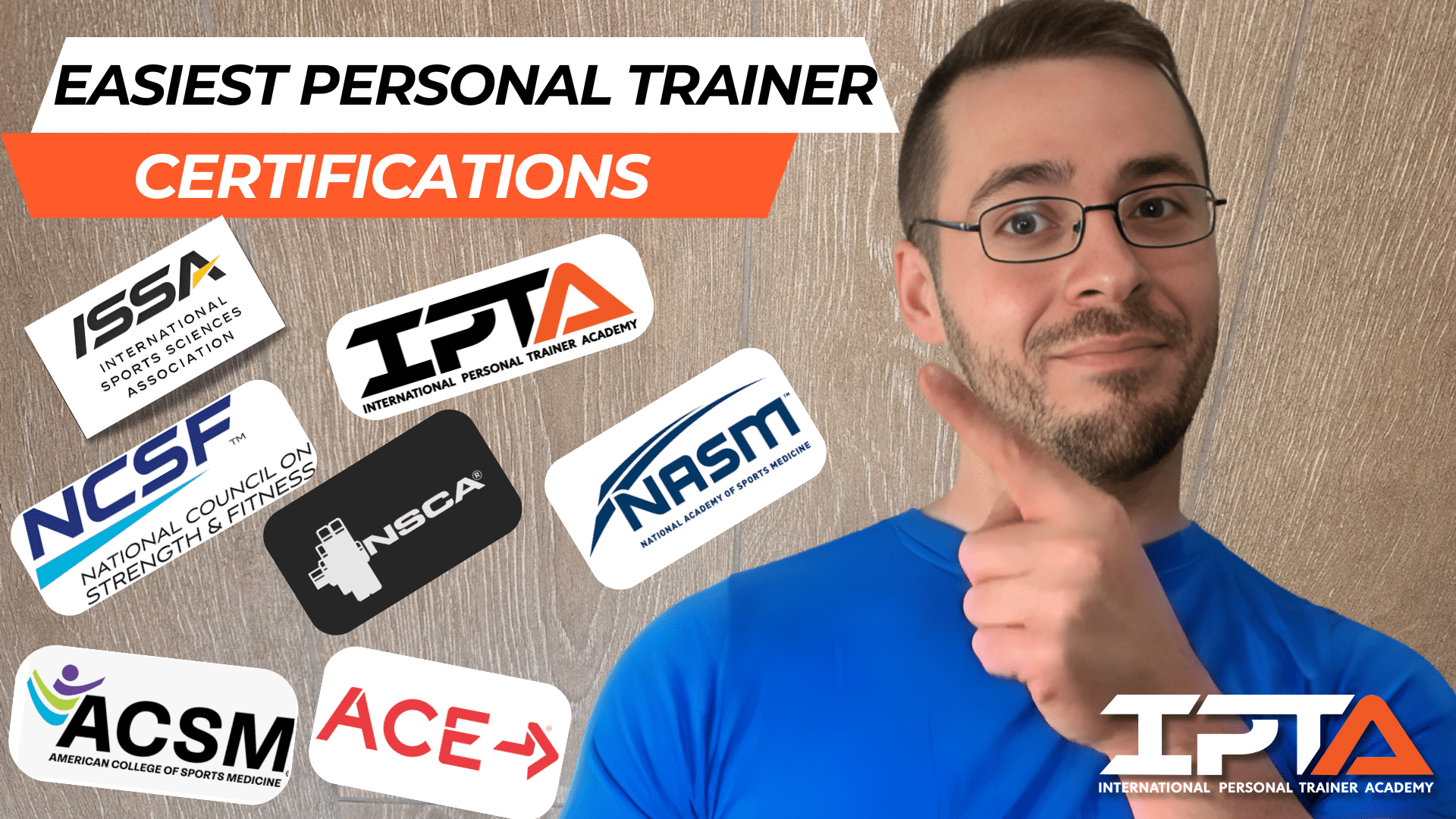
Accreditation ensures that the exam process is fair, valid, and psychologically sound. It distinguishes professional certifications from "certificate of completion" courses, which may provide knowledge but lack the industry-wide recognition required for employment. Organizations like the National Academy of Sports Medicine (NASM), the American Council on Exercise (ACE), and the National Strength and Conditioning Association (NSCA) all maintain NCCA-accredited programs that are accessible online.
Core Prerequisites for Online Certification
Before enrolling in a program, candidates must meet several baseline requirements. These standards ensure that all trainers possess a foundational level of maturity and emergency preparedness.
- Age Requirement: Candidates must be at least 18 years of age by the time they sit for the exam.
- Educational Foundation: A high school diploma or a GED equivalent is mandatory. This ensures the candidate possesses the reading comprehension and basic mathematical skills necessary to calculate metabolic rates and load percentages.
- Emergency Response Certification: You must hold a current CPR (Cardiopulmonary Resuscitation) and AED (Automated External Defibrillator) certification. In 2026, many certifying bodies accept hybrid CPR courses, but the hands-on skills assessment portion is still widely required to be performed in person or via live remote evaluation to meet safety standards.
Comparing Leading Online Certification Providers
Selecting a provider depends on your career goals, whether you aim to work in a clinical setting, a high-performance athletic environment, or a general population fitness center.
| Provider | Primary Focus | Study Duration | Exam Format | Key Feature |
|---|---|---|---|---|
| NASM | Corrective Exercise & Performance | 3–6 Months | Online Proctored | OPT™ Model for structured programming |
| ACE | Behavioral Change & General Wellness | 3–6 Months | Online Proctored | Mover Method™ for client coaching |
| ISSA | Practical Application & Business | 2–4 Months | Unproctored/Proctored | Comprehensive business and marketing guide |
| ACSM | Clinical & Sports Medicine | 4–6 Months | Testing Center | Deep focus on physiology and chronic disease |
| NSCA | Strength & Conditioning | 5–9 Months | Testing Center | Gold standard for elite athletic training |
NASM (National Academy of Sports Medicine)
NASM is often cited as the most popular choice for those entering the industry. Its proprietary Optimum Performance Training (OPT) model provides a highly structured framework for progressing clients from stabilization to strength and, finally, to power. This systematic approach is particularly helpful for new trainers who may feel overwhelmed by program design.
ACE (American Council on Exercise)
ACE places a heavy emphasis on the psychological aspects of fitness. Their curriculum focuses on behavioral change, coaching philosophy, and the Integrated Fitness Training (IFT) model. If your goal is to help the general population adopt healthier lifestyles through habit stacking and motivation, ACE is frequently the preferred route.
ISSA (International Sports Sciences Association)
ISSA is known for its accessibility and strong business education. While they offer NCCA-accredited exam options, their standard "Fast Track" programs are popular for those looking to start their own independent or online coaching businesses quickly. ISSA includes a significant amount of material on how to actually run a fitness business, which is sometimes a secondary focus in more clinical programs.
Navigating the Online Curriculum
The transition to digital learning has enabled these organizations to offer sophisticated study portals. In 2026, a typical online personal trainer course includes high-definition video demonstrations, interactive anatomy software, and AI-driven practice quizzes that adapt to your weak points.
Human Anatomy and Physiology
You will spend a significant portion of your study time learning the musculoskeletal system. This includes identifying bones, muscle origins, insertions, and their primary actions. Understanding energy systems—such as the ATP-CP, glycolytic, and oxidative pathways—is also essential for determining how different rest periods and intensities affect the body.
Biomechanics and Kinesiology
This section covers how the body moves. You will study planes of motion (sagittal, frontal, and transverse) and the mechanics of joints. Online simulators now allow students to visualize "leaks" in form, such as a knee valgus during a squat, and learn the corrective cues necessary to fix them.
Nutrition and Supplementation
While a personal trainer is not a registered dietitian, you must understand the basics of macronutrients, micronutrients, and hydration. The 2026 curricula emphasize the scope of practice, ensuring trainers provide sound nutritional guidance without crossing into medical nutrition therapy.
The Certification Exam: Preparation and Proctoring
The final hurdle is the certification exam. Most organizations now offer Live Remote Proctoring (LRP), allowing you to take the exam from your home office.
- Technical Requirements: You will need a reliable high-speed internet connection, a webcam, and a microphone. The proctoring software will scan your room to ensure no unauthorized materials are present.
- Exam Structure: Exams typically consist of 120 to 150 multiple-choice questions. You are usually given 120 minutes to complete the test.
- Passing Score: Most bodies require a scaled score of 70 or higher to pass.
- Security Measures: AI-driven monitoring tracks eye movements and background noise to maintain the integrity of the NCCA-accredited credential.
If you fail on your first attempt, most organizations allow a retake after a mandatory waiting period (usually 30 days), though additional fees often apply.
Financial Investment and Ongoing Costs
Becoming a certified personal trainer involves more than just the initial course fee. It is important to budget for the full scope of your professional launch.
- Study Packages: Expect to pay between $600 and $1,500 for the primary certification. Premium packages often include "job guarantees" or specialized nutrition certifications.
- Liability Insurance: Once certified, you cannot safely train clients without insurance. In 2026, professional liability insurance for trainers costs approximately $150 to $250 per year.
- Recertification: Most certifications expire every two years. To renew, you must earn Continuing Education Units (CEUs). These can be obtained by taking specialized workshops (e.g., kettlebell instruction, pre-natal fitness) or attending fitness conferences. Renewal fees typically range from $99 to $150.
Career Paths in the Digital Fitness Era
The "online" aspect of certification doesn't just apply to the learning process; it also describes a massive segment of the job market.
Hybrid Coaching
Many trainers now work in a hybrid capacity—meeting clients in person at a local gym once a week and managing the rest of their programming via fitness apps. This allows for a higher volume of clients and more stable income.
Corporate Wellness
Large corporations increasingly hire certified trainers to manage remote wellness programs for their employees. These roles often involve leading virtual group classes and providing one-on-one ergonomic and health consultations.
Specialized Niches
With an online certification, you can easily add "stackable" credentials. Specializing in youth fitness, senior populations, or athletic performance allows you to charge higher rates. In 2026, trainers specializing in longevity and metabolic health are in particularly high demand.
Common Mistakes to Avoid
- Ignoring the "Scope of Practice": A common error for new trainers is trying to act as a physical therapist or nutritionist. Stay within your lane to avoid legal liability and provide the best service to your clients.
- Skipping the Practical Application: Because the course is online, some students focus solely on the textbook. It is vital to practice the movements yourself and observe others in a gym setting to develop your "coaching eye."
- Choosing Based on Price Alone: A $200 non-accredited certification might seem like a bargain, but if no gym will hire you and no insurance company will cover you, it is a wasted investment. Always verify NCCA status.
Frequently Asked Questions
Can I get a personal trainer certification completely online?
Yes, most major certifying bodies offer 100% online study programs and proctored exams. You can complete the modules, take practice tests, and sit for the final exam from your home. The only component that sometimes requires an in-person element is the CPR/AED skills check, though hybrid versions are increasingly common.
How long does it take to get certified?
The average student takes 3 to 6 months to prepare for the exam. This allows enough time to absorb complex topics like anatomy and bioenergetics. If you have a background in kinesiology or exercise science, you may be able to fast-track the process in 4 to 8 weeks.
Is the ISSA exam still open-book in 2026?
ISSA offers several exam formats. While they have historically offered open-book options for their foundational certificates, their NCCA-accredited "Certified Personal Trainer" exam is a closed-book, proctored test. To be recognized by most major gym chains, you must opt for the proctored, accredited version.
Which certification is the most respected in the industry?
NASM and ACE are generally the most widely recognized for general personal training. NSCA is the most respected for those looking to work with high-level athletes, while ACSM holds the most weight in medical or clinical environments (such as hospital-based wellness centers).
Do I need a college degree to be a personal trainer?
No, a college degree is not required for the standard CPT (Certified Personal Trainer) credential. However, advanced certifications, such as the NSCA-CSCS (Certified Strength and Conditioning Specialist), do require a Bachelor’s degree in an exercise-related field.
Final Recommendation
If you are starting your journey in 2026, your best first step is to download the syllabus for both NASM and ACE. Compare their coaching models to see which resonates more with your personal philosophy. Once you choose a provider, prioritize obtaining your CPR/AED certification immediately, as you cannot sit for the exam without it. Focus on understanding the why behind exercise selection rather than just memorizing facts for the test, as this deep understanding will be the foundation of your future coaching success.
Image Gallery